
What is blind buying in perfume? A complete guide
TL;DR:
- Blind buying perfume involves purchasing scents without prior testing, often due to limited local availability or personal preference. To reduce risks, buyers should set budgets, read multiple reviews, and consider smaller bottles or samples before committing. Understanding the fragrance’s note structure and analyzing personal preferences can make blind purchasing a confident and rewarding part of building a scent collection.
You find a fragrance online. The notes read like a dream. The bottle looks extraordinary. There is no stockist within 200 miles. So you do it: you buy without smelling. That is what is blind buying in perfume, and it is one of the most common decisions niche and designer fragrance lovers face. Done impulsively, it leads to expensive regrets. Done with structure and self-knowledge, it becomes one of the most rewarding ways to build a scent collection. This guide covers everything you need to make blind perfume purchases you are confident in.
Table of Contents
- What is blind buying in perfume and why do people do it?
- How to approach blind buying perfume with less risk
- Understanding perfume descriptions and notes to make smarter blind buys
- Common pitfalls and expert tips for blind buying perfume
- When blind buying perfume makes sense: practical applications for niche fragrance lovers
- Why blind buying perfume is both an art and a science
- Explore perfumes with confidence at ThePerfumeSampler
- Frequently asked questions
Key Takeaways
| Point | Details |
|---|---|
| Blind buying defined | Blind buying perfume means purchasing without smelling first, taking a thrilling but risky leap. |
| Reduce risk | Choose smaller bottles, set budgets, wait before buying, and research reviews to avoid regret. |
| Focus on notes not stories | Look at fragrance structure—top, heart, base notes—rather than poetic marketing descriptions. |
| Know your preferences | Understanding your scent likes and dislikes greatly improves blind buying success. |
| Blind buying as art and science | It combines personal intuition with structured research, balancing excitement with caution. |
What is blind buying in perfume and why do people do it?
Blind buying in perfume means purchasing a fragrance without smelling it in advance. No sample. No tester at a counter. Just a description, a list of notes, and your best judgement. For many fragrance lovers, this is not a choice but a necessity. Niche and designer houses often have limited retail distribution, making it impossible to test a scent before buying.
As one fragrance writer puts it, blind buying fragrance is the olfactory equivalent of agreeing to a blind date: you commit to an unknown outcome. That framing captures both the appeal and the anxiety of the practice perfectly.
Why do people blind buy, despite the risk? Several reasons drive it:
- Rarity and limited availability. Many niche houses do not have widespread retail presence. If you want to discover niche fragrances, blind buying is sometimes the only route.
- Discontinued or hard-to-find scents. Some fragrances are no longer in production. Finding a bottle at all is the priority, not sampling first.
- Thrill of discovery. Experienced collectors often describe the blind buy as part of the hobby. The anticipation of opening a package and smelling something for the first time is genuinely exciting.
- Online-only availability. A growing number of fragrance brands operate exclusively online, removing the tester option entirely.
- Cost efficiency. Travelling to a specialist retailer to sample costs time and money. Sometimes a calculated blind buy is more practical.
The risk is real. Fragrance is deeply personal. A scent that reads beautifully on paper can be unwearable on your skin. But risk and reward are proportional here. Understanding how to manage the risks of blind buying perfume is what separates a collector who grows their wardrobe confidently from one who accumulates bottles they never wear.
How to approach blind buying perfume with less risk
Knowing what blind buying is does not automatically make it easier. The next step is building a structured approach that reduces regret without eliminating the discovery element.
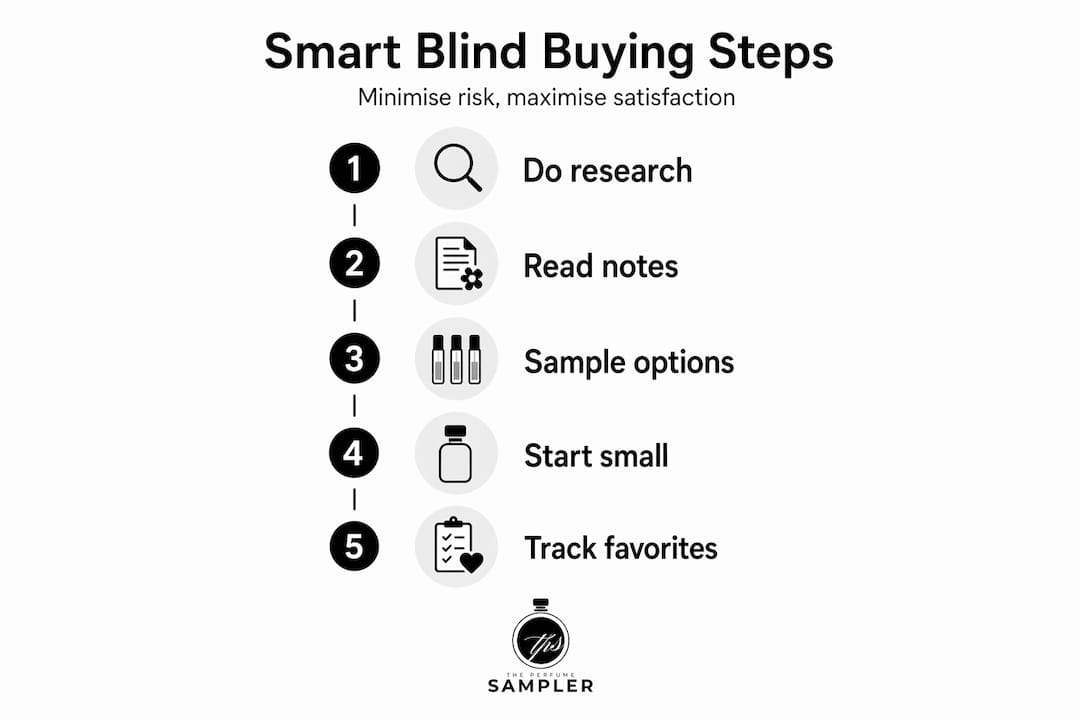
The single most effective change you can make is to reduce the financial commitment. Start with smaller bottles, such as a 30ml option rather than a 100ml full bottle, to lower the cost of being wrong. A blind perfume purchase at a lower price point carries far less regret than one at full retail.
Here is a practical framework for making smarter blind buys:
- Set a budget threshold. Decide in advance what you are willing to spend on an untested scent. A clear budget limit, for example under £40, keeps blind buys in sensible territory.
- Impose a waiting period. Add the item to your basket, then wait 24 to 48 hours before completing the purchase. If you still want it, the decision is far less likely to be purely impulsive.
- Read multiple reviews. Seek out reviewers whose taste aligns with yours. One enthusiastic review is not enough. Look for patterns across several sources.
- Check the return policy. Some retailers accept returns on unopened fragrances. Knowing this before you buy reduces the downside.
- Consider a decant or sample first. Many fragrance communities and specialist retailers offer decants in smaller volumes, which are ideal for testing sample scents confidently before investing in a full bottle.
Pro Tip: Look for fragrance sample options in 2ml, 5ml, or 10ml sizes before committing to a full bottle. Even a single wear on your own skin will tell you more than 50 written reviews combined.
The key principle is this: blind buying fragrance does not have to mean uninformed buying. Every piece of research you do before clicking purchase is a risk-reduction measure. When you also factor in key personal preferences such as preferred fragrance families and seasonal wear, the blind buy becomes a much more calculated decision.
Understanding perfume descriptions and notes to make smarter blind buys
With a strategy in place, understanding how to interpret what you are reading about a fragrance is the next practical skill to develop. This is where many blind buyers go wrong.
Perfume marketing copy is written to sell a lifestyle, not describe a scent. Words like “radiant”, “mysterious”, or “sun-drenched” tell you nothing useful. Instead, focus on the fragrance’s note structure rather than the poetic descriptions around it. This is where objective information lives.
The olfactory pyramid is the standard framework for understanding how a fragrance develops:
- Top notes are what you smell in the first few minutes. They are volatile and fade quickly. Common examples include citrus, bergamot, and light herbs.
- Heart notes form the core of the fragrance and last for one to three hours. Rose, jasmine, and spices are typical heart note ingredients. This is the character of the scent.
- Base notes are the lasting foundation, often persisting for several hours. Vetiver, sandalwood, musks, and ambers are common here.
When blind buying, the heart and base notes matter most. They are what you will actually live with. Avoid fragrances with dominant heart or base notes you already know you dislike.
Here is a comparison to illustrate how notes affect fragrance choice:
| Fragrance type | Typical top notes | Typical heart notes | Typical base notes |
|---|---|---|---|
| Woody oriental | Bergamot, spice | Oud, rose | Sandalwood, musk |
| Fresh aquatic | Citrus, ozonic | Sea notes, green | Amber, cedar |
| Floral gourmand | Fruity, aldehyde | Jasmine, iris | Vanilla, praline |
| Aromatic fougère | Lavender, herbs | Geranium, oakmoss | Coumarin, patchouli |
Pro Tip: Learn how fragrances evolve on skin across the olfactory pyramid. A fragrance you find unpleasant in its opening may be stunning in its dry-down, and vice versa. Reviews that describe the full arc are far more reliable than those covering only the first spray.
Sticking to familiar fragrance families significantly reduces risk. If you know you love woody ambers, a blind buy within that family is far safer than venturing into green chypres with no prior experience. Use the note structure and your ranking of favourite scents as your reference point. Pair this with honest personal fragrance preferences and you have a solid decision-making framework.
Common pitfalls and expert tips for blind buying perfume
Even experienced collectors make mistakes. Understanding where blind buying goes wrong is as useful as knowing what to do right.
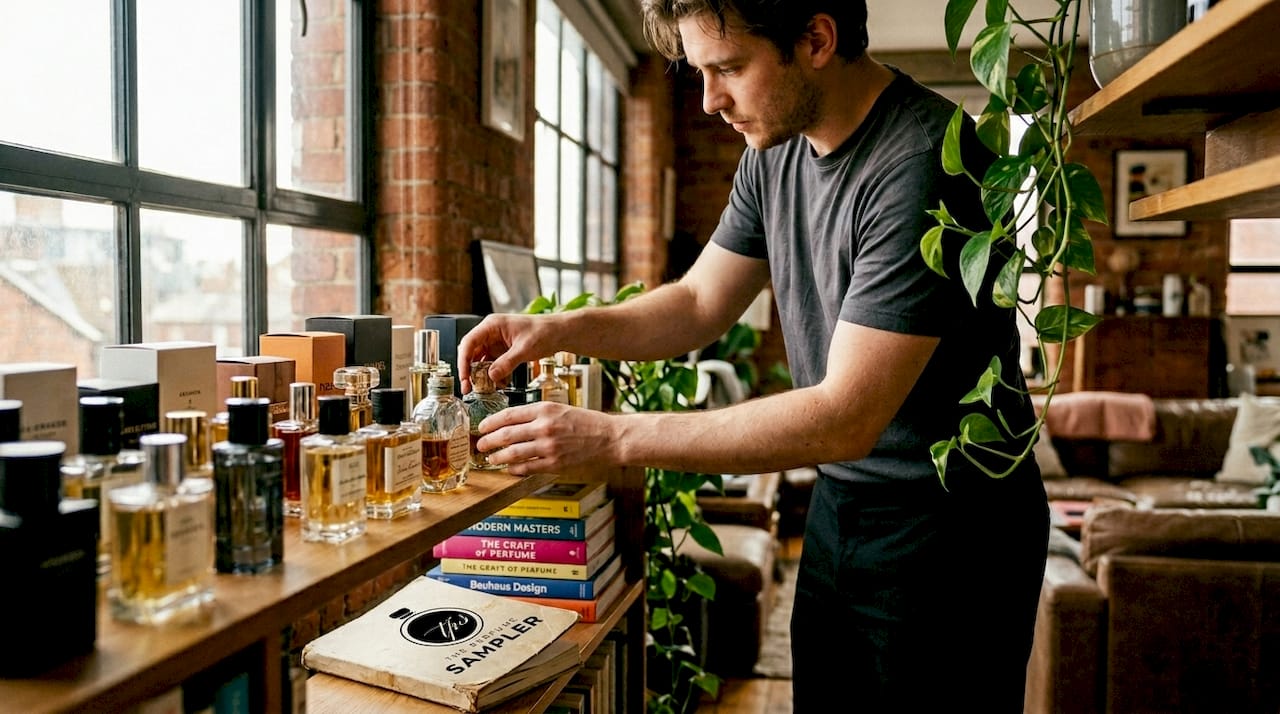
The most common error is the impulse blind buy. You see a fragrance featured in a post, someone raves about it, and you order it within the hour. Impulse blind buys carry the highest regret rates; converting the decision into a structured process reduces this significantly.
Common pitfalls to avoid:
- Buying expensive full bottles without prior sampling. Even a highly praised fragrance may not suit your skin chemistry or personal taste.
- Trusting a single reviewer. Individual taste varies enormously. One person’s “masterpiece” is another person’s headache.
- Ignoring your existing wardrobe. If every fragrance you love is a clean musk and you blind buy a heavy resinous oriental, the gap is likely too wide.
- Overlooking concentration. An Eau de Parfum will project and last very differently to an Eau de Toilette version of the same scent. Note the concentration before you buy.
- Dismissing negative reviews too quickly. If multiple reviewers mention the same off-putting quality, that is worth noting even if the majority are positive.
Pro Tip: Before any blind buy, spend five minutes with your own collection. Identify two or three fragrances you consistently reach for. Use those as your reference point when reviewing luxury fragrances you are considering blind buying. Similarity to something you already love is the strongest indicator of a successful purchase.
Your collection history is genuine data. If you want to build your fragrance wardrobe with confidence, treat each blind buy as an experiment with a clear hypothesis. “I believe I will like this because it shares characteristics with fragrances I already wear.” Document your reactions when the fragrance arrives. Over time, this process helps you master your own review framework and improves every future decision.
When blind buying perfume makes sense: practical applications for niche fragrance lovers
With the pitfalls covered, the question becomes: when is blind buying actually the right call?
Niche fragrances are often unavailable in local stores, making blind buying the most practical option for many enthusiasts. If you live outside a major city, accessing a broad range of designer and niche scents requires either travel or a willingness to buy online. In that context, blind buying is not recklessness. It is simply how the hobby works.
Scenarios where blind buying is a sensible approach:
- The fragrance is not stocked within a reasonable travel distance.
- The brand operates exclusively online and does not offer samples.
- The fragrance is limited edition or being discontinued and availability is disappearing.
- You have strong prior experience with the house and trust their aesthetic consistently.
- You have researched the scent thoroughly across multiple credible sources.
When you do decide to blind buy, apply this structured process:
- Confirm the fragrance is genuinely unavailable to sample locally or through a decant service.
- Read at least five reviews from sources whose taste aligns with yours.
- Map the fragrance notes against your established preferences.
- Identify whether the price point sits within your defined blind buy budget.
- Wait 24 hours after deciding to purchase before completing the transaction.
Used in this way, blind buying becomes a calculated addition to your collection rather than a gamble. For dedicated fragrance lovers, it is also one of the most enjoyable parts of the hobby. The moment a package arrives and you smell something truly new is difficult to replicate through any other means. Resources like niche fragrance discovery guides and factors for picking fragrances can support each stage of this process.
Why blind buying perfume is both an art and a science
Here is the perspective most fragrance articles do not share: the people who succeed at blind buying are not lucky. They are self-aware.
The common assumption is that blind buying is inherently risky and the best you can do is minimise loss. That framing is too narrow. Experienced fragrance enthusiasts develop pattern recognition that makes blind buys more accurate over time. It is a learnable skill. The more you sample, the more you understand your own nose, and the better your blind buy predictions become.
The art component is personal. It involves knowing not just which notes you like in isolation, but how combinations work on your specific skin chemistry. It involves understanding your own emotional associations with scent. Some people find vetiver grounding. Others find it unpleasant. Neither is wrong. Both are information.
The science component is about methodology. It means reading note breakdowns rather than marketing copy. It means setting financial rules before you are tempted. It means using your collection history as data. It means applying a waiting period to separate genuine desire from impulse.
Together, these two elements make blind buying perfume genuinely rewarding. The goal is not to eliminate uncertainty. The goal is to make uncertainty manageable and occasionally thrilling. If you invest time in building your collection with confidence, the blind buy stops being an anxiety and starts being one of the most interesting parts of the hobby.
The enthusiasts who find blind buying consistently satisfying are not the ones who got lucky once. They are the ones who learned from every purchase, built a reference library of personal preferences, and applied structure to every decision.
Explore perfumes with confidence at ThePerfumeSampler
Blind buying does not have to mean full commitment on day one.
At ThePerfumeSampler, we offer fragrance decants in 2ml, 3ml, 5ml, and 10ml sizes, giving you a practical way to experience a scent before spending full bottle prices. Our decants are 100% authentic, sourced directly from genuine bottles. If you want to understand why decants make sense before committing to a full purchase, the answer is straightforward: they reduce financial risk, let you test on your own skin, and give you genuine confidence in a buying decision. Once you have found a fragrance you love through sampling, our full bottle collection is available at competitive prices. Start with a sample. Buy with confidence.
Frequently asked questions
What exactly is blind buying in perfume?
Blind buying means purchasing a fragrance without testing or smelling it in advance, relying instead on descriptions, notes, and reviews. As one source describes it, it is the olfactory equivalent of agreeing to a blind date: you commit to a scent you have never smelled.
How can I reduce the risk when blind buying perfume?
Reduce risk by choosing smaller bottle sizes, setting a clear budget limit for blind buys, waiting at least 24 hours before ordering, and researching multiple trustworthy reviews. Starting with smaller bottles such as 30ml rather than 100ml significantly lowers the financial cost of being wrong.
Should I trust perfume marketing descriptions for blind buying?
Perfume marketing is written to evoke mood rather than accurately describe a scent. Focus on the note structure instead, specifically the heart and base notes, and avoid dominant notes you already know you dislike.
Is blind buying suitable for beginners?
Blind buying carries higher risk for those new to fragrance who have limited sampling experience and less self-knowledge of their personal preferences. Blind buying risk decreases meaningfully as you build more experience and a clearer understanding of what suits your taste.
Recommended
- How to review luxury fragrances: step-by-step guide – ThePerfumeSampler
- Perfume reformulation: what every fragrance lover should know – ThePerfumeSampler
- What is a perfume reviewer? Insider role explained – ThePerfumeSampler
- Uncovering perfume prices: What makes fragrance cost vary? – ThePerfumeSampler