
Discover niche fragrances: unique scents & sampling tips
TL;DR:
- Niche fragrances emphasize creativity, small production runs, and unusual ingredients, not necessarily higher quality.
- They differ from designer scents by offering complex, often polarizing scents with limited retail presence.
- Sampling decants and focusing on personal experience is essential for affordable and meaningful fragrance exploration.
Many fragrance collectors assume that niche automatically means superior. That assumption shapes purchasing decisions and often leads to disappointment. The niche perfume market has grown considerably, with prices ranging $200 to $800+ for a single bottle, yet the higher price does not always reflect better quality. What it does reflect is creative freedom, smaller production runs, and a deliberate distance from mass-market formulas. This guide explains what niche actually means, how it compares to designer fragrances, which houses are worth your attention, and how you can explore the category affordably through samples and decants.
Table of Contents
- What defines a niche fragrance?
- Niche vs designer: Comparing scent, quality and pricing
- Spotlight on leading niche fragrance houses
- How to explore niche perfumes affordably
- Why true fragrance discovery means asking better questions
- Sample extraordinary scents with confidence
- Frequently asked questions
Key Takeaways
| Point | Details |
|---|---|
| Niche means distinctive vision | Niche fragrances are crafted with creative freedom, smaller batches, and unique concepts. |
| Higher price, not always better | Premium pricing in niche scents reflects rarity and production scale, but not guaranteed quality. |
| Sampling broadens discovery | Testing decants and samples allows you to explore exclusive scents affordably and confidently. |
| Brand variety exists | From Amouage to Matiere Premiere, the spectrum of niche houses offers something for every scent profile. |
What defines a niche fragrance?
Now that you know why the price tag does not always tell the full story, let us look closer at what actually defines niche fragrances.
The word niche gets used freely in fragrance communities, but its meaning has shifted considerably over the past few decades. The term originated in the 1980s and 1990s as a direct reaction to the mass-market approach taken by large fashion houses. Independent perfumers wanted to create scents that prioritised artistry over broad commercial appeal. That was the original distinction.
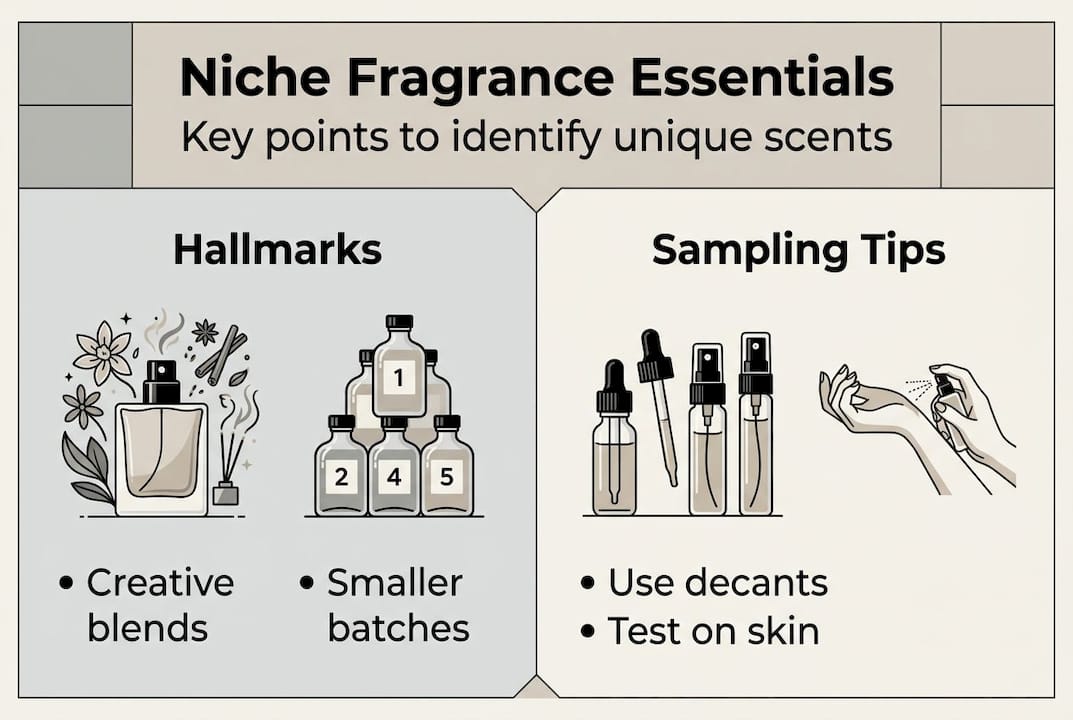
Today, the word is far less precise. Niche now includes indie perfumers working from small studios, artisanal houses producing limited runs, and even some larger brands that have repositioned themselves as exclusive. The subcategory of ultra-niche goes further still, using some of the rarest raw materials available, such as aged oud, real ambergris, or sustainably sourced iris root.
For collectors, understanding what makes a fragrance unique helps distinguish genuine creative work from brands simply using the niche label as a marketing tool. The key characteristics that define a true niche fragrance include:
- Creative freedom: Perfumers are not constrained by trend reports or focus groups
- Small-batch production: Quantities are deliberately limited to maintain exclusivity
- Unusual ingredients: Niche houses often source materials that mass-market brands avoid due to cost or complexity
- Direct-to-consumer storytelling: Many niche brands build identity through the narrative behind each scent
- Limited retail presence: You will rarely find authentic niche fragrances in supermarkets or department store end caps
“The niche perfume category began as a counter-movement to commercial perfumery. Today it encompasses indie, artisanal, and ultra-niche subsets, each with its own relationship to rarity and creative intent.”
This broader definition means you need to research each house individually rather than assuming the niche label alone signals quality or authenticity.
Niche vs designer: Comparing scent, quality and pricing
With the basics in place, it helps to see niche fragrances in direct contrast with their designer counterparts.
Designer fragrances are produced by large fashion or beauty houses and sold through widespread retail channels. They are formulated to appeal to the widest possible audience. Niche fragrances take a different approach entirely, targeting collectors and enthusiasts who want something more distinctive. Neither category is automatically superior.
| Attribute | Niche fragrances | Designer fragrances |
|---|---|---|
| Scent profile | Complex, unusual, often polarising | Familiar, crowd-pleasing, broadly wearable |
| Production volume | Small-batch, limited | Mass-produced |
| Price range | £150 to £500+ per bottle | £30 to £200 per bottle |
| Bottle design | Often artistic, collectible | Functional, brand-consistent |
| Retail availability | Specialist boutiques, online | Department stores, pharmacies |
| Creative freedom | High | Moderate to low |
As noted, niche prices reflect smaller production and premium materials rather than guaranteed quality improvements. A well-formulated designer fragrance can absolutely outperform a mediocre niche release. The myth that niche equals better is one the fragrance community has been slowly dismantling for years.
For collectors, the decision often comes down to purpose. If you want something recognisable and socially accessible, a designer fragrance serves well. If you want why invest in high-end perfumes for your collection and are prepared for something more challenging or unusual, niche fragrances reward that curiosity.
Considerations for collectors:
- Niche scents often have stronger sillage (the trail a fragrance leaves) but this varies by house
- Designer fragrances tend to be more versatile for everyday wear
- Niche releases can appreciate in value if discontinued
- Understanding defining luxury fragrances helps you make more informed decisions at any price point
Pro Tip: Before spending on a full bottle, always test a decant first. A fragrance that reads beautifully online can perform very differently on your skin chemistry.
Spotlight on leading niche fragrance houses
Understanding the distinctions is only half the journey; let us now spotlight the brands shaping the niche landscape.
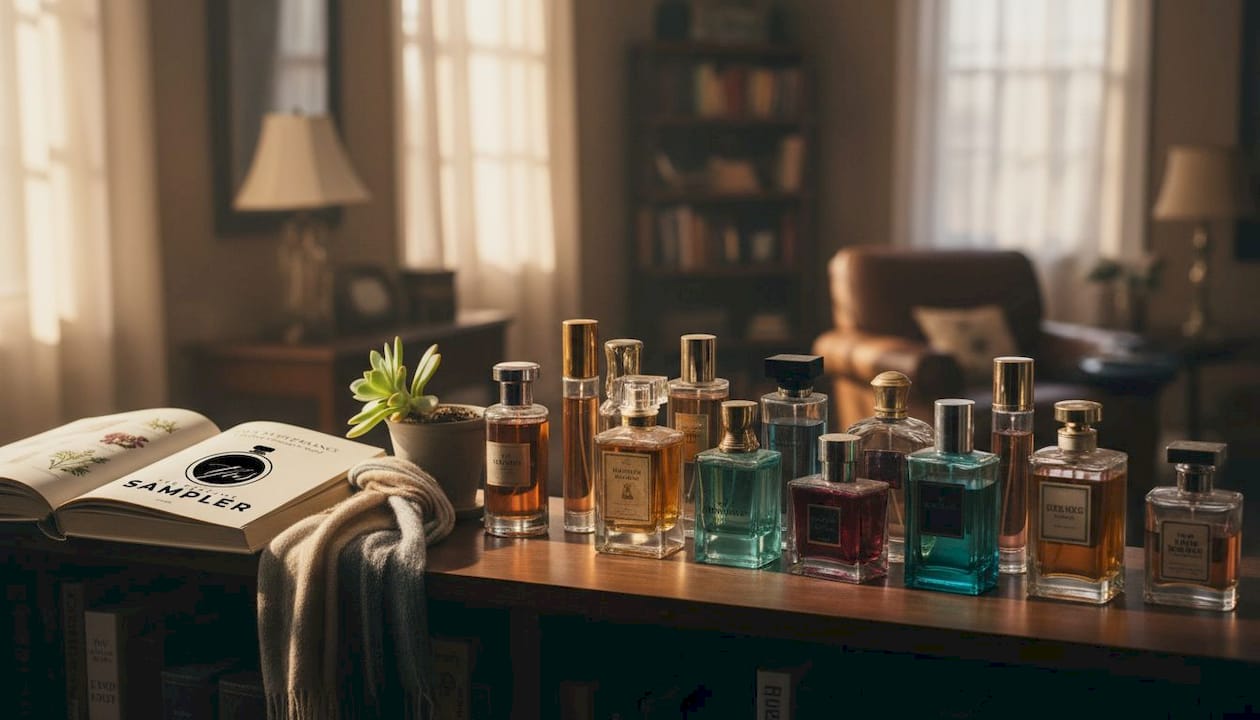
The niche fragrance world has a rich catalogue of houses, from those that helped define the category decades ago to modern brands rewriting the rules. Notable niche houses include Amouage, Frederic Malle, Maison Francis Kurkdjian, Andy Tauer, Serge Lutens, and Profumum Roma. Among newer arrivals, Matiere Premiere and Henry Rose have attracted considerable attention.
| Brand | Founded | Signature style |
|---|---|---|
| Amouage | 1983 | Rich, opulent Middle Eastern compositions |
| Frederic Malle | 2000 | Collaborative perfumery with named perfumers |
| Maison Francis Kurkdjian | 2009 | Elegant, modern French perfumery |
| Serge Lutens | 1992 | Dark, avant-garde, deeply literary |
| Profumum Roma | 1996 | Italian craftsmanship, high concentration |
| Matiere Premiere | 2019 | Sustainable, single-material focus |
For first-time collectors exploring sampling designer scents and niche houses together, a structured approach helps. Here is a recommended starting sequence:
- Begin with accessible niche: Maison Francis Kurkdjian and Frederic Malle produce scents that are unusual but wearable for newcomers
- Move to regionally inspired houses: Amouage and Profumum Roma offer deeper complexity as your nose develops
- Explore gender-neutral territory: Many niche houses reject gendered categories entirely, so keep an open mind
- Sample before committing: Use decants from 2ml to 10ml to test longevity and how each scent develops on your skin over several hours
- Follow specific perfumers: Some collectors prefer to follow the career of a particular perfumer across multiple houses
If you want focused recommendations, browse curated lists for top niche fragrances for women and top niche fragrances for men to identify where your interests align.
How to explore niche perfumes affordably
Knowing which houses to try is just the start; here is how you can sample niche scents smartly and affordably.
Full bottles of niche fragrances represent a significant financial commitment. Spending £200 or more on a scent you have never tested is a risk most collectors learn to avoid quickly. Decants and sample sets solve this problem directly.
Decanting involves transferring a small quantity of fragrance, typically 2ml, 3ml, 5ml, or 10ml, from an original bottle into a smaller container. When purchased from a reputable source, you receive 100% authentic fragrance at a fraction of the full-bottle cost. This approach is legal, widely practised, and increasingly recognised as the smart collector’s method.
The ultra-niche segment in particular benefits from this sampling culture. Many of the rarest ingredients used in ultra-niche fragrances make these bottles extraordinarily expensive. A 5ml decant lets you assess whether the rarity genuinely appeals to you before any large purchase.
Practical strategies for affordable niche exploration:
- Buy decants first: Always test a 2ml or 5ml before considering a full bottle
- Join fragrance communities: Online groups on Reddit and dedicated forums facilitate swaps and splits, where collectors share the cost of a bottle and divide the contents
- Focus on one house at a time: Depth of exploration within one brand teaches you more than surface-level sampling across twenty
- Store samples correctly: Keep decants away from direct light and heat to preserve the integrity of the fragrance
- Track your reactions: Note how each fragrance opens, develops through the middle notes, and dries down over six to eight hours
Pro Tip: Testing a fragrance three times on skin, across different days and contexts, gives a far more reliable read than a single spritz in a shop.
For a practical overview of affordable niche sampling strategies, and guidance on building a fragrance collection systematically over time, both resources offer clear, actionable guidance.
Why true fragrance discovery means asking better questions
After these strategies, it is worth stepping back to reconsider how we approach scent collecting.
The fragrance community can become oddly focused on acquisition. Which house is the most exclusive? Which bottle costs the most? Which release is the hardest to find? These questions have their place, but they can quietly obscure the point of collecting in the first place.
The most rewarding discoveries often come from the overlooked, the unfamiliar, and the inexpensive. A £12 decant of an obscure house can connect more deeply than a £400 bottle purchased for its reputation. Real discovery asks different questions: What does this scent make me feel? When would I reach for it? Does it change how I move through a day?
Understanding what affects perfume performance shifts attention from the label to the actual experience. That shift is where genuine collecting begins. It is also where the most interesting conversations happen, because you stop talking about price and start talking about memory, texture, and presence. The niche category offers enormous creative range. Use that range to explore, not just to own.
Sample extraordinary scents with confidence
If you are inspired to begin your own fragrance journey, you can start sampling with ease.
At The Perfume Sampler, we offer authentic decants in 2ml, 3ml, 5ml, and 10ml sizes across both niche and designer fragrances. You can explore rare releases and classic compositions without the risk of committing to a full bottle you may not connect with. Our service is designed specifically for collectors and enthusiasts who take their scent exploration seriously. Read more about why decants are the most practical approach to fragrance discovery. Browse the full The Perfume Sampler catalogue and find your next signature scent, sampled on your terms.
Frequently asked questions
What distinguishes a niche fragrance from a designer fragrance?
Niche fragrances emphasise unique compositions, smaller batches, and creative freedom, while designer scents prioritise mass appeal and broad accessibility. The term originated in the 1980s as a deliberate counter to commercial perfumery.
Are niche perfumes always better quality than designer ones?
Not always. Niche perfumes focus on uniqueness and creative intent, but not always superior quality over every designer fragrance. Quality depends on the specific formulation, not the category.
Can I try niche fragrances without buying a full bottle?
Yes. Purchasing decants and sample sets in sizes from 2ml to 10ml lets you explore various niche scents thoroughly before committing to a full bottle purchase.
What are some notable niche perfume brands?
Brands such as Amouage, Frederic Malle, Maison Francis Kurkdjian, and Serge Lutens are respected examples, alongside modern houses like Matiere Premiere and Henry Rose.
Recommended
- Explore unique fragrance profiles: niche and affordable sampling – ThePerfumeSampler
- Discover fragrance houses: Sampling designer scents affordably – ThePerfumeSampler
- What makes a fragrance truly unique: your scent guide – ThePerfumeSampler
- Discover types of fragrance samples for affordable trials – ThePerfumeSampler