
Key factors for picking fragrance: Affordable luxury scents
TL;DR:
- Fragrance concentration affects scent strength and longevity, with higher percentages not always being better.
- Matching scent families to personality and seasons is essential for confident fragrance selection.
- Sampling and decants provide affordable, risk-free ways to explore luxury fragrances before buying full bottles.
Choosing a fragrance should feel rewarding, not stressful. Yet with hundreds of designer and niche options available, many people end up overwhelmed, second-guessing every choice. The risk of spending £150 or more on a full bottle, only to discover it does not suit you, is very real. Blind buying is one of the most common and costly mistakes in fragrance. This article covers the essential factors you need to consider when selecting a scent, from concentration and longevity to scent families and smart sampling strategies, so you can enjoy luxury fragrances with confidence and without overspending.
Table of Contents
- Understanding fragrance concentration and longevity
- Scent profiles and families: Matching personality and context
- Sampling luxury and niche scents affordably
- Testing fragrances like a pro: Methods for accurate choices
- Why the luxury scent world is moving beyond signature fragrances
- Discover your luxury signature scent with ThePerfumeSampler
- Frequently asked questions
Key Takeaways
| Point | Details |
|---|---|
| Know your concentration | Choose fragrance strength based on your daily needs and longevity preferences. |
| Sample before buying | Use decants and discovery sets to explore luxury and niche scents affordably. |
| Explore scent families | Identify your favourite scent profiles through sampling before committing. |
| Test like a pro | Evaluate fragrances on skin, in intervals, and compare only a few at once for best results. |
| Build a fragrance wardrobe | Curate a set of scents for different moods instead of searching for one signature. |
Understanding fragrance concentration and longevity
Concentration is the starting point for any fragrance decision. It determines how strong a scent is, how long it lasts on your skin, and, to a significant degree, how much you will pay. Understanding this before you buy saves both money and disappointment.
Fragrance concentration refers to how much pure perfume oil is diluted in alcohol and water. The Byrdie perfume guide breaks this down clearly: Parfum sits at 20 to 50% concentration and lasts six to eight hours or more, Eau de Parfum (EDP) runs at 15 to 20% and lasts four to six hours, while Eau de Toilette (EDT) falls between 5 and 15% and typically lasts two to four hours. Higher concentration does not always mean better. A lighter EDT can be perfectly suited to warmer weather or professional environments where a heavy sillage (the scent trail you leave) would be unwelcome.
Here is a quick comparison to guide your choice:
| Type | Concentration | Longevity | Best for |
|---|---|---|---|
| Parfum | 20 to 50% | 6 to 8+ hours | Evening, special occasions |
| Eau de Parfum | 15 to 20% | 4 to 6 hours | Daily wear, versatile use |
| Eau de Toilette | 5 to 15% | 2 to 4 hours | Office, warm weather |
| Cologne (EDC) | 2 to 4% | 1 to 2 hours | Light, casual, refreshing |
Key considerations when choosing concentration:
- Occasion matters. A Parfum or EDP is ideal for evenings or cooler months. An EDT works better in summer or daytime settings.
- Skin chemistry is personal. Some people project EDP-level intensity even with an EDT. Test on your skin before assuming you need the strongest version.
- Cost per use. A Parfum requires fewer sprays, so it often lasts longer in the bottle. EDT may need reapplication, affecting how long a bottle lasts.
- Sillage preferences. If you prefer subtle scents, a lower concentration is your best option. Understanding fragrance notes and lasting power helps set realistic expectations.
Pro Tip: Do not assume a more expensive, high-concentration fragrance is always the right choice for you. If you are drawn to fresh or aquatic scents, an EDT often performs better in those families than a heavier EDP version of the same fragrance.
Scent profiles and families: Matching personality and context
Once you understand concentration, the next big decision is choosing which scent family reflects you best. Fragrance families are the foundation of any scent selection process. They group perfumes by their dominant character, making it easier to navigate an overwhelming market.
The main families you will encounter are:
- Floral: Rose, jasmine, peony. Romantic, feminine, and widely loved. Works across seasons.
- Woody: Sandalwood, cedarwood, vetiver. Grounded, warm, and often gender-neutral.
- Oriental: Vanilla, amber, spice. Rich and intense, suited to cooler evenings.
- Fresh: Citrus, aquatic, green. Clean and light. Ideal for everyday or warm-weather wear.
- Gourmand: Caramel, chocolate, tonka bean. Sweet, edible-inspired, and increasingly popular in niche perfumery.
As Vogue Arabia’s fragrance guide points out, identifying your scent family preferences first through sampling is the most reliable route to a confident purchase. Personal style, season, and even your mood on a given day all influence what works for you.
Exploring scent families through small samples is far more effective than relying on descriptions alone. A fragrance described as “fresh floral” can smell entirely different on your skin versus on a blotter strip or on someone else’s wrist.
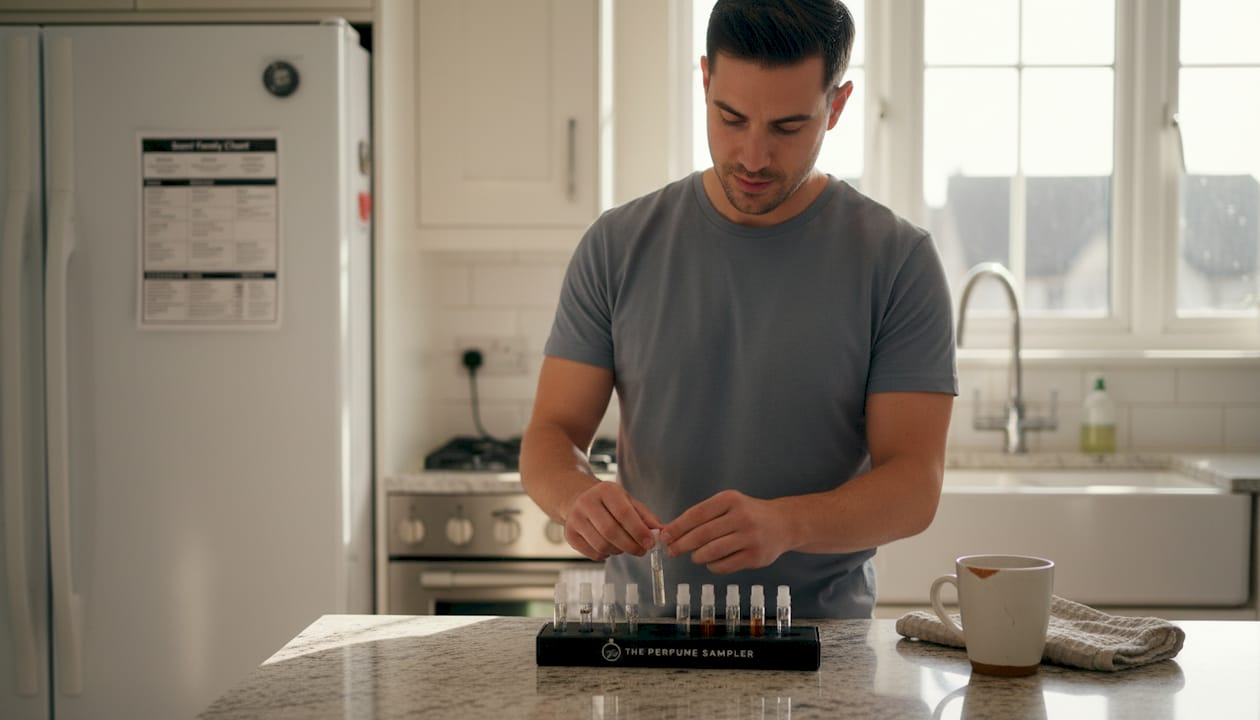
There is also real value in being open to unfamiliar families. Many people discover that niche oriental or gourmand blends suit them far better than the fresh scents they assumed they preferred. The risk, of course, is buying a full bottle before you know this.
Pro Tip: Rather than searching for a single signature scent, build a rotation of three to five fragrances that cover different moods, occasions, and seasons. This approach is more practical, more enjoyable, and reduces the pressure of a single defining choice.
Sampling luxury and niche scents affordably
Having identified scent families you want to explore, the next step is experiencing them without financial risk. This is where sampling and decants become essential tools.
A decant is a smaller portion of a fragrance transferred from the original bottle into a sample vial. A discovery set is a curated collection of samples, often themed by brand or scent family. Both allow you to test genuine, high-end fragrances at a fraction of the full bottle cost.
As the fragrance budget guide confirms, samples and decants in the 1ml to 10ml range typically cost between £4 and £40, making them the most affordable route into niche and designer fragrance. Blind buying a niche or oud-based scent at full bottle prices is a significant financial risk, particularly when those fragrances can retail at £200 or more.
Here is how to approach sampling safely and affordably:
- Start by identifying two or three scent families you are drawn to.
- Search for niche fragrance sampling tips and discover which specific perfumes fall within those families.
- Order sample sizes (2ml or 5ml) from a reputable decant retailer.
- Test each sample on your skin across multiple days, noting how it evolves.
- Narrow your shortlist to one or two favourites before considering a full bottle.
Learning about the types of fragrance samples available helps you choose the right format for your needs. For those interested in affordable luxury fragrance options, decants offer genuine access without the premium price tag.
| Format | Typical size | Approximate cost | Best use |
|---|---|---|---|
| Sample vial | 1 to 2ml | £3 to £8 | Initial testing |
| Decant | 5 to 10ml | £10 to £35 | Extended evaluation |
| Discovery set | 5 x 2ml to 10ml | £20 to £60 | Exploring a brand range |
| Full bottle | 50 to 100ml | £80 to £300+ | Confirmed favourites only |
Testing fragrances like a pro: Methods for accurate choices
Sampling makes sense, but a thoughtful testing method ensures you choose wisely. Even with access to samples, poor testing habits can lead to inaccurate impressions and ultimately the wrong purchase.
Follow these steps for a reliable fragrance evaluation:
- Choose a neutral environment. Avoid testing in spaces with strong competing smells such as kitchens or heavily scented shops.
- Apply to pulse points. Wrists, inner elbows, and the base of the neck give the most accurate projection and longevity reading.
- Do not rub. Rubbing the wrist together breaks down fragrance molecules and distorts the top notes.
- Test no more than three to four scents per session. Byrdie’s fragrance testing tips confirm that limiting sessions to 3 to 4 scents prevents olfactory fatigue, which makes everything smell similar after a point.
- Use coffee beans to reset. Sniffing coffee between fragrances clears your palate and restores your ability to distinguish scents accurately.
- Take notes at intervals. Check the fragrance at 15 minutes (top notes), one hour (heart notes), and three or more hours (base notes). How it dries down is often more important than its initial impression.
- Return to favourites the next day. Fresh impressions are more reliable than in-session assessments.
This approach is especially important when exploring niche perfumery, where fragrances are often more complex and unfamiliar.
“Blind buying for complex niche scents is one of the highest-risk moves a fragrance enthusiast can make. The base notes of a challenging oud or animalic blend may not reveal themselves for hours, by which point you have already formed a misleading impression.”
For those serious about finding your signature scent, building your knowledge through structured testing with decants is the most reliable path forward.
Why the luxury scent world is moving beyond signature fragrances
The idea of a single signature scent is a compelling one. It implies confidence, consistency, and a refined personal identity. But it is increasingly outdated for anyone who takes fragrance seriously.
Modern fragrance culture, particularly within niche perfumery, has shifted decisively. As Vogue Arabia notes, the trend is now towards 3 to 5 versatile scents selected for different moods, seasons, and occasions rather than one fixed identity. This is not indecision. It is a smarter, more expressive approach to personal fragrance.
A niche fragrance wardrobe does not need to be expensive to build. It just requires intentional, affordable exploration. Decants and samples make this accessible to anyone willing to invest a little time into testing before buying.
The most important shift is this: let go of the pressure to find “the one.” Fragrance is personal, seasonal, and contextual. A woody oriental that suits you perfectly in January may feel heavy and suffocating in July. Building a small, well-considered wardrobe is the modern answer, and sampling is the most practical way to build it confidently.
“The most sophisticated fragrance lovers we know own fewer full bottles but wear a broader and more interesting range. They test before they commit. Every time.”
Discover your luxury signature scent with ThePerfumeSampler
If you are ready to put these tips into action, ThePerfumeSampler makes it straightforward to start exploring luxury fragrances today.
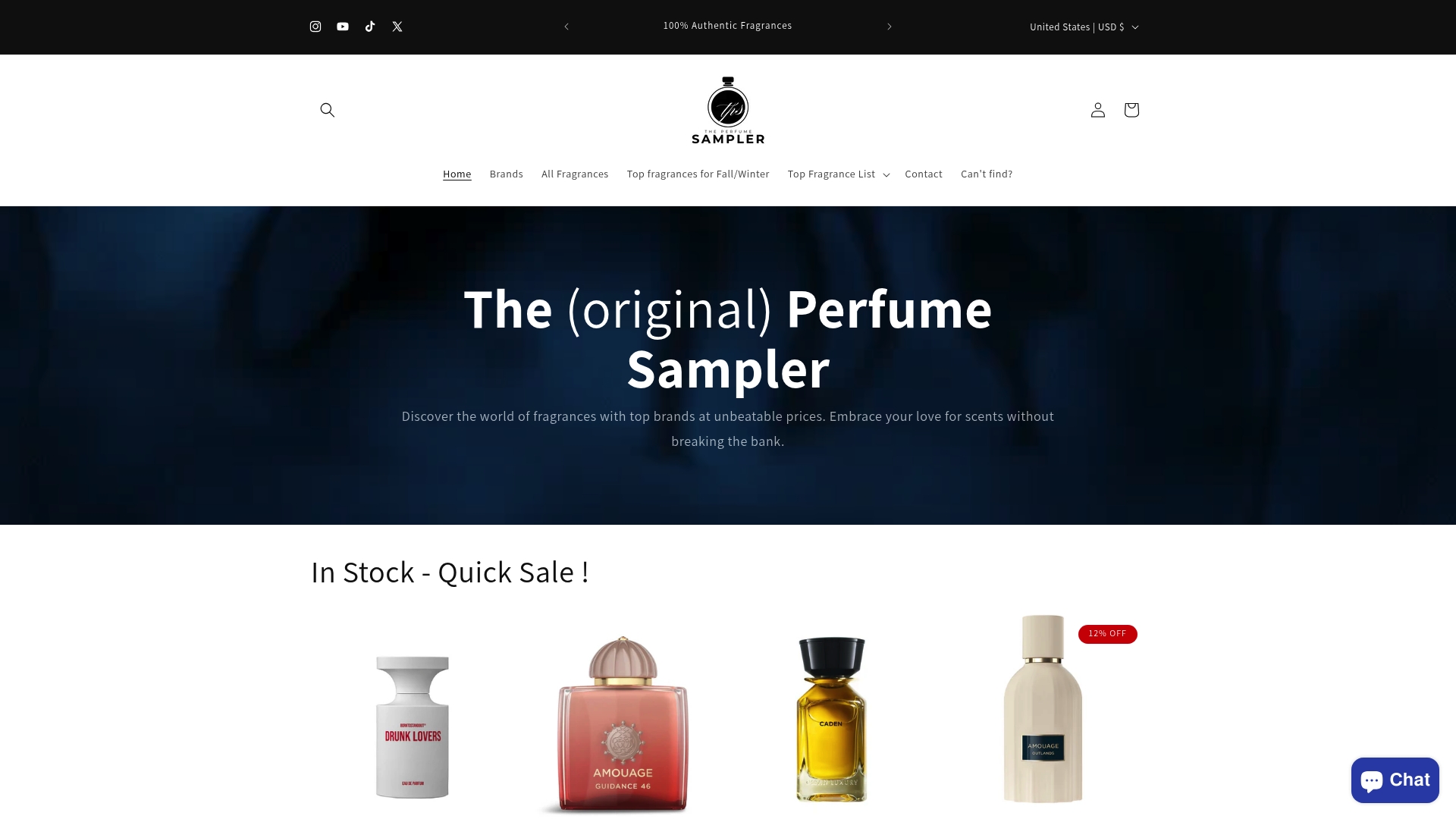
ThePerfumeSampler offers 100% authentic fragrance decants in 2ml, 3ml, 5ml, and 10ml sizes across a wide range of high-end designer and niche labels. Whether you want to test a single scent or explore an entire collection, it is a genuinely risk-free approach to luxury fragrance shopping. Read more about why decants are the smarter choice before committing to a full bottle. If you are looking for a starting point, the Boss Bottled Absolu decant is a strong example of affordable access to a premium fragrance experience.
Frequently asked questions
Is higher concentration always better when choosing a fragrance?
Higher concentration is not always better; lighter formats such as EDT can be more appropriate for warm weather, professional settings, or anyone who prefers a subtle sillage.
How do I avoid wasting money on expensive blind fragrance buys?
Use samples, decants, and discovery sets to test before committing to a full bottle, particularly for niche, oud-based, or otherwise bold fragrances.
What is the advantage of building a fragrance wardrobe instead of finding a signature scent?
A small, curated collection gives you versatility across moods and seasons, reflecting how modern fragrance enthusiasts actually approach scent selection.
What’s the best way to test fragrances for an accurate impression?
Apply to pulse points in a neutral environment, limit to 3 to 4 scents per session, and use coffee beans between samples to prevent olfactory fatigue.
Recommended
- Top luxury scent picks: accessible options for every budget – ThePerfumeSampler
- Defining luxury fragrances: what truly sets them apart? – ThePerfumeSampler
- Luxury perfume prices: cost factors and affordable sampling – ThePerfumeSampler
- How to review luxury fragrances: step-by-step guide – ThePerfumeSampler