
Build a luxury fragrance collection with confidence
TL;DR:
- Building a personal fragrance wardrobe requires sampling, patience, and intentional selection.
- Proper storage, rotation, and testing techniques prolong the lifespan and effectiveness of scents.
- Focus on curation and meaningful roles, not quantity, for a confident, authentic fragrance collection.
Buying a full bottle of an expensive perfume, only to find it smells nothing like you expected, is a frustration most fragrance lovers know well. Skin chemistry, environment, and personal taste all play a role in how a scent performs on you specifically. The good news is that building a curated, high-end fragrance wardrobe does not have to involve costly mistakes. With the right approach, a sample-first mindset, and a clear framework for selecting and organising scents, you can create a collection that is genuinely personal, versatile, and worth every penny.
Table of Contents
- What you need before you start: tools, approach and mindset
- Sampling strategy: how to explore luxury and niche scents wisely
- Defining your collection: fragrance roles and capsule curation
- Caring for your collection: storage, rotation and longevity
- Our perspective: curation over collecting — what most people get wrong
- Discover your signature scents with The Perfume Sampler
- Frequently asked questions
Key Takeaways
| Point | Details |
|---|---|
| Sample before you buy | Trying fragrances first avoids wasted money and regret. |
| Prioritise roles not quantity | Think of each scent as serving a purpose in your daily life for a balanced collection. |
| Store and rotate wisely | Proper care helps your fragrance investment last longer. |
| Layer for uniqueness | Combining compatible scents creates a signature that’s truly your own. |
What you need before you start: tools, approach and mindset
The single biggest mistake fragrance buyers make is impulse purchasing full bottles. A scent smells extraordinary in a shop or on someone else, and suddenly you are spending £150 on a bottle that sits unused after three wears. Skin chemistry alters how fragrances develop, and overbuying leads to waste. Understanding this is the first and most important mindset shift.
Think of your fragrance collection as a wardrobe, not a hoard. A wardrobe is curated, intentional, and functional. Every item earns its place. This reframe changes how you shop, how you test, and how you decide. Patience and curiosity replace impulse and hype.
Before you test a single scent, gather the right tools. A quiet, scent-free space for testing is essential. Olfactory fatigue sets in quickly, so limit yourself to three or four samples per session. A simple notebook or notes app for recording impressions is invaluable. You will forget more than you remember without it.
Knowing the affordable fragrance sample types available to you is equally important. Decants in 2ml, 3ml, 5ml, and 10ml sizes let you trial a scent properly before committing. This is the foundation of smart curation.
Essentials checklist for successful fragrance curation:
- Access to decants and samples across niche and designer categories
- A scent-free testing environment with clean skin
- A notebook or digital log for recording impressions and ratings
- Unscented moisturiser to apply before testing (improves projection)
- Patience to test each sample across multiple wears
- A clear sense of the occasions you are shopping for
| Tool | Purpose |
|---|---|
| Fragrance decants | Risk-free trialling before full-bottle purchase |
| Testing notebook | Track impressions, notes, and ratings |
| Scent-free space | Avoid olfactory interference during testing |
| Unscented moisturiser | Extend projection and longevity during trials |
Pro Tip: Reset your sense of smell between samples by sniffing the crook of your elbow or a handful of coffee beans. This clears olfactory fatigue quickly and keeps your assessments accurate.
Sampling strategy: how to explore luxury and niche scents wisely
With the right tools and mindset in place, it is time to start experiencing scents properly. The key word is wisely. Random sampling wastes time and money. A structured approach delivers far better results.
Sampling first avoids 80% of buyer remorse, according to fragrance experts. That statistic alone should guide every purchase decision you make.
Step-by-step sampling process:
- Research before you order. Read reviews, explore fragrance communities, and note the scent families that consistently appeal to you. Prioritise samples from houses you have not tried before.
- Order a range of decants. Include both niche and affordable fragrance sampling options. Variety reveals preferences you did not know you had.
- Test on skin, not paper. Paper strips give a rough idea of top notes only. Skin reveals the full development of a fragrance across several hours.
- Blind-test where possible. Remove the bottle, the brand name, and the price tag from your assessment. Hype and prestige bias your perception more than you realise.
- Wear each sample at least twice. First impressions are unreliable. A scent you dismiss on day one may become a favourite by day three once you understand how fragrances evolve across wear.
- Record your impressions immediately. Note the opening, the dry-down, longevity, and your emotional response. This data becomes invaluable when narrowing down final choices.
| Fragrance type | Price range | Sampling availability | Hype risk |
|---|---|---|---|
| Designer | Moderate to high | Widely available | Moderate |
| Niche | High | Decants recommended | Lower |
| Indie/artisan | Low to moderate | Often direct from brand | Low |
| Celebrity/commercial | Low | Easily found | High |
Knowing how to review luxury fragrances systematically turns casual sniffing into informed decision-making. Rate each sample on a simple 1 to 10 scale across categories: longevity, projection, uniqueness, and personal enjoyment.
Pro Tip: Wear a sample for a full day, including into the evening, before rating it. Fragrances behave very differently in heat, cold, and after physical activity. A single short test tells you very little.
Defining your collection: fragrance roles and capsule curation
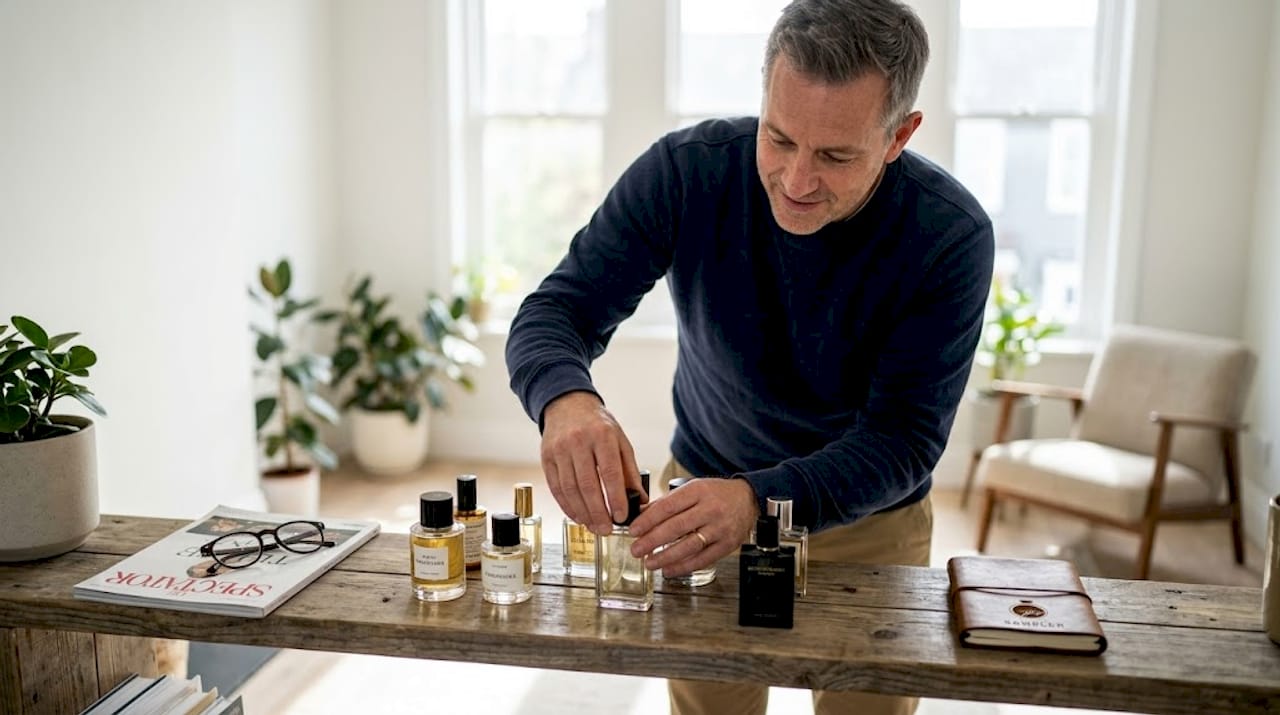
Once you have sampled widely, the next step is organising your selections with purpose. This is where the wardrobe analogy becomes most useful. Every fragrance in your collection should fill a specific role.
The 10-role framework prevents overlap and waste, ensuring a functional collection. You do not need ten bottles to start. A capsule of four to six carefully chosen scents covers most occasions effectively.
Roles to consider when building your collection:
- Daily wear: A light, inoffensive scent suitable for work or casual settings
- Evening or date night: Something richer, more sensual, and memorable
- Summer or warm weather: Fresh, citrus-forward, or aquatic profiles
- Autumn and winter: Warmer, woodier, or spicier compositions
- Formal occasions: A polished, classic scent with strong projection
- Signature scent: The fragrance most closely associated with your personal identity
Exploring fragrance family exploration helps you identify which note families naturally suit each role. Florals and citruses tend to suit daytime and warm weather. Orientals, woods, and musks anchor evening and cooler-season roles.
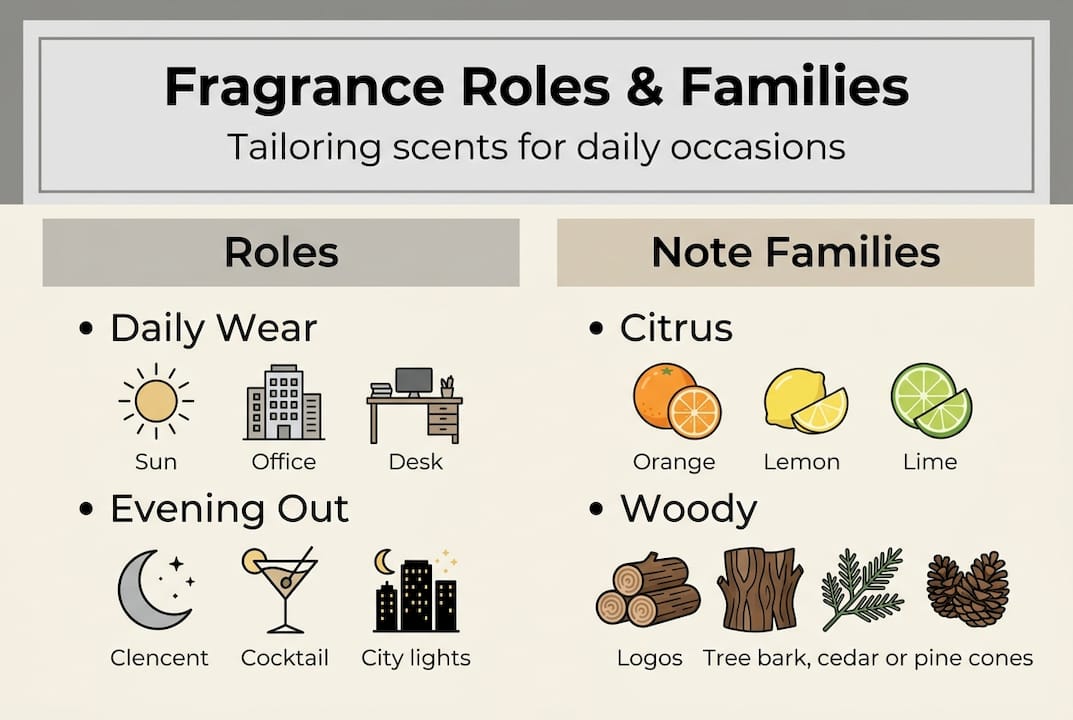
| Role | Suggested note families | Example occasions |
|---|---|---|
| Daily wear | Citrus, light musk, green | Office, errands, casual outings |
| Evening | Oud, amber, dark florals | Dinner, events, date nights |
| Summer | Aquatic, citrus, white florals | Holidays, outdoor events |
| Winter | Woody, spice, resinous | Formal dinners, cosy settings |
| Signature | Personal preference | Any occasion |
Avoid buying two scents that occupy the same role. If you already have a fresh citrus for daytime, a second one adds no value. Prioritise fragrance self-expression ideas that reflect your identity, not just what is trending.
Pro Tip: Layer a light base scent with a more distinctive one to create a unique signature. A simple woody musk beneath a floral, for example, adds depth without overwhelming. This technique stretches a smaller collection further.
Caring for your collection: storage, rotation and longevity
Building a great collection is only half the work. Protecting it matters just as much. Fragrances are sensitive to their environment, and poor storage can ruin even the finest bottle within months.
Heat, light, and air are the three primary enemies of fragrance integrity. UV exposure breaks down aromatic compounds. Fluctuating temperatures cause oxidation. Even leaving a cap off for extended periods introduces air that degrades the juice over time.
“Store your fragrances in a cool, dark place to prevent waste and scent degradation.” Proper storage is not optional. It is the difference between a collection that lasts years and one that disappoints within months.
Dos and don’ts for fragrance longevity:
- Do store bottles in a drawer, wardrobe, or dedicated fragrance box away from sunlight
- Do keep fragrances at a consistent room temperature, ideally below 20°C
- Do rotate your collection regularly so no bottle sits unused for too long
- Do keep caps and stoppers on when not in use
- Don’t store fragrances in the bathroom, where heat and humidity fluctuate daily
- Don’t display bottles on a sunny windowsill, regardless of how attractive it looks
- Don’t shake bottles unnecessarily, as this introduces air bubbles
- Don’t decant into plastic containers for long-term storage
Rotation is often overlooked. Using every fragrance in your collection regularly prevents any single bottle from sitting stagnant. It also keeps your appreciation of each scent fresh. Learning how to make fragrances last longer on skin complements good storage habits.
Understanding the factors affecting perfume performance gives you a clearer picture of why some scents fade faster than others, and how to apply them for maximum effect. Application points, skin hydration, and concentration all play a role.
Our perspective: curation over collecting — what most people get wrong
Most fragrance advice focuses on how many bottles to own or which houses to explore. That misses the point entirely. The real question is whether your collection genuinely reflects who you are and serves the life you actually live.
We have seen customers with forty bottles who reach for the same two every day. That is not a collection. That is a stockpile. Satisfaction comes from quality of choice, not quantity of options.
Layering complementary scents creates unique signatures that no single bottle can replicate. A small, thoughtful collection with layering potential outperforms a large, unfocused one every time.
Scent also has a strong emotional dimension that most buyers underestimate. The fragrances you reach for most are rarely the most expensive or the most hyped. They are the ones that feel like you. Build around that feeling. Use fragrance layering techniques to extend what you already love rather than constantly chasing something new. Curation, not accumulation, is the mark of a genuinely confident fragrance wardrobe.
Discover your signature scents with The Perfume Sampler
Ready to build your collection the right way? The Perfume Sampler offers a curated range of high-end niche and designer fragrance decants in 2ml, 3ml, 5ml, and 10ml sizes. You get to trial luxury scents properly before committing to a full bottle.
No more guesswork. No more expensive regrets. Every decant is 100% authentic, giving you genuine confidence in what you are testing. Whether you are building your first capsule collection or refining an existing wardrobe, sampling first is always the smarter choice. Find out why decants are the most practical and cost-effective way to explore luxury fragrance without the risk.
Frequently asked questions
How many fragrances should I have in my collection?
Experts suggest a capsule of 4 to 6 versatile scents or up to 10 if you prefer more variety. The 10-role framework ensures each bottle fills a unique purpose rather than duplicating another.
Should I buy full bottles or samples first?
Always sample first. Sampling first avoids 80% of buyer remorse associated with impulse full-bottle purchases, according to fragrance experts.
How can I prevent my fragrances from spoiling?
Store fragrances cool and dark and rotate your collection regularly. Avoid bathrooms, direct sunlight, and fluctuating temperatures to maintain freshness and prevent scent degradation.
What if a scent changes on my skin after a few hours?
This is entirely normal. Skin chemistry alters how fragrances develop over time, so always test each sample across multiple wears and several hours before making a final decision.
Recommended
- How to review luxury fragrances: step-by-step guide – ThePerfumeSampler
- Defining luxury fragrances: what truly sets them apart? – ThePerfumeSampler
- How to layer fragrances for a unique signature scent – ThePerfumeSampler
- Discover fragrance houses: Sampling designer scents affordably – ThePerfumeSampler