
What is a perfume reviewer? Insider role explained
TL;DR:
- Perfume reviews combine science, language, and cultural insights to guide consumer choices.
- Reviewers assess scent development, projection, longevity, versatility, and value systematically.
- Credible reviews help enthusiasts explore fragrances thoughtfully, balancing expert insight and personal sampling.
Perfume reviewing is far more than listing smells. It sits at the intersection of science, language, and cultural influence, shaping what millions of people choose to wear. Many assume critics simply sniff a bottle and jot down impressions, but the reality is considerably more structured. Reviewers analyse scent development, assess longevity, and frame their findings in language that helps buyers make confident choices. Whether you are a seasoned collector or just beginning to explore niche fragrances, understanding how reviewers work can sharpen your own nose and save you from costly mistakes.
Table of Contents
- Defining the perfume reviewer’s role
- How expert reviewers evaluate fragrances
- The evolution and impact of perfume reviewing
- Tips for discovering and understanding credible reviews
- Why every collector should embrace the art of the perfume reviewer
- Explore samples and expert guidance on your fragrance journey
- Frequently asked questions
Key Takeaways
| Point | Details |
|---|---|
| Expert perfume reviewers | They analyse, compare, and describe scents using both science and artistic language. |
| Structured scent evaluation | Reviewers use ratings, detailed prose, and direct comparisons to assess fragrances. |
| Influence on fragrance world | Reviews help guide trends, boost niche brands, and inform collectors before they buy. |
| Choosing reviews wisely | Trust reviewers with expertise, transparency, and clear, descriptive language. |
Defining the perfume reviewer’s role
A perfume reviewer is not simply a hobbyist with a large collection. They are documentarians of scent, building a body of work that helps readers navigate an overwhelming market. The global fragrance industry is valued at over £40 billion, and new releases arrive constantly. Without trusted voices to filter that noise, buyers are left guessing.
Reviewers blend two distinct skill sets. The first is technical. They understand olfactory science, recognising individual aromatic ingredients such as musks, aldehydes, and woods. They know how fragrance families are structured and can identify when a formula changes. The second skill set is artistic. They translate invisible, fleeting sensory experiences into prose that resonates with readers who have never smelled the fragrance in question.
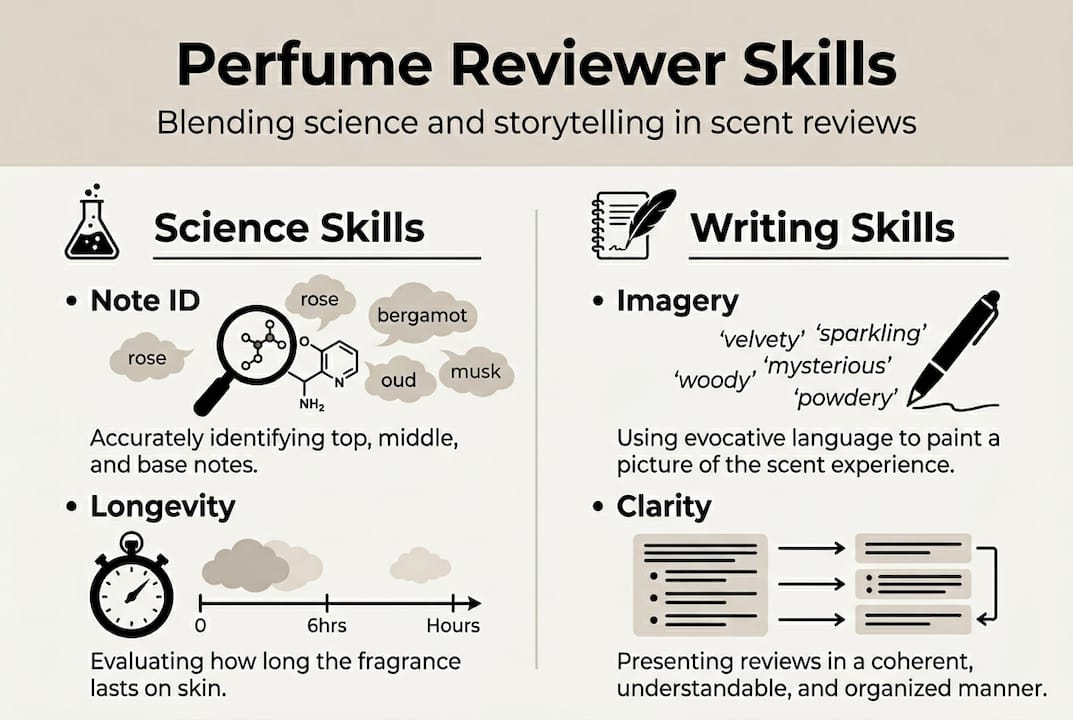
This combination gives reviewers genuine authority. Established critics like Luca Turin and Tania Sanchez blend science, passion, and critique, treating perfumery as an artform. Their landmark book Perfumes: The Guide rated thousands of fragrances using star scores and vivid descriptions, setting a benchmark that still influences the industry today.
Reviewers also drive trends. A single well-placed critique can elevate an obscure niche house to global recognition or expose a mass-market release as a watered-down reformulation. They give language to experiences that most wearers struggle to articulate, which is why their influence extends well beyond hobbyist circles. If you are looking for a scent for professionals, a reviewer’s structured take can be invaluable.
Today, reviewers operate across several formats:
- Print critics writing for specialist publications and books
- Bloggers offering long-form written analysis with personal context
- YouTubers providing visual, real-time reactions and comparisons
- Instagram creators delivering quick impressions and community engagement
Each format serves a different audience need, but the core function remains the same: to help you discover fragrance houses and make informed choices before spending significant money.
How expert reviewers evaluate fragrances
With the role defined, let’s look at how reviewers actually judge a perfume. The process is more systematic than most people expect.
Core evaluation criteria typically include:
- Scent development: How does the fragrance evolve from the first spray through dry-down?
- Projection: How far does the scent radiate from the skin?
- Longevity: How many hours does it last before fading?
- Versatility: Is it appropriate for multiple seasons, settings, or occasions?
- Value: Does the price reflect the quality and complexity of the formula?
Reviewers also place fragrances in context by comparing them across categories. A niche release priced at £250 will be judged differently from a designer flanker at £80 or a mass-market option at £30.
| Evaluation factor | What reviewers assess |
|---|---|
| Scent development | Top, heart, and base note progression |
| Projection | Sillage and radiance from the skin |
| Longevity | Hours of noticeable wear |
| Versatility | Season, occasion, and skin-type suitability |
| Value | Price relative to formula quality |
Reviewers use star ratings (1 to 5) and prose descriptions ranging from brief dismissals to in-depth paragraphs that explore the emotional and cultural resonance of a scent. Both formats serve different readers. Star ratings offer quick orientation, while narrative critique gives context that numbers alone cannot convey.
Narrative reviews often describe mood, memory, and inspiration. A reviewer might note that a fragrance evokes a specific season or setting, helping you picture whether it suits your lifestyle. This is where fragrance sample trials become essential. Reading a review is the starting point, not the end.
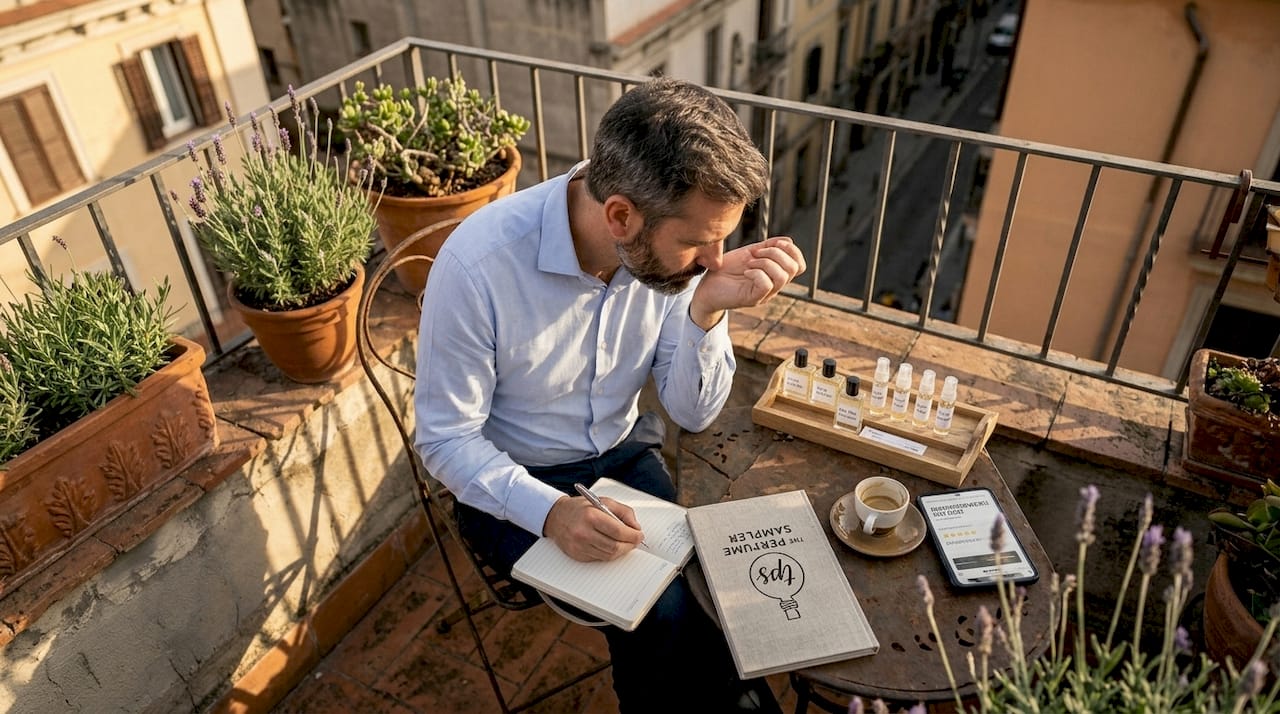
Pro Tip: Wear a sample in different environments, indoors, outdoors, at work, and in the evening, before forming your own verdict. Reviews describe general behaviour, but your skin chemistry and context will always add a personal dimension.
The evolution and impact of perfume reviewing
Now that you understand how reviews are formed, consider the broader power they carry. Perfume reviewing was once a niche pursuit confined to specialist publications. The internet changed everything.
Bloggers in the early 2000s began building communities around fragrance discussion, and critics like Turin and Sanchez brought academic rigour to what had been a largely marketing-driven conversation. Perfume critics treat perfumery as an art form, influencing thousands of scents and buyers worldwide. That shift had lasting consequences for how houses develop and market their products.
Here is how reviewer influence typically unfolds:
- A reviewer discovers and writes about an obscure or newly launched fragrance
- The review circulates within enthusiast communities
- Search interest and social discussion increase
- Retailers report higher enquiries and sales for that fragrance
- The house gains credibility and may expand distribution
- The fragrance enters mainstream awareness and shapes broader trends
This cycle happens repeatedly. Understanding perfume performance factors such as concentration, ingredients, and storage becomes easier once you read reviews that contextualise these variables.
“A single honest review, grounded in expertise and free from commercial pressure, can do more for a fragrance than an entire marketing campaign.”
The ripple effects extend to designer scent sampling behaviour. When a reviewer highlights a house’s signature style, readers seek out samples rather than committing to full bottles immediately. This is a sensible approach. Even gourmand fragrance history shows that public taste evolves in response to critical attention, not just advertising.
The Luca Turin reviews of the 2000s are a clear example. Fragrances he praised saw renewed interest years after their original release, while those he criticised faced lasting reputational challenges regardless of their commercial backing.
Tips for discovering and understanding credible reviews
With a clear picture of reviewer influence, let’s focus on how you can use reviews effectively in your own fragrance journey.
Identifying a credible reviewer comes down to three factors: expertise, transparency, and context. Expertise means the reviewer can name and explain ingredients, fragrance families, and house histories. Transparency means they disclose any commercial relationships or gifted samples. Context means they situate the fragrance within a broader landscape rather than reviewing it in isolation.
Red flags to watch for:
- Vague descriptions that could apply to any fragrance
- Exclusively positive reviews with no critical analysis
- Undisclosed brand partnerships or affiliate arrangements
- No reference to longevity, projection, or development
Credible critics blend science, art, and subjective experience. The best reviews acknowledge personal bias while still delivering useful, structured information. A reviewer who admits a scent is not to their taste but explains why it might suit others is more trustworthy than one who simply declares everything excellent.
When using a review to decide on a fragrance, ask yourself:
- Does the reviewer describe how the scent develops over time?
- Do they compare it to other fragrances I already know?
- Are they clear about projection and longevity?
- Do they acknowledge who this fragrance is best suited to?
- Have multiple reviewers reached similar conclusions?
Pro Tip: Start with trying scent samples of any fragrance that receives consistent praise from two or more credible sources. This reduces risk and builds your own reference library of scents.
Combining reviews with personal sampling is the most reliable method. Reviews give you a map. Sampling gives you the territory. Explore unique fragrance profiles through affordable decants before committing to a full bottle. If you want a starting point, look at top niche fragrances that have earned consistent critical attention.
Why every collector should embrace the art of the perfume reviewer
Here is something worth considering: the most knowledgeable collectors are not the ones who follow reviews blindly. They are the ones who use reviews as a starting point for their own exploration.
Reviews teach you the language of scent. They introduce terms like sillage, dry-down, and olfactory fatigue in context, which helps you articulate your own preferences more precisely. Once you can name what you like, you can seek it out deliberately rather than stumbling across it by chance.
True connoisseurship values expert guidance without being ruled by it. A reviewer’s opinion is one data point, not a verdict. The richest fragrance journeys happen when you let a review open a door, then walk through it yourself. Understanding scent projection insights becomes far more meaningful once you have experienced a range of fragrances and can compare them against a reviewer’s description.
Collecting is ultimately a conversation between reviewer, creator, and wearer. Each party brings something the others cannot. Reviewers bring structure and breadth. Creators bring intention and craft. You bring your skin, your memory, and your taste. That combination is what makes fragrance collecting genuinely rewarding.
Explore samples and expert guidance on your fragrance journey
If reading about perfume reviewers has sparked your curiosity, the logical next step is to start sampling. Reviews point you in the right direction, but wearing a fragrance on your own skin is the only way to know whether it truly suits you.
At ThePerfumeSampler, we offer decants in 2ml, 3ml, 5ml, and 10ml sizes, covering niche and designer fragrances that critics regularly highlight. If you want to understand why decants are the smartest way to explore reviewer-recommended scents, the answer is simple: low cost, low commitment, and maximum discovery. For those ready to commit, our full bottle options cover a curated range of high-end fragrances. All products are 100% authentic. Start exploring today.
Frequently asked questions
How do I know if a perfume review is trustworthy?
Check the reviewer’s credentials, the depth of their scent description, and whether they disclose any brand affiliations. Credible critics blend science, art, and subjective experience, so look for structured analysis rather than vague praise.
Why rely on a reviewer before buying a perfume?
Reviewers compare large numbers of fragrances, saving you time and money by identifying scents that are likely to match your preferences. Their industry-shaping influence means a trusted review carries real weight.
What makes Luca Turin or Tania Sanchez famous as reviewers?
They apply science-driven critique and vivid language to evaluate thousands of perfumes, setting standards that still guide buyers and houses today. Their work in Perfumes: The Guide remains a benchmark for serious fragrance criticism.
Should I trust YouTube and Instagram perfume reviews?
Many are credible, but prioritise reviewers who offer transparency, expertise, and detailed scent descriptions rather than brief reactions. Multiple reviewer formats serve different needs, so use a mix of sources for the most balanced perspective.
Recommended
- Perfume projection: How scent radiance shapes your experience – ThePerfumeSampler
- What affects perfume performance: fragrance guide – ThePerfumeSampler
- Explore unique fragrance profiles: niche and affordable sampling – ThePerfumeSampler
- Discover types of fragrance samples for affordable trials – ThePerfumeSampler
- Perfume Finder | Authentic Oud Perfume & Attar | Oudh Shop – Longlasting Scents