
What affects perfume performance: fragrance guide
You spray your favourite perfume each morning, yet by midday it has vanished whilst your colleague’s scent lingers all day. This frustrating mystery puzzles many fragrance enthusiasts. The truth is, perfume performance depends far less on the fragrance itself than on a complex interplay of environmental conditions, individual skin chemistry, and how you store and apply it. Understanding these external factors transforms how you choose, wear, and appreciate both niche and designer scents, helping you maximise every precious drop.
Table of Contents
- Key takeaways
- How environmental factors affect perfume performance
- The role of skin chemistry in perfume performance
- Storage and application: practical tips to enhance perfume longevity
- Comparing niche and designer perfume performance: what you should know
- Discover your perfect scent with the perfume sampler
- What affects perfume performance?
Key Takeaways
| Point | Details |
|---|---|
| Temperature impact on wear | High temperatures accelerate evaporation, causing top notes to burst and fade quickly and shortening overall wear. |
| Humidity extends longevity | Humid conditions slow evaporation, allowing fragrance molecules to linger and prolong longevity. |
| Air movement reduces projection | Wind and air flow carry scent molecules away from the skin, reducing projection and potentially requiring reapplication. |
| Storage and application | Proper storage and application techniques improve overall performance. |
How environmental factors affect perfume performance
The environment surrounding you when wearing perfume dramatically alters how it behaves. Temperature stands as the most influential factor because heat accelerates evaporation rates, causing top notes to burst intensely before fading faster than expected. On a warm summer day, your citrus opening might dazzle for ten minutes then disappear, whilst the same perfume in winter conditions develops slowly and lasts considerably longer.
Humidity creates the opposite effect by slowing molecular evaporation. Moisture in the air acts as a barrier, keeping fragrance molecules closer to your skin and extending their release over time. This explains why perfumes often perform better in coastal cities or during rainy weather compared to dry, arid climates where scents dissipate rapidly into the atmosphere.
Air movement presents another challenge for perfume longevity. Wind and circulation patterns literally carry scent molecules away from your body, reducing both projection and duration. Indoor environments with still air allow fragrances to create a stable scent bubble around you, whilst outdoor settings with breezes require stronger concentrations or more frequent reapplication to maintain presence.
The distinction between indoor and outdoor wearing conditions affects not just longevity but also how others perceive your scent. Enclosed spaces concentrate fragrance, making lighter applications appropriate, whereas open air disperses molecules quickly, sometimes requiring bolder choices or layering techniques to achieve noticeable projection.
- Higher temperatures intensify initial burst but shorten overall wear time significantly
- Humid conditions preserve fragrance molecules, extending longevity by several hours
- Wind disperses scent rapidly, reducing projection radius and requiring reapplication
- Indoor environments concentrate fragrance, making lighter doses more effective
Pro Tip: Test new fragrances in the environment where you will wear them most frequently. A perfume that performs beautifully in an air conditioned shop might behave completely differently in your actual daily conditions.
The role of skin chemistry in perfume performance
Your skin acts as a living canvas that chemically interacts with every perfume you apply, creating a unique scent signature that differs from anyone else wearing the same fragrance. Skin pH levels modify molecular release patterns, with alkaline skin often flattening delicate floral notes whilst acidic skin can amplify them, sometimes creating sharper or sweeter variations than the perfumer originally intended.

Natural skin oils play an equally crucial role in fragrance retention. Oily skin provides lipophilic binding sites where perfume molecules attach and release slowly over hours, explaining why some people enjoy all day longevity whilst others experience rapid fading. Dry skin lacks these anchoring points, causing fragrances to evaporate quickly without the molecular grip needed for extended wear.
Hydration levels influence how top and middle notes develop throughout the day. Well moisturised skin allows perfume to bloom gradually, revealing heart notes as designed, whilst dehydrated skin can skip developmental stages entirely, jumping from opening citrus straight to base woods without the intended floral bridge. This disruption in the fragrance pyramid disappoints enthusiasts expecting the marketed scent journey.
Diet, medication, and hormonal fluctuations subtly alter your skin chemistry daily, which explains why your signature scent might smell different from week to week. Spicy foods, certain vitamins, and hormonal changes during menstrual cycles all modify skin pH and oil production, creating variations in how fragrances interact with your personal chemistry.
- Alkaline skin flattens florals whilst acidic skin enhances and sometimes sharpens them
- Oily skin retains perfume molecules longer through lipophilic binding
- Hydration levels determine whether fragrances develop through all intended notes
- Diet and medication create subtle daily variations in skin chemistry
Pro Tip: Apply unscented moisturiser to pulse points before spraying perfume. This creates an oil rich base that dramatically improves longevity without altering the fragrance composition, particularly beneficial for those with naturally dry skin.
Storage and application: practical tips to enhance perfume longevity
How you store and apply perfume matters as much as the fragrance quality itself. Proper storage preserves compounds and prevents degradation that ruins even the finest perfumes. Light exposure, particularly ultraviolet rays, breaks down delicate molecules and causes discolouration, whilst heat accelerates oxidation that turns fresh scents rancid and unpleasant.
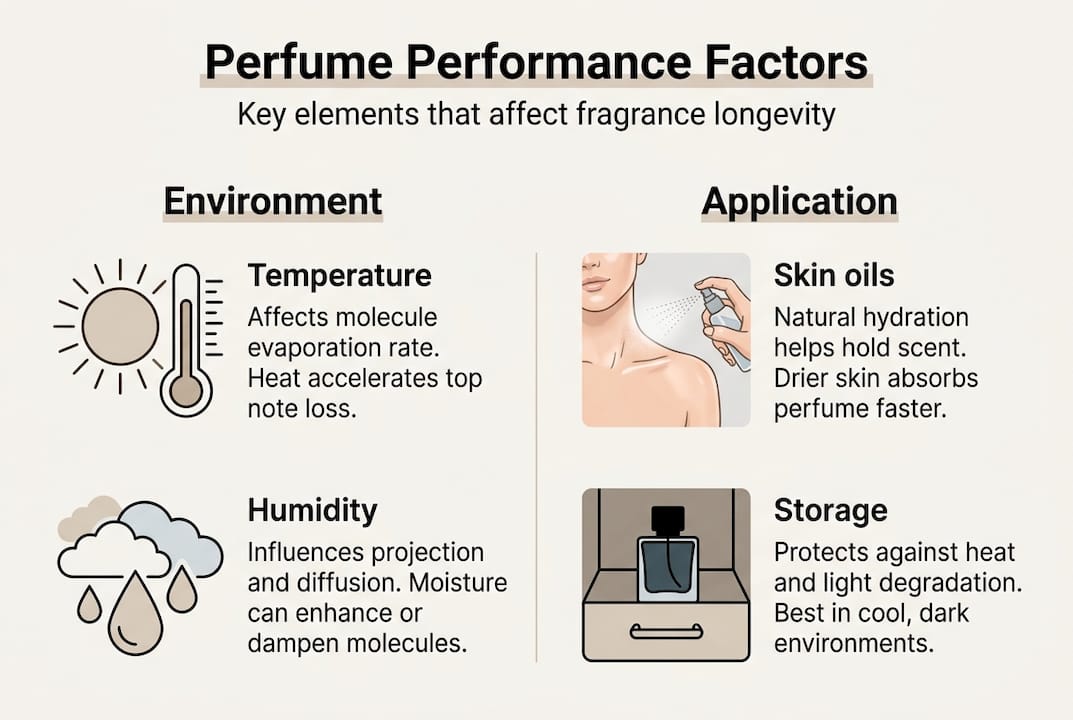
The bathroom, despite being convenient, ranks as the worst possible storage location. Temperature fluctuations from hot showers create condensation inside bottles, whilst humidity promotes bacterial growth and accelerates breakdown of natural ingredients. Instead, keep bottles in bedroom drawers, wardrobes, or dedicated boxes away from windows and heating sources.
Application technique dramatically affects performance, yet many enthusiasts unknowingly sabotage their fragrances through common mistakes. Rubbing wrists together after spraying generates friction heat that breaks molecular bonds, destroying the carefully constructed fragrance pyramid before it can develop properly. This habit, though widespread, literally crushes top notes and distorts the intended scent journey.
Pulse points offer the best application sites because body heat gently warms perfume, encouraging natural diffusion without the destructive effects of rubbing. Wrists, neck, behind ears, and inner elbows all provide ideal warmth for fragrance development, whilst spraying on clothing creates longer lasting but less dynamic scent because fabric lacks the chemical interaction that skin provides.
- Store bottles in cool, dark locations with stable temperatures between 15-20°C
- Keep perfumes in original boxes to provide additional light protection
- Spray pulse points from 15-20 centimetres distance for even distribution
- Allow fragrance to dry naturally without rubbing or touching application sites
- Apply to moisturised skin for improved molecular adhesion and longevity
- Avoid storing in bathrooms due to humidity and temperature fluctuations
Pro Tip: Spray perfume on your hairbrush rather than directly onto hair. This distributes fragrance evenly whilst avoiding alcohol damage to hair fibres, creating a subtle scent trail that lasts hours longer than skin application alone.
Comparing niche and designer perfume performance: what you should know
The distinction between niche and designer fragrances extends beyond marketing to fundamental differences in formulation that affect performance. Niche perfumes typically contain higher concentrations of fragrance oils, often ranging from 20-30% compared to designer eau de toilettes at 5-15%, which directly translates to longer lasting power and stronger projection throughout the day.
Ingredient quality varies significantly between categories, with niche houses frequently sourcing rare natural materials and using less dilution, whilst designer brands optimise for mass production and cost efficiency. This difference shows most clearly in base notes, where niche fragrances often feature complex, long lasting foundations built from expensive resins and woods that linger for eight hours or more.
Designer perfumes prioritise immediate appeal and accessibility, favouring bright, fresh openings that attract customers during brief shop testing. This commercial focus often means lighter, more volatile compositions that smell wonderful initially but fade faster than niche alternatives designed for fragrance connoisseurs who value longevity and complexity over instant gratification.
| Aspect | Niche perfumes | Designer perfumes |
|---|---|---|
| Concentration | 20-30% fragrance oils | 5-15% fragrance oils |
| Base note longevity | 8-12 hours typical | 4-6 hours typical |
| Ingredient sourcing | Rare naturals, minimal synthetics | Cost optimised blends |
| Development complexity | Multi-layered, evolving dry down | Linear, accessible progression |
| Price per millilitre | £3-8 typically | £0.80-2.50 typically |
Price correlates with performance more reliably within categories than across them. An expensive designer fragrance might still fade faster than a moderately priced niche scent due to formulation philosophy rather than ingredient cost. Understanding these differences helps enthusiasts set realistic expectations and choose fragrances matching their performance priorities.
- Niche formulations emphasise longevity through higher concentrations and quality bases
- Designer scents optimise for mass appeal with accessible, lighter compositions
- Ingredient sourcing affects complexity and lasting power more than brand prestige
- Price indicates craftsmanship but does not guarantee superior performance universally
Discover your perfect scent with the perfume sampler
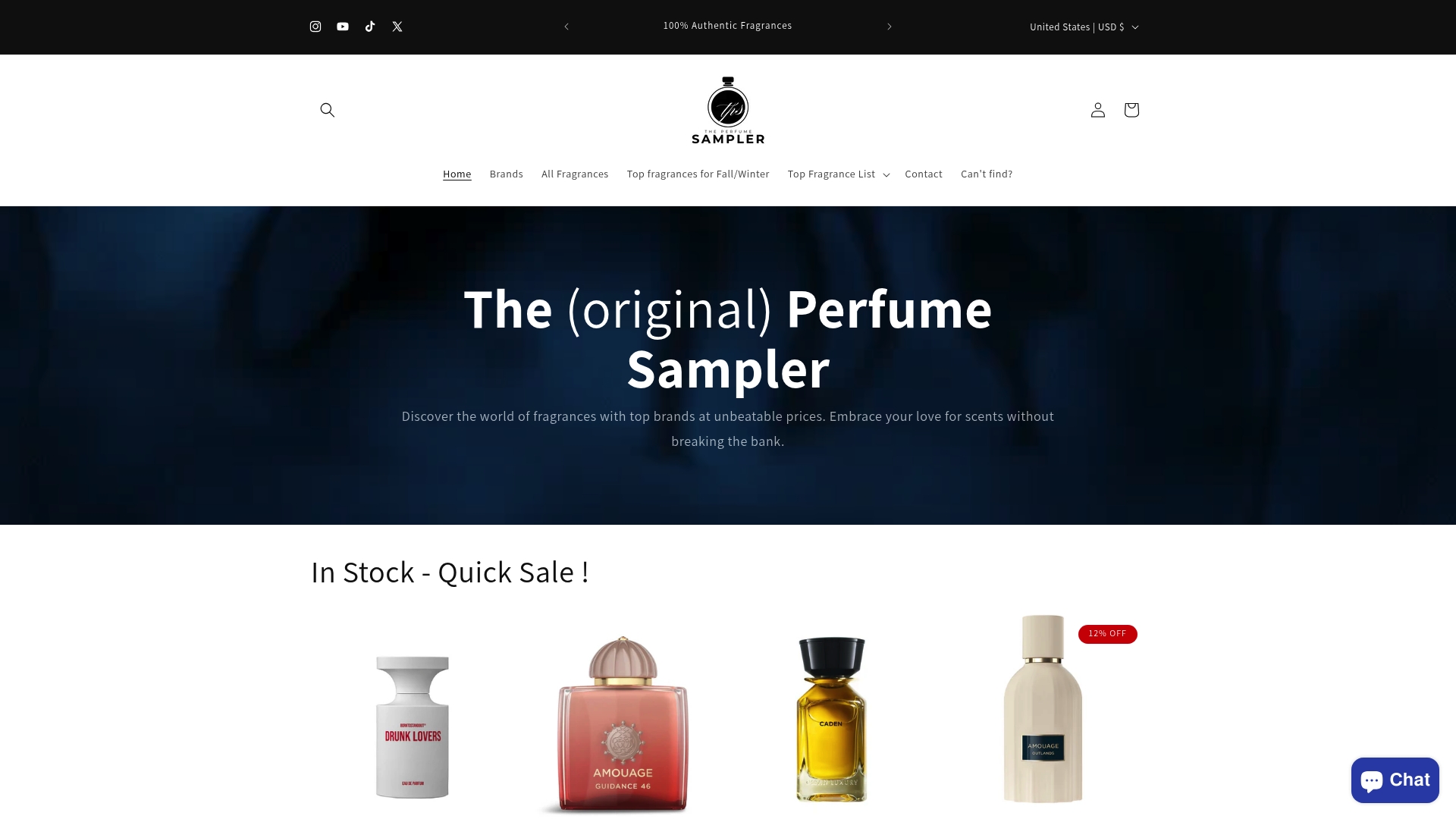
Now that you understand the external factors influencing perfume performance, the logical next step involves testing fragrances on your own skin in your actual environment. The Perfume Sampler offers curated selections of high end niche and designer fragrances in affordable 2ml, 3ml, 5ml, and 10ml sizes, perfect for discovering how different perfumes interact with your unique chemistry without the commitment of full bottle purchases.
Exploring multiple fragrances through samples lets you evaluate performance across various conditions, identifying which formulations work best with your skin type, lifestyle, and climate. This practical approach transforms theoretical knowledge into personal expertise, helping you build a fragrance wardrobe of proven performers rather than disappointing impulse purchases.
What affects perfume performance?
Why does my perfume smell different on me?
Your unique skin chemistry, including pH levels and natural oil production, chemically interacts with fragrance molecules to create variations in scent development. What smells sweet and powdery on your friend might turn sharp or woody on you due to these individual biochemical differences.
How can I make my perfume last longer throughout the day?
Apply fragrance to well moisturised pulse points without rubbing, and store bottles away from heat and light to preserve compound integrity. Layering with matching body products creates additional scent anchoring points that extend longevity significantly.
Do weather conditions really change how perfume smells?
Absolutely. Temperature affects evaporation rates whilst humidity influences molecular dispersion, meaning the same perfume behaves completely differently in summer heat versus winter cold. These environmental factors often matter more than the fragrance formula itself.
Is it true that perfume smells differently on clothes vs skin?
Yes, because fabric lacks the chemical interaction and heat that skin provides. Clothes hold fragrance longer but without the dynamic development and personal variation that makes perfume interesting, resulting in flatter, more linear scent profiles.
What storage mistakes shorten perfume lifespan?
Keeping bottles in bathrooms exposes them to humidity and temperature fluctuations that degrade compounds rapidly. Direct sunlight and heat sources also accelerate oxidation, turning fresh fragrances rancid within months rather than years.