

Explore fragrance families: find your signature scent affordably
TL;DR:
- Fragrance families help you navigate scents by grouping dominant characteristics for better choices.
- Sampling small decants allows affordable exploration across families and personalizes your scent journey.
- Most favorite fragrances blend multiple families, so trust your nose over labels to find your signature scent.
Choosing a fragrance can feel overwhelming. Walk into any department store and you face hundreds of bottles, each promising something different. Without a framework, it is easy to waste money on scents that simply do not suit you. Understanding fragrance families changes that entirely. It gives you a practical map for navigating the world of perfumery, helping you identify what you actually enjoy before spending on a full bottle. This article unpacks the main fragrance families, shows you how to compare them, and explains how affordable sampling lets you explore widely and confidently find your signature scent.
Table of Contents
- How fragrance families are classified
- Exploring the main fragrance families
- Modern twists: Gourmand, musky and new micro-families
- Comparing fragrance families: Styles, mood and suitability
- How to discover your signature family affordably
- Why your nose, not labels, should guide your journey
- Try a world of scent families without the commitment
- Frequently asked questions
Key Takeaways
| Point | Details |
|---|---|
| Understand fragrance families | Knowing the basics simplifies finding and comparing perfumes that suit your taste. |
| Try before you buy | Sampling decants or fragrance packs helps discover favourites affordably and with less risk. |
| Explore new trends | Modern micro-families like Gourmand and Musky add even more options to traditional scent groups. |
| Mix logic with intuition | Your personal scent journey may cross families—trust your nose and experiment with confidence. |
How fragrance families are classified
Fragrance families are groupings that organise perfumes by their dominant scent characteristics. They exist to help both industry professionals and everyday fragrance lovers make sense of the enormous variety on the market. The system most widely used today is the Michael Edwards Fragrance Wheel, which organises perfumes into 4 main families and 14 sub-families: Fresh, Floral, Amber, and Woody.
Michael Edwards, a British fragrance consultant, developed this classification in the early 1990s. It has since become the standard reference tool for perfumers, retailers, and collectors alike. The wheel is arranged so that neighbouring families share similar characteristics, making it easier to understand why certain scents feel related or complementary.
Here is a quick overview of the four main groups:
- Fresh: Crisp, clean, and energising
- Floral: Soft to lush, centred on flower notes
- Amber: Warm, rich, and often sweet or spicy
- Woody: Earthy, deep, and long-lasting
Over 90% of commercially available perfumes sit within these four families and their sub-categories. That single fact shows just how useful this framework is. Once you understand it, you stop guessing and start choosing with purpose.
For fragrance lovers, knowing your preferred family prevents costly mistakes. Instead of buying a full bottle based on a brief sniff in a shop, you can explore fragrance sampling options to test different families at home, on your skin, and across different occasions. That is where real confidence in your choices begins.
Exploring the main fragrance families
Now that you understand how families are defined, let us dive into the core groups themselves.
The Michael Edwards Wheel sub-families break down as follows: Fresh includes Citrus, Green, Water, and Aromatic Fougère; Floral covers Floral, Soft Floral, and Floral Oriental; Amber spans Soft Amber, Oriental, and Woody Oriental; Woody encompasses Woods, Mossy Woods/Chypre, Dry Woods, and Leather.
| Family | Key traits | Classic notes |
|---|---|---|
| Fresh | Zesty, clean, light | Bergamot, lemon, sea breeze |
| Floral | Soft to rich, feminine or unisex | Rose, jasmine, peony |
| Amber | Warm, exotic, sweet or spicy | Vanilla, musk, incense |
| Woody | Earthy, deep, often smoky | Sandalwood, cedar, vetiver |
Fresh scents are typically the most versatile for everyday wear. Citrus sub-families are particularly bright and uplifting. Fougère scents, a classic masculine sub-family, blend lavender with oakmoss for a clean, barbershop quality.
Floral is the largest family by volume. It ranges from a single-note soliflore (one flower, such as rose or violet) to complex bouquets. Soft Florals add powdery or musky undertones, while Floral Orientals lean warmer and more sensual.
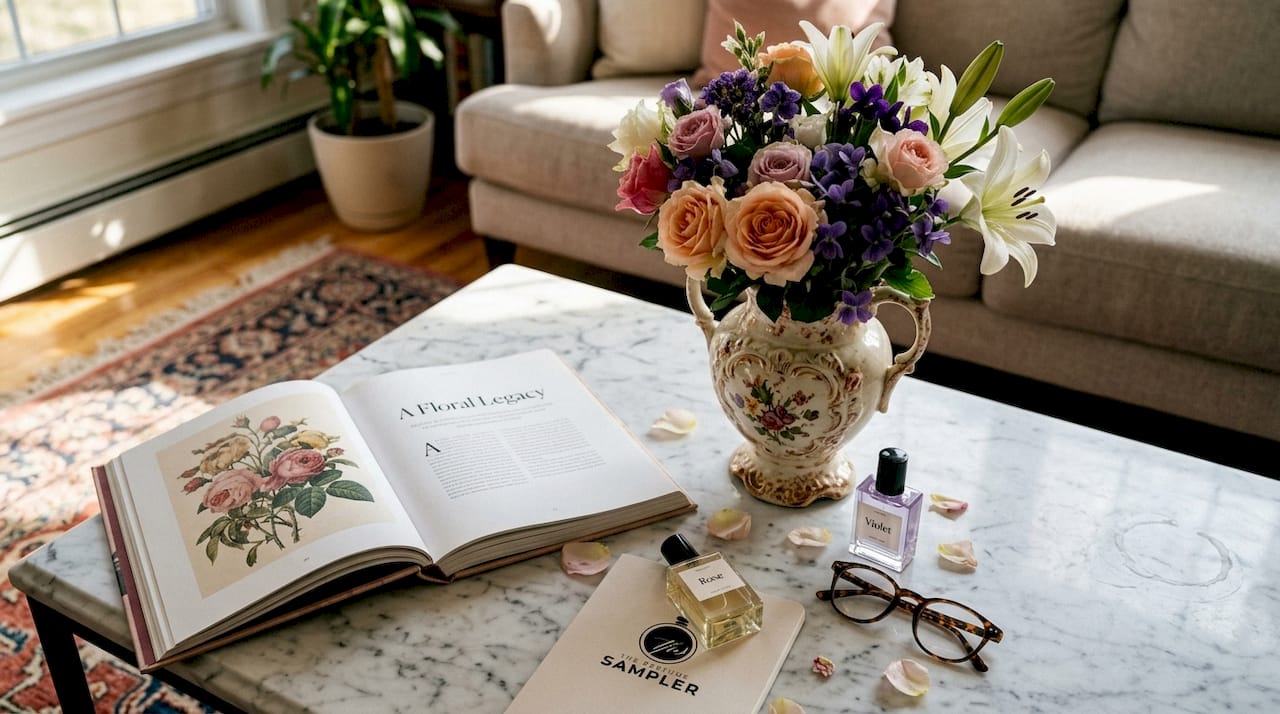
Amber (historically called Oriental) scents are bold and long-lasting. They suit cooler weather and evening wear particularly well. Notes like vanilla, benzoin, and labdanum create that signature warmth.
Woody scents anchor many modern unisex and niche fragrances. Dry Woods sub-families often feature smoky or arid qualities, while Mossy Woods/Chypre scents are earthy and complex.
Pro Tip: Sampling across sub-families rather than sticking to one main group can reveal preferences you never expected. You might love Citrus Fresh scents but find yourself equally drawn to Dry Woods. Try affordable niche samples to cover more ground without the cost of full bottles. You can also sample designer scents to see how established houses interpret each family.
Modern twists: Gourmand, musky and new micro-families
The four main families are not the whole story. New trends bring extra dimension to your choices.
The Gourmand family is perhaps the most significant modern addition. These scents are built around edible, dessert-like notes: vanilla, caramel, chocolate, praline, and coffee. They feel indulgent and comforting rather than traditionally perfume-like. Gourmand scents often sit under Amber or Woody Oriental on the classic wheel, but many perfumers now treat them as a standalone category.
Other trending micro-families include:
- Musky: Soft, skin-like, and intimate
- Spicy: Bold, warming notes like pepper, cardamom, and clove
- Airy/Transparent: Minimalist, barely-there scents that mimic clean skin
- Aquatic: Oceanic and fresh, often classified under Fresh Water
“The core four or seven fragrance families still dominate the industry, but modern micro-families and niche trends are growing rapidly, giving today’s fragrance lovers more nuanced options than ever before.”
These newer categories matter because they reflect how perfumery has evolved. Niche houses in particular push beyond classic classifications, creating scents that genuinely resist easy labelling. A fragrance might open with citrus freshness, settle into a floral heart, and dry down to a gourmand base. That complexity is part of the appeal.
For those curious about gourmand scent tips, understanding the family’s history helps you appreciate why these scents work so well in cooler months. Staying informed about fragrance trends also helps you spot emerging styles before they become mainstream.
Comparing fragrance families: Styles, mood and suitability
With so many options, it helps to compare at a glance which types suit your mood and setting.
Each family carries a distinct personality. Fresh scents are widely considered the most office-friendly and season-neutral, though they particularly shine in spring and summer. Floral scents range from daytime-appropriate Soft Florals to evening-ready Floral Orientals. Amber scents project well and last longer on skin, making them ideal for evenings or colder months. Woody scents are often the most long-lasting of all, with excellent projection and a grounding quality that suits professional and social settings alike.
| Family | Mood | Best occasion | Longevity |
|---|---|---|---|
| Fresh | Energising, clean | Daytime, office, summer | Moderate |
| Floral | Romantic, soft | All-day, spring, dates | Moderate to high |
| Amber | Warm, sensual | Evening, autumn, winter | High |
| Woody | Grounded, sophisticated | Evening, professional | Very high |
Here are four practical steps to match a fragrance family to your lifestyle:
- Consider your most common setting (office, outdoors, evenings out).
- Think about the season you wear fragrance most.
- Identify whether you prefer light, skin-close scents or bold, projecting ones.
- Test at least one scent from each family before deciding on a preference.
Pro Tip: Layering scents from neighbouring families on the wheel, such as a Woody base with a Fresh top, can create a personal signature that feels uniquely yours. Explore layering fragrance tips for practical guidance. If you work in a professional environment, top professional scents can help you choose appropriately for the office.
The sub-family structure within each main group also affects mood and suitability. Leather, for example, sits within Woody but carries a very different personality to Cedar or Sandalwood.
How to discover your signature family affordably
Once you are ready to put your knowledge into action, start exploring without breaking the bank.
The most practical approach is to use decants and sample sizes. Buying a 2ml, 3ml, 5ml, or 10ml decant of a fragrance lets you wear it properly across different days and occasions before committing to a full bottle. This is far more reliable than a single spray on your wrist in a shop, where you rarely experience the full dry-down.
Here is how to build a smart sampling strategy by fragrance family:
- Choose one or two scents from each of the four main families.
- Include at least one sub-family variant per group (e.g., Citrus Fresh and Fougère Fresh).
- Wear each sample for a full day before forming a judgement.
- Note the opening, heart, and base notes separately.
- Revisit samples in different seasons or temperatures.
Cost is a genuine concern for many fragrance lovers. A full bottle of a niche or designer fragrance can cost anywhere from £80 to several hundred pounds. Sampling first removes the financial risk entirely. You only invest in the full bottle once you are certain it is right for you.
Pro Tip: Keep a simple nose diary. After wearing each sample, jot down three words that describe your reaction: one for the opening, one for the dry-down, and one for how it made you feel. Over time, patterns emerge that point clearly to your preferred family. This habit also helps you articulate what you want when exploring affordable scent trial types.
Why your nose, not labels, should guide your journey
Having explored the logic and structure, here is a more personal perspective worth considering.
Fragrance families are genuinely useful. They provide structure and help you avoid obvious mismatches. But they can also create unnecessary limitations. Many people decide early on that they are a “Fresh person” or a “Floral person” and never venture further. That is a missed opportunity.
In practice, most people’s favourite fragrances cross more than one family. A beloved scent might open with Green Fresh notes, bloom into a Soft Floral heart, and settle into a Woody base. No single label captures it. If you had dismissed Woody scents outright, you might never have discovered it.
The real value of fragrance families is as a starting point, not a destination. Use the wheel to orient yourself, then follow your nose wherever it leads. Unexpected scents often become the most treasured. Exploring luxury fragrance insight can also shift your understanding of what quality and character really mean in a scent. Trust your own reactions over any category label.
Try a world of scent families without the commitment
Ready to start your exploration? The Perfume Sampler makes it straightforward.

At The Perfume Sampler, you can order decants in 2ml, 3ml, 5ml, and 10ml sizes across a wide range of niche and designer fragrances. This means you can systematically work through each fragrance family without the risk of an expensive full-bottle mistake. The benefits of decants go beyond cost savings: you get to experience how a scent performs on your skin across real-world conditions. If you are looking for a starting point, consider trying Boss Bottled Absolu, a rich Woody Amber that demonstrates exactly how warm and long-lasting that family can be. All products are 100% authentic.
Frequently asked questions
What are the four main fragrance families?
The four main families are Fresh, Floral, Amber (formerly Oriental), and Woody, each with distinct sub-families that cover the full range of modern perfumery.
What is a Gourmand fragrance?
Gourmand fragrances feature edible, sweet notes such as vanilla, caramel, or chocolate and typically sit within the Amber or Woody Oriental family, though many perfumers now treat them as a category in their own right.
How can I sample different fragrance families without buying full bottles?
You can use decants and samplers in small sizes such as 2ml or 5ml, which let you test a wide range of families and sub-families before investing in a full bottle.
What is the Michael Edwards Fragrance Wheel?
The Michael Edwards Fragrance Wheel is the standard industry tool that organises fragrances into four main families and 14 sub-families based on their dominant scent characteristics.
Can my signature scent belong to more than one family?
Yes. Many popular fragrances blend elements from two or more families, so your signature scent may sit at the crossover between Floral and Amber, or Fresh and Woody, rather than fitting neatly into a single category.
Recommended
- Discover fragrance houses: Sampling designer scents affordably – ThePerfumeSampler
- Explore unique fragrance profiles: niche and affordable sampling – ThePerfumeSampler
- Discover types of fragrance samples for affordable trials – ThePerfumeSampler
- Limited edition fragrances: your guide to affordable exploration – ThePerfumeSampler
- Budget parfum kiezen stappenplan: vind jouw perfecte geur – Pure Parfum