
Perfumery art: Discover creativity in every scent
TL;DR:
- Perfumery is recognized as an art form, utilizing scent to evoke mood, memory, and narrative beyond mere pleasantness.
- Understanding accords, performance elements, and the creative construction of fragrances allows enthusiasts to appreciate artistic qualities regardless of price.
Perfumery is not simply about mixing pleasant smells. It is a recognised art form, placed alongside painting, sculpture, and music in cultural and academic discussions, yet it is judged entirely by the nose. Most fragrance lovers approach a new scent by asking whether they like it, rarely pausing to consider the creative intelligence behind its construction. This article changes that perspective. We will clarify what makes perfumery a genuine artistic discipline, explain the technical and creative benchmarks that separate artistic scents from mass-market blends, and give you practical steps to explore and appreciate this art form without committing to expensive full bottles.
Table of Contents
- Defining perfumery art: The world of olfactory creativity
- Crafting artistry: What makes a perfume an artistic creation?
- Understanding perfumery through comparison: Niche, designer and artistic styles
- Experiencing perfumery art: Practical steps for discovery
- Why the art of perfumery is misunderstood—and what truly matters
- Discover artistic perfumery—affordably and confidently
- Frequently asked questions
Key Takeaways
| Point | Details |
|---|---|
| Perfumery as art | Perfumery goes beyond scent; it is an expressive artistic discipline using smell as its primary medium. |
| Artistry benchmarks | Creative composition, scent evolution, and emotional impact distinguish artistic fragrances from mass-market options. |
| Accessible discovery | Sampling decants allows you to experience perfumery art and luxury scents without high commitment. |
| Informed appreciation | Discovering and comparing perfumes mindfully helps build confidence in enjoying and collecting artistic scents. |
Defining perfumery art: The world of olfactory creativity
Perfumery sits within a broader category known as olfactory art, a recognised discipline that uses scent as a primary creative medium. Just as a painter selects pigments to communicate emotion or a composer arranges notes to build tension and release, a perfumer selects and combines aromatic materials to evoke mood, memory, and narrative. The result is not a product designed merely to smell pleasant. It is a composed, intentional artistic statement.
“Perfumery is included as an application of olfactory art, using scent as a creative medium.”
This distinction matters greatly. When you wear an artistically composed fragrance, you are experiencing a creative work, not just a scented liquid. The perfumer has made deliberate choices about every ingredient, every structural layer, and every emotional impression the scent is intended to leave.
The difference between functional fragrance and artistic perfumery becomes clear when you compare the two directly:
- Functional fragrance: Used in soaps, cleaning products, and air fresheners. The goal is a clean or pleasant smell with no deeper creative intent.
- Artistic perfumery: Constructed to communicate an idea, evoke an emotion, or tell a story. The perfumer functions as an author or composer.
- Commercial designer fragrance: Often sits between the two, prioritising broad market appeal over individual artistic vision, though exceptions exist.
- Niche and independent perfumery: Typically the purest expression of artistic intent, where the perfumer has full creative freedom.
Understanding this framework allows you to engage with fragrance differently. You stop asking only “do I like this?” and start asking “what is this saying, and how is it saying it?”
Crafting artistry: What makes a perfume an artistic creation?
With a sense of perfumery’s artistic roots, let us see how creativity unfolds in the actual construction of a perfume. The building blocks are accords, blends of individual materials that together create a unified scent impression. A skilled perfumer treats these like a painter treats colour. Two ingredients combined can produce something entirely new, something neither ingredient suggests on its own.
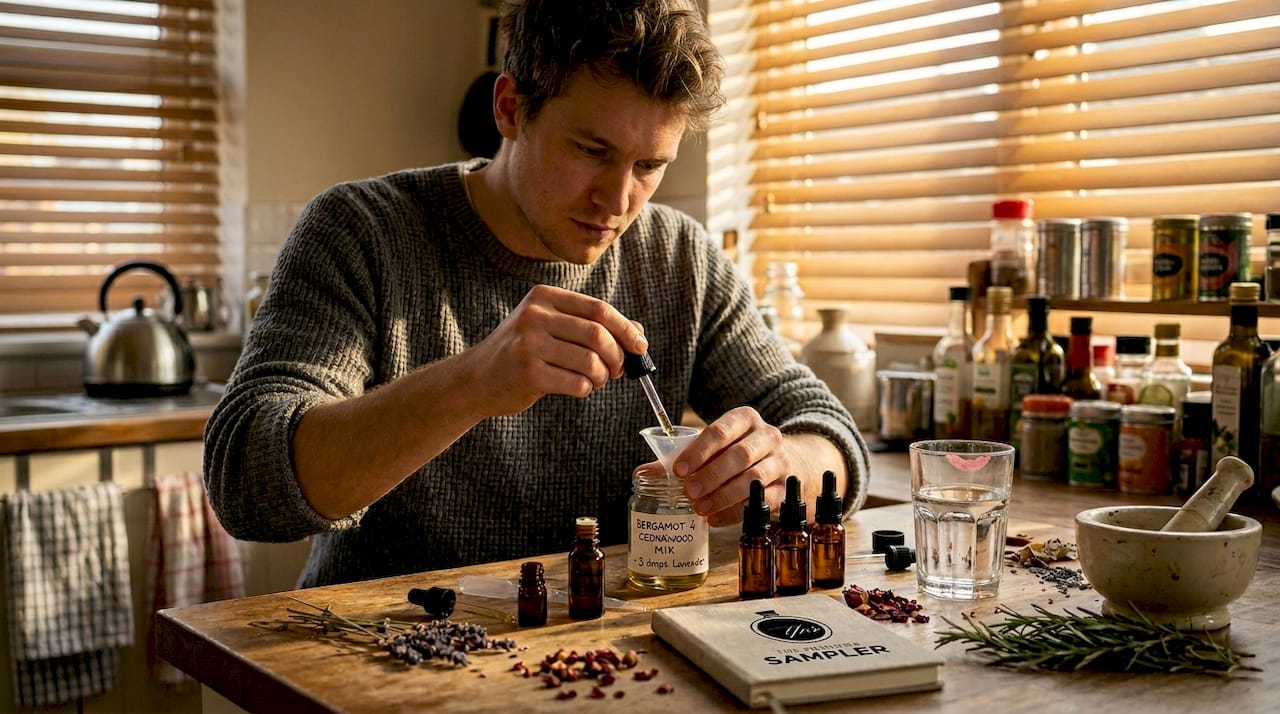
The performance dimensions of a fragrance reveal the depth of its craftsmanship. These are the elements that set luxury fragrances apart from ordinary scents. Understanding them helps you evaluate a fragrance with real critical awareness.
| Performance element | What it means | Why it matters artistically |
|---|---|---|
| Longevity | How long the scent remains detectable on skin | Signals quality of fixatives and structural balance |
| Sillage | The scented trail left in your wake | Reflects projection design and diffusion of materials |
| Scent evolution | How the fragrance changes from first spray to dry-down | Shows compositional depth across top, heart, and base notes |
| Accord balance | How ingredients blend without clashing | Indicates the skill of the perfumer’s creative architecture |
Research on luxury perfume appreciation confirms that the benchmarks for judging artistic quality come from observing these performance tradeoffs, not simply from identifying prestigious ingredients. A fragrance built from modest materials but composed with precision can outperform an expensive blend assembled without creative coherence.
This is a critical insight for fragrance enthusiasts. The cost of ingredients is not the measure of artistry. Affordable luxury scent factors include construction, balance, and the emotional journey a fragrance takes you on from first application through to the final dry-down hours later.
Pro Tip: Pay attention to sillage and projection the next time you test a fragrance. A well-designed sillage is not just strong or faint. It is calibrated to the mood the perfumer intended. A quiet, intimate sillage can be just as artistically intentional as a bold, room-filling one.
Understanding perfumery through comparison: Niche, designer and artistic styles
Understanding these artistic blueprints, you might wonder how to identify and enjoy these differences as a fragrance lover. The market divides broadly into three categories, each with a distinct relationship to artistry, originality, and price.
| Category | Artistic ambition | Scent complexity | Typical price range | Creative freedom |
|---|---|---|---|---|
| Mass-market designer | Low to moderate | Often linear or simple | £30 to £80 | Constrained by commercial briefs |
| Prestige designer | Moderate | Moderate to high | £80 to £200 | Moderate, brand-directed |
| Niche perfumery | High | High, often challenging | £150 to £500+ | Full creative freedom |
| Independent artistic | Very high | Variable, highly original | £100 to £400+ | Entirely personal vision |
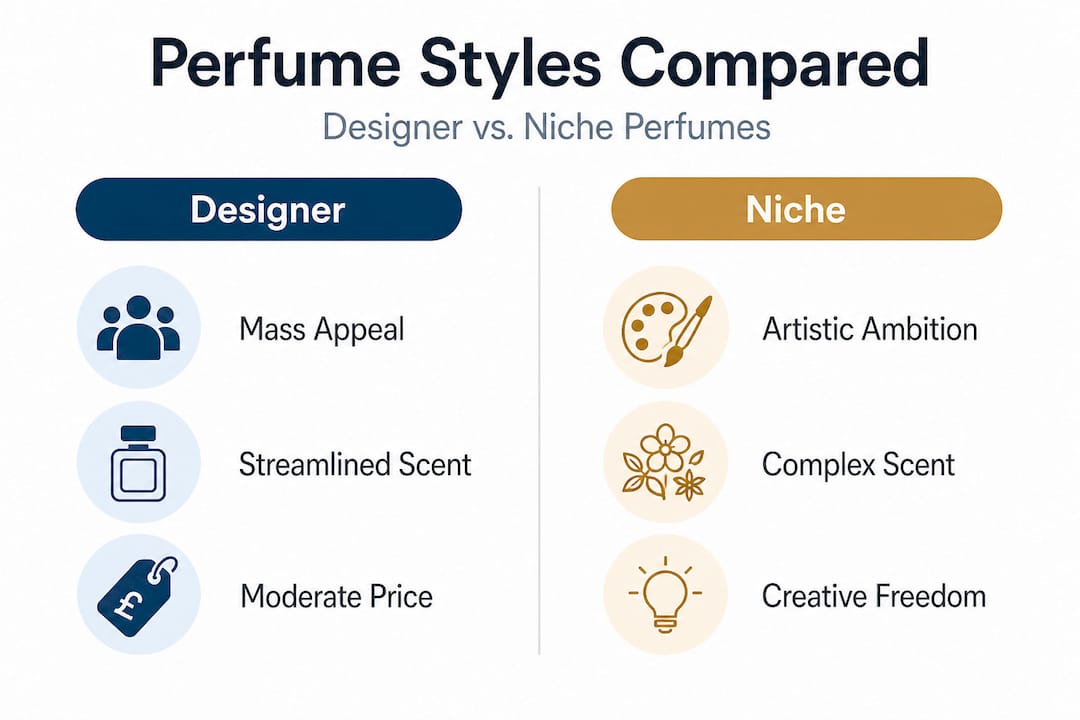
This table is not a rigid hierarchy. Excellent artistry appears at every level when you know what to look for. Some prestige designer releases demonstrate genuine compositional brilliance. Some niche releases rely on exclusivity rather than creativity.
The key insight from fragrance research is that artistry is expressed through the construction of accords and how scents develop over time, not merely through the cost of raw materials. This means you do not need an unlimited budget to experience exceptional perfumery.
Here is a practical approach to navigating these categories without overspending:
- Start with decants. Sampling small quantities of niche and designer fragrances lets you experience a range of artistic styles without the financial risk of full bottles.
- Compare across categories. Wear a mainstream designer scent one day and a niche equivalent the next. Notice the differences in complexity, evolution, and emotional response.
- Read the story behind the scent. Many artistic perfumers publish their creative concept. Knowing the intended narrative enriches your experience of the fragrance.
- Build gradually. Building a fragrance collection with intention means acquiring pieces that represent different artistic approaches, not just different smells.
- Revisit your assessments. Your perception of a complex fragrance will change over multiple wearings. What initially seems strange may reveal itself as brilliant with familiarity.
Affordable sampling is the most effective entry point into artistic perfumery. Accessible luxury scent picks exist across every budget level, and exploring them methodically builds genuine connoisseurship over time.
Experiencing perfumery art: Practical steps for discovery
Once equipped with a strategy for exploring perfumery art, it is time to consider what true appreciation looks like in practice. The process is straightforward, but it requires attention and patience.
Olfactory art employs scent as a creative communication medium, and perfume’s value lies partly in how it is experienced and interpreted by each individual. This means your personal engagement is part of the artistic process itself. No two people experience the same fragrance identically.
Follow this process to develop your appreciation systematically:
- Sample before you commit. Apply a decant or sample to skin, not paper. Fragrance behaves very differently on skin chemistry than on a strip.
- Give it time. The top notes you smell immediately are not the fragrance. Wait twenty minutes and reassess. Return at one hour and again at three hours.
- Notice the evolution. How do the scent profiles change as top notes fade and the heart and base emerge? The transition is where compositional skill becomes most visible.
- Record your impressions. Keep brief notes on what emotions, images, or memories each fragrance evokes. This builds your olfactory vocabulary over time.
- Compare with intention. Wear two fragrances from the same family on different days to identify how different artistic approaches handle similar materials.
Pro Tip: To get the most from your samples, apply fragrance to well-moisturised skin. Dry skin absorbs fragrance quickly and reduces longevity. Making fragrances last longer begins with skin preparation, not with applying more product.
Learning to review fragrances step by step also accelerates your development as a fragrance appreciator. Structured evaluation teaches you to separate initial reaction from considered assessment, which is exactly the kind of critical engagement great art deserves.
The emotional response a fragrance produces is legitimate data. If a scent makes you feel calm, nostalgic, or energised, that response is part of its artistic purpose. Paying attention to your feelings during a fragrance experience is not indulgent. It is the correct way to engage with olfactory art.
Why the art of perfumery is misunderstood—and what truly matters
Having outlined the practical aspects of experiencing perfumery as an art, it is worth stepping back and questioning what genuinely sets meaningful fragrance appreciation apart from simple collecting or status signalling.
The most common misunderstanding in fragrance culture is equating price and exclusivity with artistic merit. Many enthusiasts chase rare ingredients, limited editions, and prestigious house names. These are not irrelevant considerations, but they are not the same as artistry. A fragrance can be extraordinarily expensive and compositionally dull. It can be affordable and genuinely creative.
The second misunderstanding is expecting immediate accessibility. Artistic fragrance is not always comfortable on first encounter. Some of the most admired compositions in niche perfumery are challenging, unusual, or even initially off-putting. That discomfort is often the point. A fragrance that provokes a reaction, even a negative one at first, is communicating something. The question worth asking is what.
Investing in high-end perfume is not simply a financial decision. It is a decision about how you want to engage with fragrance as a creative form. The most rewarding appreciation comes from curiosity and willingness to experiment, not from spending more money. A methodical sampling practice, even on a modest budget, builds more genuine knowledge and enjoyment than purchasing full bottles impulsively.
The fragrance lovers who get the most from artistic perfumery are those who treat the exploration as an ongoing dialogue with the creative work. They revisit scents, change their minds, discover nuance with time, and allow their preferences to evolve. That is what artistic engagement looks like. Not ownership. Experience.
Discover artistic perfumery—affordably and confidently
You now understand that perfumery artistry lives in construction, evolution, and emotional communication, not in price tags or prestige alone. The most direct way to experience this for yourself is to start sampling.
At ThePerfumeSampler, we offer fragrance decants and samples in 2ml, 3ml, 5ml, and 10ml sizes, giving you genuine, skin-tested access to niche and designer fragrances without the full-bottle commitment. You can explore Boss Bottled Absolu for a masterclass in modern intense masculinity, try Born to Stand Out Drunk Lovers for adventurous artistic expression, or sample Diptyque Orphéon to experience the elegance of one of the most celebrated niche houses. All fragrances are 100% authentic. Sampling is how knowledge is built.
Frequently asked questions
What exactly is meant by ‘olfactory art’?
Olfactory art uses scent as a primary creative medium, with perfumery being a key form of this artistic discipline. It places scent alongside visual and auditory media as a legitimate vehicle for artistic expression.
How do I experience perfumery art without spending a lot?
You can sample niche and designer fragrances through affordable decants or small vials instead of purchasing full bottles. This allows you to experience a wide range of artistic styles without significant financial commitment.
Is artistic perfumery only about rare or expensive ingredients?
No. Artistry is driven by how accords are constructed and how scents evolve on skin, not by the origin or cost of individual ingredients. Creative construction is the true measure of quality.
What is the difference between designer and niche perfumes?
Designer perfumes generally prioritise broad commercial appeal and market accessibility, while niche perfumes emphasise individual artistic creativity, originality, and unique scent profiles with fewer commercial constraints.
Recommended
- What makes a fragrance truly unique: your scent guide – ThePerfumeSampler
- How perfume empowers self-expression and personal style – ThePerfumeSampler
- Types of perfume notes: Unlock fragrance layers and lasting power – ThePerfumeSampler
- Discover niche fragrances: unique scents & sampling tips – ThePerfumeSampler
- How perfumers create scents: a behind-the-scenes guide