

Open Perfume Vials Safely in 5 Minutes, From Pro Decanter Rupesh
The safest way to open most plastic-plug perfume sample vials is to lever the stopper gently with a small flat-head screwdriver rather than pulling it with your fingers. This technique works on the vast majority of sample vials fragrance retailers use, and it minimises the risk of spills or cracked glass. Screw-cap and roll-on vials need slightly different handling, covered below.
TL;DR:
- Using a small flat-head screwdriver to gently lever plastic plugs reduces the risk of cracks or spills compared to pulling with fingers.
- Wrapping tools in cloth or tape protects the glass rim and minimizes the chance of scratching or breaking the vial during opening.
- Warm water soaking can help loosen screw caps without damaging the fragrance, but never force a crack or glued plug open.
- Store opened samples in dark, cool, airtight containers and label them clearly, using within six to twelve months for the best scent.
- Buying professionally decanted samples avoids opening risks, especially for rare or valuable fragrances, and ensures the seal remains intact.
Table of Contents
- Getting ready to open a sample vial safely
- What tools do you actually need?
- How do you open each type of sample vial?
- What if a vial won’t open or something goes wrong?
- How should you store an opened sample afterwards?
- Why trust these steps?
- Is it worth opening a vial yourself, or buying a decant instead?
- Try a ready-opened decant instead of risking the vial
- Sources
- FAQ
Getting ready to open a sample vial safely
A few seconds of preparation prevents most of the accidents that happen with sample vials. Small glass containers are unpredictable under pressure, and perfume oil stains fabric and wood permanently, so setting up properly matters more than the opening technique itself.
Work over a towel or shallow tray, in good light, on a hard surface you don’t mind getting a little damp. Take off rings or bracelets that might knock against the glass, and slow down. Rushing is the single biggest cause of snapped stoppers and spilt samples.
- Lay a towel or tray under your workspace to catch drips and shards
- Remove rings, bracelets or anything that could knock the vial
- Wear nitrile gloves if the sample is rare or expensive, both for grip and to avoid getting fragrance on your skin
- Keep a small empty bowl or dish nearby in case you need to decant quickly
- Avoid leaning in and breathing the vapour directly as the plug releases
- Never force a vial that’s cracked or clearly glue-sealed. Stop and transfer the contents instead
If you’re planning to post an opened vial to someone else, note that shipping perfume samples has its own packing and carrier rules, which ThePerfumeSampler’s decanting and shipping guide covers in more detail.
Pro Tip: If you’ve never opened this particular vial style before, practise on a cheap or near-empty sample first. A conservative, step-by-step approach on a low-value vial saves you from ruining a rare or expensive one.
What tools do you actually need?
You don’t need a specialist kit. A handful of small, precise tools handle almost every sample vial you’ll encounter, and most of them are already sitting in a drawer somewhere.
The essentials are a small flat-head screwdriver (the electronics or “precision” style, not a DIY toolbox one), a rubber jar-opener pad or a scrap of rubber glove for grip, a pair of blunt tweezers, and a glass dropper or pipette for transferring liquid if a plug won’t budge cleanly. That’s genuinely the full list for most jobs.
If you don’t have a precision screwdriver, a strong flat toothpick, a nail file, or the flat edge of a butter knife can substitute, but wrap the tip in a layer of tape or cloth first. That padding protects the glass rim from scratches and stops the tool skidding when it meets resistance.
Steer clear of anything designed for leverage on metal or wood. Large flat-head screwdrivers deliver too much force for glass this small, serrated pliers grip unevenly and can crack the neck, and metal chisels or box cutters have no place near a 2ml vial. The goal is control, not power.
- Small flat-head (precision/electronics) screwdriver
- Rubber jar-opener pad or a scrap of rubber glove for grip
- Blunt tweezers for lifting small stoppers
- Glass dropper or pipette for transferring liquid
- Household substitutes: a toothpick, nail file or butter knife, taped or wrapped in cloth
- Avoid: large screwdrivers, serrated pliers, metal chisels
How do you open each type of sample vial?
Most sample vials fall into three families: plastic plug (friction-fit), screw or threaded cap, and roll-on or dabber style. Each needs a different touch.
Plastic plug or friction-fit vials
This is the vial you’ll meet most often from fragrance retailers, and it’s the one the levering method was built for.
- Set the vial on your towel and grip the base firmly with one hand, ideally through a rubber pad for extra traction.
- Slide the tip of your small flat-head screwdriver under the lip of the plastic plug, at the point where it meets the glass rim.
- Rest the screwdriver’s fulcrum on the glass edge rather than on the plug itself. This spreads the force across the rim instead of concentrating it on the plastic, which cuts the risk of stress fractures in the neck.
- Twist gently, in small increments, rather than levering hard in one go. Give the plug a quarter-turn of pressure, pause, then repeat.
- Stop the moment you feel serious resistance. A plug that won’t shift after two or three gentle attempts is likely glued, not just tight. Move to the troubleshooting steps below rather than forcing it.
- Once the plug lifts, ease it straight out rather than tipping the vial, which avoids a sudden pressure release and the little spurt that comes with it.
Levering in small increments rather than one big pry is a common trick among people who decant fragrances professionally, precisely because it avoids that unpredictable spill moment.
Screw or threaded caps
Threaded caps are more forgiving than plugs but still worth handling carefully to avoid cross-threading the neck.
- Check the thread direction before you start twisting. Most open anticlockwise, but cheap sample caps occasionally reverse this.
- If the cap won’t turn at all, sit the vial (upright, capped) in a cup of warm, not hot, water for a minute or two. Warmth makes the plastic expand very slightly, which loosens a tight seal without touching the fragrance inside.
- Dry the cap and neck, then grip the cap through a rubber pad or scrap of glove for traction.
- Turn slowly and evenly. If you feel grinding rather than smooth rotation, stop, back off half a turn, and realign the threads before continuing.
- Lift the cap straight up once it’s free rather than wrenching sideways.
Roll-on and dabber vials
Roll-on samples hide their seal under a metal or plastic sleeve, which trips up more people than the plug or cap styles combined.
- Look for a thin metal or plastic collar around the base of the roller ball. That’s usually what’s actually sealing the vial, not the ball itself.
- Use blunt tweezers or a taped screwdriver tip to lift one edge of that collar gently, working around the rim rather than prising at a single point.
- Once the collar loosens, the roller ball assembly should lift out as one piece, exposing the neck underneath.
- If you want to refill or repurpose the vial, use a glass dropper to transfer the remaining liquid into a clean container rather than trying to reseat a roller mechanism, which rarely seals as well the second time.
Whichever method you use, finish the same way: wipe the rim with a clean tissue to remove any residue, replace the cap or plug loosely if you’re not using the sample immediately, and label the vial before it goes back in storage. A drop of fragrance on an unlabelled vial is a mystery scent within a week.
What if a vial won’t open or something goes wrong?
Most sticking points follow a predictable order, and working through it in sequence saves you from turning a stuck plug into a smashed vial.
Start with a gentle wiggle side to side. If that does nothing, move to light levering with your screwdriver, in the small increments described above. If the plug still resists after a few attempts, soak the neck of the vial in warm water for a couple of minutes. Some promotional samples use a dab of adhesive under the plug, and a short warm water soak softens that glue without touching the fragrance itself. Avoid alcohol or solvents here. They can dissolve labels or interact with the perfume.
If none of that works, stop trying to open it and transfer the contents instead, by tipping the vial carefully into a fresh dropper bottle through the gap you’ve created.
- Wiggle gently first, then lever, then soak in warm water, then transfer if nothing else works
- Soak for no more than two to three minutes at a time, using warm water only, never hot
- If the glass chips or cracks, decant the remaining liquid into a clean vial immediately, then clean the area with a damp cloth and dispose of shards wrapped in paper, not loose in a bin
- If perfume splashes onto a surface, blot it up straight away with a cloth. Fragrance that’s touched an unclean surface or picked up dust and fibres should be treated as compromised and not sampled on skin
How should you store an opened sample afterwards?
An opened vial starts losing its top notes the moment it meets air and light, so what you do in the next few minutes matters almost as much as how you opened it.
Direct sunlight and warmth accelerate the chemical changes that make a fragrance “turn”, stripping out the delicate top and middle notes first. Keep opened samples somewhere cool, dark and reasonably stable in temperature, away from windowsills, radiators and car interiors.
- Store in a small airtight decant or dropper bottle rather than leaving the original vial loosely capped
- Choose opaque or dark glass where possible, since UV exposure is one of the main causes of fragrance degradation
- Label every container with the fragrance name and the date you opened it
- Treat most opened samples as best used within six to twelve months for the truest scent
- Rotate through open samples methodically rather than leaving them to sit, using a practical rotation routine if you’re testing several at once
Avoid the fridge, despite what you might have read elsewhere. Home refrigerators bring their own problems with humidity and temperature swings every time the door opens, and dedicated guidance on perfume storage explains why a stable room-temperature spot usually beats it.
Why trust these steps?
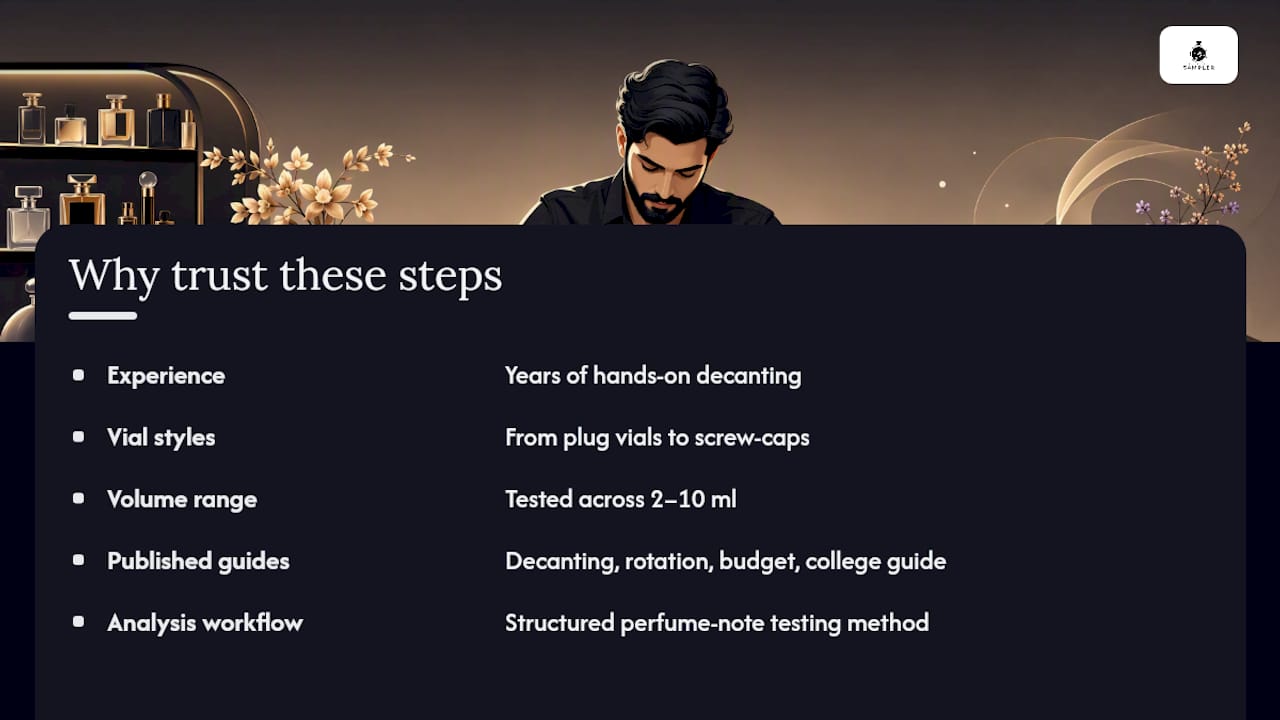
These methods come from hands-on decanting experience by an established sample decanter who has spent years opening, transferring and labelling fragrance samples across every vial style on the market, from small plug vials to screw-cap decants.
The product range covered runs from 2ml to 10ml, which means every technique above has been tested against vial formats readers are likely to be holding. The site also publishes practical guides on decanting methods, fragrance rotation, and testing on a budget, including a college fragrance testing guide for readers working with limited space and equipment.
If you want a deeper dive into evaluating what’s inside a vial once it’s open, the workflow for analysing perfume notes walks through a structured way to test and compare scents properly.
Is it worth opening a vial yourself, or buying a decant instead?
Opening a vial yourself makes sense when you’ve already got the sample in hand, you’re comfortable with a screwdriver and a bit of patience, and the fragrance isn’t irreplaceable. It’s a five-minute job once you’ve done it a couple of times.
Buying a professionally prepared decant is the better call when the fragrance is rare, expensive, or you simply don’t want the risk. There’s no glass to crack, no glue to fight, and no guesswork about whether you’ve damaged the seal. Convenience and preservation win out over the small satisfaction of doing it yourself. Neither choice is wrong. It depends on what you’re holding and how much you’d mind losing it.
— Rupesh
Try a ready-opened decant instead of risking the vial
Purchasing a professionally prepared decant is an alternative to fighting a stubborn plug or a glued cap: decants often arrive already opened, labelled and ready to test, in various sizes, with no screwdriver required. That matters most for rare or discontinued scents, where one slip with a lever tool can mean losing the sample entirely.
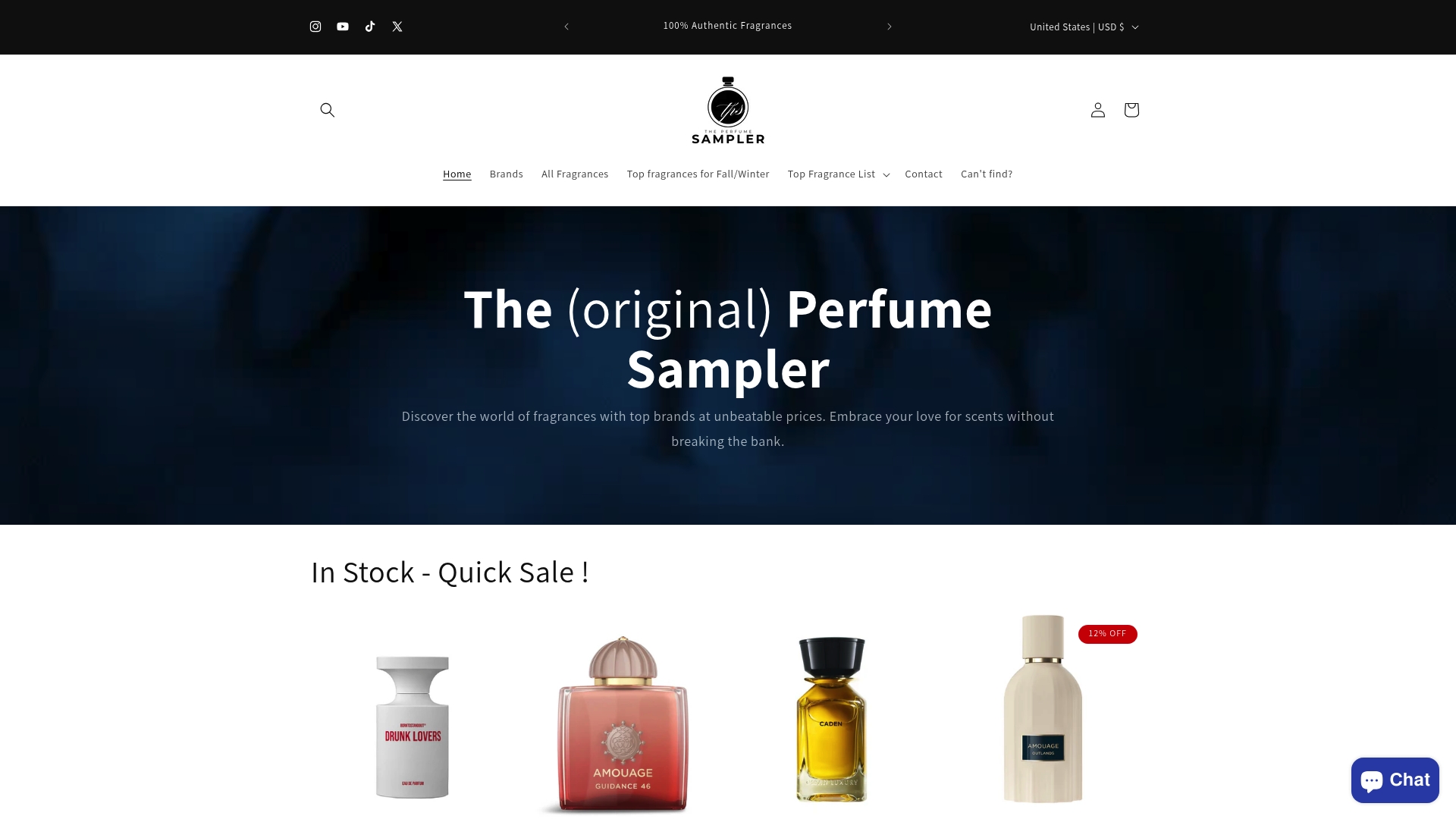
Instead of sourcing a full bottle and opening it yourself, you can try the same fragrance in a smaller, professionally decanted size first. Browse the full range of niche and designer fragrance samples, or read why decants make sense compared with opening manufacturer vials at home. If a scent wins you over, full bottles are ready to order when you’re certain.
Sources
FAQ
How do you open a perfume sample vial?
Use a small flat-head screwdriver to gently lever the plastic plug, resting the tool’s edge on the glass rim rather than the plug itself, and twist in small increments rather than one hard pry. Screw caps usually just need a warm-water soak if they’re stiff, and roll-on vials open by lifting the metal collar under the roller ball.
Where can you buy perfume sample vials?
Empty refillable vials for your own decanting are widely available from craft suppliers and packaging shops, while pre-filled, professionally decanted samples in 2ml to 10ml sizes are available directly from Theperfumesampler. Buying pre-decanted samples skips the opening process entirely.
How do you open the cap of a perfume bottle without breaking it?
Check whether the cap is a plastic plug, a screw thread, or a roll-on sleeve first, since each needs a different technique. For a stuck plug or cap, soak the neck briefly in warm water to loosen it before applying any leverage, and always stop if you feel serious resistance.
Is it okay to open a perfume bottle yourself?
Yes, opening a perfume sample vial yourself is generally safe if you work slowly, use the right small tools, and stop the moment a stopper resists strongly. For rare or expensive fragrances, buying an already-opened, professionally prepared decant avoids the risk of chipped glass or a lost sample altogether.