
Advantages of decanting fragrance: your 2026 guide
TL;DR:
- Decanting fragrances enhances aroma, reveals hidden notes, and removes sediment for improved scent performance.
- It offers flexible sampling options and protects fragrance quality by reducing particulate build-up.
Decanting is the process of transferring a fragrance from its original bottle into a separate vessel to amplify scent complexity, manage aroma evolution, and enable flexible sampling. The advantages of decanting go well beyond convenience. They touch on chemistry, cost, and the way a fragrance actually performs on your skin. Whether you are building a collection, testing niche scents, or simply curious about a new release, understanding how decanting works gives you a real edge.
1. What are the main advantages of decanting perfume?
The core benefits of decanting fall into three categories: aroma enhancement, quality preservation, and sampling flexibility. Each one addresses a different aspect of the fragrance experience. Together, they make decanting one of the most practical habits a fragrance enthusiast can adopt.
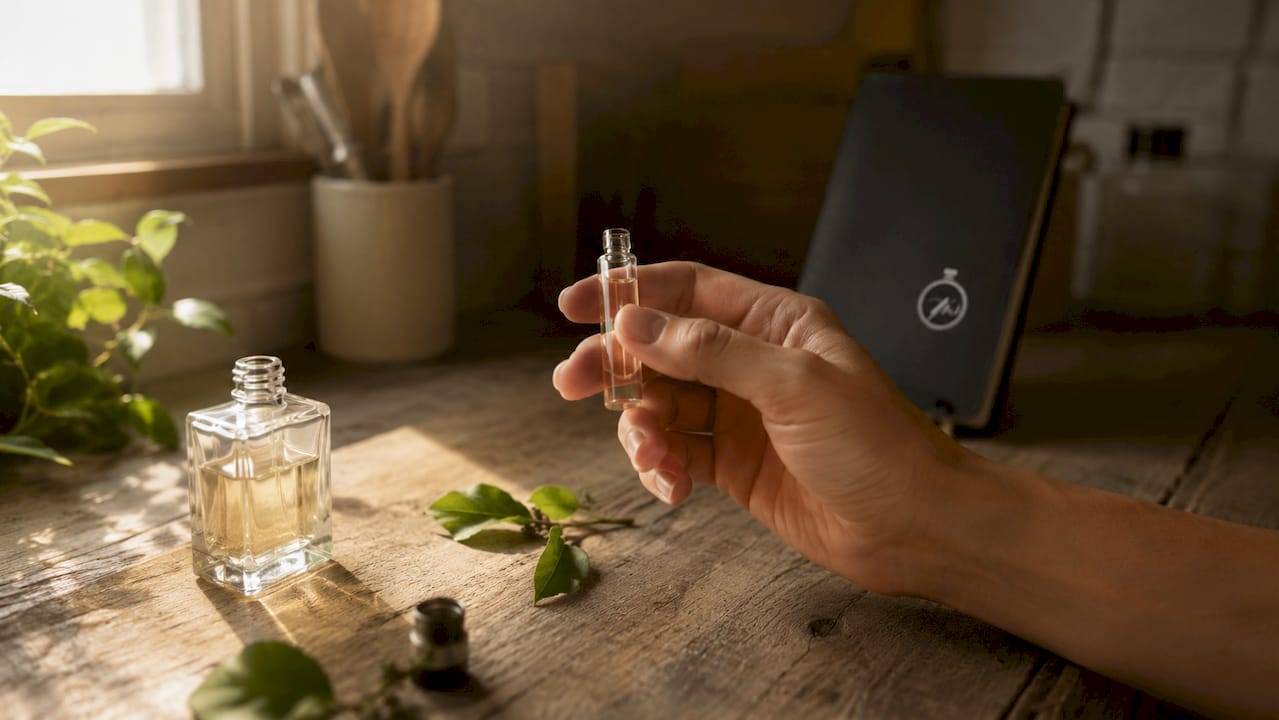
Oxygen exposure during the transfer process liberates aromatic compounds that would otherwise remain locked in the bottle. Agitation during pouring does the same. The result is a scent that opens faster and reveals its full character sooner.
2. How decanting enhances fragrance aroma and complexity
Decanting changes a fragrance at a chemical level. When a perfume is transferred from one vessel to another, oxygen interacts with its aromatic molecules. This interaction softens harsh top notes and allows middle and base notes to surface more quickly.
Mechanical agitation during decanting releases locked-in aromatic compounds, which parallels the oxidation and volatility changes that reveal hidden scent layers in a perfume. Think of it as waking the fragrance up before you wear it. A perfume that smells flat or sharp straight from the bottle can open into something far more nuanced after a brief decant.
The same principle applies in the world of wine. Three chemical changes occur during decanting: oxygen softens tannins, volatile sulphur compounds dissipate, and agitation liberates aromatic compounds. Fragrance chemistry follows a comparable logic. Volatile top notes settle, and the richer heart and base notes become more accessible.
- Oxygen exposure softens sharp or aggressive top notes
- Agitation during transfer releases mid and base note compounds
- Brief aeration allows the full scent profile to express itself sooner
- Controlled exposure prevents over-oxidation in delicate compositions
Pro Tip: Decant into a small, clean glass vial and leave the cap off for two to three minutes before applying. This brief aeration period gives complex fragrances time to open without risking over-exposure.
Decanting is not reserved for aged or heavy fragrances only. Younger, vigorous fragrances can benefit greatly from controlled aeration. A fresh citrus or green fragrance, for example, may reveal unexpected floral or woody undertones after a short decant. Understanding how fragrances evolve through their top, heart, and base stages helps you time the decant for maximum effect.
3. Sediment and purity: how decanting supports fragrance quality
Aged perfumes and poorly filtered formulations can develop particulate matter over time. This sediment does not always affect scent directly, but it can alter the visual clarity of the fragrance and, in some cases, affect how it disperses from the bottle.
Decanting separates this sediment cleanly. The process mirrors the technique used with mature wines, where a strong light source behind the bottle neck helps monitor sediment during pouring. The same careful, slow pour applies to aged perfumes. Patience during the transfer preserves the clarity of the decanted liquid.
Fragrance types that benefit most from sediment removal include:
- Aged or vintage perfumes stored for several years
- Oil-based or extrait de parfum concentrations with dense compositions
- Natural or botanical fragrances with plant-derived ingredients
- Perfumes stored in warm or fluctuating temperature conditions
The visual result matters too. A clear, sediment-free decant in a clean glass vial looks and feels more refined. For collectors who share or gift decants, presentation is part of the experience.
4. Decanting as a sampling strategy: flexibility and cost-effectiveness
Smaller decants allow testing multiple scents without committing to a full bottle purchase. This is the most practical advantage for anyone building a fragrance wardrobe or exploring niche houses for the first time. Full bottles of high-end fragrances represent a significant financial commitment. A 2ml or 5ml decant lets you wear a scent across different occasions and seasons before deciding.
The sample size benefits extend beyond personal use. Decants are easy to share with friends, include as gifts, or trade within fragrance communities. They also allow collectors to partition limited edition releases without opening the original bottle unnecessarily.
Here is how to approach decanting as a sampling strategy:
- Start with 2ml or 3ml decants of unfamiliar fragrances before investing in larger sizes
- Wear each decant across at least three different occasions to assess performance in varied conditions
- Note how the scent evolves from morning application through to dry-down
- Use 5ml or 10ml decants for fragrances you already enjoy but want to trial daily before buying a full bottle
- Share decants with friends to gather different perspectives on the same scent
Pro Tip: Label every decant clearly with the fragrance name, house, and concentration. Memory fades quickly when you are testing several scents in a week, and unlabelled vials become impossible to identify accurately.
The economic case for decanting is straightforward. Buying a 10ml decant of a £200 niche fragrance costs a fraction of the full bottle price. If the scent does not suit you, you have lost very little. If it does, you buy with confidence. This approach also reduces the number of unworn full bottles sitting on a shelf, which is a common and costly outcome for fragrance collectors who buy without testing.
5. Vessel types and decanting techniques: what works best
The vessel you use for decanting affects the outcome. Surface area exposed to air drives aeration, not the cost or appearance of the container. Crystal decanters are not necessary. Any clean vessel with a wide base increases oxygen contact effectively.
| Vessel type | Aeration level | Best suited for | Key consideration |
|---|---|---|---|
| Wide-base glass vial | High | Complex, heavy fragrances | Maximises oxygen contact |
| Narrow-neck glass bottle | Low to medium | Delicate or light fragrances | Limits over-oxidation |
| Plastic atomiser | Minimal | Travel and daily use | Avoid for long-term storage |
| Crystal decanter | High | Display and gifting | No chemical advantage over glass |
Narrow-neck vessels suit lighter or more volatile fragrances where you want to limit oxygen exposure. Wide-base vessels work better for dense, oily, or complex compositions that need more aeration to open fully. Plastic containers are acceptable for short-term use but can interact with fragrance compounds over time. Glass remains the preferred material for any decant intended to last more than a few weeks.
Manual decanting, pouring slowly and steadily, gives you the most control. Mechanical transfer using a syringe or pipette is cleaner and more precise for small volumes like 2ml or 3ml. For fragrance decants specifically, a syringe or pipette minimises waste and keeps the process hygienic.
6. When to decant: situational advantages by fragrance type
Not every fragrance benefits equally from decanting. The decision depends on the composition, age, and concentration of the scent.
Aged or vintage perfumes are the clearest candidates. They often carry sediment and benefit from careful separation during transfer. Oily or heavy concentrations, such as extrait de parfum or perfume oil, open significantly with brief aeration. Aeration and sediment separation are distinct goals requiring different approaches. Applying aggressive aeration to a delicate, aged fragrance can strip its complexity rather than enhance it.
Fragrance types and their decanting needs:
- Extrait de parfum and perfume oils: Benefit from aeration to soften density and reveal layered notes
- Aged or vintage fragrances: Require slow, careful pouring to separate sediment without disturbing clarity
- Niche and complex compositions: Gain from brief aeration that allows hidden accords to surface
- Fresh or citrus fragrances: Require minimal decanting time to avoid losing volatile top notes
- Fragile or delicate compositions: Avoid aggressive aeration, which can damage subtle aromatic balance
White wines, much like lighter fragrances, evolve in aroma profile during decanting and can surprise with enhanced complexity. The same logic applies to fresh or aquatic fragrances. A short, controlled decant of one to two minutes can reveal unexpected depth without sacrificing the brightness that defines the scent. Understanding what affects perfume performance helps you judge how much aeration each fragrance type can handle.
Key takeaways
Decanting enhances fragrance aroma, removes sediment, and makes sampling multiple scents affordable and practical without committing to full bottle purchases.
| Point | Details |
|---|---|
| Aroma enhancement | Brief oxygen exposure during transfer liberates aromatic compounds and reveals hidden scent layers. |
| Sediment removal | Slow, careful pouring separates particulate matter and preserves the clarity of aged or dense fragrances. |
| Sampling flexibility | Small decants of 2ml–10ml let you test fragrances across multiple occasions before buying a full bottle. |
| Vessel choice | Glass with a wide base maximises aeration; narrow-neck vessels suit delicate or volatile compositions. |
| Know when to stop | Delicate and aged fragrances need minimal aeration to avoid stripping their complexity. |
Decanting changed how I approach fragrance entirely
The first time I deliberately decanted a fragrance rather than spraying straight from the bottle, the difference was immediate. A dense oud-based extrait I had written off as too aggressive opened into something genuinely beautiful after two minutes of aeration in a wide glass vial. That single experience shifted how I think about fragrance performance.
The most common mistake I see is treating decanting as purely a storage or sharing exercise. Fragrance enthusiasts often miss the aroma benefit entirely because they cap the vial immediately after transfer. Leaving the decant open for even a short period before application changes the experience meaningfully. The scent you apply is not the same as the scent that sat sealed in the original bottle.
I would also caution against over-decanting delicate compositions. A light floral or citrus fragrance left open for too long loses its brightness. The top notes, which are the most volatile, dissipate first. For those scents, a quick transfer and immediate application gives the best result. The role of decants in trying new scents is something I now consider before every new purchase. Testing a 3ml decant across a full week of wear tells me more than any in-store strip ever could.
— Rupesh
Fragrance decants from Theperfumesampler
Theperfumesampler offers a curated range of high-end niche and designer fragrance decants in sizes of 2ml, 3ml, 5ml, and 10ml. Every decant is 100% authentic, drawn directly from genuine full bottles.
For fragrance enthusiasts who want to experience the benefits of decanting without sourcing or preparing vials themselves, Theperfumesampler does the work. You receive a clean, labelled decant ready to wear and assess. Read more about why decants make sense for anyone serious about building a fragrance collection without the financial risk of buying blind. Full bottles of high-end designer fragrances are also available for those ready to commit.
FAQ
What is decanting in fragrance?
Decanting is the process of transferring a perfume from its original bottle into a separate vessel. The purpose is to enhance aroma complexity, remove sediment, or create smaller sample sizes for testing and sharing.
Does decanting actually improve how a fragrance smells?
Oxygen exposure during transfer liberates aromatic compounds and softens harsh top notes, allowing the full scent profile to express itself more quickly. The effect is most noticeable in dense, oily, or complex compositions.
What size decant should I start with?
A 2ml or 3ml decant is the best starting point for an unfamiliar fragrance. It provides enough volume to wear the scent across several occasions and assess how it performs before committing to a larger size.
Can decanting damage a fragrance?
Aggressive or prolonged aeration can strip delicate or aged fragrances of their complexity. Volatile top notes dissipate first, so light or citrus-based scents need minimal decanting time to preserve their character.
Do I need special equipment to decant a fragrance?
No specialist equipment is required. A clean glass vial and a syringe or pipette are sufficient for most fragrance decants. Surface area drives aeration, not the cost of the vessel, so a simple wide-base glass vial works as well as any ornate container.