
Don't Store Perfume in the Fridge: Use 2–10ml Decants Instead
Storing perfume in the fridge is unnecessary for almost everyone, and it carries real risk of humidity damage inside a standard kitchen unit. The one exception is highly volatile, natural-heavy formulations or vintage bottles kept in a hot, unstable room, where controlled cold storage can slow their decline. For the vast majority of bottles, a cool, dark, stable cupboard does the job better and without the risks.
TL;DR:
- Most perfumes do not benefit from fridge storage, as stable, dark, cool environments are safer and reduce humidity risks.
- Frequent door openings in kitchen fridges cause temperature fluctuations and humidity that accelerate perfume degradation more than steady room temperatures.
- Long-term preservation is better supported by storing bottles in a dark, stable drawer or box, especially for vintage or natural formulations.
- Using smaller bottles or decants for regular wear minimizes aging and oxidation, reducing the need for specialized storage.
- A wine cooler offers a more consistent and controlled environment for long-term perfume preservation than a standard kitchen fridge.
Table of Contents
- Does storing perfume in the fridge actually help?
- What actually happens to fragrance molecules over time?
- Which perfumes might actually benefit from cool storage?
- How should you store perfume at home?
- What’s the safest way to chill perfume if you still want to?
- How can you tell if a perfume has gone off?
- Why sampling beats stockpiling full bottles
- Our take: the fridge is a hobbyist habit, not a rule
- A smaller bottle solves the storage problem before it starts
- Sources
Does storing perfume in the fridge actually help?
Cold slows the chemical reactions that break fragrance down, which is the genuine benefit behind fridge storage. Lower temperatures reduce the pace of oxidation and can help volatile top notes hold their shape a little longer, an effect Perfume Cultures confirms is real but limited by what a household fridge actually offers. The problem is the environment itself, not the temperature.
- Benefit: cooler temperatures slow oxidation and degradation reactions in the juice.
- Con: kitchen fridges run humid, and condensation can seep past caps and labels.
- Con: food odours and constant door opening expose bottles to smell contamination and temperature swings.
- Acceptable use: chilling a single bottle briefly before a hot day’s wear is fine as a one-off refresh, not a long-term strategy.
Repeated trips in and out of the cold cause more harm than steady room-temperature storage, according to WhatScent. A fridge that constantly opens and closes never holds one stable condition, which defeats the purpose of chilling it in the first place.
What actually happens to fragrance molecules over time?
Perfume degrades through three main forces: oxidation, evaporation, and moisture exposure. Oxidation happens when oxygen reacts with the aromatic compounds in the juice, altering their structure and often turning bright, fresh notes into something flatter or slightly sour. Citrus and green notes oxidise fastest because their molecules are small and reactive.
Volatility explains why top notes vanish before the base does. Lighter molecules like bergamot or grapefruit evaporate quickly once a bottle is opened repeatedly, while heavier notes such as musk or amber linger. Air and humidity both speed this along. Every time you open a bottle, a little air gets in, and that oxygen keeps reacting with what’s left. According to GQ India, heat, light and humidity are the three real culprits behind spoiled perfume, and consistent conditions matter more than how cold the storage spot actually is.
Which perfumes might actually benefit from cool storage?
Not every bottle needs special treatment, and most modern designer perfumes are built to withstand normal room conditions without issue. A smaller group of fragrances genuinely benefits from cooler, more controlled storage:
- High-citrus and natural-oil formulations degrade faster in heat because their volatile compounds are less chemically stable.
- Vintage or rare bottles made with natural extracts, rather than modern synthetic stabilisers, can gain from a steady cool environment, particularly if you’re preserving them for years rather than wearing them regularly.
- Modern synthetically stabilised designer perfumes are formulated to resist oxidation at normal room temperature, so refrigeration adds little practical benefit.
Collectors managing older bottles sometimes use dedicated cool storage for this reason, though Perfume Cultures notes that a dark, stable drawer remains simpler and safer for most people.
How should you store perfume at home?
Getting this right doesn’t require special equipment. It comes down to a handful of habits that protect scent from the three real enemies: heat, light, and air.
- Keep bottles in a cool, dark, dry spot, ideally in a cool temperature range typically recommended for perfume storage. Stability matters more than hitting an exact number, as explained in How Perfume Longevity Works Naturally on Your Skin – Maison Voyageur.
- Store bottles in their original boxes where possible. The packaging blocks light and buffers small temperature shifts, a point WhatScent backs up in its storage guidance.
- Keep caps tightly closed, and try to limit the air pocket in bottles that are more than half empty, since trapped air accelerates oxidation.
- Avoid bathrooms and vanity tops. Humidity from showers and steam speeds up oxidation, particularly in citrus and floral blends, as Southern Living points out. Store bottles upright, away from radiators, windowsills, and direct sun.
- For travel or short-term use, decant a small amount into a travel atomiser rather than carrying (or repeatedly chilling) your full bottle. If you like a cold spritz on a hot day, chilling briefly is a sensory preference, not a preservation method, so keep it occasional rather than routine.
Pro Tip: Write the purchase or opening date on the base of each bottle with a fine marker. It takes ten seconds and means you’re never guessing whether a scent has been sitting unopened for three years or three months.
Rotating older bottles into regular wear, rather than leaving them untouched for years, also helps. Perfume that gets used doesn’t have time to sit and oxidise in the same way a forgotten bottle at the back of a drawer does. For more on why some scents fade faster than others, it’s worth reading about how fragrance ageing works.
What’s the safest way to chill perfume if you still want to?
A standard kitchen fridge is the weakest option for cold storage, mainly because of foot traffic and humidity. Every time the door opens, warm moist air rushes in, and that cycle of condensation and drying is worse for a bottle than simply leaving it at stable room temperature.
A wine cooler or a small temperature-controlled cabinet is a far better choice if you’re committed to cold storage long-term. These units hold a steady temperature with much lower humidity than a food fridge, which is exactly what WhatScent recommends for anyone serious about preserving delicate or vintage fragrances. If you do use a kitchen fridge anyway, keep the bottle inside a sealed box on a middle shelf, never on the door, and avoid taking it in and out more than necessary.
How can you tell if a perfume has gone off?
A few quick checks will tell you whether a bottle is still good. Visually, look for cloudiness, sediment, or a colour noticeably darker than when you bought it. On the nose, watch for a metallic, sour, or flattened smell where the top notes used to sing.
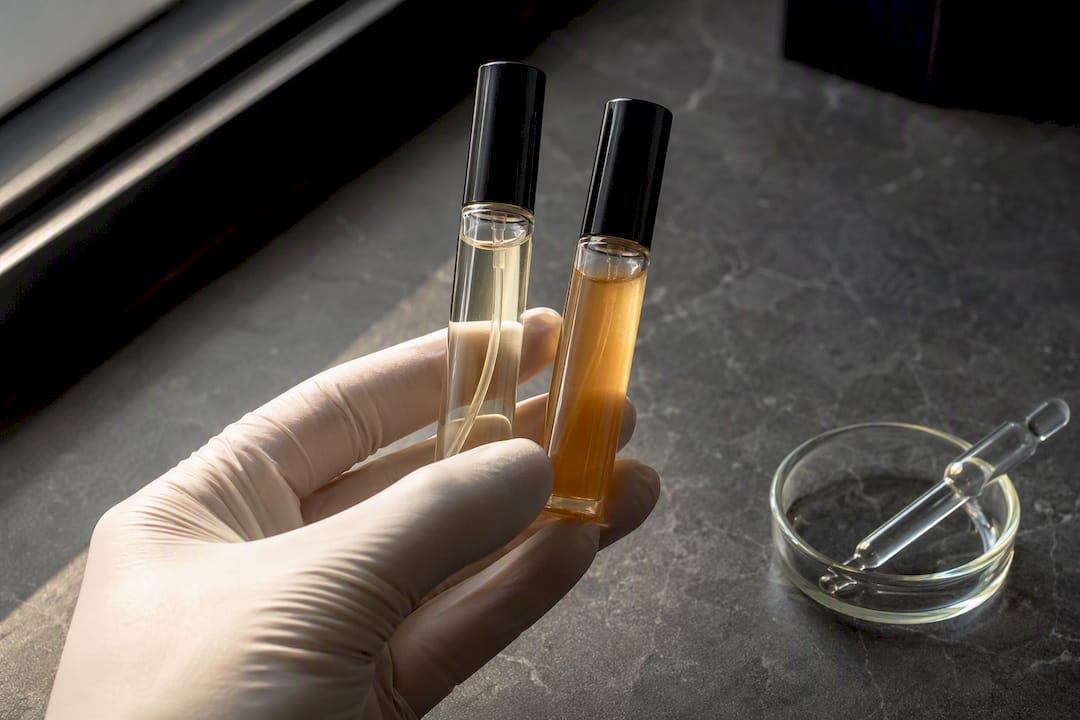
Small colour shifts over years are often harmless, a natural part of maceration rather than spoilage, as Perfume Cultures explains. But a sharp vinegar-like or musty smell means the juice has genuinely turned, and no amount of chilling will bring it back.
Why sampling beats stockpiling full bottles
Long-term storage problems mostly start with owning more full bottles than you can wear through before they age. Theperfumesampler sells fragrance decants in 2ml, 3ml, 5ml, and 10ml sizes precisely because smaller volumes get used up while they’re still fresh, removing the years-long storage question altogether. Boxed, upright, and rotated stock is standard fulfilment practice, the same habits worth applying at home. For a deeper look at what shapes how a scent wears and lasts, see what affects perfume performance.
Our take: the fridge is a hobbyist habit, not a rule
The obsession with fridge storage says more about how fragrance enthusiasts talk online than about actual chemistry. Most of the advice circulating treats refrigeration as a universal upgrade, when the research points the other way: stability beats cold, and a kitchen fridge rarely delivers stability. Humidity, food odours, and constant door traffic do more damage than warm shelf air ever would for the average bottle.
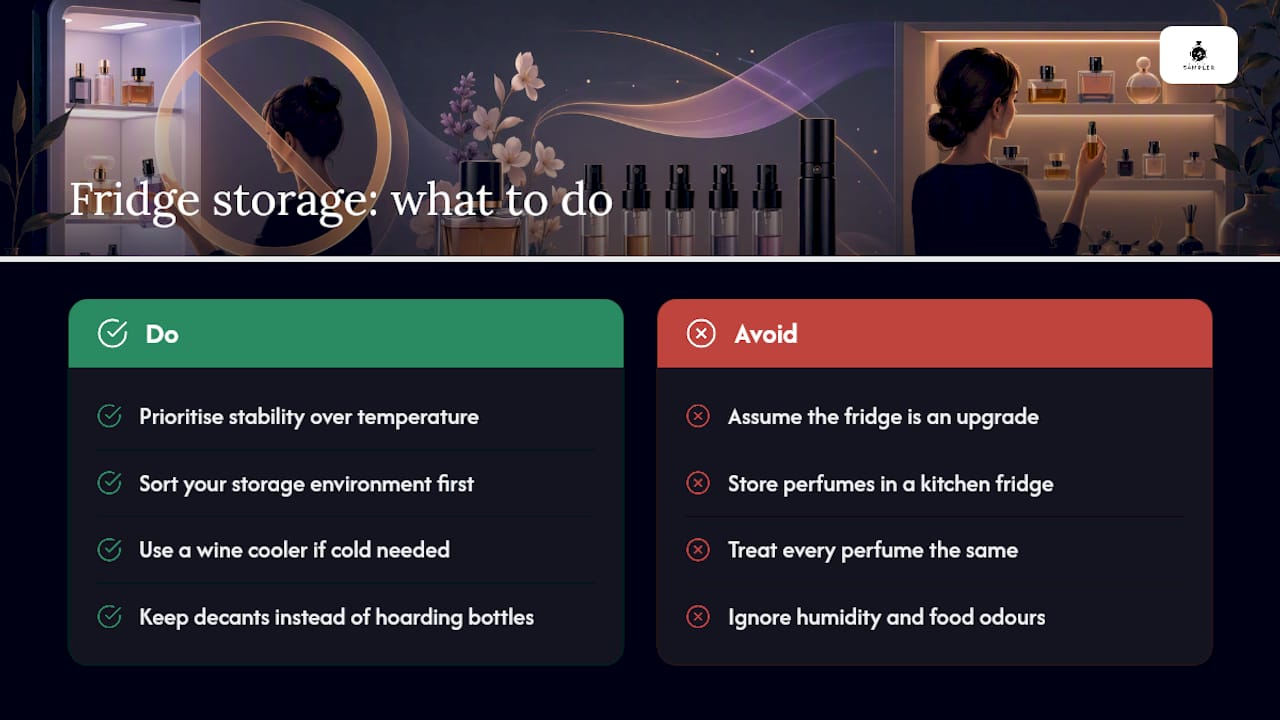
Where the conventional wisdom really falls short is in treating every perfume the same. A synthetic, well-stabilised designer scent and a fifteen-year-old vintage extract with natural jasmine absolute are not the same chemical proposition, yet most “just put it in the fridge” advice doesn’t distinguish between them.
If there’s one priority worth acting on, it’s this: sort your storage environment before you worry about temperature extremes. Then, for the collector cases that genuinely need cold, reach for a wine cooler rather than the salad drawer. And for anyone tempted to hoard full bottles just to have variety, decants solve the underlying issue rather than managing around it.
— Rupesh
A smaller bottle solves the storage problem before it starts
Owning fewer full bottles means fewer bottles ageing untouched at the back of a cupboard. Theperfumesampler’s decants let you wear a wide rotation of niche and designer fragrances without the years-long storage commitment a full bottle demands.
Sizes run from 2ml up to 10ml, which suits sampling new releases, building a seasonal rotation, or simply travelling without checking a full bottle through security. You use what you need, finish it while it’s fresh, and move on to the next scent rather than watching a shelf of half-used bottles slowly oxidise. For a full breakdown of why this approach works better than stockpiling, visit the why decants page, or browse an example like the Boss Bottled Absolu Parfum Intense to see how sizing options work in practice. If you’re weighing up decants versus full bottles for the first time, that’s the right place to start.
Sources
- How To Properly Store Perfume, According To An Expert
- Should you store perfume in the fridge? The truth about cold storage - Perfume Cultures
- Fridge Storage for Perfume: Pros and Cons for Longevity | WhatScent
- Should you store perfume in the fridge to make it last longer? | GQ India