
What is skin chemistry scent? Your complete guide
TL;DR:
- Skin chemistry determines how fragrances smell and perform on each individual due to unique hydration, sebum, and microbiome interactions. These factors influence evaporation, longevity, and scent development, making personal skin properties the key to fragrance experience. Testing fragrances on skin with proper preparation provides the most accurate understanding of how a perfume will evolve on your body.
Skin chemistry scent is the term used to describe how your individual skin composition alters the way a perfume smells and performs on your body. Every person’s skin carries a unique combination of hydration levels, sebum production, pH balance, and microbial activity. These factors interact directly with fragrance molecules, meaning the same perfume can smell entirely different on two people. Understanding how skin affects scent is not a minor detail in fragrance selection. It is the single most important variable between a perfume smelling extraordinary on you and merely adequate.
What is skin chemistry scent and why does it matter?
Skin chemistry scent, known in fragrance circles as your personal scent chemistry or individual fragrance profile, is the result of your skin’s biological and chemical properties reacting with perfume compounds. No two people share an identical profile. Skin hydration, oil content, surface temperature, microbiome composition, and even the hygiene products you use all contribute to how a fragrance opens, develops, and fades on your body.
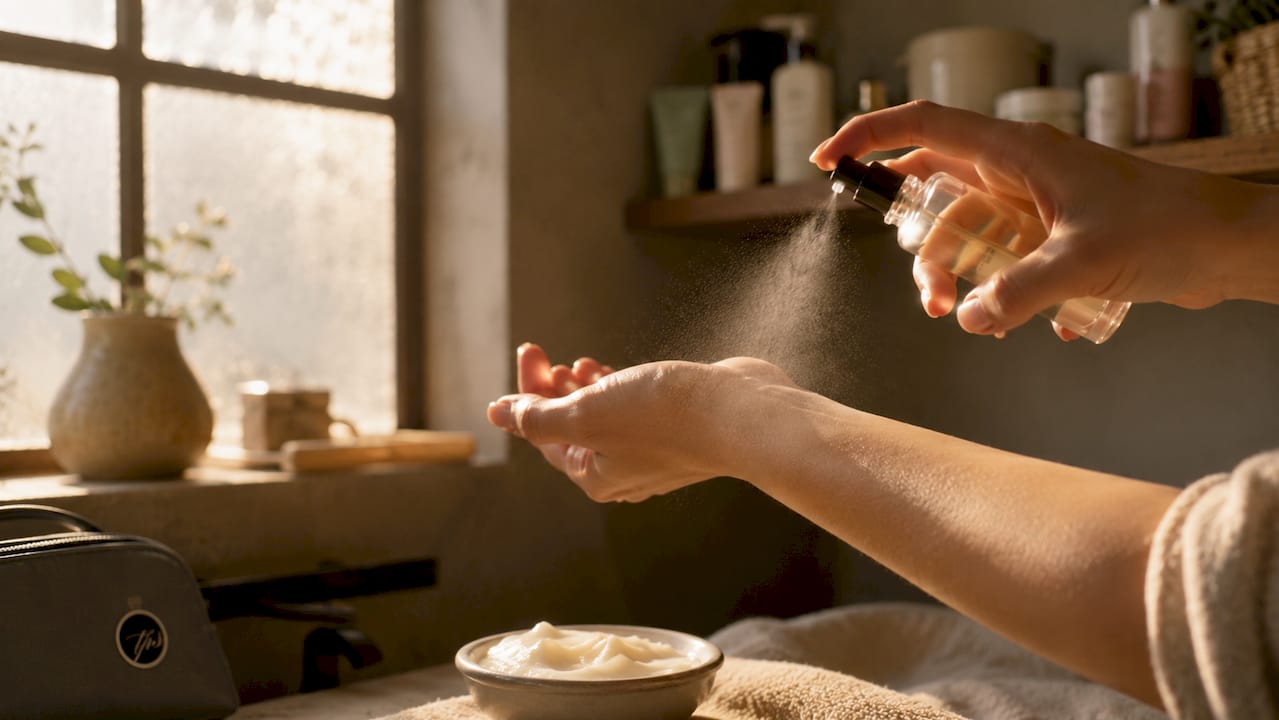
This is not a marketing concept. Skin hydration, transepidermal water loss (TEWL), and surface roughness are identified as primary physical drivers of fragrance evaporation on skin. That means the moisture content of your skin directly controls how quickly or slowly fragrance molecules are released into the air around you. A well-hydrated skin surface creates a slower, more controlled release. Dry skin tends to absorb fragrance molecules rather than project them outward.
The practical implication is significant. A perfume that receives glowing reviews for its longevity may fade within two hours on your skin, not because the formula is weak, but because your skin chemistry is consuming it differently. Recognising this removes the frustration of perfume shopping and replaces it with a more informed approach.
What skin factors influence the scent and longevity of perfumes?
Several measurable skin properties determine how a fragrance behaves from the moment it touches your skin to the final dry-down hours later.
- Skin hydration. Hydrated skin retains fragrance molecules more effectively and releases them gradually, extending longevity and improving projection. Dry skin, by contrast, absorbs molecules quickly, causing faster fade and sometimes a sharper or thinner scent character.
- Sebum levels. Oilier skin holds fragrance molecules longer, often producing a richer, more rounded scent. People with naturally drier skin frequently find that perfumes smell less complex on them compared to the same fragrance on someone with higher sebum production.
- Skin pH. The skin maintains an acidic pH between 4.5 and 5.5, which is critical for barrier function and microbiome balance. While pH has a smaller direct effect on fragrance smell compared to hydration and oil levels, it influences enzyme activity that can subtly alter certain fragrance compounds during dry-down.
- Skin surface roughness. Rougher skin textures increase the surface area available for evaporation, which can accelerate the release of top notes and reduce overall longevity.
- Microbiome activity. The skin microbiome creates subtle background notes that blend with perfume molecules, producing what some perfumers describe as ghost notes unique to each wearer. This is why a fragrance can smell unexpectedly different on you compared to a friend wearing the same bottle.
- Hygiene and skincare products. Soaps, body washes, and moisturisers all leave chemical residues on the skin surface. These residues interact with fragrance molecules and can shift the perceived character of a perfume before it even begins to develop properly.
Pro Tip: Apply an unscented moisturiser to your skin before spraying perfume. This creates a hydrated base that slows evaporation and extends wear time noticeably, particularly if you have naturally dry skin.
How do different fragrance molecules interact with skin chemistry?
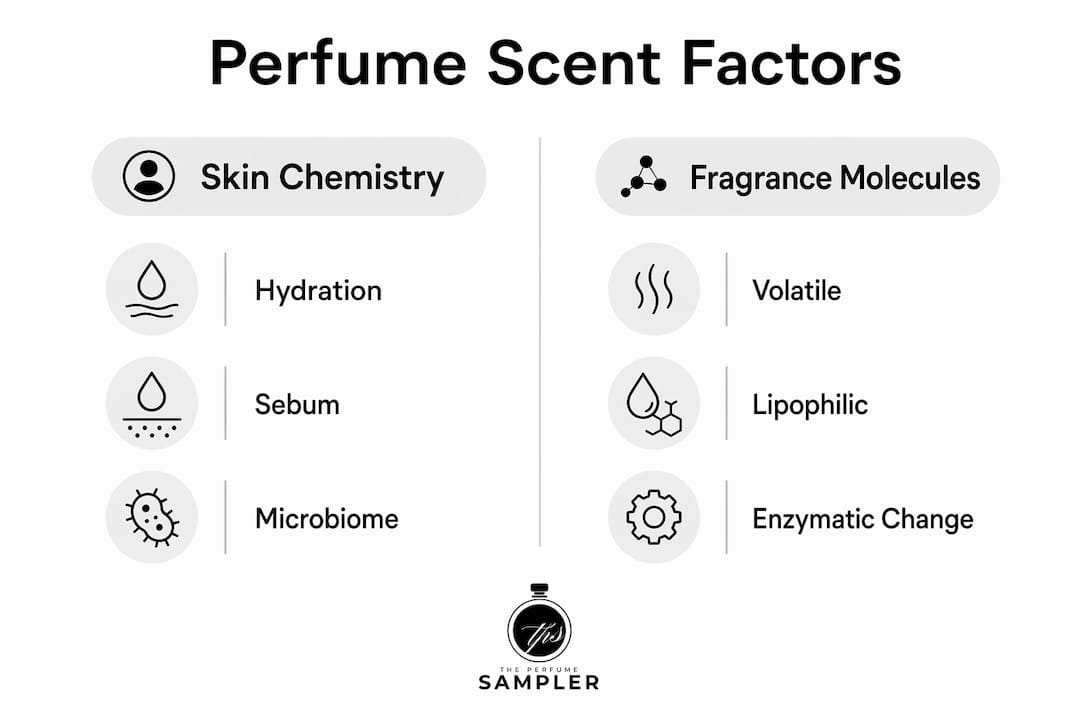
Not all fragrance molecules behave the same way on skin. Understanding the distinction between volatile and lipophilic compounds explains why some perfumes open brightly and fade fast while others build slowly and last for hours.
| Molecule type | Behaviour on skin |
|---|---|
| Volatile top notes (e.g. citrus, light florals) | Evaporate quickly; skin roughness accelerates their release |
| Lipophilic base notes (e.g. musks, woods, resins) | Bind to skin oils and hydrated layers; last significantly longer |
| Mid-range heart notes (e.g. spices, heavier florals) | Moderate evaporation; affected by both hydration and sebum levels |
Volatile compounds evaporate faster with increased skin surface roughness, while less volatile, lipophilic compounds are retained longer on hydrated skin. This explains why a citrus-forward fragrance might disappear within 30 minutes on dry skin, whereas a woody or musky base note from the same formula continues to perform for hours. The skin is not a neutral surface. It is an active participant in the fragrance formula.
Transepidermal water loss also plays a role here. Skin that loses moisture rapidly creates a more dynamic evaporation environment, pushing fragrance molecules off the surface faster than skin with a healthy moisture barrier. This is why fragrance longevity is so closely tied to skin condition rather than simply concentration of the perfume itself.
Testing a fragrance on a paper strip also misses this entirely. Skin enzymes and microbiome activity cause chemical changes not present on inert surfaces. A perfume that smells clean and linear on a blotter may develop unexpected animalic or sweet notes on your skin due to enzymatic reactions during dry-down.
Pro Tip: Always test a fragrance on your inner wrist or forearm and wait at least 20 minutes before deciding. The dry-down phase, when heart and base notes emerge, is where your personal skin chemistry has the most influence.
How do lifestyle, environment, and body chemistry affect personal scent?
Your skin chemistry is not fixed. It shifts daily based on what you eat, how stressed you are, the climate you are in, and the products you apply. This is why the same perfume can smell noticeably different on you from one week to the next.
- Diet and hydration. Diet, hydration, medications, and stress measurably alter the skin’s chemical substrate. Compounds excreted through sebum and sweat change the base layer that fragrance molecules interact with. A diet high in spiced or pungent foods can subtly alter your skin’s background scent, which blends into the fragrance you wear.
- Stress and hormones. Stress increases cortisol, which affects sebum production and sweat composition. This can make a previously loved fragrance smell sharper or more synthetic on a difficult day.
- Temperature and sweating. Warmer skin promotes stronger initial scent projection and faster evaporation, while cooler skin enhances longevity but reduces sillage. This is why the same fragrance performs very differently in summer versus winter, or in a heated office versus outdoors.
- Body zones. Pulse points such as the wrists, neck, and inner elbows generate more heat, which amplifies projection. The back of the knees and chest are cooler microclimates that extend longevity with less immediate projection.
- Layered products. Scented body lotions, hair products, and even laundry detergents on clothing all contribute to the overall scent impression. Layering an unscented base with your perfume gives the fragrance a cleaner canvas to develop on.
Understanding these variables helps explain why perfume performance is so personal and why reading reviews alone is an unreliable guide to how a fragrance will work for you specifically.
Practical tips for testing and selecting perfumes based on your skin chemistry
Getting the most from a fragrance requires adapting your testing and application approach to your own biology.
- Test on skin, not paper. Paper strips give you a rough idea of a fragrance’s character, but your skin chemistry will alter the dry-down significantly. Always test on your wrist or forearm before purchasing.
- Prepare your skin. Apply an unscented moisturiser 10 to 15 minutes before testing. This creates a hydrated base that more accurately reflects how the fragrance will perform in daily wear.
- Test one fragrance at a time. Testing multiple fragrances simultaneously on different parts of your arm creates interference. The scents blend and you lose the ability to evaluate each one accurately.
- Wait for the full dry-down. The opening notes of a fragrance last 10 to 30 minutes. The heart and base notes, which represent the majority of wear time, only emerge after that. Your skin chemistry has the greatest influence on this later phase.
- Test across different days. Because lifestyle factors alter your skin chemistry daily, a fragrance that smells flat on a stressed Monday may perform beautifully on a relaxed Saturday. Testing on two or three separate occasions gives a more reliable picture.
- Consider concentration. Eau de parfum and parfum concentrations contain higher proportions of lipophilic base notes, which bind more effectively to skin oils. If you have dry skin, these concentrations tend to perform better than eau de toilette formulations.
Pro Tip: If a fragrance you love fades too quickly, try applying it to slightly damp skin immediately after a shower. The residual moisture slows evaporation and can extend wear time by an hour or more.
Key takeaways
Skin chemistry scent is the primary reason the same perfume smells and performs differently on every person, driven by hydration, sebum, microbiome activity, and daily lifestyle variables.
| Point | Details |
|---|---|
| Hydration drives longevity | Moisturised skin retains fragrance molecules longer and improves projection noticeably. |
| Sebum enriches scent | Oilier skin produces richer, longer-lasting scent compared to dry skin. |
| Microbiome creates uniqueness | Your skin’s microbial activity blends with fragrance molecules to produce a scent profile no one else shares. |
| Lifestyle shifts your chemistry | Diet, stress, temperature, and medications all alter how a perfume smells on you day to day. |
| Always test on skin | Paper strips cannot replicate the enzymatic and bacterial activity that transforms a fragrance during dry-down. |
Skin chemistry is more personal than most people realise
I have been around fragrances long enough to know that the biggest mistake people make is trusting a review over their own skin. Someone writes that a particular fragrance lasts 12 hours with incredible projection, and you buy the full bottle expecting the same result. It fades on you within three hours. That is not a failure of the perfume. That is skin chemistry at work.
What surprises most people is how much their own chemistry changes over time. I have noticed that fragrances I found flat in my twenties smell richer and more complex now. Hormonal shifts, changes in diet, and even moving to a different climate all contribute. Your skin is not a static surface. It evolves, and your fragrance wardrobe should evolve with it.
The other misconception worth addressing is that dry skin is a disadvantage. It is not. It simply means you need to approach fragrance differently. Moisturising before application and choosing higher concentration formats such as parfum or extrait de parfum compensates effectively. You can read more about how fragrances evolve on skin to understand why the same bottle can smell different six months after purchase.
The most useful shift in thinking is to treat your skin as part of the formula. A perfumer creates the base, but your biology completes it. That is not a complication. It is what makes fragrance personal.
— Rupesh
Find your perfect scent with Theperfumesampler

The only reliable way to discover how a fragrance performs on your specific skin chemistry is to wear it. Theperfumesampler offers fragrance decants in 2ml, 3ml, 5ml, and 10ml sizes, giving you the opportunity to test niche and designer fragrances across multiple days and conditions before committing to a full bottle. This approach removes the guesswork entirely. You learn exactly how a scent develops on your skin, across different temperatures, moods, and occasions. Browse the full range at Theperfumesampler and build a testing wardrobe matched to your biology, not someone else’s review.
FAQ
What is a skin scent in perfumery?
A skin scent refers to a fragrance that stays close to the body rather than projecting outward, often blending so naturally with the wearer’s own chemistry that it is perceived as an extension of their natural scent rather than a separate fragrance.
Why does the same perfume smell different on different people?
Differences in skin hydration, sebum production, microbiome activity, and skin pH all cause the same fragrance molecules to evaporate and interact differently on each person, producing a distinct scent experience even from an identical bottle.
Does skin pH affect how a perfume smells?
Skin pH has a modest direct effect on fragrance smell compared to hydration and oil levels, but it influences enzyme activity that can subtly alter certain fragrance compounds during the dry-down phase, particularly in skin with a disrupted acid mantle.
How can I make perfume last longer on my skin?
Applying an unscented moisturiser before spraying perfume creates a hydrated base that slows evaporation. Choosing higher concentration formats such as eau de parfum or parfum also improves longevity, particularly on drier skin types.
Why should I test perfume on skin rather than a paper strip?
Paper strips cannot replicate the enzymatic and bacterial activity present on skin. Skin chemistry alters the fragrance dry-down in ways that blotter testing entirely misses, meaning a fragrance that smells appealing on paper may develop unexpected notes once applied to your body.