
How fragrance ageing works: enhance your scent knowledge
TL;DR:
- Perfume ageing involves chemical reactions like oxidation and photodegradation that typically degrade scent quality over time. Proper storage in cool, dark environments can slow degradation and extend fragrance lifespan. Perceived improvements are often emotional or due to initial settling, not actual chemical evolution.
Most perfume lovers assume that a bottle sitting on the shelf for a year or two is somehow getting better. It is a compelling idea. Aged wine, aged whisky, aged cheese — good things take time, right? The truth with fragrance is far more specific and, for collectors of niche and designer scents, far more important to understand. This article covers the chemical science behind ageing, how luxury houses prepare fragrances before sale, whether scents genuinely improve over time, and how to store your collection for maximum longevity.
Table of Contents
- The science behind fragrance ageing
- Maceration, maturation and shelf life: what really happens
- Does perfume really get better with age?
- How to store fragrances for optimal ageing
- Aged to perfection? The truth luxury fragrance collectors know
- Discover your next signature with confidence
- Frequently asked questions
Key Takeaways
| Point | Details |
|---|---|
| Aging triggers | Heat, light, oxygen, and humidity are the main factors that cause fragrances to age or degrade. |
| Production vs. consumer aging | True improving processes like maceration and maturation are completed before sale; post-purchase aging is usually chemical breakdown. |
| Myth of improvement | Most modern designer and niche fragrances do not improve with age—quality is best when fresh and properly stored. |
| Longevity tips | Store perfumes in cool, dark places and use regularly to enjoy them at their best. |
The science behind fragrance ageing
With the question of whether ageing improves fragrance firmly in mind, let us start with the science that dictates how and why perfumes change.
Fragrance ageing is not one single process. It is a series of chemical reactions that alter the molecular structure of scent compounds over time, both whilst the bottle sits unopened and as it is used. These reactions happen whether you do anything or not. Temperature, light, oxygen, and humidity are the four primary catalysts, and each one attacks different parts of the fragrance formula.
Oxidation is the most significant process. When fragrance molecules react with oxygen, they change shape and release different scent signals. This is not subtle. A citrus accord that once smelled bright and sharp can shift to something flat and faintly sour. A floral can become powdery and muted. The factors affecting perfume performance include everything from your skin chemistry to your storage environment, but oxidation is among the most destructive.
Photodegradation occurs when UV light breaks apart aromatic molecules. This is why amber glass bottles and opaque packaging exist. Direct sunlight can degrade a fragrance in weeks. Even indirect light from a window across the room contributes over months and years.
The key accelerators of negative ageing are heat, which doubles oxidation rates for every 10°C rise above 20°C, UV light causing photodegradation, oxygen entering through headspace as the bottle empties, and humidity promoting molecular breakdown.
“Every degree of heat and every photon of UV light is a slow erosion of the formula you paid for. The enemy is not time alone — it is what time brings with it.”
Here is a clear breakdown of the main ageing catalysts and what they do:
| Catalyst | Effect on fragrance | Common source |
|---|---|---|
| Heat | Doubles oxidation rate per 10°C | Bathrooms, sunny shelves |
| UV light | Breaks aromatic molecules apart | Sunlight, fluorescent bulbs |
| Oxygen | Reacts with compounds, alters scent | Headspace in part-empty bottles |
| Humidity | Promotes hydrolysis, molecular breakdown | Bathrooms, humid climates |
Physical changes also matter. Colour shifts are common as fragrances age, particularly in EdPs and parfums with higher concentrations of natural materials. A golden amber juice may darken significantly. This is a visual signal of chemical activity. It does not always mean the scent is ruined, but it confirms change is underway.
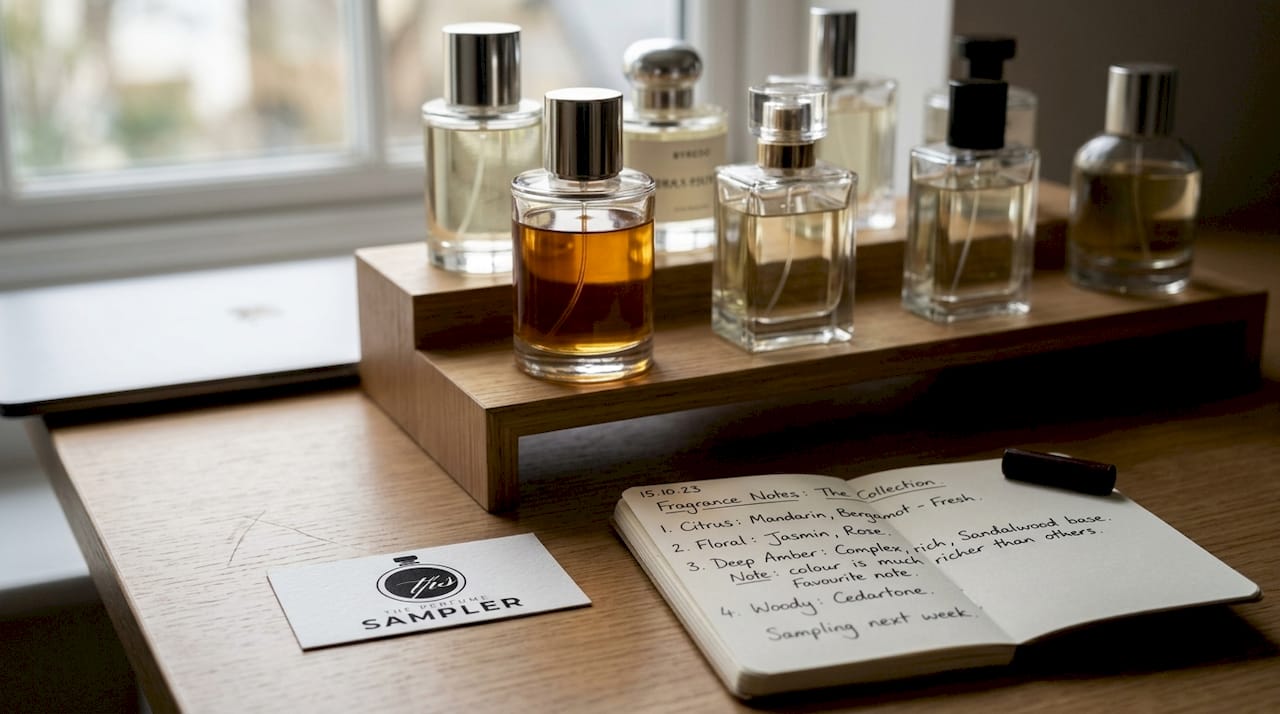
The key point is this: ageing is not neutral. Without intervention, the direction of travel is degradation, not improvement.
Maceration, maturation and shelf life: what really happens
Understanding the scientific triggers helps. Now it is important to distinguish how fragrances are stabilised before they reach you, and what happens after you purchase them.
There are two processes that happen before a fragrance ever reaches a retailer. Maturation refers to the blending of raw aromatic oils, which is allowed to rest for two to three weeks so the components bond and harmonise. Maceration follows, resting the alcohol-diluted mixture for a further two to three weeks to fully integrate and stabilise before bottling. As noted by Allure, these are distinct production stages designed to deliver a finished, stable product.
This matters enormously for how we think about ageing post-purchase. The fragrance you buy from a reputable luxury house is not a work in progress. It has been matured, macerated, and quality-controlled. The producer considers it finished.
| Process | When it happens | Purpose | Result |
|---|---|---|---|
| Maturation | Pre-dilution, at the house | Harmonise raw oils | Stable aromatic base |
| Maceration | Post-dilution, pre-bottle | Integrate alcohol blend | Finished, stable product |
| Consumer ageing | Post-purchase | Uncontrolled exposure | Mostly oxidation and degradation |
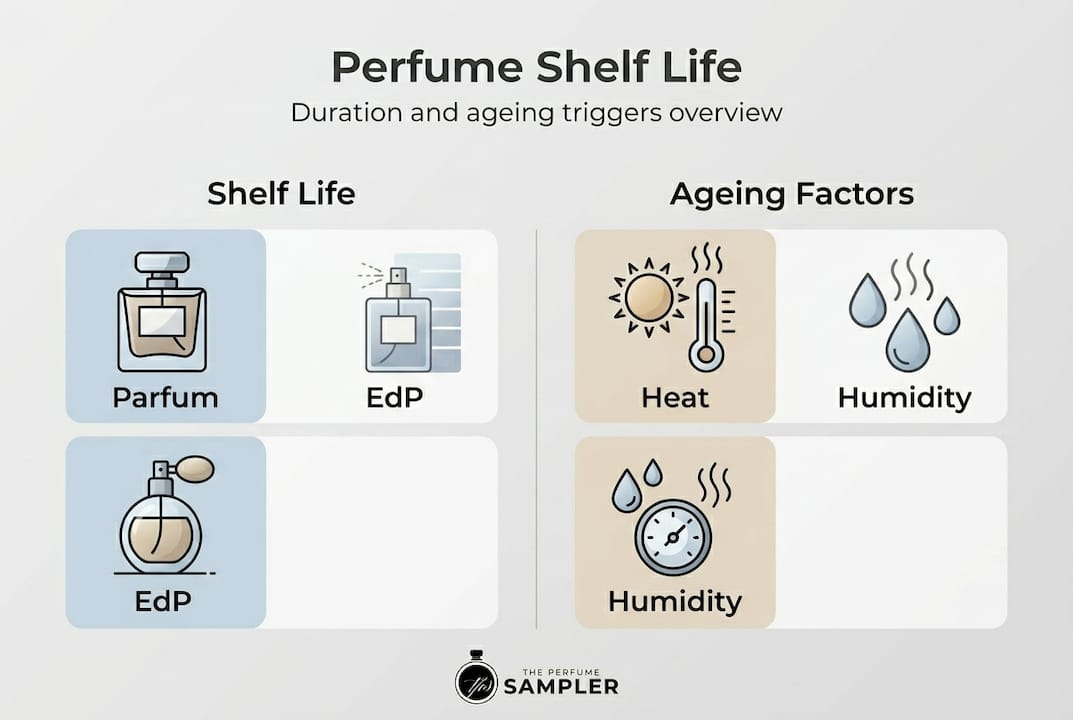
The average shelf life by concentration varies considerably, and it is useful to know before you invest. According to published benchmarks, properly stored parfum lasts six to eight years, EdP four to five years, and EdT two to three years. Citrus-heavy formulations degrade faster, often within one to two years, whilst woody and oriental compositions tend to endure five years or more.
Statistic to note: Citrus-forward fragrances can lose significant character within 12 to 18 months without ideal storage. Light top notes are simply the most volatile and most vulnerable.
Pro Tip: Spray a small amount from a new bottle on skin on day one, then repeat the same test after one week and again after one month. Noting changes in opening accord, heart, and dry-down gives you a personal benchmark for how that specific fragrance evolves in your ownership.
The practical takeaway is that any ageing that occurs after purchase is largely the consumer managing degradation, not guiding improvement. Understanding this removes the myth that patience is a strategy for better-smelling perfume.
Does perfume really get better with age?
Now that you know how your scent is prepared and preserved, let us tackle the popular belief that fragrances always get better with time.
The debate is genuine. Enthusiast communities are full of accounts from collectors who swear a bottle opened three years later smelled deeper, richer, and more complex. Others describe opening a cherished bottle to find it flat, sour, or simply gone. Both experiences are real. The question is what is actually happening.
Understanding fragrance evolution on skin is one thing. Evolution in a sealed bottle is another. The key distinction is this: luxury houses ship stable, finished products. As experts at Parfumo note, the changes that enthusiasts attribute to post-purchase maceration are, in the view of industry professionals, typically a combination of initial settling after transport and personal olfactory adaptation.
“Vintage Shalimar opened today may smell richer to the nose because the bergamot top note that once accounted for roughly 30% of the opening accord has largely degraded, leaving the deeper oriental base more exposed. That is not improvement. That is loss of dimension.”
Here are the most commonly cited reasons perceived improvement occurs:
- Initial settling period. A fragrance shaken during shipping may smell slightly different in the first few days as volatiles resettle. This is temporary and not a sign of ongoing improvement.
- Headspace oxygenation. A very small amount of oxygen entering the bottle can initially smooth harsh synthetic notes in the first weeks of use, which some interpret as the scent “opening up.”
- Olfactory adaptation. Familiarity with a fragrance changes how you perceive it. After repeated wearings, your nose stops registering certain elements as strongly, which can make the overall experience feel different, even if the formula has not changed.
- Loss of dominant top notes. Top notes degrade fastest. Without a sharp citrus or bright green accord competing for attention, the middle and base notes feel more prominent. This can create an impression of richness that is really just a different imbalance.
- Nostalgia and emotional association. The context in which you smell a fragrance matters. Memories tied to a scent can make an older bottle feel more meaningful, not more technically impressive.
The honest conclusion: for modern designer and niche fragrances, true chemical improvement post-purchase is rare. The maceration has already happened. What follows is time-dependent degradation, sometimes slow, sometimes rapid, always directional.
How to store fragrances for optimal ageing
Knowing ageing’s limits and what it actually does, let us turn to practical steps you can take to preserve your favourite scents at their best.
The four chemical triggers identified in the science section translate directly into four storage principles. Apply them consistently and your collection will last as long as the shelf life benchmarks suggest it should.
- Keep bottles away from direct and indirect light. A wardrobe shelf, a drawer, or a dedicated fragrance cabinet are ideal. Windowsills and bathroom shelves near windows are the worst options.
- Maintain a stable, cool temperature. Aim for below 20°C if possible, and avoid any location where temperature swings occur. Bathrooms cycle from hot and humid during showers to cooler between uses, making them particularly damaging.
- Minimise air exposure. Replace caps promptly after use. For bottles with spray mechanisms, this happens naturally, but splash bottles are more vulnerable. Decanting into smaller bottles as a large bottle empties also reduces headspace oxygen.
- Keep fragrances in their original boxes. The packaging blocks light and provides some temperature insulation. It also protects the bottle from dust and accidental UV exposure.
Fragrance type matters for storage priorities. Citrus-forward scents are the most vulnerable and benefit most from cool, dark conditions. Woody and oriental fragrances are more robust, but they are not immune. Heavy base notes such as oud, sandalwood, and musks do hold up longer, but heat will still accelerate their change over years.
The expert steps for lasting fragrance extend beyond storage to application technique, but the bottle itself must be protected first. Fragrance note stability varies by note family, and understanding which notes are in your collection helps you prioritise which bottles to use sooner.
Room-specific guidance worth knowing:
- Bathroom: Avoid entirely. Heat and humidity are constant threats.
- Bedroom wardrobe: Excellent choice. Stable temperature, dark, minimal humidity.
- Dressing table near a window: Acceptable only if no direct sunlight reaches the bottles and a UV-blocking curtain is in place.
- Refrigerator: Used by some collectors for citrus fragrances. Effective for slowing degradation, though the cycle of temperature change when removing and replacing bottles can offset the benefit.
Pro Tip: Keep a small notebook or digital note with the date you opened each bottle, a brief description of how it smells on day one, and periodic notes every three to six months. This gives you a real record of how your specific collection ages in your environment, which is far more useful than any general guideline.
The key accelerators of negative ageing are all environmental. The good news is that environment is the one variable you control.
Aged to perfection? The truth luxury fragrance collectors know
Here is an opinion worth sitting with: the romance of fragrance ageing is, for most collectors, more myth than practical strategy.
The idea that a perfume sitting in a drawer for five years will emerge transformed and superior is appealing. It also happens to be largely incorrect for anything produced after roughly the 1980s, when modern synthetic stabilisers became standard in luxury formulation. Contemporary niche and designer fragrances are engineered for stability, not evolutionary change. The maceration and maturation are complete before you ever open the box.
What actually drives perceived improvement, in our view, is almost always emotional rather than chemical. A bottle purchased during a meaningful trip, a scent worn at a significant life moment, a fragrance associated with someone close — these contexts change perception profoundly. When you smell that bottle two years later, the experience is richer because you are different, not because the formula is.
This does not diminish collecting. It reframes it. The value in investing in high-end perfumes is in what you experience wearing them now, at their intended peak, not in what they might theoretically become.
The collectors who genuinely understand ageing do not wait for transformation. They store carefully, use mindfully, and replace bottles when the time is right. They also sample widely before committing to full bottles, because they know that a fragrance at its best is a fragrance that is fresh, correctly stored, and enjoyed within its optimal window.
Proper storage and timely enjoyment will always beat waiting for a chemical miracle that modern perfumery was never designed to produce.
Discover your next signature with confidence
You now understand how fragrances age, what to expect from your collection, and how to protect it. The logical next step is ensuring you experience any new fragrance at its freshest, before committing to a full bottle.
At ThePerfumeSampler, we offer decants in 2ml, 3ml, 5ml, and 10ml sizes from the world’s leading niche and designer houses. Sampling allows you to assess a fragrance exactly as it was intended, fresh and at its peak, before deciding whether a full bottle suits your collection. Learn more about why try fragrance decants and how sampling smarter protects both your investment and your enjoyment. All decants are 100% authentic, shipped with care, and priced to make luxury fragrance genuinely accessible.
Frequently asked questions
What causes perfume to go off or spoil?
Exposure to heat, light, oxygen, and humidity accelerates oxidation and molecular breakdown, causing perfume to lose its scent profile or develop an unpleasant odour. Storing bottles correctly significantly slows this process.
Are older perfumes worth more or better smelling?
Older perfumes sometimes smell richer because their volatile top notes have degraded, exposing the base, but experts note this is not superior to fresh formulations and does not necessarily indicate greater value.
How long can I expect my perfume to last?
With proper storage, parfum lasts six to eight years, EdP four to five years, and EdT two to three years. Citrus-forward fragrances fade faster, whilst woody and oriental compositions are generally more resilient.
Can shaking or moving perfume bottles help with ageing?
Agitating a bottle introduces excess air and accelerates oxidation via headspace growth, so bottles are best stored still and handled gently during use.
Recommended
- How to make fragrances last longer: expert steps – ThePerfumeSampler
- How fragrances evolve: master scent profiles before you buy – ThePerfumeSampler
- What makes a fragrance truly unique: your scent guide – ThePerfumeSampler
- Key factors for picking fragrance: Affordable luxury scents – ThePerfumeSampler