
What is a dupe perfume? Your honest guide
TL;DR:
- Dupe perfumes are inspired by expensive designer scents, not counterfeit products, and are legally sold under different branding.
- They offer similar initial fragrances but often differ in dry-down, longevity, and projection due to lower-cost ingredients.
Dupe perfumes are one of the most talked-about topics in fragrance right now, and yet they are widely misunderstood. What is a dupe perfume, exactly? It is not a fake, not a forgery, and not a cheap imitation designed to deceive. A dupe perfume is a fragrance created to resemble the scent profile of a more expensive designer perfume, typically sold at a fraction of the price. For anyone curious about exploring affordable luxury scents without committing to a full-price bottle, understanding the dupe market is worth your time.
Table of Contents
- Key takeaways
- What exactly is a dupe perfume?
- Why dupe perfumes have become so popular
- How close are dupes to the originals?
- Ethical considerations and industry perspectives
- How to find and buy perfume dupes safely
- My take on dupe perfumes
- Try designer fragrances before you commit
- FAQ
Key takeaways
| Point | Details |
|---|---|
| Dupes are not counterfeits | A dupe perfume is inspired by an original scent, not a copy of its branding or packaging. |
| Legal protections are limited | Perfume formulas cannot be copyrighted, giving dupe brands legal room to operate. |
| Scent similarity varies | Dry-down and longevity often differ between a dupe and its original, even if the opening spray is close. |
| Social media drives demand | Platforms like TikTok have made dupe culture mainstream, particularly among younger consumers. |
| Sampling reduces risk | Testing before committing is the smartest way to evaluate any dupe or designer fragrance. |
What exactly is a dupe perfume?
Understanding the dupe perfume meaning starts with one critical distinction: dupes are not counterfeits. A dupe fragrance is made to resemble the scent profile of a more expensive designer perfume, marketed as “inspired by” rather than sold as the real thing. There is no fake branding, no copied logo, no attempt to pass the product off as something it is not.
A counterfeit product actively deceives. It replicates the bottle, the box, the brand name, and the packaging with the intention of misleading the buyer. A dupe does none of that. It openly acknowledges its inspiration and sells on the strength of its scent alone.
Here is where the key distinctions lie:
- Dupes: Fragrance inspired by a designer original. Sold under a different brand name with different packaging. Legal, provided no trademarks are infringed.
- Counterfeits: Direct copies of a designer product, including branding and packaging. Illegal and often unsafe.
- Replicas: A term sometimes used interchangeably with dupes, though occasionally misused to describe counterfeit goods. Read labels carefully.
The language dupe brands use matters. Phrases like “inspired by” or “similar to” are deliberate. They signal scent similarity without making claims that would constitute trademark infringement. Brand messaging avoids claiming dupes are identical to originals, instead using this language to maintain legal safety.
Pro Tip: If a product claims to be the actual designer fragrance at a suspiciously low price, that is a counterfeit, not a dupe. Walk away.
Why dupe perfumes have become so popular
The popularity of dupe fragrances is not accidental. It reflects a genuine shift in how consumers think about luxury, value, and spending. Designer perfumes are expensive. A 100ml bottle of a well-known niche fragrance can easily cost £200 or more. For many people, that price point puts entire categories of scent completely out of reach.
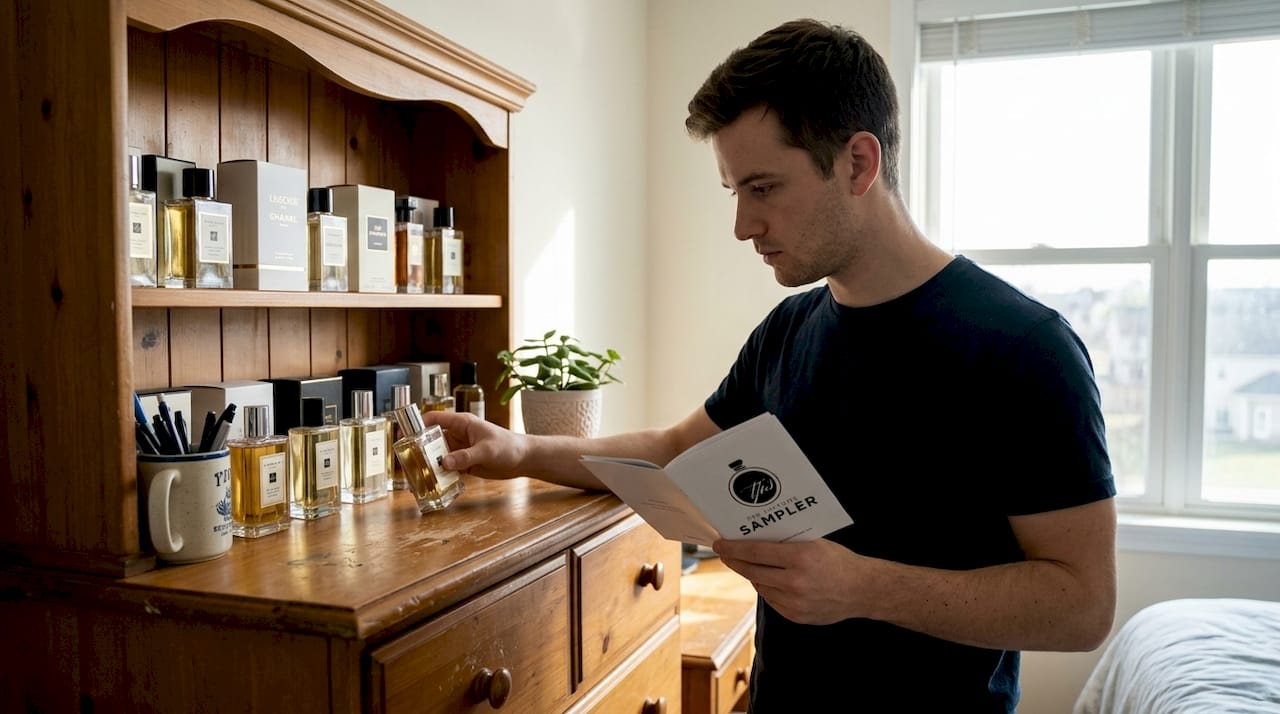
Dupes solve this problem directly. A dupe of Baccarat Rouge 540 from one well-known brand costs around $49, compared to $210 for the original. That kind of difference changes the maths entirely.
Beyond price, there are other reasons the dupe market has grown:
- Variety without commitment. Buying several dupes at low cost lets you explore a wider range of scents than a single full-price bottle would allow.
- Experimentation. Dupes give fragrance newcomers a lower-risk way to discover what styles and families suit them.
- Social media amplification. TikTok’s #perfumedupes hashtag has accumulated millions of views, driving awareness among younger audiences who might never have engaged with fragrance before.
- Luxury fatigue. There is a growing cultural sentiment, particularly among younger consumers, that luxury pricing reflects marketing and packaging costs rather than the quality of the fragrance itself.
Dupe culture is also partly a generational statement. It reflects a younger generation pushing back against traditional prestige pricing and asking reasonable questions about what they are actually paying for.
How close are dupes to the originals?
This is the question most people really want answered. The honest response is: it depends, and the answer is more nuanced than most dupe marketing suggests.
Dupe brands use professional analytical tools, specifically GCMS technology, to identify the molecular components of a target fragrance and recreate them as accurately as possible. This is a legitimate scientific process, and when done well, the results can be genuinely impressive.
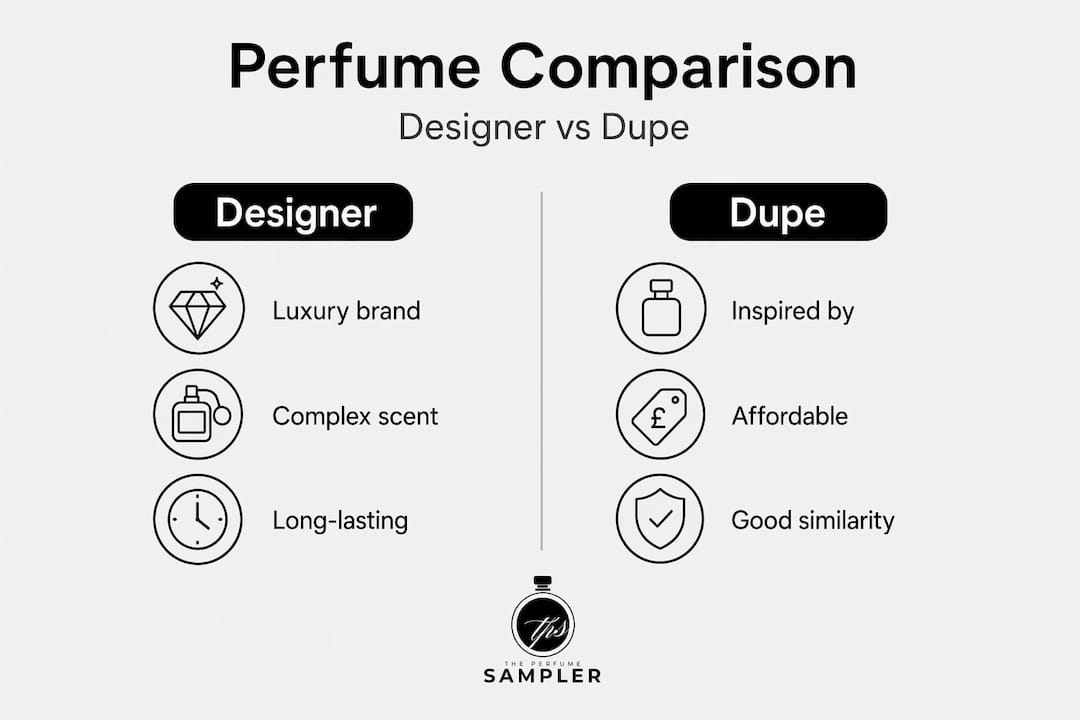
| Factor | Original designer perfume | Dupe perfume |
|---|---|---|
| Opening spray | Often very similar | Can be very close |
| Dry-down (middle/base notes) | Consistent and developed | Variable; may differ noticeably |
| Longevity on skin | Typically stronger | Often shorter-lasting |
| Projection | Fuller, broader | Usually reduced |
| Ingredient quality | High-grade raw materials | Cost-driven substitutions |
Even professional perfumers sometimes find it difficult to tell a good dupe apart from the original on first smell. But the full fragrance experience, including how a scent develops and performs across several hours, is where differences tend to appear.
Longevity and projection are the areas most likely to fall short. Dupes often use fewer high-cost raw materials, which affects both the depth of the scent and how long it lasts on the skin. This does not make them bad fragrances. It simply means your expectations should be calibrated accordingly.
Pro Tip: Never rely on the opening spray alone when testing a dupe. Wear it for at least three to four hours to understand the dry-down and judge overall performance.
If a dupe claims to smell completely identical, approach that claim with caution. If the scent truly were indistinguishable, the original would arguably be the better investment.
Ethical considerations and industry perspectives
The dupe conversation does not end at price and performance. There is a genuine ethical debate worth understanding.
On the legal side, the position is relatively clear. Perfume formulas cannot be copyrighted, but brand names and packaging are trademarked. This creates the legal space dupe companies operate within. A recent ruling in France confirmed that scent formulas are generally not copyrightable, reinforcing that position across European markets.
The ethical question is more complex. Creating a fragrance inspired by another perfumer’s work sits in grey territory. The original creator invested significant time, expertise, and money developing that scent. A dupe brand essentially benefits from that creative output without contributing to it.
“Though dupes skirt copying branding, they raise genuine ethical questions about exploiting creativity and originality in perfumery.” — NPR, 2025
Independent perfumers, in particular, feel this impact most acutely. Large luxury houses absorb competition more easily. Smaller artisan creators, whose entire identity is tied to a single signature scent, have much more to lose when a dupe captures the essence of their work for a fraction of the price.
As a consumer, being aware of this does not mean refusing to buy dupes. It means making considered choices, supporting original creators when you can, and understanding what your purchasing decisions represent.
How to find and buy perfume dupes safely
Knowing how to find perfume dupes is one thing. Buying them well is another. These practical steps will help you avoid disappointment and get real value.
- Start with a sample or small decant. Never buy a full bottle of any fragrance, dupe or original, without testing it first. Trying scents in smaller sizes is the single most effective way to avoid wasted money.
- Wear it for a full day. As covered above, the dry-down tells you more than the initial spray. Judge performance over time, not just on first contact.
- Check the return policy before you buy. This is especially relevant for online purchases. Testing before buying and confirming that returns are possible reduces the risk significantly.
- Read marketing language critically. “Inspired by” is honest. “Identical to” is a red flag. Reputable dupe brands use the former.
- Buy from established, transparent brands. Dupes sold through credible retailers with clear ingredient lists and customer reviews are far safer than anonymous online sellers.
- Avoid anything that mimics designer packaging. If the bottle or box looks like a copy of the original, you are looking at a counterfeit, not a dupe.
Finding reliable cheap alternatives to perfumes is not difficult once you know what to look for. The fragrance size options available from reputable sellers make it easier than ever to trial a range of scents without significant financial commitment.
Pro Tip: Cross-reference dupe recommendations on fragrance communities such as Fragrantica, where real users rate both originals and their dupe alternatives with genuine, unsponsored reviews.
My take on dupe perfumes
In my experience, the strongest argument for dupe fragrances is not the price. It is access. Fragrance should not be the preserve of those with the budget for a £250 bottle. Scent is personal, emotional, and deeply tied to identity. When dupes make that exploration possible for more people, that is genuinely positive.
I have tested plenty of dupes over the years. Some are genuinely impressive. Others disappoint within an hour of wear. The variability is real, and I think anyone who tells you otherwise is oversimplifying. But what dupes reliably do is lower the barrier to discovery. They let people try scent families, explore orientals or florals or woods, and understand their own preferences before spending serious money.
Where I draw a line personally is supporting dupes of small, independent perfumers whose entire creative output is captured in one or two original compositions. In that context, the ethical weight feels heavier. For dupes of major luxury houses? I find it harder to feel the same concern.
My advice: treat dupes as part of your fragrance education, not the endpoint. Use them to find what you love. Then, when you find a scent that genuinely moves you, consider investing in the original. Understanding what sets luxury fragrances apart makes that decision much clearer.
— Rupesh
Try designer fragrances before you commit
The smartest way to approach both dupe and designer fragrances is to sample before you spend. At Theperfumesampler, that is exactly what we make possible.
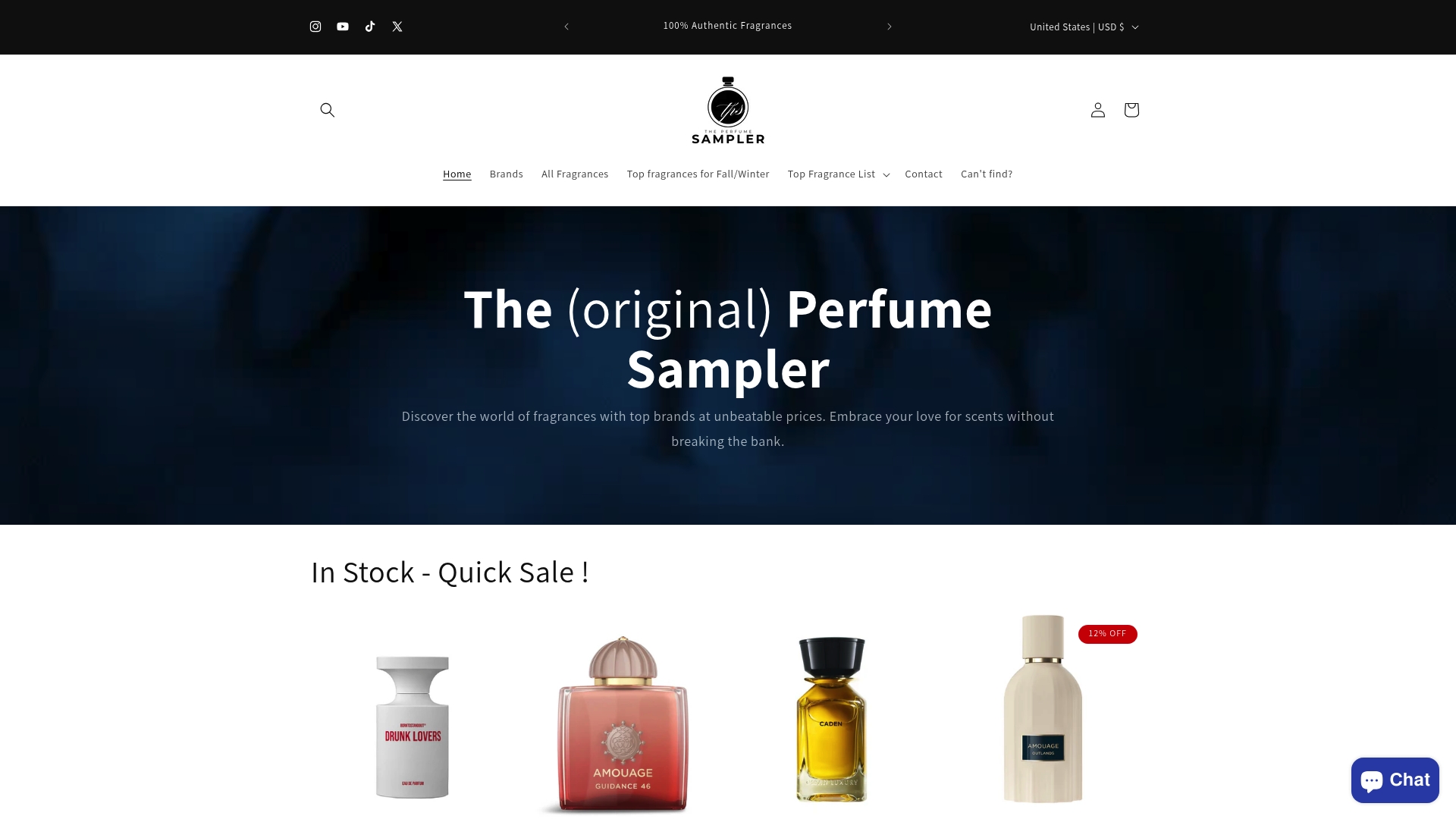
Theperfumesampler offers 100% authentic fragrance decants in sizes of 2ml, 3ml, 5ml and 10ml, covering high-end niche and designer fragrances from across the market. Rather than committing to a full bottle based on a description or a dupe comparison, you can wear the real thing first. Find out how the original performs on your skin before deciding whether it is worth the full price. Explore the benefits of fragrance decants and discover a more practical, cost-effective way to build your fragrance collection. Full bottles are also available for those ready to commit.
FAQ
What is a dupe perfume in simple terms?
A dupe perfume is a fragrance designed to smell similar to a more expensive designer scent, sold under a different brand name and marketed as “inspired by” the original. It is not a counterfeit and does not copy the original’s branding or packaging.
Are perfume dupes legal?
Yes, in most cases. Perfume formulas cannot be copyrighted, which means recreating a scent profile is generally legal. However, copying brand names, logos, or packaging is illegal and constitutes counterfeiting.
How close do dupe perfumes smell to the originals?
The opening spray of a well-made dupe can be very close to the original. However, the dry-down, longevity, and projection often differ, as dupes typically use fewer expensive raw materials.
How do I avoid buying a fake instead of a dupe?
Check that the product uses its own branding and is sold as “inspired by” a designer scent. If the bottle or packaging mimics the original, it is a counterfeit. Buy from reputable, transparent retailers and avoid unverified online sellers.
Is it better to buy a dupe or sample the original?
Sampling the original is nearly always the better first step. It lets you assess the actual scent, performance, and longevity before deciding whether to invest in a full bottle or consider a dupe as an everyday alternative.
Recommended
- Perfume reformulation: what every fragrance lover should know – ThePerfumeSampler
- What is a perfume reviewer? Insider role explained – ThePerfumeSampler
- Uncovering perfume prices: What makes fragrance cost vary? – ThePerfumeSampler
- Understanding perfume accords: your guide to scent harmony – ThePerfumeSampler