
How to track fragrance preferences effectively
TL;DR:
- Tracking fragrance preferences systematically helps prevent wasteful spending by identifying scents you genuinely love.
- Using tools like notebooks, spreadsheets, or apps enhances consistency and provides valuable data to inform your wardrobe choices.
You buy a perfume, wear it twice, forget the name, and spend the next month describing it as “that woody one with the sweet finish” to anyone who will listen. If that sounds familiar, you need a system. Learning how to track fragrance preferences is the single most practical step you can take to stop wasting money on full bottles and start building a wardrobe of scents you genuinely love. This guide covers the tools, the process, the common mistakes, and how modern technology can take your fragrance preference tracking further than a simple notebook ever could.
Table of Contents
- Key takeaways
- How to track fragrance preferences: tools you need
- Logging fragrance experiences step by step
- Using wearables to go beyond subjective notes
- Common tracking pitfalls and how to avoid them
- Building a scent wardrobe from your tracked data
- My take on fragrance tracking
- Start tracking with the right samples
- FAQ
Key takeaways
| Point | Details |
|---|---|
| Start with the right tools | Choose between a notebook, spreadsheet, or dedicated app based on how consistently you will update it. |
| Record impressions at each stage | Log your first impression, the mid-wear development, and the dry-down separately for accurate analysis. |
| Use samples before committing | Testing decants before buying full bottles prevents costly mistakes and builds richer tracking data. |
| Avoid common logging mistakes | Olfactory fatigue and poor application technique distort your records and skew preference data. |
| Review and act on your data | Periodically revisit your logs to spot scent family patterns and plan future purchases with confidence. |
How to track fragrance preferences: tools you need
Before you record a single note, you need to decide where and how you will capture your impressions. The method you choose directly affects how consistent your tracking will be.
The three main options are a physical notebook, a spreadsheet, or a dedicated fragrance app. Each has genuine strengths.
- Physical notebook: Portable, personal, and requires no screen. You can stick blotter strips directly onto the pages for scent memory. The downside is it is harder to search and sort entries over time.
- Spreadsheet (Google Sheets or Excel): Allows you to filter by note, rating, season, or house. You can build your own template and customise every column. Less portable but far easier to analyse across multiple entries.
- Fragrance apps (such as Parfumo or Fragrantica): Purpose-built for logging and discovery. The Parfumo database contains over 200,000 fragrances with contributions from a community of 7,800 members, making it one of the most thorough references available for cross-checking your impressions against others.
| Tool | Pros | Cons |
|---|---|---|
| Physical notebook | Tactile, portable, holds blotters | Hard to search or sort entries |
| Spreadsheet | Highly customisable, filterable | Requires setup; less portable |
| Fragrance app | Pre-loaded data, community ratings | Dependent on app availability and updates |
| Voice memo | Fast to record on the go | Difficult to organise or review later |
Blotter strips are worth mentioning separately. They let you preserve a physical scent snapshot and revisit it days later alongside your written notes. Pair them with small sample vials and you have a tangible reference library alongside your digital or written records.
Pro Tip: Label every blotter immediately after spraying. Within 30 minutes, unlabelled strips become unidentifiable, especially when testing multiple fragrances in one session.
Logging fragrance experiences step by step
Treating scent tracking like a journal with consistent updates leads to clearer understanding of personal preferences over time. The structure below gives you a repeatable process you can follow for every fragrance you test.
- Acquire a sample. Start with a decant or discovery sample rather than a full bottle. 40% of consumers prefer smaller fragrance formats before committing to a full purchase. This preference exists for good reason: it reduces financial risk and generates better tracking data.
- Prepare your skin. Apply an unscented moisturiser beforehand. Moisturising pulse points can add two to three hours to wear time, which means you have more to evaluate and record.
- Apply correctly. Spray from 6 to 8 inches away. Two to four sprays on pulse points produces a balanced scent projection without overwhelming your own senses or others around you.
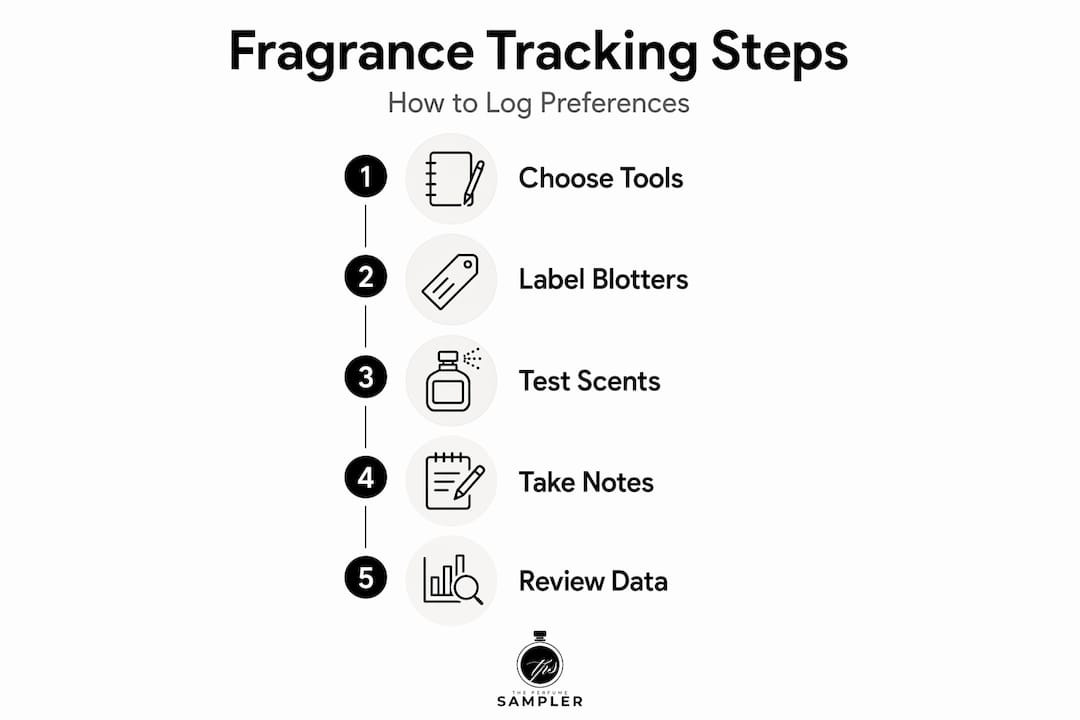
- Record the opening. Within the first five minutes, note your immediate reaction. Is it sharp, sweet, green, or powdery? Give it a numerical rating out of ten.
- Capture the heart. After 20 to 30 minutes, the top notes have settled. Note what you smell now, how it differs from the opening, and whether you like the direction it has taken.
- Note the dry-down. At the one to two hour mark, record the base notes. This stage often determines whether a fragrance is genuinely wearable for you long term.
- Record full details. Log the fragrance name, house, concentration (EDT, EDP, parfum), the date, weather conditions, and your skin type notes. Capturing name, date, environment, and ratings lets you spot patterns across dozens of entries.
- Update regularly. Return to your entry after wearing the fragrance a second or third time. First impressions shift, and your log should reflect that.
Pro Tip: Test no more than two fragrances per session. Beyond that, your nose becomes unreliable and your notes lose accuracy.
You can find detailed guidance on the methodology for reviewing scents systematically if you want to go deeper on the evaluation process.
Using wearables to go beyond subjective notes
Subjective impressions are valuable but they are also incomplete. Two people can wear the same fragrance and experience entirely different projection and longevity based on skin chemistry alone. This is where wearable technology adds a genuinely new dimension to how you analyse scent choices.
Wearables can provide skin temperature and heart rate data which correlate directly with fragrance projection and longevity on individual skin. Higher skin temperature tends to amplify top notes and shorten the overall arc. Cooler skin does the opposite.
Here is how to design a simple controlled fragrance trial using a smartwatch or fitness tracker:
- Apply the same fragrance under the same conditions across three separate days.
- Log your skin temperature reading at the point of application, at 30 minutes, and at two hours.
- Note heart rate variability if available, as elevated stress levels affect how your skin interacts with certain molecules.
- Record sillage (the scent trail you leave) and longevity in your log alongside the biometric data.
- Compare across trials to identify whether your body chemistry or environmental temperature is the dominant variable.
Wearable technology integration elevates fragrance testing from subjective impression to data-supported decisions. The limitation is that this level of tracking suits serious fragrance enthusiasts rather than casual wearers. It also requires you to wear the same fragrance repeatedly, which many people find impractical when testing a large collection. Use it selectively for fragrances you are seriously considering purchasing at full-bottle prices.
Understanding what affects perfume performance across different skin types and environmental conditions is also worth reading before you design your trials.
Common tracking pitfalls and how to avoid them
Fragrance tracking fails for predictable reasons. Knowing them in advance saves time and prevents bad data from skewing your conclusions.
- Mixing up samples without labelling them. A shared testing session with unlabelled vials produces useless records. Label everything before you open it.
- Olfactory fatigue mid-session. Your nose stops detecting a scent after prolonged exposure even if it is still present. Sniffing coffee beans between fragrances helps reset your perception, though the evidence for this is anecdotal. The real solution is spacing out tests.
- Rubbing wrists together after application. Rubbing breaks fragrance molecules and shortens longevity. Dab or spray and leave. This mistake consistently produces inaccurate longevity readings in your log.
- Ignoring environmental context. Heat, humidity, and even what you ate that day affect how a fragrance develops. Always log the weather and setting alongside the scent.
- Inconsistent logging times. Evaluating one fragrance at 8am on a cold morning and another at 7pm in a warm room produces incomparable data. Standardise your testing conditions where possible.
Reviewing your tracked entries every four to six weeks is more useful than daily logging for spotting genuine preference patterns. Frequency matters less than consistency and honesty in what you record.
Tracking progress regularly helps spot patterns that would otherwise remain invisible across individual testing sessions.
Building a scent wardrobe from your tracked data
Once you have 15 to 20 logged entries, the data becomes genuinely useful for purchases. This is where fragrance preference tracking pays off most clearly.
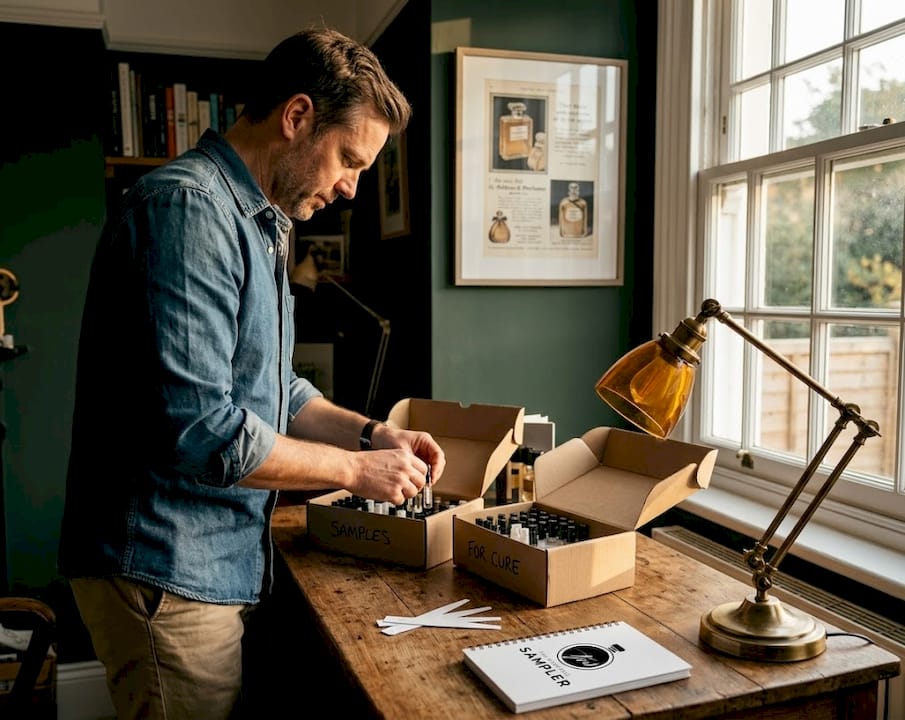
Start by grouping your highest-rated fragrances by family: woody, floral, citrus, oriental, gourmand, and so on. You will almost certainly find a cluster. Most people have one or two dominant families they consistently rate highly regardless of the season or occasion.
| Collection type | How tracking informs it |
|---|---|
| Everyday wearers | High-rated, moderate projection, comfortable dry-down |
| Office or work scents | Low sillage, neutral reception, good longevity |
| Evening or occasion fragrances | High impact, complex dry-down, full bottle worthy |
| Seasonal rotation | Citrus or green for summer; woody or oriental for winter |
| Discovery shelf | Samples and decants you are still evaluating |
Once your preferred families are clear, you can plan complementary additions rather than random acquisitions. If you know you love dry, woody orientals in winter, you can search deliberately rather than sampling whatever is trending.
Pro Tip: Use your tracking data to identify “safe bets” within your preferred houses. If you consistently rate a specific perfumer’s woody releases highly, their new releases carry lower risk and are worth sampling first.
Ranking sample scents with a consistent method ties directly into this planning process and helps you make confident purchase decisions without second-guessing yourself. The goal is to choose a fragrance that expresses your identity rather than one that simply smelled good on a blotter in a shop.
Using fragrance samples for affordable trials before committing to full bottles is the most practical way to build a wardrobe based on real tracking data rather than impulse.
My take on fragrance tracking
When I started keeping a proper fragrance log, I expected it to confirm what I already thought I knew about my preferences. It did the opposite. I had convinced myself I was a floral person, but my ratings told a different story. Every fragrance I scored nine or above was in the woody amber category.
That realisation alone saved me from buying several full bottles I would have eventually regretted. Over time, I also noticed my preferences shifting seasonally in ways I had not consciously registered. What I found genuinely surprising was how much the dry-down notes drove my scores. Top notes create the first impression but they rarely determine whether I actually wear something again.
On the technology side, I found wearable data most useful not for everyday testing but for the six or seven fragrances I was seriously considering at full-bottle prices. At that level, a few controlled trials with biometric notes felt worth the extra effort.
My honest advice is to start simple. A well-kept spreadsheet beats an abandoned app every time. The method matters far less than the consistency of use.
— Rupesh
Start tracking with the right samples
If you are ready to build your tracking log with real data, you need reliable samples to test.
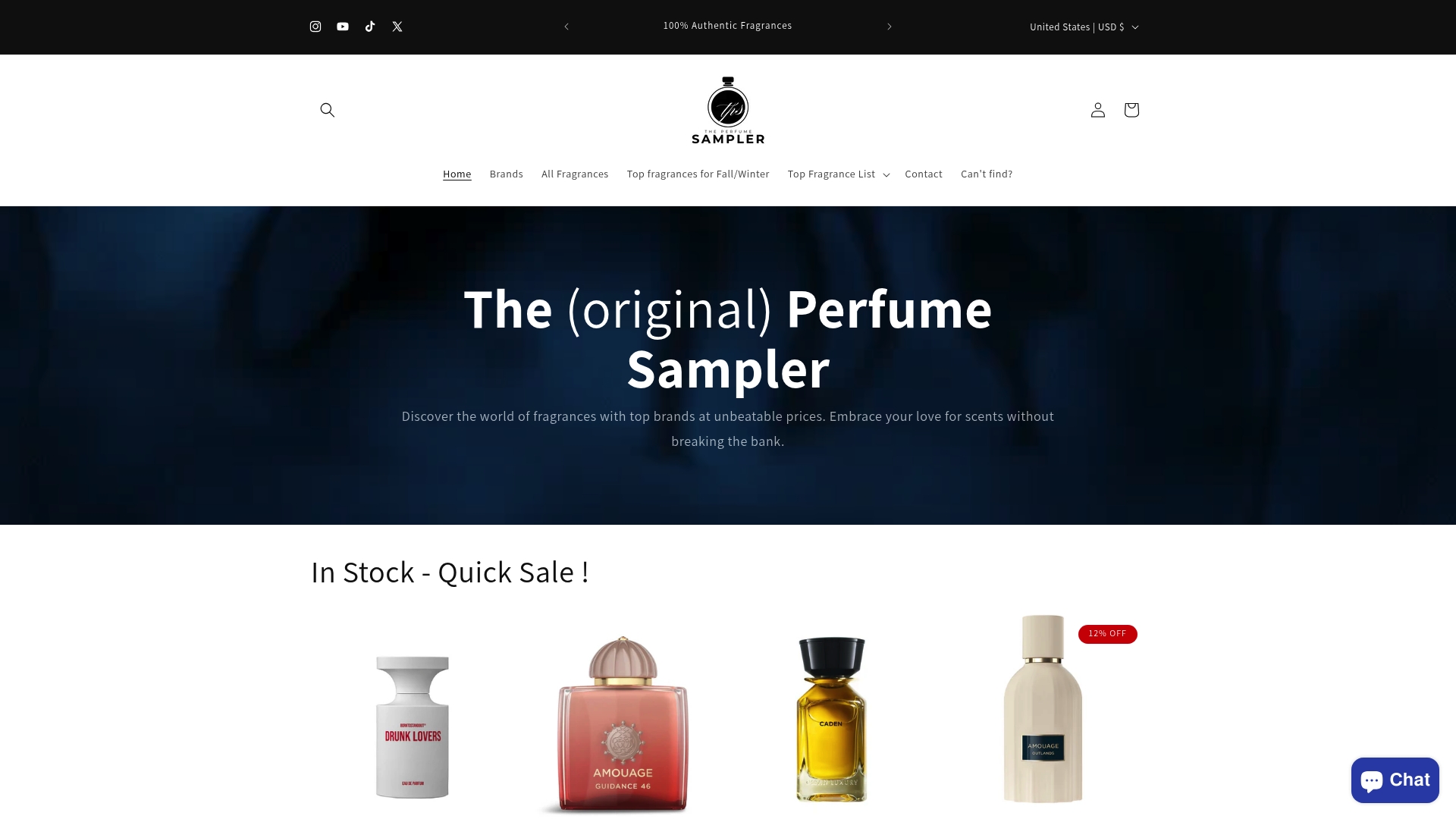
Theperfumesampler offers niche and designer fragrance decants in 2ml, 3ml, 5ml, and 10ml sizes, giving you exactly the volume you need to evaluate a fragrance across multiple wears without committing to a full bottle. All fragrances are 100% authentic. Find out why decants work for building a tracking-based fragrance wardrobe and browse the full range at Theperfumesampler. Start small, track carefully, and let the data guide your next purchase.
FAQ
What details should I record when tracking fragrance preferences?
Record the fragrance name, house, concentration, date, weather, application points, and subjective ratings at opening, heart, and dry-down. These details help you identify patterns across multiple wears and build reliable preference data.
How many fragrances should I test per session?
Test no more than two fragrances per session to avoid olfactory fatigue. Your nose becomes less reliable beyond two scents, which makes logged impressions inaccurate and harder to compare later.
Can wearable technology improve fragrance tracking?
Yes. Skin temperature and heart rate data from smartwatches correlate with how a fragrance projects and lasts on your skin, adding objective data to complement your subjective notes.
Why do my fragrance impressions change between wears?
Environmental conditions, skin temperature, diet, and hydration all affect how a fragrance develops. This is why logging context details alongside scent notes produces more accurate and comparable records over time.
How do I use tracked data to build a fragrance wardrobe?
Group your highest-rated entries by scent family to identify your dominant preferences. Then plan purchases within those families, using samples and decants to verify before buying full bottles.
Recommended
- How to rank sample scents for confident fragrance choices – ThePerfumeSampler
- Guide to fragrance scent mapping for enthusiasts – ThePerfumeSampler
- Discover wearable fragrances: a luxury guide to sampling scents – ThePerfumeSampler
- Key factors for picking fragrance: Affordable luxury scents – ThePerfumeSampler