
How to read fragrance labels: a practical guide
TL;DR:
- Reading fragrance labels reveals concentration percentages, scent notes, ingredients, and authenticity markers, empowering informed purchasing decisions. Understanding note layers and transparency details helps predict scent evolution and identify quality products while minimizing allergen risks. Applying this knowledge through sampling ensures fragrances suit your preferences and skin, fostering confidence in your selections.
Fragrance labels look simple until you actually try to read them. Terms like “Eau de Parfum,” “parfum,” and strings of unpronounceable ingredient names leave most shoppers guessing at the shelf. Knowing how to read fragrance labels changes that completely. It helps you choose the right concentration for your lifestyle, understand what is actually touching your skin, and spot the difference between a quality product and something not worth your money. This guide covers fragrance types, scent notes, ingredient transparency, and authenticity markers so you can shop with confidence.
Table of Contents
- Key takeaways
- How to read fragrance labels: concentrations explained
- Decoding fragrance notes on labels
- How to interpret perfume ingredients on the label
- Quality and authenticity: what to look for
- Practical tips for shopping and storing fragrances
- My honest view on fragrance labels
- Try before you buy with Theperfumesampler
- FAQ
Key takeaways
| Point | Details |
|---|---|
| Concentration determines longevity | Higher aromatic oil percentages mean longer wear and usually a higher price per bottle. |
| Notes evolve over time | Top, heart, and base notes each appear at different stages, shaping your overall impression of a scent. |
| “Parfum” hides many ingredients | The word “parfum” on an ingredient list can legally cover dozens of undisclosed chemicals. |
| Batch codes signal authenticity | Clear, intact batch codes and IFRA compliance markers are reliable indicators of a genuine, quality product. |
| Sampling before buying is smart | Testing a decant before committing to a full bottle lets you apply your label knowledge to real wear experience. |
How to read fragrance labels: concentrations explained
The most prominent claim on any fragrance label is the concentration type. It tells you how much aromatic oil the product contains, and that single figure affects everything from how long the scent lasts to how much you should pay.
Fragrance concentrations are categorised by aromatic oil percentages: Parfum sits at 20 to 30%, Eau de Parfum at 15 to 20%, Eau de Toilette at 5 to 15%, and Eau de Cologne at 2 to 5%. Parfum lasts the longest and sits closest to the skin. Eau de Cologne is the lightest and most affordable.
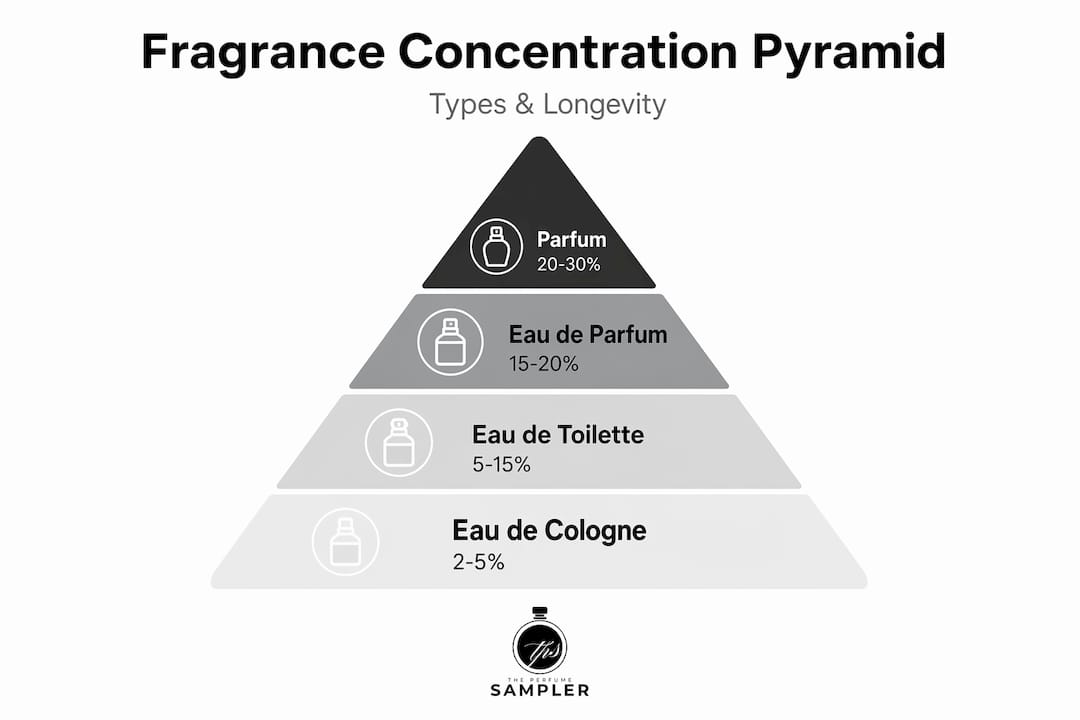
| Concentration | Oil % | Typical duration | Best use case |
|---|---|---|---|
| Parfum | 20–30% | 8–12 hours | Formal occasions, evenings |
| Eau de Parfum | 15–20% | 6–8 hours | Everyday wear, work |
| Eau de Toilette | 5–15% | 3–5 hours | Casual, daytime, warmer weather |
| Eau de Cologne | 2–5% | 1–3 hours | Sport, light refresh, budget buys |
Price follows concentration closely. A bottle labelled “Parfum” will cost more per millilitre than an Eau de Toilette from the same house, but it will also last longer per application. If you wear fragrance daily and value longevity, an Eau de Parfum often delivers the best balance of cost and performance.
Pro Tip: For warmer climates or daytime wear, an Eau de Toilette is frequently the wiser choice. The lighter oil content means the scent diffuses more openly in heat without becoming overpowering.
Decoding fragrance notes on labels
When a label lists “bergamot, jasmine, and sandalwood,” it is not random poetry. It is a map of how the scent will behave on your skin over time. Understanding fragrance note structure turns that list into genuinely useful information.
Fragrances are built in three layers. Top notes are what you smell immediately after spraying. Top notes evaporate within 5 to 30 minutes, heart notes last 30 minutes to 4 hours, and base notes provide the foundation, lasting 4 to 12 hours or more. The base is what you smell on your skin at the end of the day.
Here is a quick reference for common notes at each layer:
- Top notes: bergamot, lemon, grapefruit, pink pepper, green tea, ginger
- Heart notes: jasmine, rose, ylang-ylang, violet, geranium, iris, peony
- Base notes: sandalwood, vetiver, amber, musk, patchouli, oakmoss, vanilla
A label heavy in citrus top notes and floral heart notes signals a fresh, light fragrance. One that leads with spice and lists heavy wood and resin base notes will wear warmer and denser. You can read the personality of a scent before you ever smell it.
For a deeper look at how these layers interact, Theperfumesampler has a detailed guide on scent profiles and evolution as well as a breakdown of fragrance note layers worth reading alongside this one.
How to interpret perfume ingredients on the label
This is where fragrance label decoding gets genuinely important, particularly for anyone with sensitive skin or allergies. The ingredient list on a fragrance or cosmetic product follows the International Nomenclature of Cosmetic Ingredients (INCI) system. Ingredients are listed in descending order by concentration, with one important caveat.
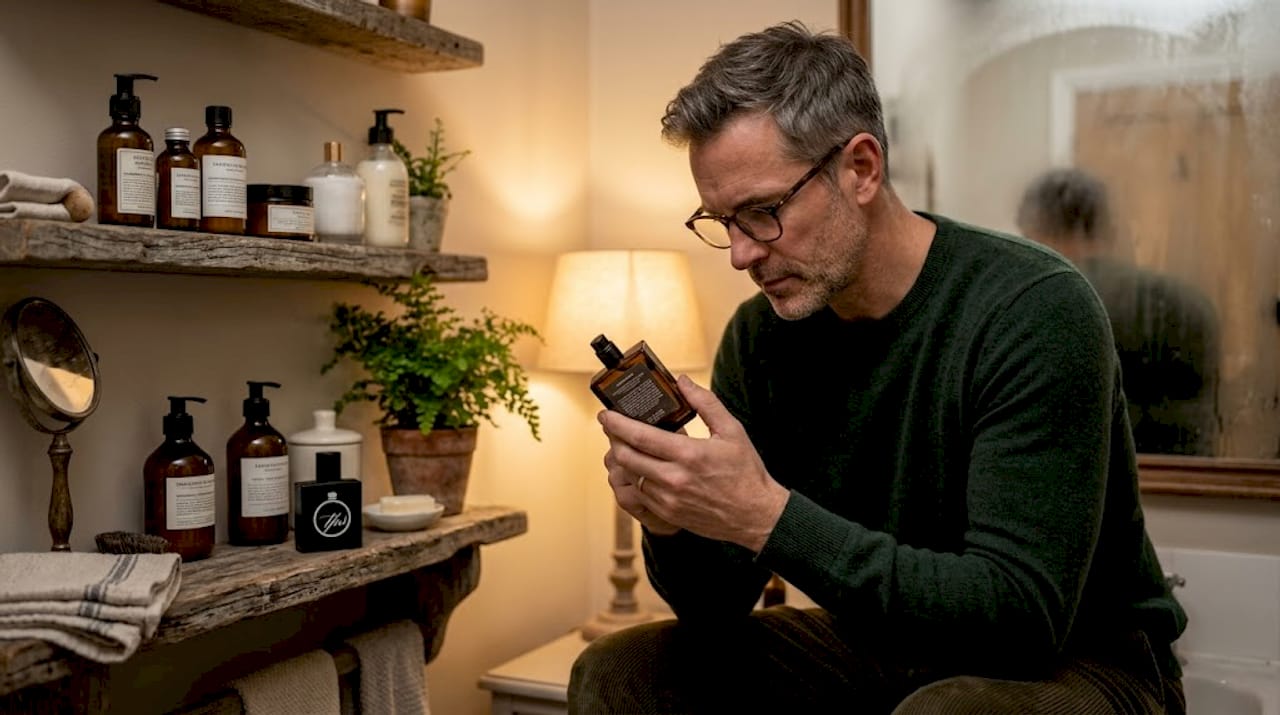
Ingredients under 1% can be listed in any order at the end of the list, making it difficult to determine exact concentrations of allergens or preservatives. This matters because fragrance components and potential irritants are often present at very low concentrations.
The single most important thing to know about reading ingredient lists: the word “parfum” or “fragrance” on a cosmetic label legally covers dozens or even hundreds of undisclosed chemicals. Trade secret protections mean brands are not required to name individual fragrance chemicals, only the blend as a whole.
Here is a practical process for reading an ingredient list if you have skin sensitivities:
- Scan the top five ingredients first. These make up the bulk of the product.
- Identify whether “parfum” or “fragrance” appears early or late in the list. Early placement means a higher concentration.
- Look below “parfum” for separately listed allergens. EU regulations require declared fragrance allergens to appear by name when present above certain thresholds.
- Cross-reference any listed allergens against your known triggers. Common ones include linalool, limonene, citronellol, and eugenol.
- Consider brands that disclose fragrance ingredients voluntarily beyond the legal minimum, as this signals greater transparency.
The difference between natural fragrances, essential oils, and synthetic fragrance also matters here. Essential oils are single-source botanical extracts, often listed by Latin name. Synthetic fragrance materials are lab-created and can be more stable and hypoallergenic than natural equivalents, but they are still covered under “parfum” unless named separately.
Pro Tip: If you react to a fragrance product and want to identify the cause, photograph the full ingredient list before purchase. Cross-check individually listed allergens with a dermatology-approved allergen reference rather than relying on “fragrance-free” marketing claims alone, which can still permit certain masking agents.
Quality and authenticity: what to look for
Not everything on a shelf is what it claims to be. Learning to read quality indicators alongside ingredient information is one of the more practical skills in fragrance label decoding.
Start with the label itself. A fragrance label with clear batch codes, bright packaging, and smooth sprays correlates with authentic, higher quality products. Batch codes are usually printed on the bottom of the bottle and the box. They should match. If one is missing, smudged, or obviously different, treat that as a concern.
| Label feature | What it signals |
|---|---|
| Clear, matching batch codes | Authentic product from legitimate supply chain |
| IFRA compliance statement | Formula meets International Fragrance Association standards |
| PAO symbol (e.g., 12M, 24M) | Shelf life after opening; helps judge freshness |
| Full INCI ingredient list | Transparency; brand accountability |
| Country of origin stated | Traceability and regulatory compliance |
A word on decoded perfumes. These are authentic products where batch codes have been intentionally removed to bypass regional sales controls. They are not counterfeit, but they sit in a grey area. If you buy a decoded fragrance, the scent should still be genuine. The removed code simply means the retailer bypassed geographic distribution agreements. Some batch code schemes are deliberately obscure and brand-specific, so decoding them requires contextual knowledge of the brand’s own methodology.
Sensory clues matter too. High quality perfumes show smooth transitions between notes, whereas counterfeit or low-grade products often smell sharp, flat, or excessively alcoholic on first spray. Cloudiness in the liquid, sediment, or a colour that differs significantly from the product description can also signal degraded or suspect products.
The Period After Opening (PAO) symbol, a small open jar icon with a number like “24M,” tells you how many months you have to use the product after opening before it may degrade. Proper storage in a cool, dark place is the other half of the equation. Heat and light break down fragrance molecules, so the PAO only holds if the product has been stored correctly throughout its life.
Practical tips for shopping and storing fragrances
Understanding label information is most useful when it informs what you actually do. Here is how to apply what you have learned when selecting, buying, and caring for fragrances.
- Match concentration to occasion. Light Eau de Toilette for offices and warmer months; Eau de Parfum or Parfum for evenings, cooler weather, or when you need longevity without reapplication.
- Read the notes list for seasonal fit. Fresh citrus and aquatic notes wear well in summer. Warm wood, amber, and spice base notes suit autumn and winter. Labels tell you this upfront if you know what to look for.
- Check the PAO before buying discounted stock. A product already opened or stored in poor conditions may smell different from what the label describes, regardless of concentration.
- Cross-check listed allergens. If linalool, limonene, or cinnamal appears on a label and you know your skin reacts to one of these, skip the product regardless of how appealing the scent description sounds.
- Use samples and decants before committing. A 5ml or 10ml decant gives you enough product to wear through the full note evolution across multiple days. This is the only reliable way to know whether a fragrance actually works for you.
- Consider price relative to concentration and ingredients. A label that lists natural absolutes and essential oils alongside a high concentration level justifies a higher price. Synthetic-heavy, low-concentration products at premium prices warrant more scrutiny. Theperfumesampler’s guide on what affects fragrance pricing explains this in more detail.
Reading labels with this framework means you are no longer guessing. You are making decisions based on actual product information.
My honest view on fragrance labels
I have spent a considerable amount of time reading fragrance labels, and the honest truth is that most people skip them entirely. They spray, they like it, they buy it. That is fine, until the bottle runs out and the replacement smells different, or until their skin reacts and they have no idea why.
What I have found is that labels are underestimated because they appear technical. The Latin names, the concentration codes, the allergen disclosures. People assume it is industry jargon meant to confuse rather than inform. In my experience, once you understand the structure, those labels become genuinely useful. You start to see patterns. A brand that lists individual fragrance components beyond the minimum legal requirement is usually one that takes quality seriously. A label missing a batch code or PAO symbol is often a signal to pause.
The other thing I have learned is that the fragrance industry does not make transparency easy. The “parfum” loophole is real, and it affects more consumers than realise it. I think anyone with even mild skin sensitivity should treat every unlabelled fragrance blend as an unknown quantity until proven otherwise.
What this knowledge actually delivers is confidence. You do not need to be a chemist to read a fragrance label well. You just need to know what the terms mean, what to look for, and what to question.
— Rupesh
Try before you buy with Theperfumesampler
Knowing how to read fragrance labels gives you a strong foundation. Applying that knowledge in practice is where it really counts.
Theperfumesampler offers fragrance decants in 2ml, 3ml, 5ml, and 10ml sizes across a curated selection of high-end niche and designer fragrances. Before investing in a full bottle, you can test a scent through its full note evolution, confirm it works with your skin chemistry, and check all the quality signals the label describes. All products are 100% authentic, sourced from genuine supply chains, and backed by customer satisfaction. Find out more about why decants work for informed, risk-free fragrance discovery. For a specific example of a high-concentration Parfum in practice, the Boss Bottled Absolu Parfum Intense is a useful reference point for understanding what a true Parfum concentration delivers on skin.
FAQ
What does “Eau de Parfum” mean on a label?
Eau de Parfum indicates an aromatic oil concentration of 15 to 20%, which provides a scent duration of roughly 6 to 8 hours. It sits between Parfum (the strongest) and Eau de Toilette in the concentration hierarchy.
What is “parfum” in an ingredient list?
On an ingredient list, “parfum” is a catch-all term covering an undisclosed blend of fragrance chemicals, protected under trade secret laws. It can contain dozens of individual compounds, including potential allergens, without naming them individually.
How do fragrance notes help when choosing a perfume?
Fragrance notes tell you how a scent will evolve over time. Top notes give the first impression, heart notes form the character of the scent, and base notes determine what lingers. Reading these on the label helps you predict whether a fragrance suits your preferences and lifestyle before you buy.
What is a PAO symbol and why does it matter?
The PAO (Period After Opening) symbol shows how many months a product remains at its best after first use. A marking like “24M” means 24 months. It is especially relevant for fragrances stored improperly or bought as discounted old stock.
How can I tell if a perfume is authentic from the label?
Authentic products carry clear, matching batch codes on both the bottle and outer box, an IFRA compliance statement, and a full INCI ingredient list. A missing or smudged batch code, combined with an unusually low price, is a common warning sign.
Recommended
- How to find your signature scent: a complete guide – ThePerfumeSampler
- Discover wearable fragrances: a luxury guide to sampling scents – ThePerfumeSampler
- How fragrance ageing works: enhance your scent knowledge – ThePerfumeSampler
- How to review luxury fragrances: step-by-step guide – ThePerfumeSampler