
Your guide to wearing strong perfumes effectively
Wearing strong perfumes well comes down to a few consistent habits: apply to moisturised skin at pulse points, avoid rubbing, choose the right concentration, and stay mindful of your environment. Done correctly, a bold fragrance can last all day without overwhelming those around you.
Key application principles:
- Apply to moisturised skin. Unscented moisturiser before spraying can double scent duration by giving fragrance molecules something to cling to.
- Target pulse points: wrists, neck, behind the ears, inner elbows, and back of knees. Body heat at these spots diffuses fragrance steadily throughout the day.
- Never rub your wrists together after spraying. It breaks down top notes and shortens the scent’s lifespan.
- Choose Eau de Parfum (15–20% concentration, lasts 6–9 hours) or Extrait for all-day wear. Lower concentrations simply are not built for it.
- Store bottles in a cool, dark place away from bathroom humidity to preserve the fragrance composition.
- Layer lightly with complementary scented body products to build depth without clashing.
Pro Tip: Use the distance test before leaving the house. Your perfume should be noticeable at arm’s length but not detectable from across a room. If it crosses that threshold, reduce your spray count by one.
Table of Contents
- How perfume concentration and scent notes affect longevity
- How to apply strong perfumes for maximum effect
- Common mistakes that make strong perfumes overpowering
- Choosing the right scent tone for your personality and occasion
- When is the best time to apply your perfume?
- How and when to reapply strong perfumes
- Try strong fragrances before committing to a full bottle
- Key takeaways
How perfume concentration and scent notes affect longevity
Understanding perfume concentration is the single most practical step towards longer-lasting fragrance. The higher the oil content, the longer the scent stays on skin.
Concentration levels and typical wear times:
- Eau de Cologne (EDC): short wear time with mostly top notes; fades quickly.
- Eau de Toilette (EDT): moderate wear time; often needs reapplication.
- Eau de Parfum (EDP): longer lasting with better projection.
- Parfum / Extrait de Parfum: highest concentration and longest wear time; minimal sprays needed.
Scent notes also shape how a fragrance performs over time. Top notes (citrus, light florals) are the first impression but fade within 30 minutes. Middle or heart notes (rose, jasmine, spice) carry the character of the fragrance for several hours. Base notes (oud, amber, sandalwood, musk, vanilla) are what remain after hours of wear and determine how long the fragrance truly lasts. Fragrances built on heavy base notes naturally cling to skin longer.
Fragrance families matter too. Woody, amber, and oriental compositions tend to project powerfully and last well. Citrus and aquatic families are lighter and dissipate faster, particularly in cold weather.
Pro Tip: If you have dry skin, your fragrance will fade faster regardless of concentration. The moisturiser step is not optional for dry-skinned wearers — it is the fix.
How to apply strong perfumes for maximum effect
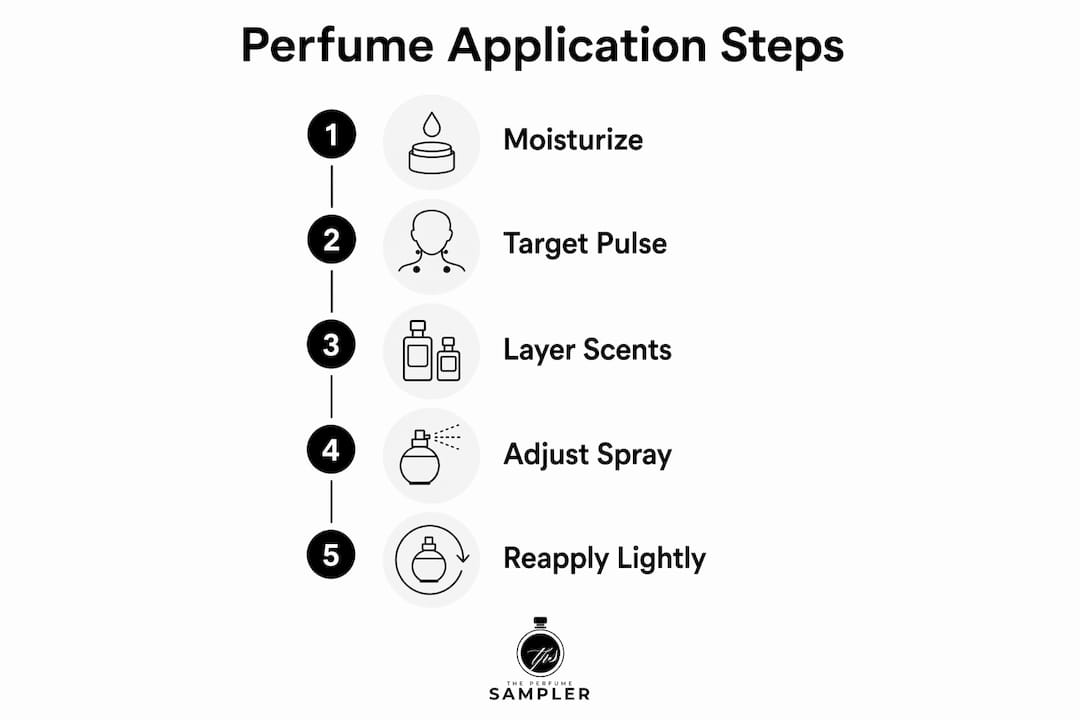
Applying perfume immediately after showering, when skin is warm and slightly damp, gives fragrance the best possible base. The warmth opens the skin and helps the scent develop fully.
Application best practices:
- Apply unscented moisturiser 5–10 minutes before spraying. This creates a smooth base that holds fragrance molecules and releases them gradually.
- Spray from 15–20 cm away for a controlled, even mist rather than a concentrated wet patch.
- Target less obvious pulse points: the nape of the neck, back of knees, and hair mid-lengths all hold scent well and project at different heights throughout the day.
- Spray each wrist separately rather than pressing them together.
- Apply lightly to the inside of a scarf or jacket collar. Fabric holds fragrance significantly longer than skin.
Layering an oil-based attar or solid perfume underneath your spray anchors the fragrance and extends longevity by several hours. This technique is particularly effective with bold oriental or woody compositions.
Pro Tip: For reapplication during a long day, carry a solid perfume or small decant rather than a full bottle. A single controlled dab on the wrist is far easier to manage than an additional spray, which risks tipping into over-application.
Common mistakes that make strong perfumes overpowering
Most people who wear too much perfume are unaware of it. Olfactory fatigue causes your brain to filter out your own scent within 15–20 minutes of application. The fragrance has not faded; you have simply stopped noticing it. Others around you still can.
Mistakes to avoid:
- Rubbing wrists together. Friction accelerates evaporation of top notes and disrupts the fragrance’s intended development.
- Storing perfume in the bathroom. Temperature and humidity swings from showers degrade fragrance composition over time.
- Spraying too close to the skin. This concentrates the fragrance in one spot and creates an overpowering wet patch rather than an even mist.
- Reapplying mid-event because you cannot smell it. This is olfactory fatigue, not fading. Others still perceive the scent clearly.
- Ignoring the environment. Heat amplifies projection significantly. On warm days, reduce your spray count by one.
Spray counts should be matched to the setting, using fewer sprays indoors and more for casual or outdoor occasions, adjusted according to fragrance concentration.
Pro Tip: If someone mentions your perfume is strong, respond without defensiveness. Acknowledge it warmly, step outside briefly if possible, and let time and air do the work. Avoid reapplying. Attributing the comment to fragrance sensitivity rather than poor judgement on your part keeps the exchange gracious.
Choosing the right scent tone for your personality and occasion
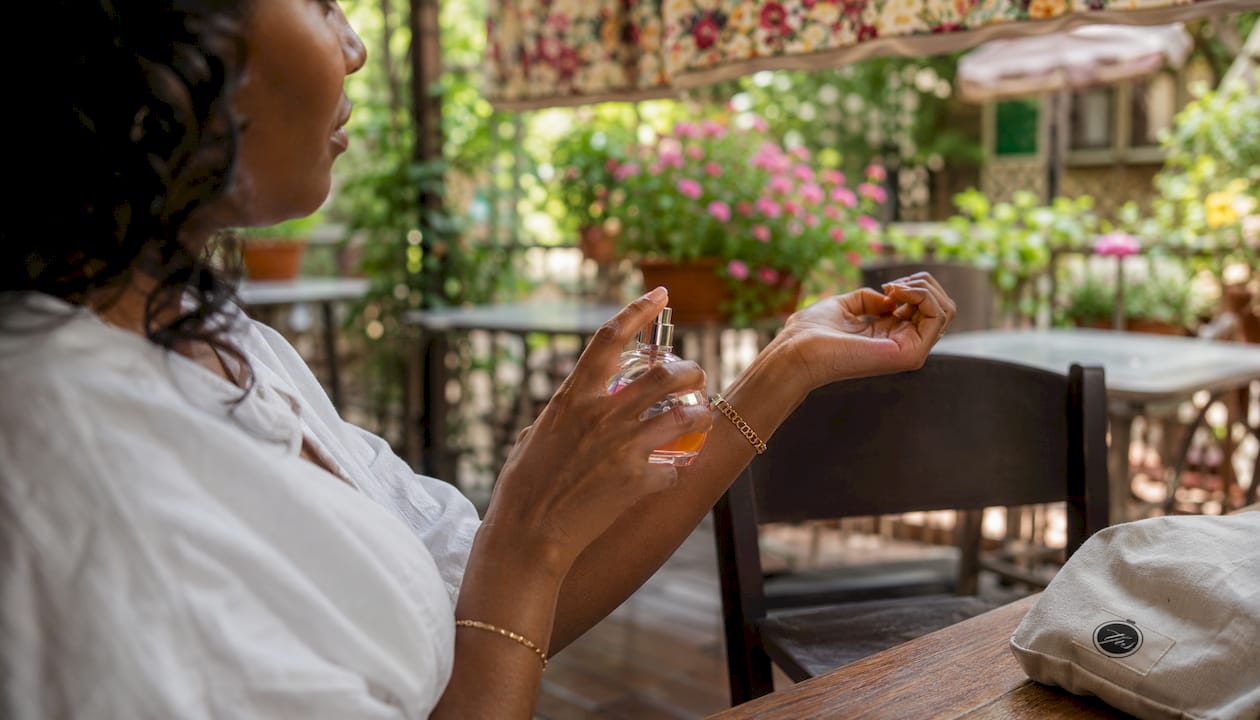
Matching a fragrance to the occasion is as important as how you apply it. A scent that works perfectly outdoors on a Saturday evening can feel intrusive in a Monday morning meeting.
Fragrance families by occasion:
- Office and formal settings: Light florals, clean musks, soft woods. Avoid heavy orientals, dense oud, and gourmand compositions.
- Casual daytime: Citrus, aquatics, green florals. Fresh and approachable without demanding attention.
- Evening and social events: Ambers, spiced orientals, warm vanillas, dark woods. These families are built for projection and lasting power.
- Outdoor and warm-weather wear: Citrus and aquatic families work well; heavy musks and spices can become overwhelming in heat.
Season affects scent choice directly. Cold weather mutes projection, so bolder compositions perform better in winter. Summer heat amplifies every note, making lighter concentrations and fresher families the safer choice. Understanding how to pick a fragrance for the right context saves you from wearing something technically excellent in entirely the wrong setting.
Layering complementary scent families adds depth without clashing. A woody base paired with a light floral spray, for example, creates a more complex and personal result than either alone. The key is keeping the families adjacent on the fragrance wheel rather than opposing.
When is the best time to apply your perfume?
Timing matters more than most people realise. Applying perfume immediately before walking into a social setting means arriving in the most volatile, high-projection phase of the fragrance. Top notes are loudest in the first 10–20 minutes after application.
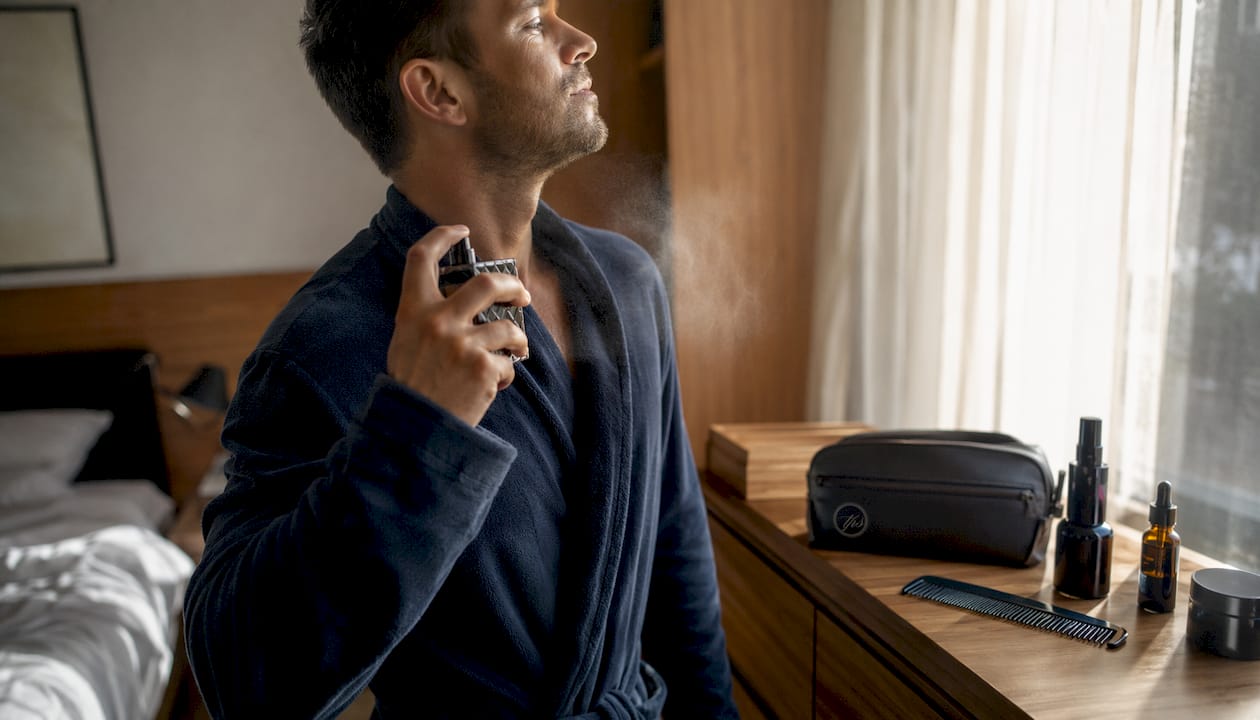
Apply perfume well before attending an event or entering an office to allow the initial strong notes to mellow, resulting in a softer, more refined projection upon arrival. This single habit makes a noticeable difference to how others perceive your scent.
For everyday wear, applying right after your morning shower is ideal. Warm, slightly damp skin absorbs fragrance well and the gradual dry-down throughout the morning means the scent reaches its most balanced phase during peak social hours. For work fragrance guidance, applying at home rather than at the office is always the better approach.
How and when to reapply strong perfumes
Strong fragrances, particularly Eau de Parfum (15–20% concentration, lasts 6–9 hours) and Extrait concentrations, rarely need reapplication within the first six to nine hours. The impulse to reapply is almost always driven by olfactory fatigue rather than actual scent loss.
Before reaching for your bottle, do a quick check: bring your wrist close to your nose and smell the application point directly. This brief close-range sniff often reactivates your perception of the scent. If a trusted person nearby confirms they can still smell it, skip the reapplication entirely.
When reapplication is genuinely needed, keep it minimal. One spray on a single pulse point is sufficient for a refresh. Avoid reapplying in enclosed spaces such as lifts, cars, or meeting rooms. Step outside or into a private space, apply conservatively, and wait a few minutes before returning. For custom perfume longevity, the same principle applies: less is more when the base concentration is already high.
Try strong fragrances before committing to a full bottle
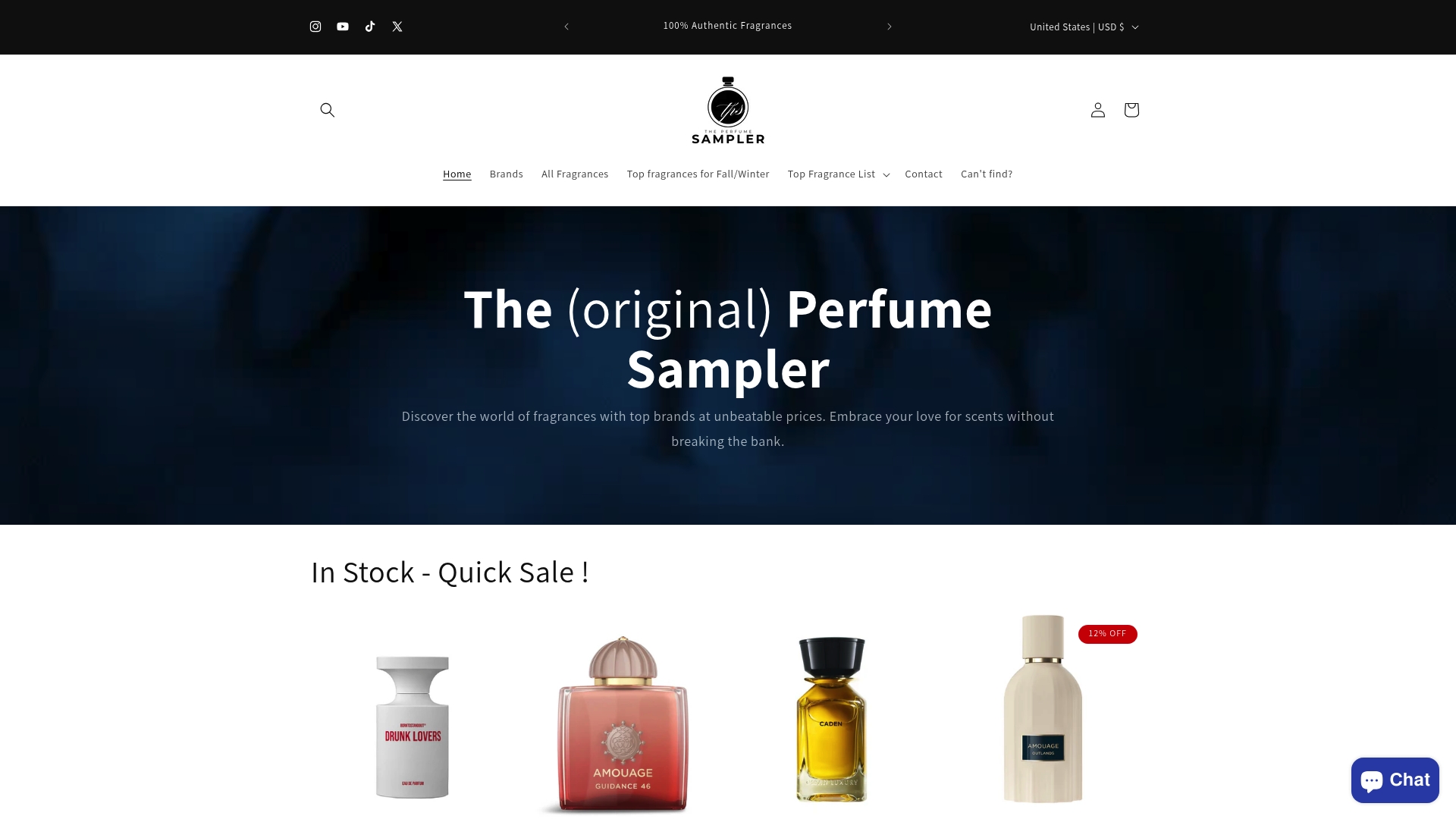
Theperfumesampler offers a practical solution for anyone wanting to wear bold, long-lasting fragrances with confidence. Rather than spending on a full bottle of an unfamiliar scent, you can order decants in 2ml, 3ml, 5ml, and 10ml sizes. This lets you test how a strong Eau de Parfum or Extrait performs on your skin, across different settings, before making a larger investment.
Strong fragrances vary considerably in projection and longevity depending on skin chemistry and wear conditions. Sampling first removes the guesswork. Theperfumesampler stocks 100% authentic niche and designer fragrances, including high-concentration options built for all-day wear. Find out why decants work for discovering bold fragrances at a fraction of the cost of a full bottle.
Key takeaways
Wearing strong perfumes effectively requires moisturised skin, correct pulse point targeting, and spray counts matched to the setting and concentration.
| Point | Details |
|---|---|
| Moisturise before spraying | Unscented moisturiser can double scent duration by giving fragrance molecules a base to cling to. |
| Match concentration to occasion | Eau de Parfum (15–20% concentration, lasts 6–9 hours) and Extrait offer the longest wear times; choose accordingly for all-day wear. |
| Never rub wrists together | Friction breaks down top notes and shortens the fragrance’s intended lifespan. |
| Olfactory fatigue is the main risk | Your nose adapts within 15–20 minutes; others still smell your scent clearly, so avoid reapplying unnecessarily. |
| Theperfumesampler | Offers authentic fragrance decants in 2ml–10ml sizes, letting you test strong perfumes before buying a full bottle. |
Recommended
- Your guide to first fragrance purchase: choose with confidence – ThePerfumeSampler
- What affects perfume performance: fragrance guide – ThePerfumeSampler
- Workday fragrance selection guide for professionals – ThePerfumeSampler
- Discover wearable fragrances: a luxury guide to sampling scents – ThePerfumeSampler