
Your guide to first fragrance purchase: choose with confidence
TL;DR:
- A first fragrance purchase guide emphasizes understanding fragrance families, the note pyramid, and skin chemistry for better selections. Testing scents on skin, not paper, over 30 to 60 minutes helps reveal their true character, especially in different climates. Sampling via decants or discovery sets reduces the risk of costly mistakes and leads to a more satisfying, personalized scent choice.
A guide to first fragrance purchase is, at its core, a structured approach to understanding how perfumes develop on your skin and which scent families suit your personal style. Most first-time buyers make the mistake of judging a fragrance in the first thirty seconds. That single error accounts for more wasted money than any other factor in perfume shopping. This guide covers fragrance families, the note pyramid, skin chemistry, climate effects, and buying methods that reduce risk. Resources like Fragrantica, Basenotes, and discovery sets from brands such as Maison Margiela and Jo Malone are useful starting points, but the principles here apply regardless of which direction you explore.
What is a guide to first fragrance purchase?
Understanding fragrance families is the single most useful framework for any beginner. Perfumers organise scents into groups, much like music genres, and knowing your preferences across woody, floral, citrus, gourmand, and oriental families helps you narrow your search before you even walk into a shop. A woody fragrance like Dior Sauvage leans on cedarwood and vetiver. A gourmand like Thierry Mugler Angel uses vanilla and caramel. A fresh citrus like Acqua di Parma Colonia opens with bergamot and lemon. Identifying which category appeals to you cuts the number of options from thousands to dozens.
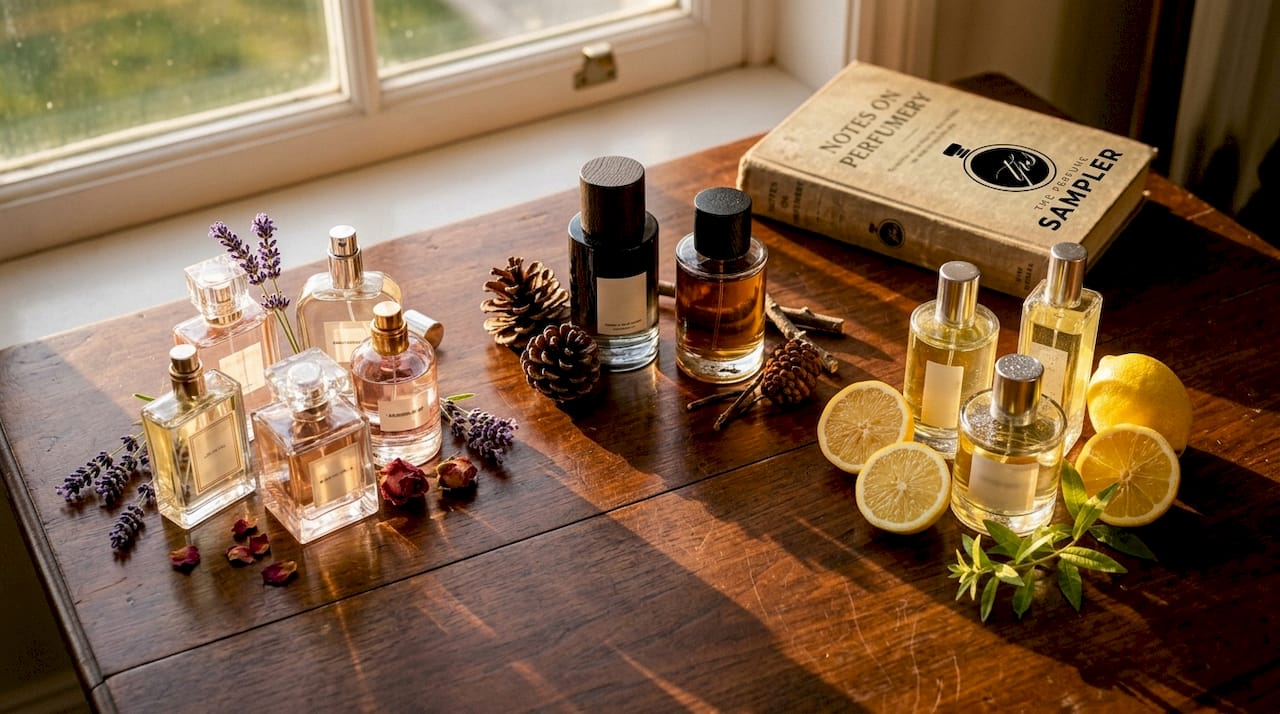
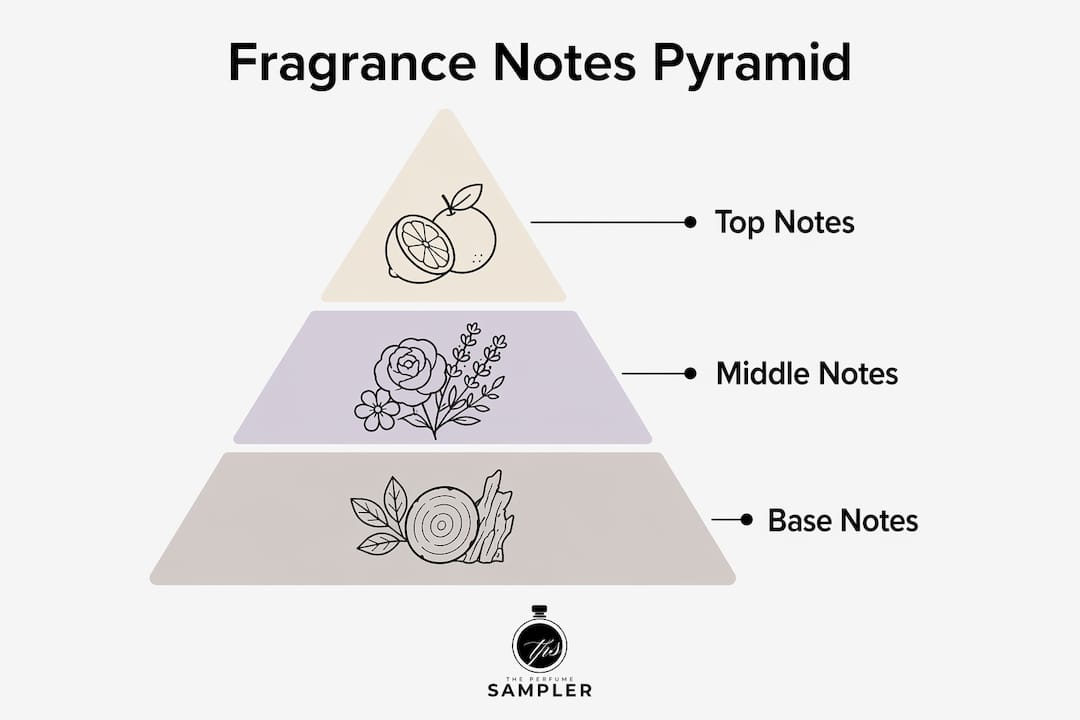
The fragrance note pyramid is the structural backbone of every perfume. It describes three layers of scent that appear and fade at different rates. Top notes last roughly 15 minutes to 2 hours, heart notes persist for 1 to 5 hours, and base notes can linger for 4 to 12 or more hours. This timeline matters because what you smell in the first minute is not what you will smell three hours later.
| Note layer | Typical lifespan | Common examples |
|---|---|---|
| Top notes | 15 minutes to 2 hours | Bergamot, lemon, grapefruit, pink pepper |
| Heart notes | 1 to 5 hours | Rose, jasmine, lavender, geranium |
| Base notes | 4 to 12+ hours | Sandalwood, vetiver, musk, amber, vanilla |
Top notes are described as the “handshake” of a fragrance. They create the first impression but fade quickly, and many lower-quality perfumes prioritise a flashy opening with little depth underneath. Judging a fragrance solely on its opening is one of the most common beginner mistakes.
Pro Tip: Before visiting a counter or browsing online, write down two or three scents you already enjoy, whether from a candle, a soap, or a memory. This gives you a reference point when speaking to a sales adviser or reading fragrance descriptions on Fragrantica.
Why does skin chemistry change how a fragrance smells?
Skin chemistry is the reason the same bottle of Chanel No. 5 can smell entirely different on two people standing side by side. Your skin’s pH level, moisture content, diet, and even body temperature all influence how fragrance molecules interact with your skin. Testing on skin, not paper, is the only reliable way to know whether a scent works for you. Paper strips give a rough impression of the top notes, but they tell you nothing about how the fragrance will develop over time on your body.
Follow these steps when testing a fragrance properly:
- Apply the fragrance to a pulse point, either the inner wrist or the inside of the elbow. These areas generate warmth, which activates the scent.
- Wait at least 15 minutes before forming any opinion. This allows the top notes to settle.
- At the 30-minute mark, assess the heart notes. This is where the true character of the fragrance begins to emerge.
- Wait 30 to 60 minutes to appreciate the full evolution before making any decision.
- Avoid rubbing the fragrance into your skin. Rubbing breaks down the molecular structure and distorts the scent.
- Test no more than two or three fragrances per session. Olfactory fatigue sets in quickly, and your nose becomes unreliable after several applications.
The dry-down is the phase that matters most for a signature scent. Experts advise focusing on base notes for lasting impressions, because these are what remain on your skin hours after application. A fragrance that smells extraordinary in the dry-down but unremarkable on first spray is still a good choice. The reverse is rarely true.
Pro Tip: Carry a small amount of coffee beans when testing multiple fragrances in a shop. Smelling coffee between applications helps reset your olfactory receptors and reduces fatigue.
How does weather affect fragrance performance?
Climate has a direct and measurable impact on how a fragrance performs throughout the day. Hot, humid weather causes quicker evaporation and sharper projection, while cold or dry conditions produce softer, closer-to-skin wear. This is not a minor difference. A fragrance that projects confidently in a warm British summer can feel almost invisible on a cold January morning.
Key points to consider when choosing a fragrance for varied conditions:
- Citrus top notes are the most weather-sensitive. They evaporate rapidly in heat and become almost imperceptible in cold weather, which is why citrus-heavy fragrances are best suited to warmer months.
- Woody and oriental base notes perform consistently across seasons. Fragrances built around sandalwood, oud, or amber maintain their character in both warm and cold conditions.
- Humidity amplifies projection. A fragrance that feels moderate indoors can become overwhelming in a humid environment.
- For year-round reliability, choose scents that emphasise steadier heart and base notes over volatile top notes.
Understanding perfume projection and how external factors influence it helps you set realistic expectations before committing to a bottle. A fragrance is not underperforming if it behaves differently in December compared to July. That is simply chemistry.
What is the safest way to buy your first perfume?
Blind buying is risky without prior sampling, particularly given that most fragrance retailers operate strict no-return policies. Buying a full bottle based on an online description or a friend’s recommendation is one of the most common ways first-time buyers end up with an expensive mistake. The solution is to sample before you spend.
| Buying method | Pros | Cons |
|---|---|---|
| In-person at a counter | Test on skin, adviser guidance, immediate access | Time-consuming, limited range, sales pressure |
| Online with samples first | Wide selection, convenience, price comparison | Requires planning ahead, postage costs |
| Blind buy full bottle | Convenient, often discounted | High risk, no returns, money wasted if unsuitable |
| Discovery sets or decants | Low cost, multiple options, genuine testing | Smaller sizes, not always available for every fragrance |
Travel sizes and discovery sets are the recommended starting point for any first-time buyer. They allow you to live with a fragrance for several days across different temperatures and occasions before committing to a full bottle. Brands like Maison Margiela, Jo Malone, and Byredo offer official discovery sets, but decant services provide access to a far wider range of niche and designer options at a fraction of the cost.
For beginners, certain fragrance profiles are considered reliably approachable. Fresh aquatics like Davidoff Cool Water, clean musks like Calvin Klein CK One, and light florals like Marc Jacobs Daisy are widely regarded as accessible starting points. They are not necessarily the most complex fragrances, but they are unlikely to polarise. Once you understand what you enjoy, you can explore more distinctive territory.
Pro Tip: Read community reviews on Fragrantica before purchasing any fragrance online. Filter by season and occasion to understand how real wearers experience the scent across different conditions, not just how the brand describes it.
Using reputable retailers and enthusiast communities leads to more satisfying choices than relying on marketing copy alone. Fragrantica and Basenotes both offer detailed note breakdowns, user reviews, and seasonal recommendations that are genuinely useful for beginners navigating their first purchase.
Rupesh’s take: what I wish I knew before my first bottle
My first fragrance purchase was a full bottle of a designer scent I had smelled on someone else at a party. I bought it the next day without testing it on my own skin. It smelled completely different on me. The woody base notes that had seemed so appealing on someone else turned sharp and medicinal on my skin within an hour. That bottle sat unused for two years.
The lesson I took from that experience is straightforward. Patience in testing is not optional. Dry-down defines the lasting scent more than the initial spray, and no amount of reading reviews substitutes for wearing a fragrance yourself across a full day. I also learned to stop chasing trends. The fragrances I have worn consistently for years are ones I connected with personally, not ones that were popular at the time. An authentic connection to a scent produces far better long-term satisfaction than buying what is currently fashionable.
If you are starting out, give yourself permission to take your time. Sample widely, test properly, and do not let anyone rush you into a decision at a counter. The right fragrance will feel obvious once you have worn it for a full day.
— Rupesh
Try before you commit: explore fragrances through Theperfumesampler
Theperfumesampler offers fragrance decants in 2ml, 3ml, 5ml, and 10ml sizes, covering a wide range of niche and designer fragrances. This is the most practical way to apply the testing principles in this guide without the financial risk of a full bottle. You can wear a fragrance across multiple days, in different weather, and at different times before deciding whether it suits you. Decants explained on the Theperfumesampler website cover exactly why this approach saves money and reduces the chance of a costly mistake. For those ready to commit, full bottles of popular options like Boss Bottled Absolu are also available. All products are 100% authentic.
Key takeaways
First fragrance purchases succeed when buyers test on skin, understand note evolution, and sample before committing to a full bottle.
| Point | Details |
|---|---|
| Learn fragrance families first | Identifying whether you prefer woody, floral, citrus, or gourmand scents narrows your search significantly. |
| Test on skin, not paper | Skin chemistry alters how a fragrance smells; paper strips only reveal top notes and nothing more. |
| Wait for the dry-down | Base notes define the lasting scent. Judge a fragrance after 30 to 60 minutes, not in the first minute. |
| Factor in climate | Citrus top notes fade in cold weather; woody and oriental bases perform reliably across all seasons. |
| Sample before buying | Decants and discovery sets reduce financial risk and allow proper multi-day testing before full-bottle commitment. |
FAQ
What are fragrance families and why do they matter?
Fragrance families group scents by shared characteristics, such as floral, woody, citrus, gourmand, and oriental. Understanding which family appeals to you is the fastest way to narrow down your options as a first-time buyer.
How long should I test a fragrance before deciding?
Wait at least 30 to 60 minutes after applying a fragrance to skin before making a judgement. This allows the top notes to fade and the heart and base notes to develop fully.
Why does the same perfume smell different on different people?
Skin chemistry, including pH level, moisture, and body temperature, alters how fragrance molecules interact with your skin. The same bottle can smell noticeably different on two individuals.
Is it safe to buy fragrance online without testing first?
Blind buying a full bottle without prior testing carries significant risk, as most retailers do not accept returns on opened fragrances. Purchasing a decant or sample first is the recommended approach.
What are the best fragrance options for beginners?
Fresh aquatics, clean musks, and light florals are widely considered approachable starting points. Fragrances like Davidoff Cool Water, Calvin Klein CK One, and Marc Jacobs Daisy are accessible and unlikely to polarise.
Recommended
- Key factors for picking fragrance: Affordable luxury scents – ThePerfumeSampler
- Work professional fragrance guide: select, sample and impress – ThePerfumeSampler
- Discover wearable fragrances: a luxury guide to sampling scents – ThePerfumeSampler
- How to find your signature scent: a complete guide – ThePerfumeSampler