
The best almond perfumes to try before you buy a full bottle
If you want almond fragrance recommendations right now: Dior Hypnotic Poison for a dense, bitter almond-vanilla oriental, Prada Infusion d’Amande for a soapy, refined marzipan floral, Acqua di Parma Mandorlo di Sicilia for a fresh Mediterranean take, BDK Parfums Velvet Tonka for a warm gourmand with tonka bean, and Casamorati Italica for a niche take on roasted, boozy almond.
Almond is one of the most versatile notes in modern perfumery. It can smell like marzipan, powdered skin, cherry stone, or roasted nuts, depending on what sits around it. That versatility is exactly why testing matters more here than with most notes.
- Order 2ml or 3ml decants of your shortlist rather than committing to a bottle sight unseen.
- Spray a paper strip first, then apply to skin and wait at least 20 minutes before judging character.
- Compare at least two styles (one gourmand, one fresher) so you learn which direction of almond you actually prefer.
Key Takeaways
The best almond perfumes range from bitter marzipan orientals to soapy florals and fresh citrus blends, and sampling small decants before buying prevents costly mismatches with skin chemistry.
| Point | Details |
|---|---|
| Almond is a shape-shifter | The same note reads as bitter, powdery, milky, or roasted depending on supporting accords and concentration. |
| Test for at least 20 minutes | Benzaldehyde openings can smell sharp before settling into true marzipan or creamy facets. |
| Match style to climate | Choose citrus-almond blends for warm weather and dense vanilla-almond orientals for winter. |
| Check longevity at 6+ hours | Niche formulations often outlast designer releases, which affects whether a full bottle is worth the price. |
| Sample before committing | Theperfumesampler offers 2ml, 3ml, 5ml, and 10ml decants of designer and niche almond fragrances, letting you compare several styles before buying a full bottle. |
Table of Contents
- The best almond perfumes to try this year
- How to choose the right almond perfume for your taste and climate
- How to test almond perfumes effectively: a short routine
- Why sampling matters when almond notes vary so much
- What the research actually tells us about almond perfumes
- Try almond perfumes without the full-bottle risk
- Sources
The best almond perfumes to try this year
Almond rarely appears alone in a fragrance. It works as a supporting accord that borrows character from whatever surrounds it, which is why the same note can smell like a bakery counter in one bottle and a bar of soap in the next. The list below covers the range, from mainstream classics to niche discoveries, so you can work out which direction suits you before spending on a full bottle.
1. Dior Hypnotic Poison
This is the reference point for dense, almost bitter almond-vanilla orientals. Bitter almond, vanilla, and jasmine sambac sit over a musky base that reads as sensual rather than sweet. Editorial consensus has long treated Hypnotic Poison as the benchmark almond oriental that other brands measure their own gourmands against. It works best on cold evenings and formal occasions, where its heavy sillage has room to breathe. Try a 3ml decant first: the opening can feel sharp, and you need the full dry-down to judge it fairly.
2. Prada Infusion d’Amande
Softer and soapier than Hypnotic Poison, this one leans into almond milk and orris rather than bitter marzipan. Key notes include almond, iris, and musk, giving it a clean, powdery finish that reads as understated luxury. It suits office wear and daytime occasions where you want warmth without obvious sweetness. Sample it in spring or early autumn, when the temperature won’t push the powder into something cloying.
3. Parfums de Marly Valaya Exclusif
Valaya Exclusif pairs almond with vanilla, jasmine, and a milky sandalwood base, landing somewhere between gourmand and floral oriental. Fragrance editors regularly flag this alongside Mandorlo di Sicilia and Velvet Tonka as one of the standout almond-forward releases worth testing before you buy. It has real projection, so it’s built for evenings and cooler months rather than a quick office spritz. A 5ml decant is worth the extra cost here, since the dry-down shifts noticeably over several hours.
4. BDK Parfums Velvet Tonka
Tonka bean does most of the heavy lifting, but almond gives it a nutty, slightly bready undertone that keeps the sweetness in check. It’s a gourmand built for cold weather, dinner dates, and situations where you want warmth on your skin rather than in the room. The name suggests tonka first, but wearers consistently note the almond backbone underneath.
5. Acqua di Parma Mandorlo di Sicilia
If the other entries feel too heavy, this is the antidote. Bitter almond meets citrus and orange blossom in a composition built for heat rather than cold. It’s part of the brand’s Blu Mediterraneo line, designed to feel breezy rather than dense. Wear it in spring or summer, ideally during the day. This is the almond perfume to sample if you’ve written off the note as “too sweet for me.”
6. Marc Jacobs Perfect
A modern, mass-market almond floral built around daisy, rose, and a soft almond backdrop. It’s less complex than the niche entries on this list but far easier to find and considerably cheaper. Good for daytime wear and younger noses testing the note for the first time. It won’t challenge you, which is either a strength or a limitation depending on what you’re looking for.
7. D.S. & Durga Pistachio
Despite the name, this one leans on almond and pistachio together to create a genuinely unusual nutty accord, rounded out with warm spice. It’s one of the more interesting entries for anyone who finds mainstream almond gourmands too predictable. Best worn in cooler weather when its warmth has somewhere to sit. This is a strong candidate for a first niche almond purchase precisely because it doesn’t smell like anything else on this list.
8. Casamorati Italica (Xerjoff)
Roasted almond, tobacco, and a boozy sweetness give Italica a darker, more masculine-leaning profile than the softer florals above. It suits autumn and winter evenings, particularly if you gravitate toward gourmands with a bit of grit rather than polish. Xerjoff’s house style runs strong, so a small decant is essential before you consider the full bottle.
9. Jo Malone Myrrh & Tonka
Almond appears here as a supporting texture rather than the headline, layered with myrrh, tonka, and vanilla for a soft, resinous warmth. It’s less overtly “almond” than most entries on this list, but it demonstrates how the note can add creaminess without dominating. Good for layering, which is a Jo Malone speciality worth exploring through combining fragrances for a signature scent.
10. L’Occitane Almond Hair & Body Mist
The most accessible entry here by some distance. This isn’t a perfume in the traditional sense, more a light, skin-close mist with genuine almond milk character. It’s an easy, low-cost way to work out whether you like the note at all before spending on niche pricing. For a similarly affordable, lighter alternative in the body-mist category, Rose Petal Glam’s Porcelain Petals body spray is worth a look if you want something soft and skin-adjacent rather than a full fragrance commitment.
11. Fragrantica community favourites
Beyond the named releases above, Fragrantica’s almond note page catalogues dozens of lesser-known releases spanning marzipan, roasted almond, and almond milk accords. If the entries above have narrowed your preference toward one style, browsing by note is a reliable way to find adjacent options worth sampling next.
How to choose the right almond perfume for your taste and climate
Almond perfumes split along a few clear axes, and working out where you sit on each one will save you from buying the wrong bottle.
Literal versus supporting almond. Some fragrances put almond front and centre as an obvious marzipan or almond-milk accord (Infusion d’Amande, the L’Occitane mist). Others use it as texture beneath vanilla, tonka, or musk (Myrrh & Tonka, Velvet Tonka). Decide which you want before you shop, because the same word “almond” on a note list describes two very different experiences.
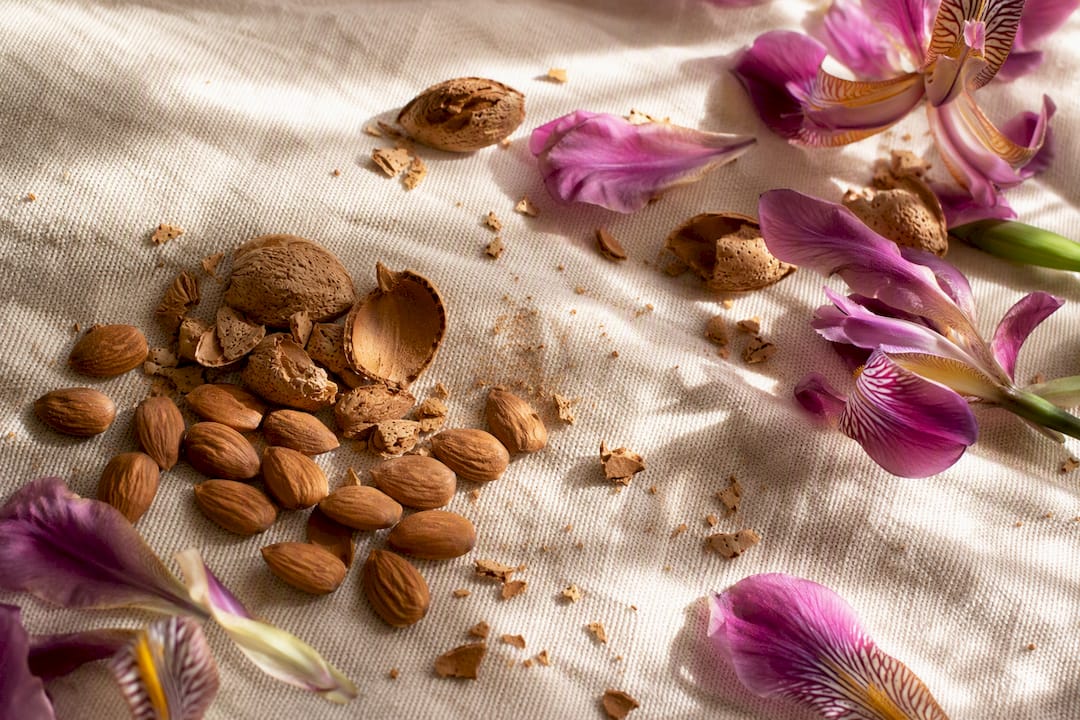
Scent family. Almond shows up across gourmand, floral, woody, and fresh compositions. A perfumer can tune almond toward airy, powdery, floral, or dense gourmand directions depending on concentration and supporting notes, which is why Hypnotic Poison and Mandorlo di Sicilia barely resemble each other despite sharing a headline ingredient.
Sillage and longevity. Niche releases like Casamorati Italica or Parfums de Marly Valaya Exclusif tend to project further and last longer than mass-market options like Marc Jacobs Perfect. If you work in a shared office, factor that in before buying a full bottle you can’t wear indoors.
Ask yourself these questions before ordering anything beyond a sample:
- Do I want obvious marzipan sweetness, or a subtle powdery almond in the background?
- Am I buying for daytime office wear or evening occasions?
- Do I tolerate strong sillage, or do I need something that stays close to skin?
- Is this for a warm climate or a cold one?
Price and availability tiers matter too. Editorial almond roundups span everything from budget body mists to high-end niche compositions, and your choice should be driven by desired intensity rather than price alone. A drugstore body mist gives you a light, short-lived hint. Designer releases like Prada or Dior offer real longevity and more complexity. Niche houses like BDK, D.S. & Durga, and Xerjoff push further into unusual accords, usually at a higher cost per millilitre, but with far more character to explore.
Seasonality follows a similar logic: lighter, citrus-forward almond fragrances suit warm weather, while dense vanilla-almond orientals belong in autumn and winter.
Pro Tip: If you’re torn between two styles, don’t guess. Order decants of one gourmand pick and one fresh pick side by side. Wearing them on consecutive days makes the difference in character obvious in a way that reading note lists never quite manages.
How to test almond perfumes effectively: a short routine
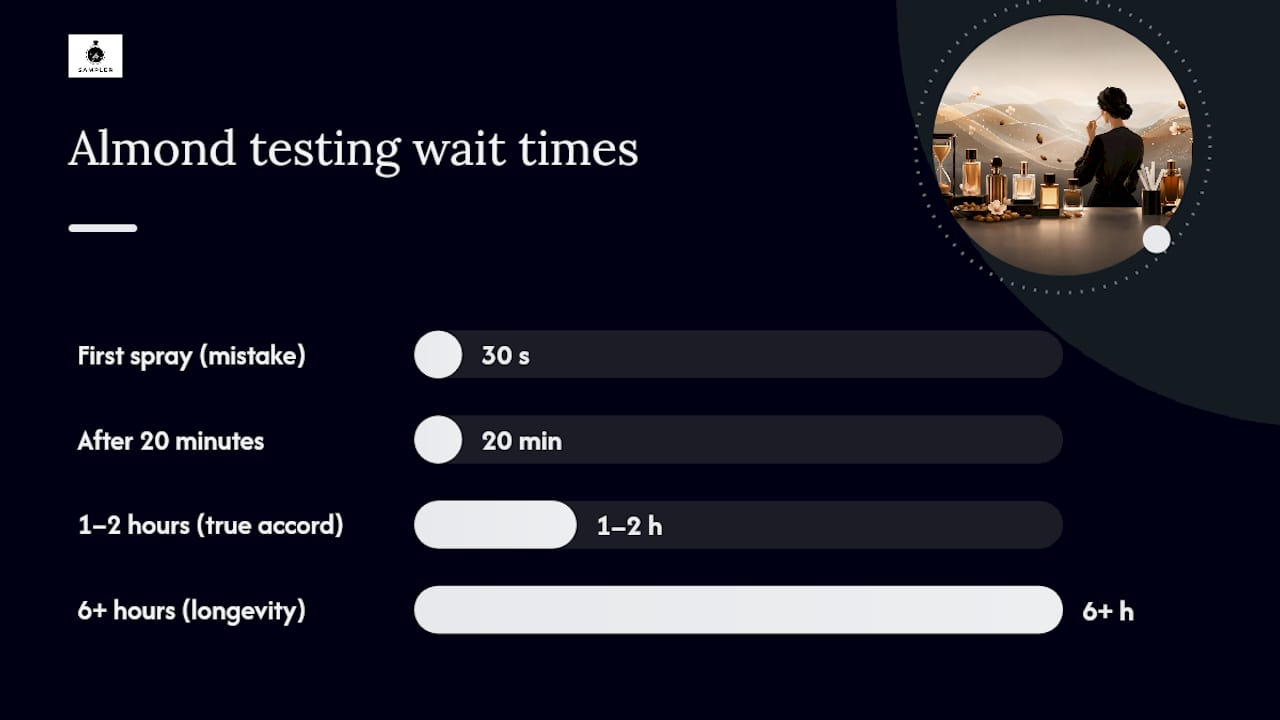
Almond can be deceptive on first spray. The compound largely responsible for its character, benzaldehyde, produces a marzipan-like, sometimes sharp or medicinal opening before settling into the softer, creamy facets most people actually associate with the note. Judging a fragrance in the first thirty seconds is one of the most common mistakes fragrance buyers make.
- Test on paper first. Spray a blotter strip to get a rough read on the opening notes without committing skin oils to the equation.
- Apply to skin and wait. Editors consistently recommend waiting at least 20 minutes before forming a real opinion, since almond’s character shifts substantially as it warms.
- Check at one to two hours. This is usually where the true almond accord settles in, whether powdery, milky, or gourmand.
- Check again after six hours or more. Longevity varies enormously between designer and niche formulations, and this is where you’ll learn whether a fragrance is worth the price tag.
Layering can push almond in either direction. A spritz of citrus or bergamot on top freshens a heavy almond gourmand for daytime wear, while a base note of tonka, vanilla, or amber deepens a lighter almond floral for evening. Understanding why fragrance shifts on individual skin also explains why the same almond perfume can smell noticeably different on two people testing it side by side.
Pro Tip: Order 2ml to 5ml decants for your first round of testing. If one earns a place in regular rotation, step up to a 10ml size before considering a full bottle.
Why sampling matters when almond notes vary so much
Almond’s unpredictability across skin types and formulations is exactly why sampling before buying makes financial sense. Theperfumesampler stocks decants in 2ml, 3ml, 5ml, and 10ml sizes across designer and niche fragrance houses, which means you can test three or four almond interpretations for the cost of committing blind to one full bottle.
A few resources worth working through alongside your testing:
- A practical workflow for analysing perfume notes using decants, useful for tracking how almond develops across the checkpoints above.
- A guide to running blind fragrance trials, which removes bottle-design and brand bias from your judgement.
- Layering guidance for building a signature scent, relevant if you want to push an almond fragrance fresher or richer than it wears alone.
Growing demand for gourmand fragrances, projected to expand from $32.55 billion in 2025 to $55 billion by 2035, means more almond-forward launches are arriving every season. Sampling widely, rather than betting on one bottle, is the only way to keep up.
What the research actually tells us about almond perfumes
The conventional advice treats almond as a synonym for sweet and gourmand, and that framing does readers a disservice. The evidence points the other way: almond behaves more like a chameleon note than a flavour category. Mandorlo di Sicilia and Hypnotic Poison share an ingredient and almost nothing else in wearing experience.
Where most buying guides fall short is longevity guidance. Plenty of lists rank almond perfumes by note complexity alone, without addressing how differently a $30 body mist and a $250 niche extrait behave over six hours on skin. That gap matters more than which notes sit on paper, because it’s the difference between a fragrance you reach for daily and one that sits unused after the first wear.
If you take one thing from this guide, prioritise the dry-down test over the opening spray. Benzaldehyde’s sharper edges fade, and the real character, whether powdery, roasted, or milky, only shows up after twenty minutes. Buy decants first. Judge on skin, not on paper.
— Rupesh
Try almond perfumes without the full-bottle risk
Committing to a full bottle before you know how an almond fragrance settles on your own skin is the most expensive mistake in this category, and it’s entirely avoidable. Theperfumesampler exists precisely for this problem: instead of guessing between Hypnotic Poison, Velvet Tonka, or Italica based on a note list, you can order decants of several and run your own side-by-side comparison for a fraction of full retail cost.
The catalogue covers both designer names and niche houses, in 2ml, 3ml, 5ml, and 10ml sizes, so you can scale up once you’ve found the almond style that actually works for you. Read why decants are worth it for a fuller breakdown of the cost and testing logic, or browse a full bottle option like Boss Bottled Absolu Parfum Intense once you’re ready to commit. Start with a small decant order this week and let your own skin, not a review, make the final call.
Sources
- The best almond perfumes, according to editors
- What does almond smell like? — perfumery guide
- Powdery almond fragrances ideal for spring