
Full bottle vs sample: a fragrance buyer's guide
TL;DR:
- Sampling fragrances before purchasing full bottles minimizes risk and ensures better value, especially for high-end scents. Full bottles are more cost-effective per milliliter but require a larger initial investment, while samples enable thorough testing across seasons and settings. Authentic decants from reputable sellers provide accurate representation, making sampling a crucial step in informed fragrance buying decisions.
A full bottle perfume is a sealed retail unit, typically 30ml to 200ml, while a fragrance sample is a smaller decant or vial, usually 0.5ml to 10ml, designed for testing before committing to purchase. Explaining full bottle vs sample is the single most useful exercise any fragrance buyer can do before spending money on a scent they have never worn. The difference between the two is not just volume. It is risk, cost, and confidence. Houses like Creed, Amouage, and Tom Ford regularly price their bottles between £200 and £400, which makes sampling a financially sound first step. Theperfumesampler stocks decants in 2ml, 3ml, 5ml, and 10ml sizes precisely to solve this problem.
What are the main functional differences between full bottles and samples?
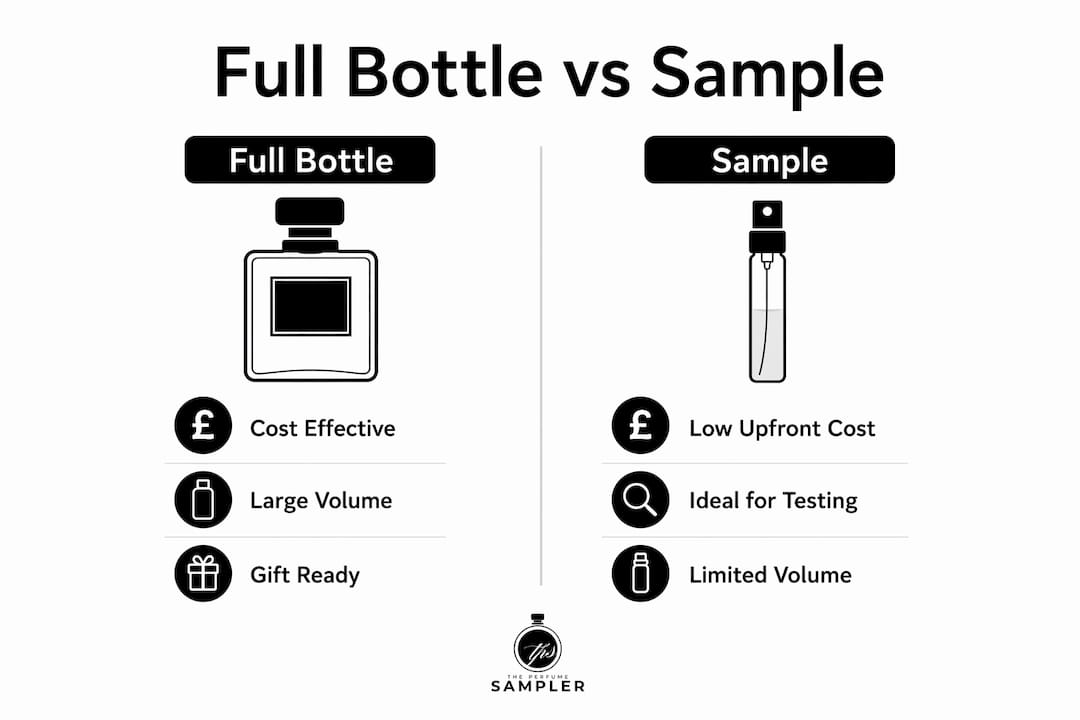
Full bottles and fragrance samples differ across four practical dimensions: volume, cost per millilitre, presentation, and longevity of supply.
Volume and cost per millilitre
Full bottles offer better cost per millilitre than samples, but they require a larger upfront spend. A 100ml bottle of a designer fragrance priced at £120 works out to £1.20 per ml. A 5ml decant of the same scent priced at £12 costs £2.40 per ml. That is double the rate per ml, yet the total outlay is a fraction of the full bottle price. Decants cost 2 to 3 times more per millilitre than full bottles, but they act as insurance against expensive mistakes. A £15 decant can prevent a £250 loss on an untested niche fragrance. That trade-off is rational for any buyer who has not worn the scent before.
Presentation and packaging
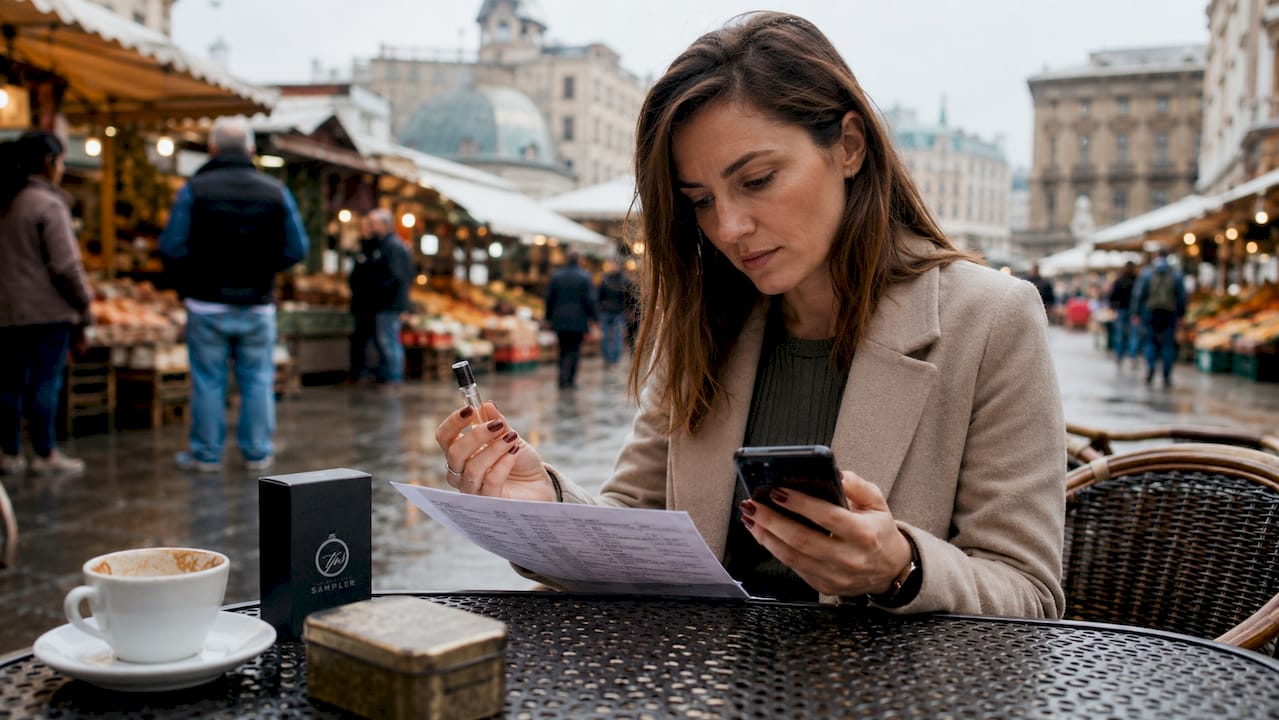
Full bottles arrive in branded boxes with retail-quality glass, spray mechanisms, and gift-ready presentation. Samples, including third-party decants, are typically supplied in plain spray vials or small glass atomisers without branded packaging. High-quality spray vials preserve scent better than dabber-style applicators, and the packaging choice affects how you perceive the fragrance experience. If you are purchasing a gift or want the full unboxing experience, a sample will not deliver that. For personal testing, the vial format is entirely adequate.
Quality differences between sample types
Not all samples are equal. There is a clear distinction between official brand samples and third-party decants:
- Official brand samples are typically 1ml to 5ml vials produced by the fragrance house itself, designed for in-store or online discovery
- Third-party decants are 2ml to 10ml portions transferred from a full retail bottle by a specialist seller, allowing more extensive testing including spray pattern and bottle feel
- Tester bottles are full-size units without retail packaging, sold by authorised distributors and identical in formula to the retail version
The decant format, when sourced from a reputable seller, gives you the most realistic representation of how a fragrance performs on your skin over several hours.
How do price, longevity, and seasonal factors shape the decision?
The decision to buy a full bottle rests on four pillars: price, longevity, seasonality, and emotional attachment. Understanding each one prevents regret in both directions.
1. Price threshold
The higher the bottle price, the stronger the case for sampling first. For fragrances priced above £80, paying more per ml for decants is the smarter financial move. Niche houses like Creed, Amouage, and Tom Ford regularly price bottles between £250 and £500. At that level, a £10 to £20 decant is not an expense. It is a cost-saving measure.
2. Longevity on skin
Longevity varies significantly between individuals due to skin chemistry, hydration, and body temperature. A fragrance that lasts eight hours on one person may fade in three hours on another. Testing a sample across a full day tells you whether the cost per wear from a full bottle is justified. If a fragrance fades quickly on your skin, the cost efficiency of the full bottle drops considerably.
3. Seasonal wearability
Fragrances perform differently across seasons. A heavy oud or resinous oriental that smells extraordinary in January may feel oppressive in July. Samples enable experiencing fragrance evolution on skin and seasonal wearability before you commit. Testing a sample in the actual season you plan to wear it is the only reliable method.
4. Emotional attachment
Emotional connection to a scent is real and valid, but it should be tested over time rather than acted on immediately. Wearing a sample on three or four separate occasions, across different moods and settings, gives you a reliable read on whether the attachment is lasting or fleeting.
Pro Tip: Wear a sample to work, on a weekend, and on an evening out before deciding. If you reach for it each time, the full bottle is justified.
What are quality, authenticity, and purchasing considerations?
Authenticity is the central concern when buying fragrance samples, particularly decants from third-party sellers. The risks are real but manageable with the right sourcing approach.
Sourcing and authenticity
Reliable decants come from credible sellers who use proper decanting methods and can verify the origin of their stock. Reputable sellers maintain verifiable reviews on platforms like Trustpilot and Reddit fragrance communities. Buying from an unverified source risks receiving a diluted, mislabelled, or poorly stored product that does not represent the fragrance accurately.
Key things to check before purchasing a decant:
- Seller reviews on independent platforms such as Trustpilot
- Clear labelling of the fragrance name, concentration, and volume
- Proper sealed spray vials rather than open-top dabbers
- Transparent sourcing statements from the seller
Storage and shelf life
Samples generally expire faster than sealed full bottles, but when stored correctly, the difference is minimal. Proper packaging and storage can preserve samples for months without significant degradation. Keep decants away from direct sunlight and heat. A cool, dark drawer is sufficient for most vials. Full bottles, particularly those with tight-fitting caps and dark glass, can last several years without noticeable change.
Pro Tip: Store decants upright in a small box away from windows. This reduces evaporation and keeps the scent accurate for longer.
You can read more about types of fragrance samples to understand which format suits your testing needs before purchasing.
When is buying a full bottle the better option?
Full size vs sample is not always a close call. In certain scenarios, the full bottle is clearly the right choice.
The full bottle wins when the fragrance is already a proven favourite on your skin, worn regularly, and suits your lifestyle across multiple settings. Cost efficiency favours full bottles when the fragrance is a known favourite or worn frequently. If you wear a scent three or four times per week, the cost per wear from a full bottle drops to a fraction of what repeated decant purchases would cost over the same period.
Strong emotional attachment with repeated craving is also a reliable signal. If you finish a sample and immediately want more, that is a clear indicator the full bottle is worth the investment.
The table below summarises the key decision factors:
| Scenario | Recommended choice |
|---|---|
| Unfamiliar fragrance above £80 | Sample first |
| Known favourite worn regularly | Full bottle |
| Gift requiring presentation | Full bottle |
| Niche or limited edition scent | Sample first |
| Signature scent worn daily | Full bottle |
| Seasonal or occasional wear | Sample or small decant |
Gifts are a specific case where the full bottle is almost always correct. A decant does not carry the presentation value expected from a gift. The branded box, the glass bottle, and the retail experience are part of what makes fragrance a meaningful present.
For readers building a collection from scratch, the first fragrance purchase guide at Theperfumesampler covers how to approach the process methodically, including when to sample and when to commit.
Key takeaways
Sampling before buying a full bottle is the most cost-effective way to avoid expensive fragrance regrets, particularly for niche or unfamiliar scents priced above £80.
| Point | Details |
|---|---|
| Cost per ml favours full bottles | Full bottles are cheaper per ml, but samples reduce the financial risk of an untested purchase. |
| Sample first for high-price fragrances | Niche houses like Creed and Amouage price bottles at £250 to £500; a decant is a rational first step. |
| Test across seasons and settings | Wear a sample in the actual season and context you plan to use it before committing. |
| Source decants from verified sellers | Check Trustpilot reviews and clear labelling to confirm authenticity before buying. |
| Full bottle suits known favourites | Buy the full size when a fragrance is proven on your skin and worn regularly. |
Why I think most fragrance buyers get this decision backwards
Most people buy the full bottle first and sample later, if at all. That is the wrong order, and it costs money. I have seen buyers spend £300 on a Creed Aventus bottle because it smelled extraordinary on a friend, only to find it performs completely differently on their own skin chemistry. A £15 decant would have answered that question in a week.
The fragrance community sometimes treats sampling as a lesser experience, something you do when you cannot afford the real thing. That framing is incorrect. Sampling is the professional approach. Perfumers and industry buyers test extensively before committing. There is no reason a retail buyer should operate differently.
The one area where I would push back on pure cost logic is emotional attachment. Some fragrances carry personal significance that goes beyond performance metrics. If a scent reminds you of someone important or marks a significant moment, the full bottle purchase is justified on those grounds alone. Rational buying frameworks have limits, and fragrance is one area where sentiment is a legitimate factor.
What I would caution against is confusing novelty with attachment. A fragrance that excites you in the first hour of wearing a sample is not the same as one you still reach for after three weeks. Give it time. The blind buying risks are real, and patience is the cheapest form of insurance available to any fragrance buyer.
— Rupesh
Try before you commit with Theperfumesampler
Theperfumesampler stocks 100% authentic fragrance decants in 2ml, 3ml, 5ml, and 10ml sizes, covering high-end niche and designer houses. Every decant is sourced from genuine retail bottles, properly sealed, and dispatched with care.
If you are ready to test before you invest, the why decants page explains exactly how the process works and why it makes sense for serious fragrance buyers. For those already confident in their choice, full bottles are also available. The Boss Bottled Absolu Parfum Intense is one of the most popular options currently in stock. Whether you are sampling for the first time or adding to an established collection, Theperfumesampler provides a straightforward, reliable way to buy with confidence.
FAQ
What is the difference between a sample and a full bottle?
A full bottle is a sealed retail unit, typically 30ml to 200ml, while a sample or decant is a smaller portion, usually 2ml to 10ml, taken from a full bottle for testing purposes. The core difference is volume, upfront cost, and the level of risk involved in the purchase.
Are fragrance decants the same quality as full bottles?
Yes, when sourced from a reputable seller. Decants are taken directly from genuine retail bottles, so the formula is identical. Quality depends entirely on the seller’s sourcing and handling practices, not the format itself.
When should I buy a full bottle instead of sampling?
Buy the full bottle when a fragrance is already a proven favourite on your skin, worn regularly, and suits your lifestyle across multiple seasons. Cost efficiency favours full bottles when usage frequency justifies the volume.
Is it worth sampling niche fragrances before buying?
Niche fragrances from houses like Creed, Amouage, and Tom Ford regularly cost £250 to £500 per bottle. Sampling first is strongly recommended. A decant costing £15 to £20 provides enough volume to assess performance, longevity, and seasonal fit before committing.
How long do fragrance samples last in storage?
Properly sealed samples last months without significant degradation when stored away from heat and direct sunlight. Full bottles with tight caps and dark glass can last several years under the same conditions.
Recommended
- Discover wearable fragrances: a luxury guide to sampling scents – ThePerfumeSampler
- Discover types of fragrance samples for affordable trials – ThePerfumeSampler
- How fragrance size options unlock affordable luxury scents – ThePerfumeSampler
- How to rank sample scents for confident fragrance choices – ThePerfumeSampler