
Youth fragrance trial process: a guide for 2026
TL;DR:
- The youth fragrance trial process involves skin testing scents over multiple sessions to ensure satisfaction before buying. Young consumers increasingly use decants and discovery kits to accurately assess fragrances and avoid costly blind purchases. Proper evaluation requires skin tests across days, rotation of samples, and understanding fragrance development phases to build a personal scent wardrobe effectively.
The youth fragrance trial process is the structured method of testing scents on your skin, across multiple settings, before committing to a full bottle. 67% of fragrance buyers regret at least one blind buy, and that figure rises sharply among younger shoppers. The average consumer already owns four or more unused bottles worth approximately £270. For students and recent graduates working within a tight budget, a disciplined trial process is not optional. It is the difference between a scent you wear daily and one that sits forgotten in a drawer.
What samples and tools do young fragrance shoppers need?
The fragrance evaluation process starts with choosing the right trial format. Not all samples are equal, and the format you pick determines how accurately you can judge a scent before buying. Younger consumers increasingly use experimental formats like wearable solids and discovery kits to reduce both financial and emotional risk. This shift reflects a broader understanding that a single sniff in a shop tells you very little.
The main trial formats available to young shoppers are:
- Decants: Small measured portions of a full fragrance, typically 2ml, 3ml, 5ml, or 10ml. These give you enough product for multiple wears across different days and settings. Theperfumesampler specialises in these, offering niche and designer samples at accessible prices.
- Discovery kits: Curated sets of several related scents, often from one house or theme. They are ideal for mapping your preferences across a category, such as woody florals or fresh aquatics.
- Travel sizes and mini sprays: Typically 5ml to 10ml, these are larger than decants but still far cheaper than a full bottle. They suit shoppers who have already narrowed down their shortlist.
- Wearable solids: Balm or wax formats that apply directly to the skin. They tend to project less than spray formats but are useful for sensitive skin trials.
| Format | Typical cost | Wearability | Scent longevity |
|---|---|---|---|
| Decant (2ml to 5ml) | Low | 3 to 8 wears | Full, identical to bottle |
| Discovery kit | Low to medium | Multiple scents | Varies by formula |
| Travel size (10ml) | Medium | 15 to 25 wears | Full |
| Wearable solid | Low | Variable | Moderate, skin-close |
The clean fragrance segment grew 34% year over year, driven largely by younger buyers seeking phthalate-free and hypoallergenic options. If you have sensitive skin or known fragrance allergies, prioritise trial formats that let you test a small amount before any extended wear. Decants are particularly well suited here because the low volume limits your exposure during the initial test.
Pro Tip: Order two or three decants from the same fragrance family before branching out. This builds your scent vocabulary quickly and helps you articulate what you actually like, rather than guessing in a shop.
How to properly test a fragrance during the trial process
Paper strip tests are insufficient as a standalone method. Skin chemistry fundamentally changes scent characteristics during dry-down, meaning the fragrance you smell on a card in a shop can differ significantly from what you experience on your wrist two hours later. The only reliable indicator before purchase is a proper skin test conducted across a full day.
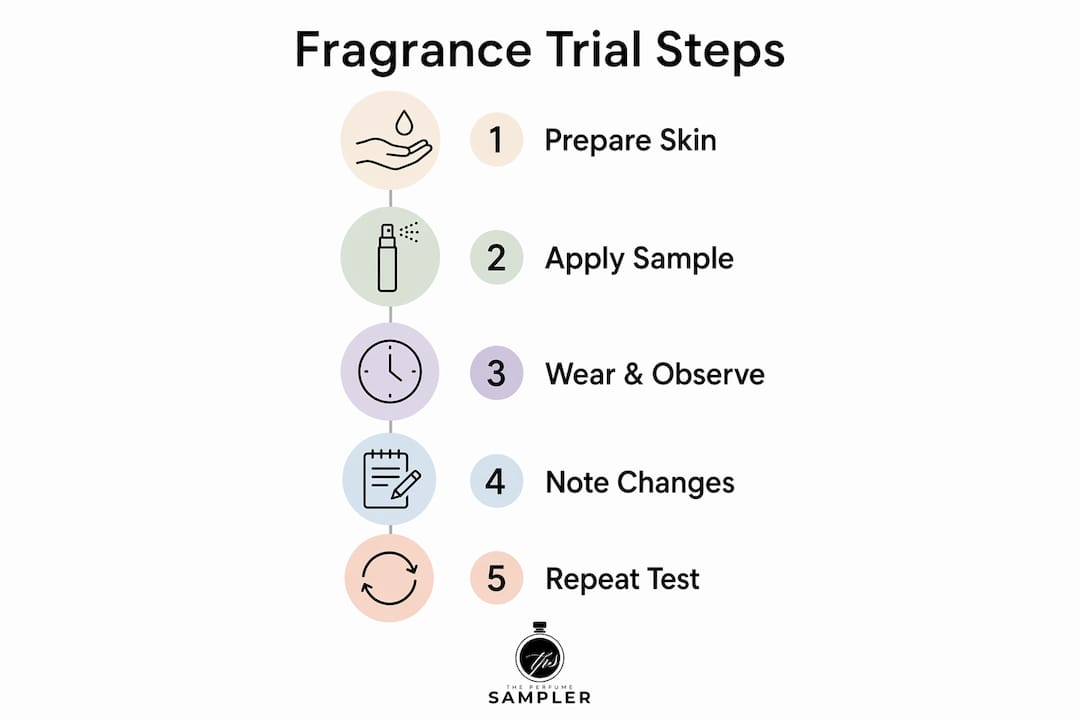
Follow this sequence for an accurate fragrance evaluation:
- Apply to clean, unscented skin. Spray one or two times on your inner wrist or the inside of your elbow. Do not rub the skin together, as this breaks down the top notes prematurely.
- Assess the top notes immediately. These are the first impressions, usually citrus, light florals, or green notes. They last roughly 15 to 30 minutes. Note your reaction but do not judge the whole fragrance here.
- Revisit at the two-hour mark. By this point the heart notes have emerged. These are the core character of the scent, often warmer, richer, or more complex than the opening. This is the phase most relevant to daily wear.
- Evaluate the dry-down at four to six hours. The base notes, typically woods, musks, or resins, are now dominant. These linger longest on skin and clothing. A scent that smells pleasant at two hours but turns sour or heavy by evening is not the right choice.
- Test in your actual daily environments. Wear the scent to a lecture, a gym session, or a social event. Testing scent across a full day in different environments minimises regret and improves satisfaction significantly.
- Keep a scent journal. Write brief notes after each wear: the setting, your mood, how the scent performed, and whether you reached for it again. Patterns emerge quickly.
Understanding why perfume smells different on your skin is central to this process. Factors including skin pH, hydration levels, and body temperature all alter how a fragrance develops. Two people wearing the same scent will often produce noticeably different results.
Pro Tip: Trial a new scent on a day when you have no other fragrance on your skin or hair. Residual scent from previous wear distorts your perception of the new one and makes accurate evaluation much harder.
Common mistakes in youth fragrance trials and how to avoid them
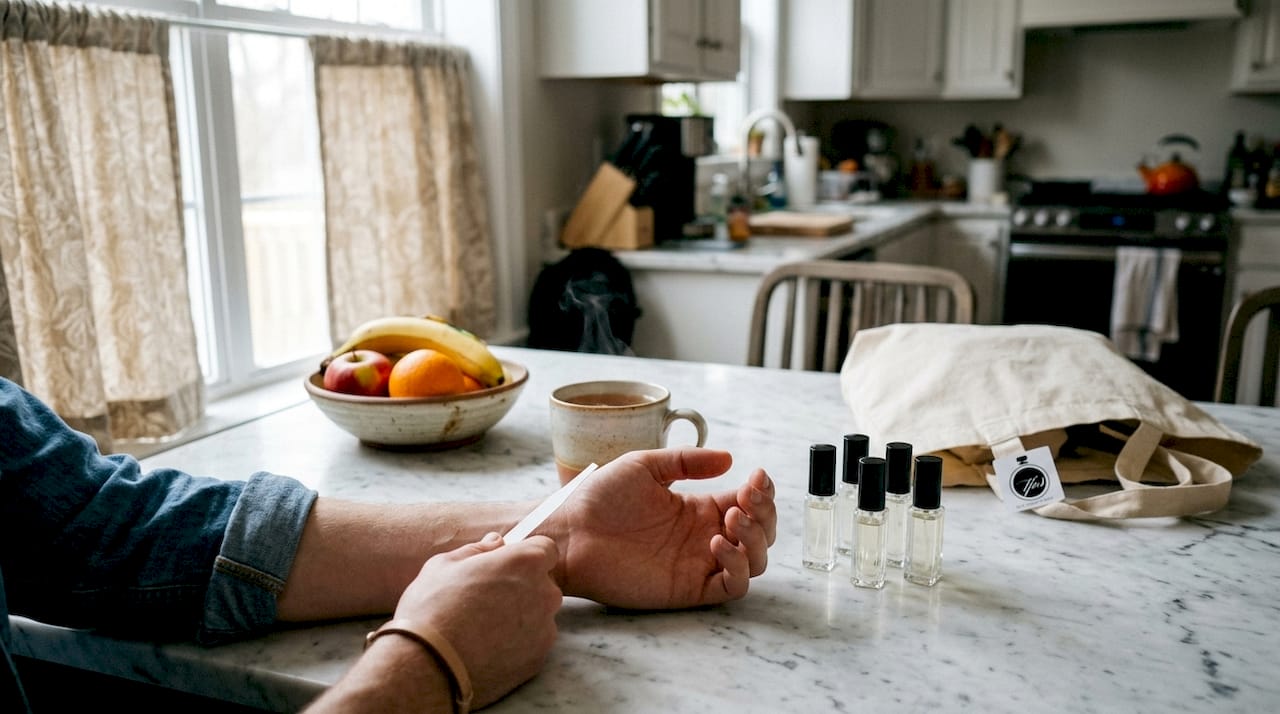
The most costly mistake in the teen perfume trial process is purchasing a full bottle based on a single impression. Sampling converts scepticism into quality-based preference precisely because it allows proof on the skin over time. Without that proof, you are guessing.
Other frequent errors include:
- Judging solely on the opening spray. Top notes are the most volatile and least representative of how a fragrance actually wears. Many outstanding scents have underwhelming openings.
- Ignoring sensitivity and allergen considerations. 35% of Gen Z cite sensitivity concerns as a factor in fragrance decisions. Skipping a skin patch test before extended wear is a genuine risk for this group.
- Overlooking scent development phases. Top, heart, and base notes each tell a different story. Buying based on top notes alone is like judging a film by its opening scene.
- Ignoring return policies. Retailers like Sephora and Ulta offer returns on opened bottles within 30 to 60 days. This functions as an extended trial for shoppers who cannot access samples, and it is an underused option.
- Buying full bottles without multiple wears. A single wear in one context is not enough data. Scents behave differently in cold weather versus warm, in dry indoor air versus humid outdoor settings.
“The fragrance funnel is broken for young consumers because the industry still defaults to counter sprays and blind buys. Sampling is the fix, not an afterthought.” — SoPost fragrance research, 2024
Understanding what blind buying in perfume actually means, and why it carries such high regret rates, is worth reading before you make any significant fragrance purchase. The risks are well documented and entirely avoidable with the right approach.
How to build a personal scent wardrobe through sampling
Youth scent selection is most effective when treated as a gradual, exploratory process rather than a single purchase decision. Youth consumers view fragrance sampling as essential, treating scents as mood-shifters rather than fixed identity markers. This mindset naturally leads to the concept of a scent wardrobe: a small, curated collection of fragrances suited to different occasions, seasons, and moods.
Here is a practical approach to building one through the trial process:
- Start with categories, not individual scents. Trial one fresh scent, one woody or earthy scent, and one floral or gourmand scent. This gives you a baseline across the main fragrance families and helps you identify where your preferences sit.
- Use discovery kits to map a house or theme. Many niche and designer houses release sets that showcase their range. Trialling these as a group reveals which direction suits you before you commit to any single bottle.
- Rotate your trials to protect your nose. Noses become desensitised to scents worn daily, which distorts your evaluation of new ones. Rotating between two or three decants during the trial period keeps your perception accurate.
- Track what you actually reach for. After two weeks of rotating samples, the ones you consistently choose reveal your genuine preferences. These are the candidates worth buying in a larger format.
- Budget by format, not by bottle. Spending £15 to £25 on a selection of decants from Theperfumesampler costs far less than a single £80 bottle you may not enjoy. The benefits of travel-size perfumes for budget management are significant for students and graduates.
Layering is worth experimenting with once you have a few samples in rotation. Applying a light musk base before a more complex scent can extend longevity and add depth. Social media platforms like TikTok and Reddit’s r/fragrance community offer useful starting points for discovering popular youth fragrance combinations, though personal skin chemistry always overrides crowd consensus.
Fragrances in youth culture have shifted considerably in recent years. Scent is now a recognised part of personal identity and self-expression for Gen Z, which makes the trial process more than a purchasing decision. It is a way of understanding your own aesthetic preferences.
Key takeaways
The most effective youth fragrance trial process combines skin testing across multiple time points, rotation of sample formats, and deliberate avoidance of full-bottle blind buys.
| Point | Details |
|---|---|
| Skin test is non-negotiable | Paper strips mislead; only skin testing across a full day gives accurate results. |
| Use decants and discovery kits | Small formats allow multiple wears before any significant financial commitment. |
| Avoid blind buying | 67% of buyers regret blind purchases; sampling eliminates this risk entirely. |
| Rotate scents during trials | Rotation protects olfactory sensitivity and produces more accurate evaluations. |
| Build a scent wardrobe gradually | Start with fragrance families, track what you reach for, then invest in full bottles. |
Why I think most young shoppers trial fragrances the wrong way
By Rupesh
The most common mistake I see is treating the trial process as a single event rather than a short experiment. A young shopper sprays a tester in a shop, likes the opening, and buys the full bottle. Three weeks later, the bottle is barely touched because the scent turned out to be heavier than expected, or it clashed with their body chemistry, or it simply did not suit the settings they actually wear fragrance in.
What actually works is treating each sample as a week-long test. Wear it to different places. Note how it performs in the cold versus indoors. See whether you still want to reach for it on day five. That last point matters more than any other. If you are not reaching for a scent after five days of having it available, a full bottle will not change that.
I also think the sensitivity conversation is underrepresented in most fragrance guides aimed at younger audiences. Clean and phthalate-free options are not a niche concern. They are a practical starting point for anyone who has ever had a headache from a heavy department store fragrance or noticed skin irritation after a new scent. Starting your trial process with sensitivity-aware options narrows the risk considerably.
The trial process should be affordable and genuinely informative. Decants from Theperfumesampler make that possible without requiring any compromise on quality or range.
— Rupesh
Try before you buy with Theperfumesampler
Theperfumesampler offers a practical and affordable way to follow the trial process described in this guide. Decants are available in 2ml, 3ml, 5ml, and 10ml sizes, covering hundreds of niche and designer fragrances. You get enough product for multiple real-world wears without paying full-bottle prices.
Every decant is 100% authentic, drawn directly from the original bottle. For students and recent graduates who want to explore the latest youth fragrances without financial risk, this is the most direct route. Read more about why decants work for the trial process, or browse the full range at Theperfumesampler to start building your shortlist today.
FAQ
What is the youth fragrance trial process?
The youth fragrance trial process is the structured practice of testing scents on skin across multiple settings and time points before purchasing a full bottle. It typically involves decants, discovery kits, or travel sizes rather than counter testers.
How many times should you wear a scent before buying?
Wear a scent at least three to five times across different days and environments before committing to a full bottle. A single wear does not account for how the fragrance performs in varying temperatures, activities, or moods.
Are paper strip tests reliable for fragrance evaluation?
Paper strip tests are not reliable on their own because skin chemistry fundamentally changes how a scent develops. They are useful for a first impression but must be followed by a proper skin test.
What are the best sample formats for teens with sensitive skin?
Decants and wearable solids are the most suitable formats for teens with sensitive skin, as they allow small-volume testing before extended wear. Prioritising phthalate-free and hypoallergenic options reduces the risk of irritation during the trial.
Can you return a fragrance if you do not like it after buying?
Retailers including Sephora and Ulta allow returns on opened fragrance bottles within 30 to 60 days. This policy functions as an extended trial option for shoppers who cannot access samples beforehand.