
What is a fragrance atelier: the complete guide
TL;DR:
- A fragrance atelier is a specialized studio where master perfumers craft personal or limited-edition scents using high-quality materials.
- There are both private laboratories for professional development and public workshops for enthusiasts to learn scent blending.
A fragrance atelier is defined as a specialised creative studio where master perfumers design, blend, and refine personalised or limited-edition scents using carefully curated raw materials. The term “atelier” is French for workshop or studio, and in perfumery it carries a specific meaning: a space dedicated to the craft of scent at the highest level. These studios operate in two distinct forms. Some are private, closed-door research and development laboratories. Others are public-facing fragrance workshops where curious individuals learn to create their own perfume. Both forms share a commitment to artisanal quality, olfactive depth, and intentional creation.
What is a fragrance atelier and how does it work?
A fragrance atelier operates in two distinct capacities, and understanding both is key to appreciating the concept fully. The first is the professional laboratory. The second is the public studio experience.
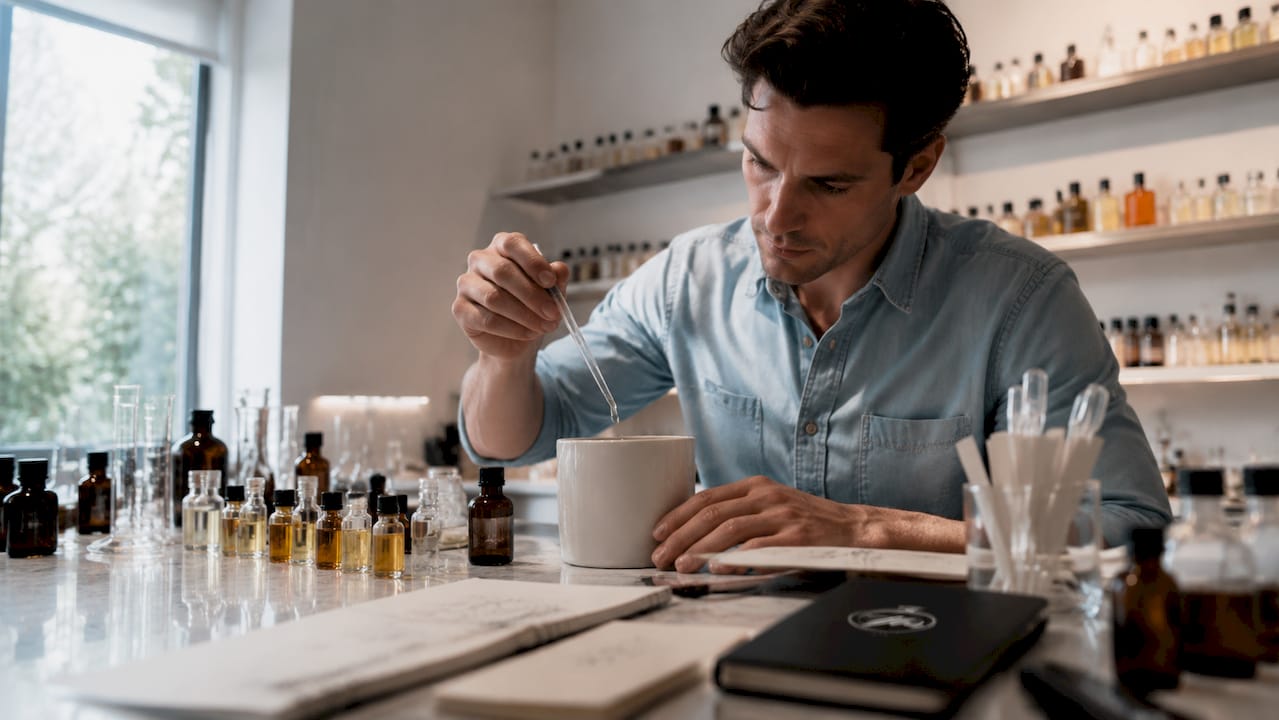
Professional ateliers function primarily as private R&D spaces. Perfumers develop proprietary accords, test raw materials, and refine formulas using precision instruments in closed-door environments. These labs safeguard innovation through strict intellectual property protections. Public access is limited by design. The work produced inside shapes the signature scents of artisan fragrance houses and niche perfumery brands.
Public fragrance workshops operate differently. They invite participants into a guided sensory experience, offering access to a curated palette of raw ingredients. Public workshops provide access to 50–150 or more raw ingredients, with professional ateliers incorporating olfactive expertise to guide each session. That breadth of materials allows participants to explore genuinely complex scent combinations rather than simple blends.
A typical public atelier session includes:
- Sensory orientation: Learning to identify top, heart, and base notes through guided smelling exercises
- Blending: Combining selected ingredients under expert guidance to build a personal accord
- Refinement: Adjusting ratios and evaluating how the scent evolves on skin
- Takeaway: Leaving with a finished fragrance, often in a 10ml to 50ml bottle, plus a custom recipe card
Workshop sessions typically last 60 to 120 minutes and cost between £40 and £100. That investment covers both the materials and the expert guidance, making it a genuine introduction to perfume craft rather than a novelty activity.
Pro Tip: Many ateliers protect the intellectual property of personal creations produced during workshops. Your bespoke formula remains yours, and the atelier will not reproduce it for other clients.
How do ateliers differ from generic perfume workshops?
The difference between a fragrance atelier and a generic perfume workshop is not simply one of price. It is one of philosophy, materials, and expertise.
True fragrance ateliers maintain a curated palette of high-quality raw materials, differentiating themselves from generic workshops that often use inexpensive fragrance oils formulated for soaps or candles. That distinction matters enormously. Cheap fragrance oils are designed for diffusion, not for wear on skin. They lack the olfactive complexity that makes a perfume worth wearing.
The table below outlines the key differences across four criteria:
| Criterion | Fragrance atelier | Generic workshop |
|---|---|---|
| Raw materials | High-quality naturals and aroma chemicals | Inexpensive fragrance oils |
| Batch size | Artisanal micro-batches, often bespoke | Standardised, mass-produced volumes |
| Expertise | Trained perfumers or olfactive specialists | Variable; often non-specialist instructors |
| Creative philosophy | Storytelling, identity, emotional resonance | Product output; novelty experience |
Scale is another defining factor. A fragrance design studio operates at a human scale. Formulas are developed for individuals or very small runs. Mass manufacturing, by contrast, produces millions of units of a single formula. The atelier model treats each creation as singular. That singularity is the point.
The creative philosophy inside an artisan fragrance house also differs fundamentally. Ateliers treat scent as a form of personal identity expression. A perfumer working in an atelier asks what a scent should communicate about the person wearing it. A mass-market brief asks what will appeal to the broadest possible audience. Those are opposite starting points, and they produce very different results.
What steps are involved in creating a perfume at an atelier?
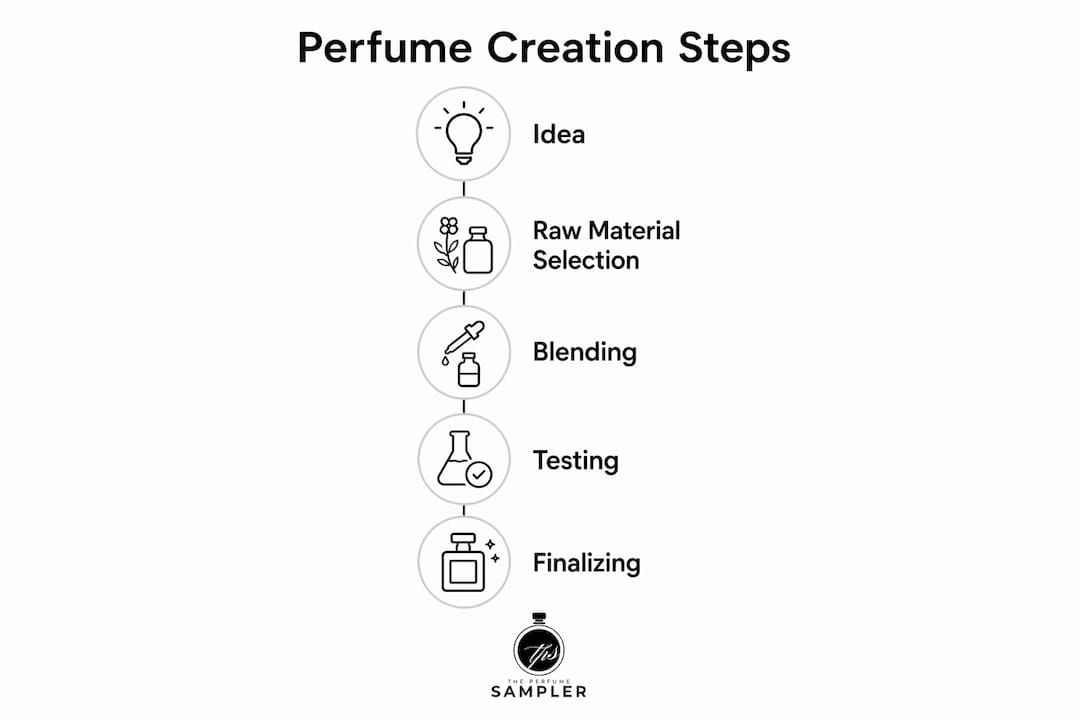
Custom perfume creation at an atelier follows a structured process. Understanding that process helps you get far more from the experience, whether you are attending a workshop or beginning serious study of perfume craft.
-
Learn the structure of a perfume. Every fragrance is built in three layers. Top notes are the first impression, typically light citrus or herbal materials that evaporate quickly. Heart notes form the core character, often florals or spices. Base notes are the foundation, usually woods, musks, or resins that linger on skin for hours.
-
Select your ingredients deliberately. Resist the urge to use every material available. Working with a limited palette of 10–20 high-quality ingredients over an extended period builds genuine sensory skill. Expanding too quickly produces confusion, not creativity.
-
Weigh, do not count drops. Precision weighing with a 0.001g scale is the standard in professional perfumery. Drop counting introduces variability because dropper sizes differ between bottles. A formula you cannot reproduce is not a formula at all.
-
Blend and evaluate on skin. Apply your blend to skin and wait. Fragrance changes significantly as it dries down. What smells sharp and bright on a blotter may become warm and rounded after 30 minutes on skin. Evaluate at multiple intervals before making adjustments.
-
Refine and document. Record every weight and every adjustment. Atelier-level work is reproducible work. A finished formula should be something you can recreate exactly, not something you stumbled upon once.
Pro Tip: Focus on the sensory experience rather than chasing a replicable recipe from the start. Your nose develops faster when you pay attention to how scents make you feel, not just how they smell in isolation.
Understanding how a scent evolves on skin over time is one of the most underrated skills in perfumery. Many beginners evaluate a fragrance only at the moment of application. Professional perfumers evaluate at 15 minutes, 30 minutes, one hour, and beyond. That patience is what separates atelier-level craft from casual blending. You can find more on what makes a scent distinctive in this guide to unique fragrance characteristics.
What is the cultural significance of a fragrance atelier?
Fragrance ateliers represent a deliberate move away from mass-market consumption toward olfactory storytelling and emotional resonance through small-batch creations. That shift is not accidental. It reflects a broader cultural appetite for authenticity, craft, and personal meaning in an era of fast consumption.
The “slow fragrance” philosophy sits at the heart of the atelier model. Just as slow food rejects industrialised eating in favour of provenance and craft, slow fragrance rejects the idea that a scent should be designed for the widest possible market. An atelier creation is specific. It belongs to someone, or to a very small group of people. That specificity is its value.
Ateliers contribute to niche perfumery in several concrete ways:
- They preserve traditional perfumery techniques, including the use of natural absolutes, resins, and animal-derived accords that mass production has largely abandoned
- They create space for experimental accords that would never survive a commercial brief
- They train the next generation of perfumers in rigorous, hands-on environments
- They give fragrance enthusiasts direct access to the creative process, deepening appreciation for the craft
The experiential dimension of an atelier visit is also significant. Visiting a fragrance design studio is not the same as buying a bottle in a department store. You engage your senses actively. You make decisions. You leave with something that did not exist before you arrived. That experience changes how you understand and appreciate scent. It connects to the broader idea of fragrance as a cultural movement, where scent becomes a form of expression rather than a commodity.
Intellectual property protections in fragrance ateliers guarantee that bespoke perfumes remain exclusive to their creator. That exclusivity transforms the workshop from a lesson into a genuinely personal act of creation. You do not leave with a version of something that exists elsewhere. You leave with something singular.
Key takeaways
A fragrance atelier is the most deliberate form of perfume creation available, combining artisanal materials, expert guidance, and intellectual property protection to produce scents that are genuinely personal and technically rigorous.
| Point | Details |
|---|---|
| Dual function | Ateliers operate as both private R&D labs and public creative workshops. |
| Material quality | High-quality naturals and aroma chemicals define atelier work, not generic fragrance oils. |
| Precision matters | Professional perfumery uses 0.001g scales for reproducibility, not drop counting. |
| Limited palette training | Working with 10–20 ingredients builds deeper sensory skill than using a large collection. |
| Cultural significance | The slow fragrance philosophy positions ateliers as guardians of craft in a fast-consumption world. |
Why fragrance ateliers still fascinate me after years in perfumery
By Rupesh
I have spent years around fragrance, and the atelier concept still holds my attention in a way that mass-market perfumery simply does not. The reason is not nostalgia. It is that ateliers are one of the few places in the fragrance world where the process is as important as the result.
What strikes me most is how ateliers blend tradition and genuine technical rigour. The precision weighing, the structured evaluation at multiple time intervals, the careful selection of a small ingredient palette: these are not affectations. They are the practices that separate a perfumer who understands what they are doing from someone who got lucky once.
The emotional depth of an atelier experience is also something I did not fully appreciate until I had been through several. There is a particular kind of attention that comes from sitting with a small collection of raw materials and asking what they mean together. That attention is rare. Most of us move through the world of scent passively, registering fragrances without really engaging with them. An atelier forces active engagement, and that changes things.
My honest view is that anyone serious about niche perfumery should visit an atelier at least once. Not to become a perfumer, but to understand what craft actually looks like up close. The experience recalibrates your expectations of what a fragrance can be and should be.
— Rupesh
Niche fragrance sampling with Theperfumesampler
Visiting a fragrance atelier sharpens your nose and raises your standards. The logical next step is exploring the niche and designer scents that ateliers draw inspiration from.
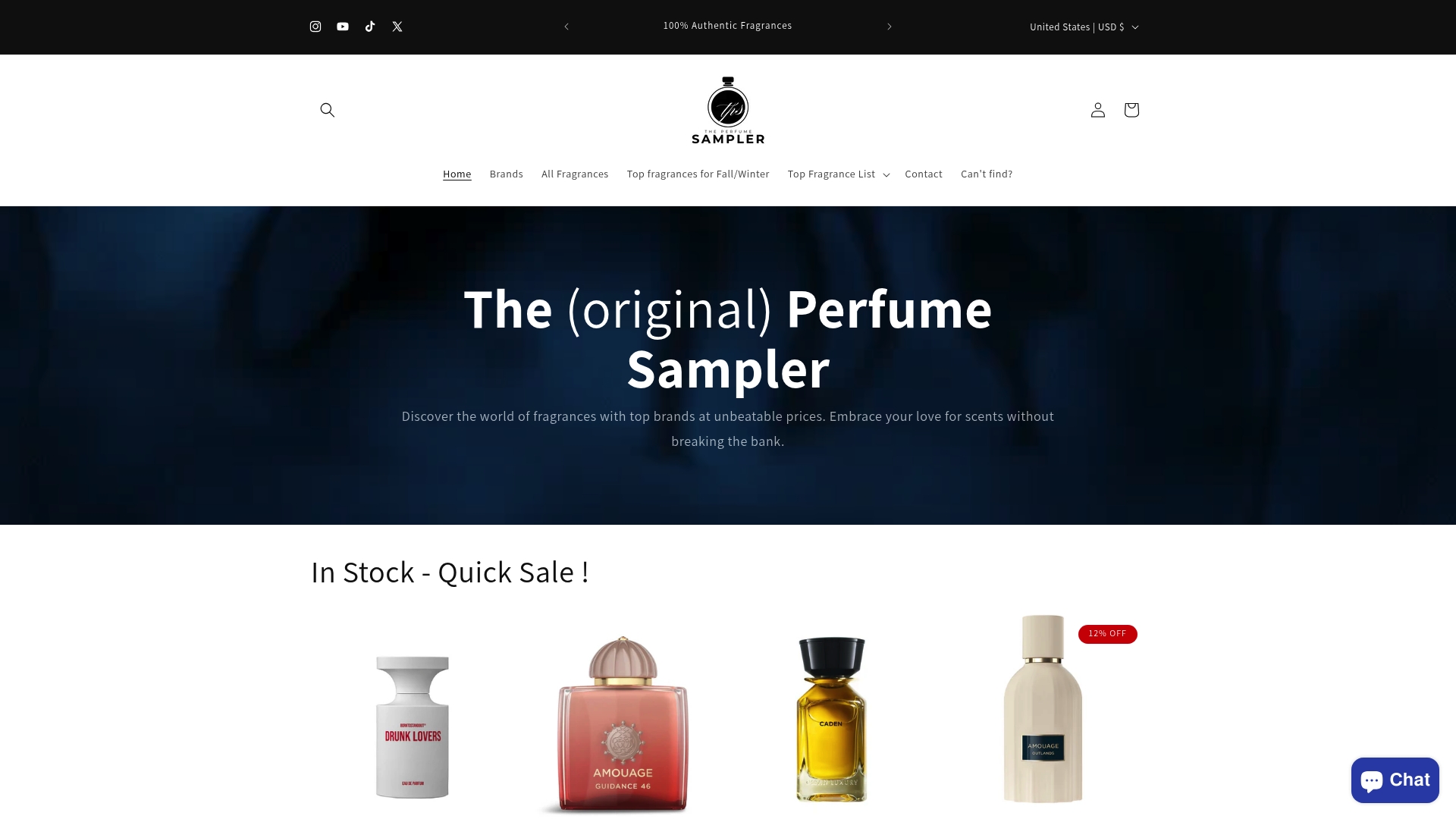
Theperfumesampler offers a curated collection of niche and designer fragrance decants in 2ml, 3ml, 5ml, and 10ml sizes. Every sample is 100% authentic. You can try boutique and luxury scents before committing to a full bottle, which is exactly the kind of considered approach that the atelier philosophy encourages. Find out more about why decants make sense for anyone serious about building a fragrance collection. If you are looking for a specific recommendation, the BOSS Bottled Absolu Parfum Intense is a strong starting point for those drawn to warm, woody compositions.
FAQ
What does “atelier” mean in perfumery?
“Atelier” is French for workshop or studio. In perfumery, it refers to a specialised space where scents are created at an artisanal level, either as a private professional laboratory or a public creative workshop.
How long does a fragrance atelier workshop last?
Most public atelier workshops last between 60 and 120 minutes. Participants typically leave with a finished fragrance in a 10ml to 50ml bottle, along with a personal recipe card.
What makes an atelier different from a standard perfume class?
A fragrance atelier uses high-quality raw materials, including naturals and aroma chemicals, rather than the inexpensive fragrance oils common in generic workshops. The creative philosophy also differs: ateliers focus on personal identity and storytelling, not just product output.
Can I keep my formula after an atelier workshop?
Many ateliers protect the intellectual property of personal creations produced during sessions. Your bespoke formula remains yours, and the atelier will not reproduce it for other clients.
Do I need prior experience to attend a fragrance workshop?
No prior experience is required. Public atelier workshops are designed for curious newcomers and experienced fragrance enthusiasts alike. Expert guidance is provided throughout the session.