
What is a fragrance movement? Scent culture explained
TL;DR:
- Fragrance movements are cultural shifts that reshape how scents are created, valued, and consumed globally. They are driven by shared philosophies, communities, and market impacts, reflecting broader societal values like wellness, sustainability, and identity.
A fragrance movement is a collective shift in how scents are conceived, created, and consumed, reflecting broader changes in culture, values, and identity. The term is not formal industry vocabulary in the way that “fragrance family” or “olfactory pyramid” are. Perfumers and market analysts tend to use “fragrance trend” or “scent movement” interchangeably, but the underlying idea is the same: a recognisable wave of shared taste and purpose that reshapes the market. Understanding these movements matters because identity, wellness, climate concerns, and digital culture are now the four forces driving fragrance globally. Knowing what drives a movement helps you choose scents with intention rather than impulse.
What is a fragrance movement and how do you recognise one?
A fragrance movement is defined by three qualities: a shared aesthetic or philosophy, a community of creators and consumers who champion it, and a measurable impact on the market. It is not simply a passing fad. A fad is a single scent profile going viral for a season. A movement rewires how people think about fragrance altogether.
The clearest historical example is the oriental fragrance era of the 1970s and 1980s, when rich, resinous, and heavily animalic compositions dominated Western perfumery. That era did not end because tastes changed randomly. It ended because the wellness movement of the 1990s pushed consumers towards lighter, cleaner, and more aquatic scents. Each shift was a response to something happening in wider culture.
Recognising a movement today requires looking at three signals: what ingredients are gaining or losing favour, which communities are forming around scent, and what values consumers say they are buying into. When those three signals align, a movement is underway.
What are the major types of fragrance movements shaping the market today?
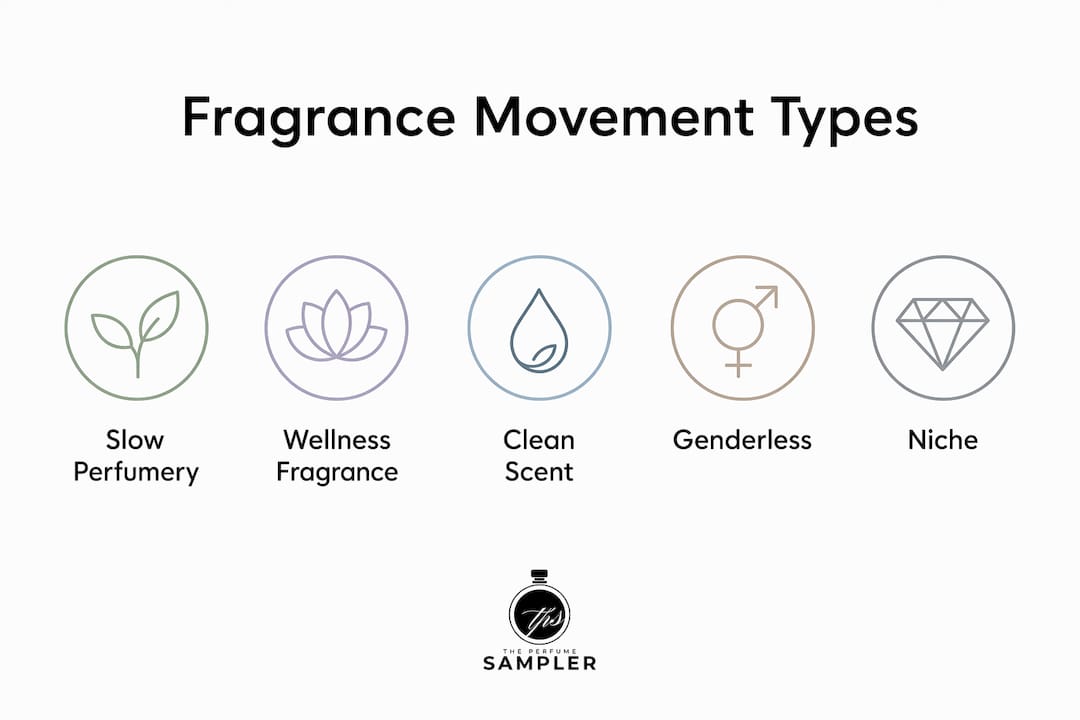
The contemporary fragrance market contains several distinct movements running in parallel. Each has its own philosophy, audience, and production logic.
-
Slow perfumery. This movement prioritises artisanal production, authentic ingredient sourcing, and unhurried development. Maceration lasting one week to a month is a technical requirement, not a marketing claim. Natural-heavy compositions bloom over time, much like wine. Slow perfumery is a direct reaction to the speed of mass-market launches.
-
Wellness and functional fragrance. Scent is increasingly positioned as a tool for mood regulation and emotional wellbeing. Around 57% of luxury fragrance consumers now prioritise emotional benefits such as mood enhancement over traditional motives like status or attraction. That figure signals a fundamental reordering of why people buy perfume.
-
Digital scent communities. Platforms like TikTok have produced large, self-organising fragrance communities. #PerfumeTok has driven impulsive, mood-based collecting and expanded what counts as a legitimate fragrance authority. A teenager with a detailed review carries weight alongside a trained nose.
-
Genderless and niche fragrance. The binary of “masculine” and “feminine” scent is dissolving. Niche houses are releasing compositions that resist gender categorisation entirely. You can read more about standout unisex scents to see how this plays out in practice.
-
Sustainability and clean fragrance. This is the most contested movement. “Clean fragrance” has no regulated definition, which means consumers must judge brands individually. Many clean formulations omit synthetic fixatives and musks, which often reduces longevity and projection. The ethical intent is real, but the execution varies widely.
Pro Tip: When evaluating a “clean” fragrance, ask the brand specifically which ingredients they exclude and why. Transparency on that question separates genuine commitment from marketing positioning.
How do fragrance movements reflect broader cultural and consumer shifts?
Fragrance movements do not emerge in isolation. Each one is a response to something happening in society, technology, or the environment.
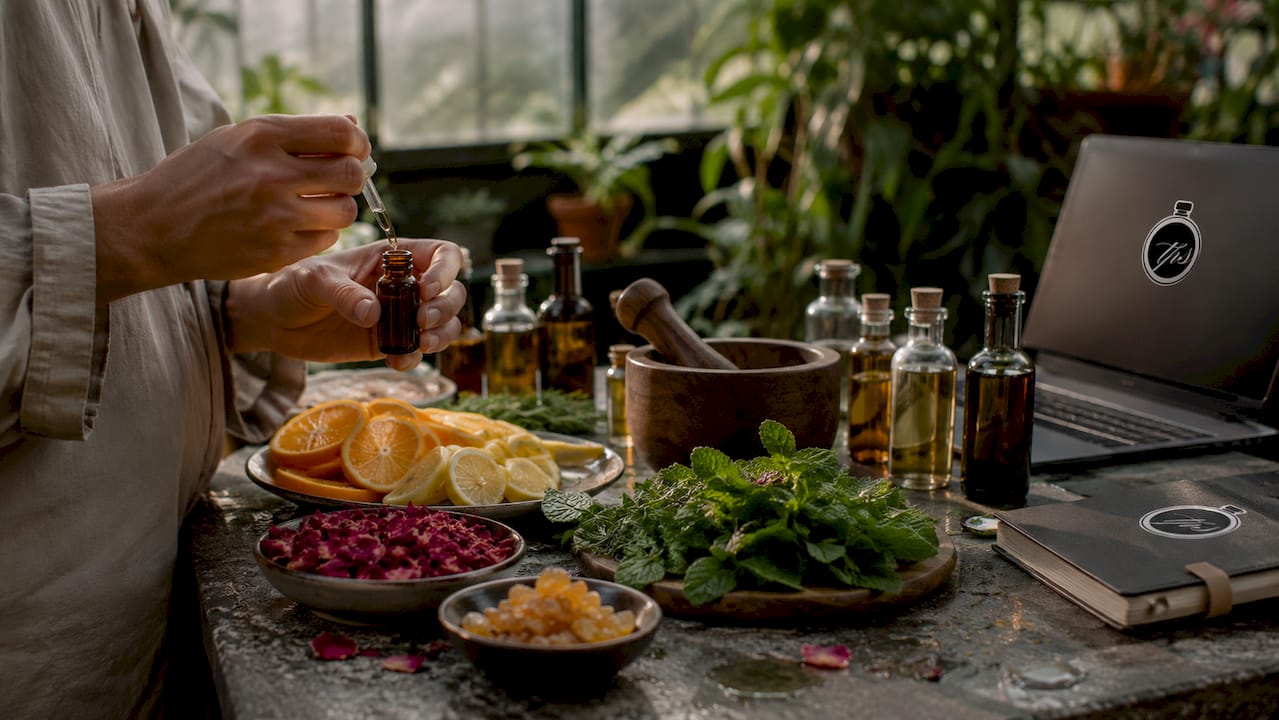
The wellness movement reshaped medicine, food, fitness, and beauty before it reached perfumery. When it arrived in scent, it produced functional fragrances designed to reduce anxiety, improve focus, or aid sleep. The shift towards scent as self-expression and wellbeing is now the dominant purchasing motivation in the luxury segment. That is a structural change, not a seasonal trend.
Digital culture has had an equally profound effect. The online fragrance community has democratised scent knowledge and created new collecting behaviours, particularly among younger consumers. Fragrance literacy, once the preserve of industry insiders, is now widely accessible. A first-time buyer can learn about top notes, base notes, and fragrance families within minutes of joining an online community.
Market data reflects these cultural shifts directly:
| Cultural force | Fragrance movement it drives | Market signal |
|---|---|---|
| Wellness and mental health | Functional and mood-based fragrance | 57% of luxury buyers prioritise emotional benefits |
| Environmental concern | Slow perfumery and clean fragrance | Growth in natural and artisanal niche houses |
| Digital community culture | #PerfumeTok and scent collecting | Prestige fragrance sales surged in 2021 and continued growing through 2024 |
| Identity and self-expression | Genderless and niche fragrance | Niche segment expanding alongside mass-market growth of 9% in 2024 |
Prestige fragrance sales surged 82% in the first half of 2021, and luxury fragrances represented 28% of total prestige beauty sales by 2024. That growth did not happen because perfume suddenly smelled better. It happened because fragrance became a vehicle for identity, community, and self-care.
What practical impacts do fragrance movements have on consumers and perfumers?
Fragrance movements change behaviour on both sides of the counter. For perfumers, slow perfumery demands longer production timelines and more expensive raw materials. For consumers, the shift is equally concrete.
The most visible change is the move from a single signature scent to a scent wardrobe. Scent wardrobes and layering reflect evolving consumer behaviour catalysed by digital subcultures, transforming perfume from a singular purchase into a daily mood accessory. A person might wear a light citrus scent for work, a woody oriental for evenings, and a functional lavender blend before sleep. That behaviour pattern drives volume and variety in purchasing.
The clean fragrance movement creates a specific practical challenge. Because the term lacks a regulated standard, two products both labelled “clean” can have entirely different formulations and performance profiles. Clean fragrances often omit synthetic fixatives and musks, which are the ingredients that make a scent last on skin. Consumers who buy clean fragrance expecting full-day wear are frequently disappointed.
The market has also expanded dramatically in terms of new releases. Around 6,000 new fragrances launched globally in 2025, up from 2,500 before 2019. That 140% increase in six years reflects both market saturation and the appetite for novelty driven by digital communities. For consumers, it means more choice and more noise.
Pro Tip: Before committing to a full bottle from any movement, whether slow perfumery, wellness, or niche, sample it across multiple wears. Fragrance behaves differently on different skin chemistry and in different seasons.
The table below shows how movements translate into practical differences for the consumer:
| Movement | Production change | Consumer behaviour change |
|---|---|---|
| Slow perfumery | Longer maceration, natural sourcing | Willingness to pay premium for artisanal quality |
| Wellness fragrance | Functional ingredient focus | Buying by mood or occasion rather than occasion alone |
| Clean fragrance | Removal of synthetic fixatives | Shorter wear time; need for reapplication |
| Digital community | Faster trend cycles | Collecting multiple scents; building a scent wardrobe |
Understanding how fragrances evolve on skin is one of the most practical skills you can develop as a fragrance enthusiast. It changes how you evaluate any scent, regardless of which movement produced it.
How is scent culture evolving beyond traditional perfumery?
Scent culture is expanding well beyond the bottle. The most striking development is the emergence of olfactory museology, a field that treats scent as intangible cultural heritage. Olfactory museology positions scent as a storytelling medium connecting memory, emotion, and identity, and challenges the visual-centric way we typically understand cultural history. Museums and heritage institutions are beginning to use scent as an interpretive tool alongside images and objects.
This matters for fragrance enthusiasts because it confirms what many already feel intuitively: scent is not a superficial accessory. It is a carrier of memory and meaning. The smell of a particular perfume can return you to a specific moment in your life with more precision than a photograph. That quality is now being taken seriously by cultural institutions.
The rise of fragrance as a community practice is equally significant. Online forums, local sniffing groups, and fragrance events have created spaces where scent appreciation is social rather than solitary. Fragrance in youth culture shows how younger generations are using scent as a marker of identity and belonging, not just personal taste.
“Scent is the sense most directly connected to memory and emotion. A fragrance movement, at its best, is culture finding a new way to express something it cannot say in words.”
Scent culture is also becoming more multisensory. Brands are pairing fragrance launches with sound design, visual art, and tactile packaging to create full experiences. The fragrance itself is the anchor, but the experience extends well beyond it.
Key takeaways
A fragrance movement is a collective cultural shift in how scent is created, valued, and consumed, driven by forces including wellness, digital community, sustainability, and identity.
| Point | Details |
|---|---|
| Definition of a movement | A fragrance movement combines shared philosophy, community, and measurable market impact. |
| Major current movements | Slow perfumery, wellness fragrance, genderless niche, clean fragrance, and digital communities each represent distinct trends. |
| Cultural drivers | Identity, wellness, climate concern, and digital culture are the four forces shaping fragrance globally. |
| Practical consumer impact | Movements shift buying behaviour from single signature scents to multi-scent wardrobes and mood-based collecting. |
| Clean fragrance caveat | “Clean fragrance” has no regulated definition; performance often differs significantly from conventional formulations. |
Why understanding fragrance movements changed how I smell
I used to buy fragrance the way most people do: I found something I liked and wore it until the bottle ran out. Understanding fragrance movements broke that habit entirely, and I think it will do the same for you.
Once you recognise that slow perfumery is a reaction to mass-market speed, you start reading ingredient lists differently. You notice when a house is genuinely committed to long maceration and natural sourcing, and when it is using the language of the movement without the substance. That critical eye makes you a better buyer and a more satisfied one.
The wellness movement taught me something more personal. I started paying attention to how different scents affected my mood throughout the day. A vetiver-heavy composition genuinely settles my thinking in a way that a bright citrus does not. That is not placebo. It is the functional fragrance movement working exactly as intended.
The part of scent culture I find most underappreciated is the community dimension. Joining an online fragrance forum or attending a local sniffing event changes your relationship with scent permanently. You develop vocabulary, reference points, and opinions you simply cannot build alone. Movements are not just market categories. They are invitations to engage more deeply with something that has been part of human culture for thousands of years.
— Rupesh
Sampling fragrances from every movement with Theperfumesampler
Theperfumesampler offers fragrance decants in 2ml, 3ml, 5ml, and 10ml sizes, covering niche and designer releases across every major movement discussed here.
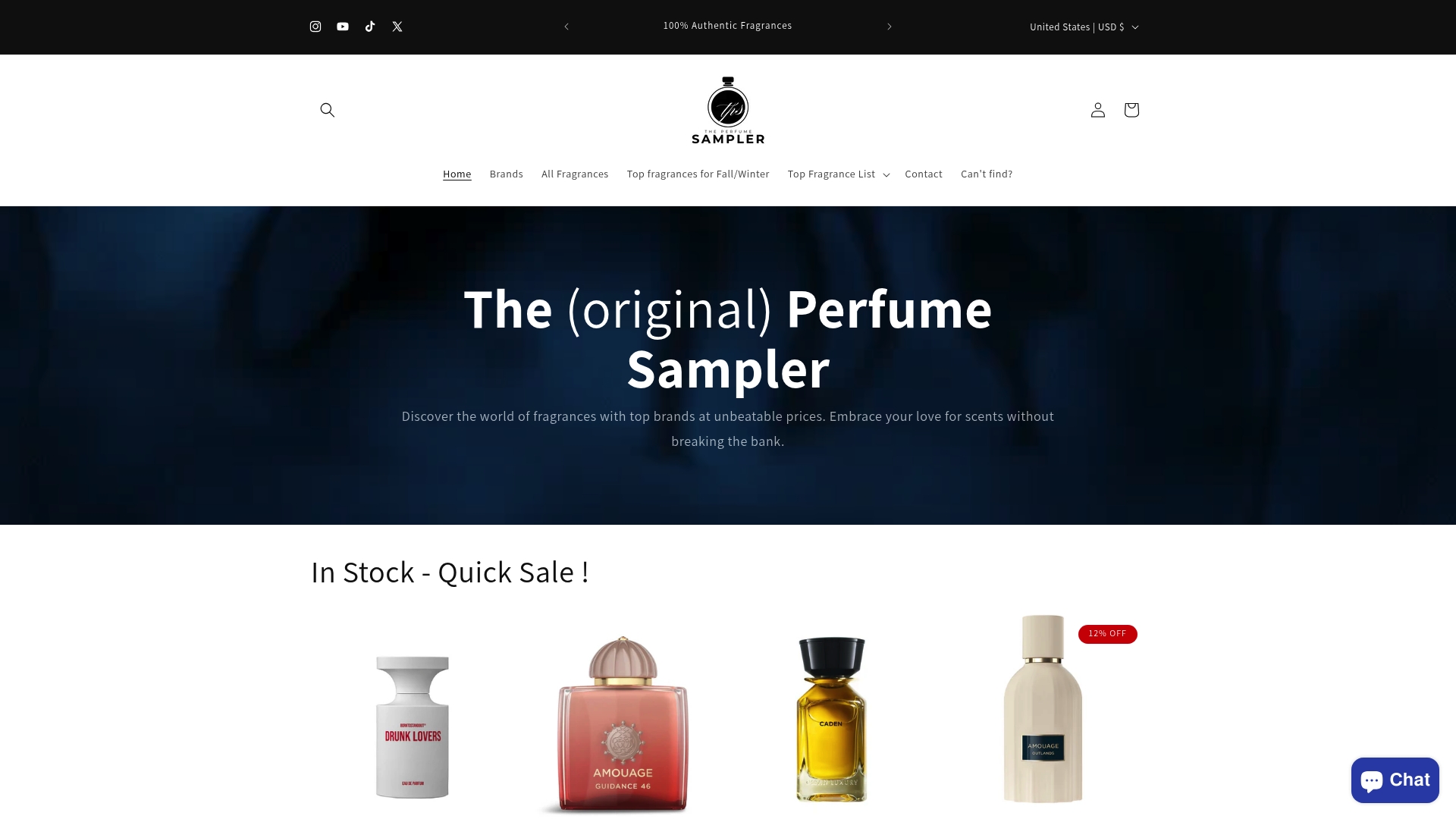
Sampling is the most practical way to explore slow perfumery, wellness blends, and genderless niche releases without committing to a full bottle. A 5ml decant gives you enough wear time to understand how a fragrance performs across different conditions and moods. Theperfumesampler also stocks full bottles for when you find the one that fits. Read why decants work to understand how sampling builds a scent wardrobe without the financial risk of buying blind.
FAQ
What is a fragrance movement in simple terms?
A fragrance movement is a collective shift in how scents are created, marketed, and worn, driven by shared cultural values such as wellness, sustainability, or identity. It differs from a trend in that it reshapes consumer behaviour and industry production over a sustained period.
What are the main fragrance movements right now?
The main current movements are slow perfumery, wellness and functional fragrance, genderless and niche fragrance, clean fragrance, and digital community-driven scent culture. Each reflects a distinct set of consumer values and production philosophies.
Is clean fragrance actually better for you?
Not necessarily. “Clean fragrance” has no regulated definition, and many clean formulations omit synthetic fixatives that provide longevity and projection. The ethical intent varies by brand, so reading ingredient transparency statements is the most reliable way to evaluate a claim.
How has social media changed fragrance culture?
Platforms like TikTok have created large fragrance communities such as #PerfumeTok, which democratise scent knowledge and drive mood-based collecting. This has shifted fragrance from a considered, infrequent purchase to a regular, identity-driven habit, particularly among younger consumers.
How do I start exploring different fragrance movements?
Sampling is the most practical starting point. Trying small decants across slow perfumery, wellness, and niche genderless releases lets you understand each movement on your own skin before investing in a full bottle.