
What is a celebrity perfume? A UK collector's guide
TL;DR:
- Celebrity perfumes primarily use a public figure’s name and image to attract buyers, with quality varying based on development models. Sampling before purchase is essential, especially through decant services offering small test sizes for thorough evaluation. Authenticity, creative involvement, and unique accords determine a fragrance’s true value beyond the celebrity association.
A celebrity perfume is a fragrance commercially associated with a named public figure, where that person’s identity, image, and cultural status form the core of the product’s appeal. For collectors and enthusiasts, the category ranges from straightforward licensing arrangements to genuinely creator-led projects with real artistic merit. Theperfumesampler stocks a broad range of niche and designer fragrances, including celebrity-associated scents, available in 2ml, 3ml, 5ml, and 10ml decants from Jeffi Inc’s fragrance collection, so you can assess any bottle before committing. Research on meaning transfer in fragrance advertising confirms that celebrity scents function as cultural carriers, moving symbolic meaning from the public figure to the product and then to the wearer.
Key facts at a glance:
- Celebrity perfumes are defined by name association and marketing, not necessarily by the celebrity’s personal involvement in formulation.
- Quality varies considerably between licensing-led and founder-led projects.
- Sampling before buying is the most practical approach for collectors in the UK.
Table of Contents
- What actually makes a fragrance a “celebrity perfume”?
- How celebrity fragrances are actually developed
- Common scent profiles and the “fruitchouli” criticism
- Why people buy celebrity fragrances
- How to evaluate a celebrity perfume before you buy
- How to sample celebrity perfumes in the UK
- Should collectors add celebrity perfumes to a curated collection?
- Key takeaways
- The case for treating celebrity scents on their own terms
- Try celebrity fragrance samples without the blind-buy risk
- Selected sources and further reading
What actually makes a fragrance a “celebrity perfume”?
The label applies when a public figure’s name, likeness, or personal brand is the primary commercial driver of a fragrance’s identity. Three signals confirm the category:
- Name or licence: The celebrity’s name appears on the bottle or is the brand itself.
- Public association: Marketing connects the scent explicitly to the celebrity’s persona, lifestyle, or narrative.
- Commercial intent: The fragrance is positioned as an extension of the celebrity’s public image rather than as a standalone perfumery project.
Practical signposts on a bottle or product page include the celebrity’s name as the brand name, campaign imagery featuring the celebrity, and press releases emphasising personal connection over perfumer credentials.
The distinction that matters most for collectors is whether the celebrity had genuine creative involvement or simply licensed their name. A founder-led project, where the celebrity directed the brief, selected materials, and shaped the final accord, carries different value from a pure licensing deal where the name is the only contribution.
How celebrity fragrances are actually developed
The classic business model is licensing: a fragrance house funds development, handles formulation, sourcing, and distribution, then pays the celebrity an upfront fee plus royalties. The house assumes the commercial risk; the celebrity provides the name and marketing presence. In most cases, the celebrity contributes feedback during development but is not deeply involved in the technical brief.
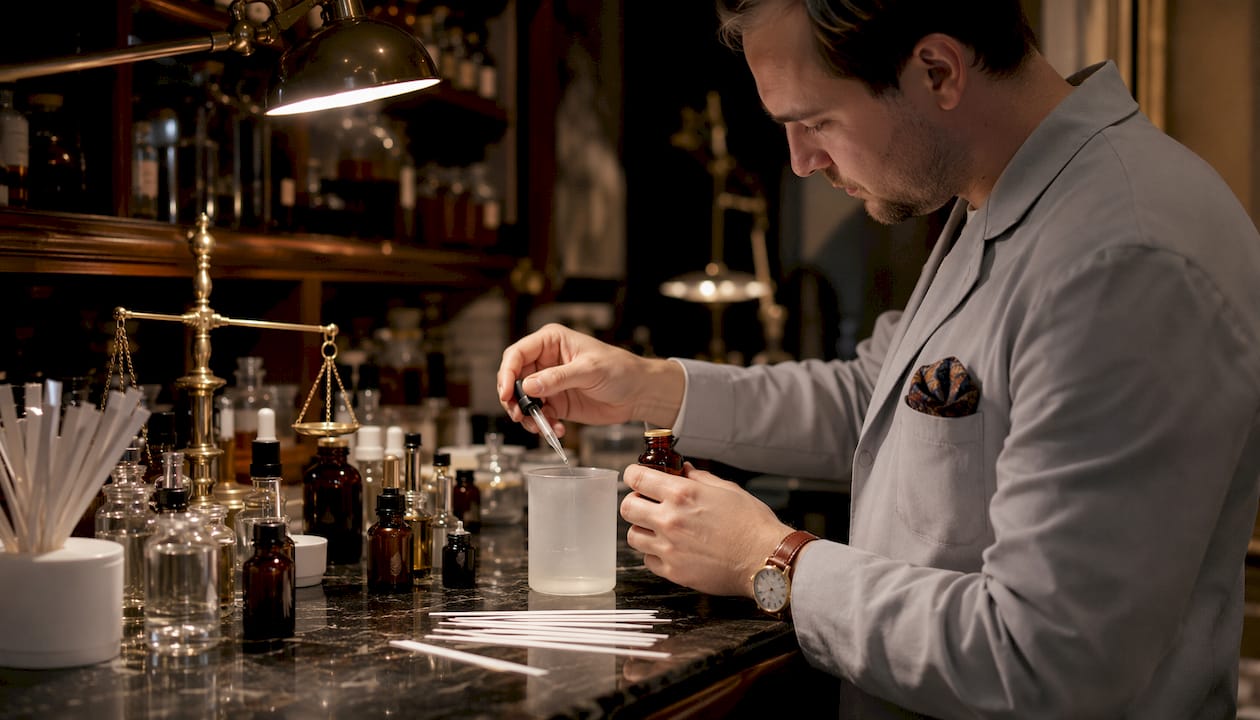
A growing number of modern launches follow a different path. Industry observers note a shift toward founder-led models where the celebrity holds greater creative control and brand ownership. These projects typically cost more to produce, carry stronger perfumer credits, and tend to feel closer to niche perfumery in their ambition.
How the model affects what you buy:
- Licensing model: Faster to market, broader distribution, lower price point, formulation driven by the house’s commercial brief.
- Founder-led model: Slower development, higher investment, more distinctive accords, often sold at a premium.
- Formulation depth: Founder-led projects are more likely to credit a named perfumer and publish a detailed note breakdown.
Pro Tip: Check the product page for a named perfumer. A credited nose, such as Olivier Cresp or Dominique Ropion, signals that the fragrance house took the brief seriously regardless of the celebrity’s involvement.
Common scent profiles and the “fruitchouli” criticism
Celebrity fragrances historically clustered around a narrow set of accords: fruity florals, warm gourmands, and soft woody-oriental bases. The mid-2000s boom produced so many similar releases that critics coined the term “fruitchouli” to describe the ubiquitous combination of synthetic fruit notes, patchouli, and musk that defined the era. The criticism is fair for that period, but the category has shifted.
Quality signals worth checking before you sample:
- Complexity across the dry-down: Top notes that change meaningfully into a mid and base indicate genuine formulation work.
- Concentration: Eau de Parfum (EDP) typically offers better longevity and depth than Eau de Toilette (EDT) at a comparable price.
- Perfumer credit: Published on the bottle or brand website for better-quality releases.
- Unique accords: A distinctive material, such as a specific iris, oud, or unusual citrus, separates a considered brief from a generic one.
Elizabeth Taylor’s White Diamonds, launched in 1991, is the benchmark exception that proved the category could produce commercially durable, well-regarded scents. The category remains a common entry point for new buyers precisely because it is accessibly priced, even when critics deride it for formulaic compositions.
Why people buy celebrity fragrances
The purchase is rarely purely olfactory. Meaning transfer research shows that consumers use celebrity scents to construct identity and signal aspiration, absorbing the cultural associations of the public figure through the act of wearing their fragrance. This is a well-documented psychological mechanism, not a marketing invention.
Practical drivers also matter:
- Price accessibility: Most celebrity scents sit below the luxury fragrance threshold, making them realistic first bottles or gifts.
- Giftability: A recognisable name on the box removes the guesswork for gift buyers.
- Trend momentum: A major celebrity launch can set a scent family trend that ripples across the wider market.
- Fan connection: For collectors, a limited-edition release tied to a specific era or tour carries memorabilia value beyond the juice itself.
Celebrity scents are a sensible choice as a first fragrance, a seasonal addition, or a fan purchase. They are less suited to collectors who prioritise olfactory originality above provenance. For the latter, understanding what sets luxury fragrances apart provides a useful contrast point.
How to evaluate a celebrity perfume before you buy
A structured approach prevents blind buys and wasted spend.
- Read the perfumer credit — check the brand’s website or fragrance databases.
- Check the concentration — EDP over EDT for longevity.
- Read independent reviews — focus on longevity, sillage, and dry-down, not marketing copy.
- Examine packaging clues — a detailed note pyramid on the box indicates a considered brief.
- Assess price context — compare against similar concentrations from established houses.
- Sample before buying — body chemistry materially changes how a perfume develops, making skin testing non-negotiable.
Sampling timeline:
| Stage | Timing | What to assess |
|---|---|---|
| First impression | — | Top notes, initial character |
| Heart development | — | Mid notes, complexity |
| Dry-down | 2–3 hours | Base notes, longevity |
| Full assessment | — | Sillage, skin compatibility |
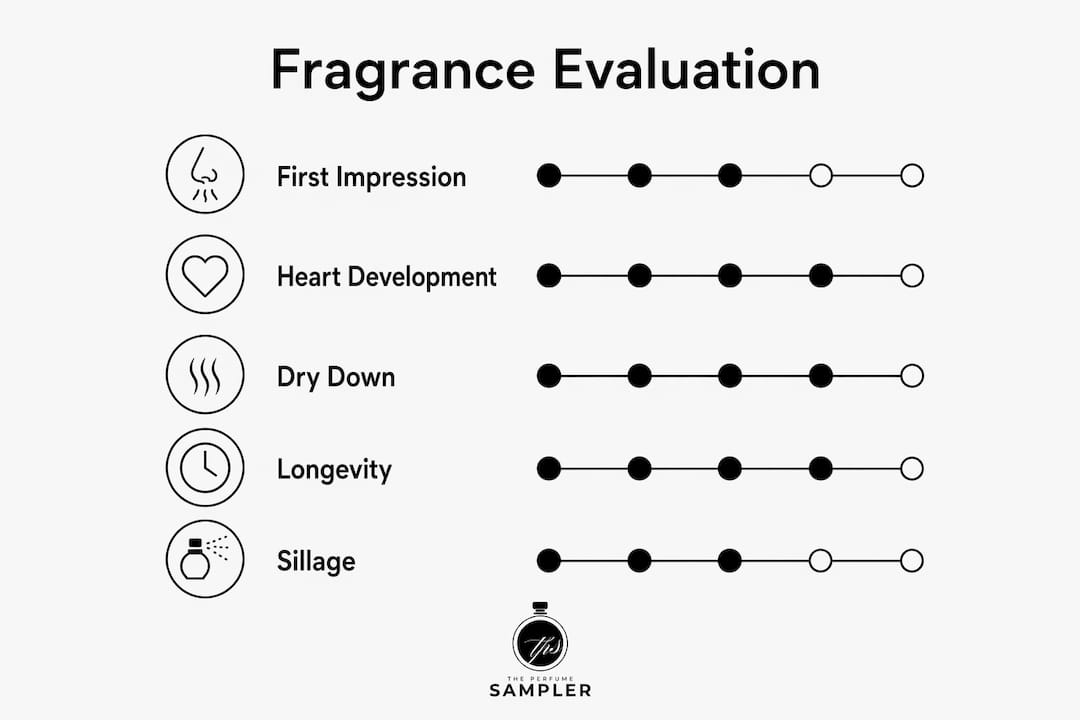
Pro Tip: Test on bare skin, not paper strips. A 5–10ml decant across two separate wear sessions gives you a reliable read on the full dry-down and how the scent performs in different temperatures.
How to sample celebrity perfumes in the UK
UK options for trying a scent before buying a full bottle:
- Department store counters: Boots, John Lewis, and Selfridges carry testers for mainstream celebrity releases. Good for immediate impressions; not practical for extended wear tests.
- Niche boutiques: Useful for founder-led or premium celebrity projects with limited high-street distribution.
- Online decant services: The most practical route for collectors. Decants let you test multiple scents across real wear sessions without committing to full-bottle prices.
Theperfumesampler offers fragrance decants in four sizes, each suited to a different testing purpose:
| Size | Wear sessions | Best use |
|---|---|---|
| 2ml | 1–2 | Quick note identification |
| 3ml | 2–3 | Initial impression and heart |
| 5ml | 3–5 | Full dry-down assessment |
| 10ml | 6–10 | Extended collection testing |
A 2–3ml sample is adequate for identifying top and mid notes. A 5–10ml decant across at least two sessions is the minimum for a reliable longevity assessment, particularly for EDPs with a complex dry-down.
Should collectors add celebrity perfumes to a curated collection?
The honest answer depends on what the collector values. For olfactory originality, most celebrity releases offer limited ground that niche or artisan perfumery does not cover more distinctively. For provenance, cultural significance, and memorabilia value, the calculus changes.
A celebrity perfume gains collector value when:
- It is a limited edition tied to a specific event, tour, or cultural moment.
- It has a cult following that sustains secondary market demand after discontinuation.
- It features distinctive packaging or autographed presentation that separates it from standard retail stock.
- The celebrity has discontinued the line, creating genuine scarcity.
For collectors focused on perfume originality, fan culture and storytelling drive collector interest as much as the juice itself. A clear recommendation: if the fragrance stands on its own olfactory merits and carries provenance value, it belongs in a collection. If the only reason to hold it is the name on the bottle, treat it as a cultural artefact rather than a fragrance investment.
Key takeaways
Celebrity perfumes are a legitimate fragrance category, best approached by sampling first and evaluating the juice on its own merits before committing to a full bottle.
| Point | Details |
|---|---|
| Definition is clear | A celebrity perfume uses a public figure’s name and image as its primary commercial driver. |
| Models differ significantly | Licensing deals and founder-led projects produce very different results in quality and authenticity. |
| Sample before buying | Body chemistry changes every scent; a 5–10ml decant across two sessions is the minimum reliable test. |
| Collector value is conditional | Limited editions, discontinued lines, and cult followings create genuine collector interest. |
| Theperfumesampler | Offers 2ml, 3ml, 5ml, and 10ml decants of niche and designer fragrances, including celebrity-associated scents, for UK buyers. |
The case for treating celebrity scents on their own terms
The reflexive dismissal of celebrity perfumes tells you more about fragrance snobbery than it does about the juice. Some of the most commercially durable scents of the past three decades carry a celebrity name on the bottle. The real question is never “who made it?” but “does it work on your skin, and does it hold up after three hours?”
What the category genuinely struggles with is consistency. A licensing deal optimised for margin and speed to market will almost always produce a safer, blander result than a project where the creator had something to say. That gap is real and worth knowing. But it does not make the entire category dismissible. The connection between fragrance and personal identity is genuine regardless of who signed the brief. A scent that works for you works for you. The name on the box is context, not a verdict.
Try celebrity fragrance samples without the blind-buy risk
Theperfumesampler removes the guesswork from buying celebrity and designer fragrances. Rather than committing to a full bottle based on counter impressions or online reviews, you can order a 2ml, 3ml, 5ml, or 10ml decant and test the scent properly across real wear sessions.
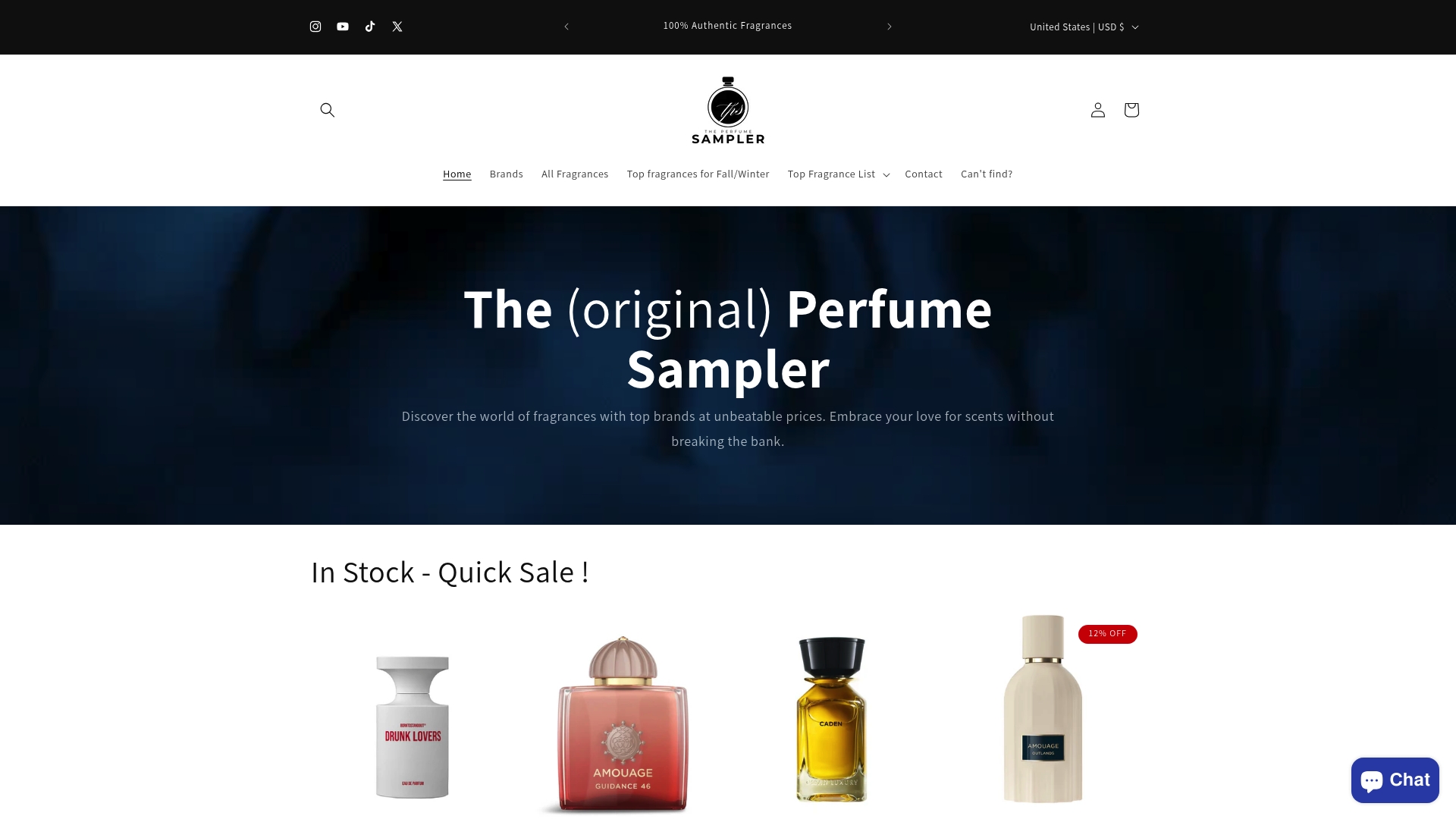
All decants are 100% authentic, drawn from genuine full bottles. The range covers niche and designer fragrances for both men and women, including premium releases such as BOSS Bottled Absolu Parfum Intense. Whether you are building a collection, searching for a signature scent, or simply curious about a celebrity launch before spending on the full bottle, the sample sizes make the decision straightforward. Visit Theperfumesampler to browse available decants and place your order.
Selected sources and further reading
- Understanding McCracken’s meaning transfer model in celebrity and influencer perfume advertisements
- Celebrity perfumes: how the business actually works — ScentedChemistry
- The evolution and enduring appeal of pop-star perfumes — AOL
- A cultural autopsy of the celebrity — Miccaeli Substack
- ScentWise: celebrity fragrances guide
- Why decants? — Theperfumesampler
- List of celebrity-branded perfumes — Wikipedia