
How to rate perfume originality: a practical guide
TL;DR:
- Perfume originality is about creating a distinctive scent identity that evolves memorably across skin.
- Assessing originality uses a five-point quality framework, evaluating transparency, harmonics, longevity, ethics, and uniqueness.
Perfume originality is defined as a fragrance’s ability to present a distinctive, cohesive scent identity that evolves memorably across its full lifecycle on skin. Knowing how to rate perfume originality separates a truly creative composition from a pleasant but forgettable formula. The process draws on structured sensory testing, a multi-dimensional scoring framework, and an understanding of what separates genuine uniqueness from trend-chasing imitation. Houses like Goldfield & Banks and independent perfumers at Parfumo have shaped how aficionados approach this evaluation today.
How to rate perfume originality: the five core dimensions
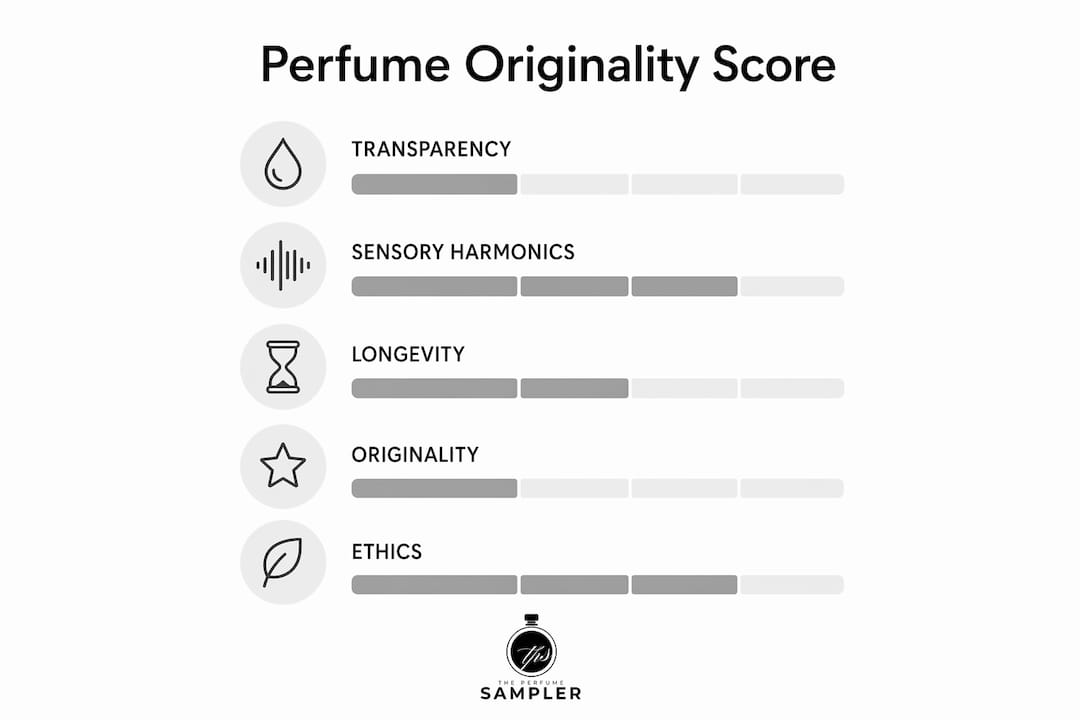
The most reliable method for assessing perfume originality uses a 5-point scoring framework across five dimensions: Transparency, Sensory Harmonics, Longevity & Projection, Originality, and Ethics. Each dimension scores from 1 to 5, giving a maximum total of 25. A score above 20 signals a strong, original fragrance. A score below 15 warrants serious caution.
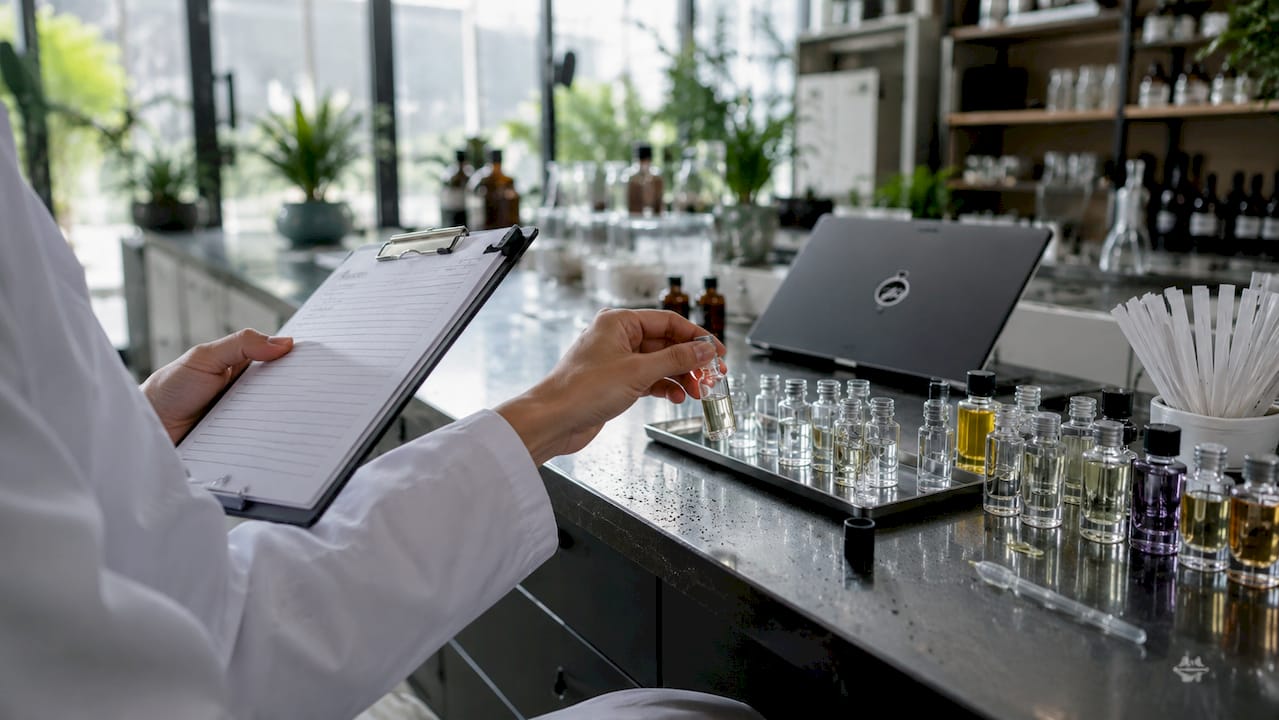
This framework matters because it forces you to separate emotional first impressions from structured analysis. You might love a scent on first spray, but a low Sensory Harmonics score reveals that the notes clash rather than evolve. Each dimension captures a different aspect of what makes a fragrance worth your attention and your money.
| Point | Details |
|---|---|
| Transparency | Does the brand disclose ingredients and sourcing honestly? |
| Sensory Harmonics | Do the notes blend and evolve without clashing or feeling disconnected? |
| Longevity & Projection | Does the scent last and project appropriately for its style? |
| Originality | Does the fragrance offer a genuinely distinctive scent identity? |
| Ethics | Are ingredients sourced responsibly and sustainably? |
Transparency and Ethics are not just moral considerations. They reflect a perfumer’s confidence in their formula. A house that hides its ingredient list often has little to distinguish its product beyond marketing. Originality, meanwhile, scores the fragrance’s creative signature: does it present something you have not smelled before, or does it feel like a recombination of familiar parts?
Longevity alone does not equal quality. Some niche perfumes deliberately prioritise subtle projection to express sophistication. Scoring longevity fairly means asking whether the projection suits the fragrance’s intent, not simply whether it lasts eight hours.
How do you conduct timed sensory testing?
Structured sensory testing is the practical engine behind any originality evaluation. Experts recommend tracking fragrance progression at three fixed intervals: 15 minutes for top notes, 30–60 minutes for heart notes, and 2–8 hours for base notes. Each stage reveals a different layer of the composition’s originality.
Follow this controlled testing protocol for consistent, objective results:
- Spray on a clean blotter first. This gives you an uncontaminated first impression of the top notes without skin chemistry interference.
- Apply to your inner wrist at the same time. Skin chemistry transforms a fragrance. Comparing blotter and skin reveals how the formula adapts.
- Assess at 15 minutes. Note the opening character. Is it distinctive or generic? Does it feel familiar from the first breath?
- Return at 30–60 minutes. The heart notes define the fragrance’s personality. This is where originality either asserts itself or disappears.
- Evaluate at 2–8 hours. The base notes reveal structural depth. A truly original fragrance leaves a memorable dry-down, not just a faint woody residue.
- Score each dimension after the full dry-down. Never finalise your rating before the base notes have settled.
Effective sensory testing uses controlled, repeatable protocols with blind testing to reduce brand bias. Remove the bottle and packaging before you assess. A luxury bottle can inflate your perception of quality before you have smelled a single note.
Pro Tip: Run the same fragrance on two separate days. Diet, hormones, and even ambient temperature affect scent perception. Repeated multi-day testing in controlled conditions accounts for these variables and gives you a far more reliable originality score.
Understanding how fragrances evolve across their note stages is the single most useful skill you can develop as a fragrance evaluator. Without it, you are rating a snapshot rather than the full composition.
What separates original perfumes from clones and trend scents?
Algorithmic scents tend to produce pleasant but forgettable clones. AI-driven formulation over-prioritises trend data, which results in derivative formulas that smell appealing on first contact but offer nothing memorable after 30 minutes. Sensory Harmonics is the key metric that distinguishes human artistry from algorithm-driven imitation.
Structural originality emerges not from a single novel ingredient but from surprising textural contrasts and balanced compositions that evolve pleasantly across all phases. A fragrance built around a single unusual note, say oud or white musk, is not automatically original. What matters is how that note interacts with the rest of the composition across time.
Watch for these red flags when evaluating fragrance uniqueness:
- Flat evolution. The scent smells almost identical at 15 minutes and at 4 hours. No development means no structural depth.
- Disconnected notes. The top, heart, and base feel like three separate fragrances rather than one coherent journey.
- Trend-note overload. Excessive ambroxan, iso E super, or synthetic musks signal a formula built for mass appeal rather than creative expression.
- Familiar DNA. The fragrance is immediately reminiscent of a well-known bestseller. This is the clearest sign of a dupe or clone.
- No dry-down surprise. Truly original fragrances reveal something unexpected in the base. If the dry-down is predictable, the composition lacks creative ambition.
High-quality perfumes feel structured and smooth, evolving naturally on skin without harsh or disconnected notes. Harshness in the heart phase almost always indicates poor ingredient quality or a formula assembled for cost efficiency rather than artistry.
Does artistic intent belong in an originality rating?
Artistic intent is a legitimate scoring factor, not a soft excuse for poor performance. Perfume reviewers incorporate artistic concept and storytelling when scoring originality, sometimes valuing creativity over technical perfection. A fragrance that presents a bold, coherent concept deserves credit for that ambition even if its longevity falls short of the top tier.
Originality is often mistaken as just “weirdness”. Real originality is about cohesive scent evolution and lasting impact. A fragrance that smells strange for the sake of it scores no higher than a generic crowd-pleaser. What you are looking for is a clear creative vision executed with skill.
The emotional experience and personal connection to a perfume significantly influence subjective originality scores. This is not a flaw in the rating process. It is a feature. Your emotional response is data. A fragrance that moves you and stays with you has achieved something that a technically proficient but cold composition has not.
Experts accept minor performance flaws if the fragrance presents a genuine, bold artistic concept. Apply this principle by weighting your Originality score generously when the creative intent is clear, even if the Longevity score is modest. The two dimensions are independent for a reason.
Pro Tip: Research the perfumer and the house before you finalise your score. Knowing that a fragrance was designed to evoke a specific landscape, memory, or material changes how you perceive its choices. Context does not excuse poor construction, but it can reveal intentional decisions you might otherwise read as flaws.
Key takeaways
Evaluating fragrance uniqueness reliably requires a structured five-dimension scoring framework combined with timed sensory testing across at least two separate days.
| Point | Details |
|---|---|
| Use the five-dimension framework | Score Transparency, Sensory Harmonics, Longevity, Originality, and Ethics out of 25. |
| Test at fixed time intervals | Assess at 15 minutes, 30–60 minutes, and 2–8 hours to capture full scent evolution. |
| Blind test to reduce bias | Remove packaging before scoring to prevent brand perception from inflating your rating. |
| Distinguish originality from weirdness | True originality is cohesive, evolving, and memorable, not simply unusual. |
| Weight artistic intent fairly | A bold creative concept can justify minor technical shortcomings in your final score. |
Rupesh’s take: why your gut feeling is part of the data
Most fragrance guides treat subjectivity as a problem to be eliminated. I disagree. After years of testing hundreds of fragrances across niche and designer houses, I have found that your emotional response at the dry-down stage is one of the most reliable indicators of genuine originality. If a fragrance makes you stop and think, or reach for the bottle again unprompted, that reaction is telling you something the score sheet cannot fully capture.
The bias worth eliminating is not emotional response. It is brand prestige. A beautiful bottle and a famous house name will inflate your perception of a fragrance before you have assessed a single note. Blind testing is the single most effective discipline I know for correcting this. Strip away the packaging and you will be surprised how often a modestly priced niche fragrance outscores a celebrated designer release on pure originality.
The other trap is over-indexing on longevity. A fragrance that lasts 12 hours but smells identical from first spray to dry-down has no structural originality at all. A fragrance that lasts four hours but transforms beautifully across every phase is far more interesting and far more original. Keep those two dimensions separate in your scoring and your evaluations will become significantly more accurate.
Try as many fragrances as you can before committing to a full bottle. The more reference points you build, the sharper your originality judgement becomes. There is no shortcut to that breadth of experience.
— Rupesh
Try before you commit: how Theperfumesampler supports your evaluation
Assessing perfume originality properly takes time and multiple wearings. Committing to a full bottle before you have completed that process is an expensive gamble.
Theperfumesampler offers fragrance decants in 2ml, 3ml, 5ml, and 10ml sizes, covering both niche and designer houses. You can run the full timed sensory protocol across multiple days without paying full-bottle prices. The why decants? page explains exactly how sampling works and why it is the most practical way to build your fragrance knowledge. If you want to explore a broader range of scent profiles before deciding, niche and affordable sampling gives you a starting point across multiple fragrance families.
FAQ
What is the best way to score perfume originality?
Use a five-dimension framework scoring Transparency, Sensory Harmonics, Longevity & Projection, Originality, and Ethics out of 5 each. A total above 20 out of 25 indicates a strong, original fragrance.
How long should you test a perfume before rating it?
Test across at least three intervals: 15 minutes, 30–60 minutes, and 2–8 hours. Repeat the test on a second day to account for variables like diet and skin chemistry.
How do you tell an original perfume from a clone?
Original fragrances evolve distinctly across all note phases without resembling a known bestseller. Clones typically show flat evolution, familiar DNA, and an over-reliance on trend-driven synthetic notes such as ambroxan or generic musks.
Does longevity mean a perfume is more original?
No. Longevity measures performance, not creativity. Some niche perfumes deliberately project subtly to express sophistication. Score longevity and originality as separate dimensions.
Should personal taste affect an originality rating?
Your emotional response at the dry-down stage is valid data, not bias. The bias to remove is brand prestige. Blind testing corrects for packaging and reputation, leaving your genuine sensory and emotional reaction as the foundation of an honest score.
Recommended
- What makes a fragrance truly unique: your scent guide – ThePerfumeSampler
- How to rank sample scents for confident fragrance choices – ThePerfumeSampler
- How to read fragrance labels: a practical guide – ThePerfumeSampler
- Types of perfume notes: Unlock fragrance layers and lasting power – ThePerfumeSampler