
Inspect Unopened Perfume Before You Open It: IFRA, FDA & Decanter Tips
Unopened perfume will usually remain usable for roughly 3 to 5 years, a quality window rather than a hard safety expiry. Many sealed bottles last considerably longer when kept cool, dark and away from temperature swings. The real variables are composition, concentration and packaging, not a fixed countdown. Ageing unopened perfume is almost always a change in scent quality, not a safety risk, since high alcohol content works against microbial growth.
TL;DR:
- Unopened perfume usually remains usable for three to five years, but storage conditions and composition heavily influence its longevity.
- Lighter concentrations like eau de toilette and citrus notes tend to degrade faster than richer scents such as amber or oud.
- Storage in a cool, dark, and stable environment with minimal air exposure helps preserve perfume quality longer.
- Visual and olfactory inspections, including checking for darkening or off smells, are crucial before opening older bottles.
- Most perfume safety regulations do not specify expiry dates, making proper storage and condition the key to extending shelf life.
Table of Contents
- Expected shelf-life ranges by concentration and scent family
- What causes unopened perfume to change
- How to inspect an old sealed bottle before opening it
- What the PAO symbol and FDA rules actually mean
- Storage checklist to keep unopened bottles fresh for longer
- What to do with an old unopened bottle
- Rupesh’s pro decanter tips for testing sealed perfume
- A nuanced take on unopened perfume
- Test an old scent first with ThePerfumeSampler decants
- FAQ
- Sources
Expected shelf-life ranges by concentration and scent family
Concentration is the first clue to how long a sealed bottle will hold its character. Eau de toilette carries a lighter oil ratio and more alcohol, so it tends to sit at the shorter end of the 3 to 5 year range. Eau de parfum sits in the middle, and pure parfum or extrait, with the highest oil concentration, often keeps its structure the longest.
The dominant notes matter just as much as concentration:
- Citrus and green top notes oxidise fastest, since their aromatic molecules are small and volatile.
- Floral-forward blends sit in the middle, ageing gradually rather than suddenly.
- Resins, ambers, woods and musks resist change for years because their molecules are heavier and less reactive.
A citrus-heavy cologne stored for five years may smell flatter than the day it was bottled, while an amber or oud composition from the same shelf can smell nearly identical. Modern formulations lean on stabilised synthetics that resist oxidation better than many natural extracts did a generation ago, so a newer bottle may outlast an older one built on the same note profile.
What causes unopened perfume to change
Perfume ages through oxidation. Oxygen reacts with aromatic compounds even through a closed cap, and the smallest, lightest molecules, the ones responsible for citrus and green top notes, react first and fastest. That is why a bottle can smell slightly flatter on top while its base notes stay intact for years.
Alcohol does double duty in most fragrance formulations: it carries the scent and it discourages microbial growth, which is part of why degraded perfume is typically a quality problem rather than a hygiene one. Natural extracts tend to shift faster than lab-stable synthetics, since naturals carry more reactive trace compounds. IFRA recommendations for good operating practices call for storing fragrance ingredients and finished fragrances under conditions suited to their physical and chemical properties, which is the same logic that applies to a bottle sitting in a drawer at home.
Packaging plays a bigger role than most people assume. Tinted or opaque glass blocks UV light that would otherwise accelerate breakdown. A tight crimp pump or a well-fitted stopper limits how much air reaches the liquid, and a smaller headspace (less air above the juice) means less oxygen available to react with it. Keeping the bottle in its original carton adds another layer of light protection. Our piece on how fragrance ageing works goes deeper into the chemistry behind these changes.
Heat, UV exposure, humidity and swinging temperatures are the main environmental aggressors. A bottle stored in a steamy bathroom cabinet or on a sunlit windowsill will age faster than the same bottle kept in a cool, stable cupboard, regardless of what is written on the label.
How to inspect an old sealed bottle before opening it
Before breaking the seal on an older bottle, work through a short checklist:
- Check the outer box. An intact carton usually means less light exposure and better protection overall.
- Inspect the cap and seal. A loose cap or a broken seal means more air has likely reached the juice over time.
- Hold the bottle to the light. Look for cloudiness, sediment or a colour noticeably darker than you would expect for that fragrance.
- Spray onto a blotter, not your skin. A paper strip lets you assess the scent without risking a reaction.
- Smell at intervals. Check the blotter immediately, then again after a few minutes, to see how the top, heart and base notes behave.
Some darkening or mellowing is normal and often harmless, particularly in amber, vanilla or resin-heavy scents. What you are watching for is different: a sour, vinegary or metallic smell, or a papery, flat quality where the fragrance should have depth. Those are signs of real degradation rather than ordinary maturation.
Pro Tip: If the blotter test smells off but you are unsure, decant a small amount into a clean vial and let it sit for a day before deciding. Sudden shock from air exposure can temporarily mute a scent that settles back once it breathes.
If a bottle is rare, expensive or you suspect it might not be genuine, professional authentication or a decant from a trusted seller is worth the extra step before you commit to wearing or reselling it.
What the PAO symbol and FDA rules actually mean
Many cosmetic packages carry a small jar icon with a number like “12M” or “24M”, known as the Period After Opening (PAO) symbol. It tells you how long a product is expected to stay good once opened and exposed to air, not how long it lasts while sealed. Applying PAO logic to an unopened bottle is a common mix-up, and it is worth separating the two ideas clearly.

Under FDA guidance on cosmetics shelf life, US law does not require perfume or other cosmetics to carry an expiration date. Manufacturers are responsible for product safety and typically determine shelf life through their own stability testing under varied temperature and humidity conditions, rather than publishing a mandated date on the box.
The practical takeaway is simple: the absence of a printed expiry date does not mean a bottle lasts indefinitely. It means the brand has not been required to put a number on the box, and the real indicator of condition is the bottle’s visible and olfactory state, not the label.
Storage checklist to keep unopened bottles fresh for longer
A few consistent habits do more for shelf life than any single product choice:
- Keep bottles cool, away from radiators, sunny windowsills or car interiors.
- Store in the dark, ideally in the original box, since UV light accelerates oxidation.
- Avoid temperature swings, which stress the liquid and packaging more than a stable cool room does.
- Keep bottles upright to limit the fragrance’s contact with the cap, pump or stopper seal.
- Leave the cap on tightly at all times when the bottle is not in use.
Fridge storage comes up often, and it can help in genuinely hot climates by keeping temperature stable, but it introduces its own risks: condensation around the cap and frequent temperature shifts every time the door opens. Our guide on why we don’t recommend storing perfume in the fridge covers the trade-offs and why smaller test formats are often the more practical fix.
A sealed bottle commonly stays usable for roughly 3 to 5 years, and often longer with careful storage. That range is a guide, not a cliff edge, which is exactly why inspection matters more than counting years. Collectors aiming for long-term retention favour a controlled, stable environment, minimal headspace and zero light exposure, the same principles IFRA’s storage recommendations point to for fragrance ingredients generally. A useful parallel appears in the way essential oils are stored for long-term stability, where the same cool, dark, sealed logic applies.
What to do with an old unopened bottle
Once you have inspected a bottle and the blotter test comes back clean, the decision is mostly about what you want from it. If the scent holds up, wear it, or set it aside as a thoughtful gift, disclosing its age and storage history so the recipient knows what they are getting.
If you are planning to resell, be upfront about how long the bottle has been stored and under what conditions. That honesty matters more to fragrance buyers than a flawless box, and it protects you from disputes later. Buyers increasingly check for authenticity markers before purchasing older stock, so having your own provenance details ready helps close the sale.
If the scent has genuinely turned, sour, metallic or papery on the blotter, it is not worth wearing. Many municipalities treat leftover fragrance as household chemical waste rather than something to pour down a drain, so check local guidance before disposal. An ageing bottle with an acceptable but changed character can also find a second life in home fragrance projects, such as the layering ideas in this guide to scenting a home.

Rupesh’s pro decanter tips for testing sealed perfume
As a decanter who handles sealed vials daily, I open bottles with the pump or stopper tilted away from my face, letting the first release of trapped air clear before I spray a blotter. A 2 to 10 ml decant is the most useful test format: it is enough to properly evaluate the dry-down without committing a full bottle’s worth of risk. For sellers and collectors shipping older stock, a well-packed box and stable temperatures in transit matter as much as storage at home, something our guide to opening vials safely covers in more detail.
A nuanced take on unopened perfume
Most sealed bottles deserve a proper inspection before anyone writes them off. A changed top note is not a ruined bottle, and a few years past a loosely quoted shelf life rarely means the scent is gone. I would rather see someone test a decant and decide for themselves than toss a bottle on instinct alone. Well-stored older perfume can still be genuinely good wearing.
— Rupesh
Test an old scent first with ThePerfumeSampler decants
Before committing to a full bottle, a small decant lets you confirm exactly how a fragrance smells today, not how it smelled when it was bottled. Small decants in various sizes let you check a scent’s current character without the cost of a full bottle.
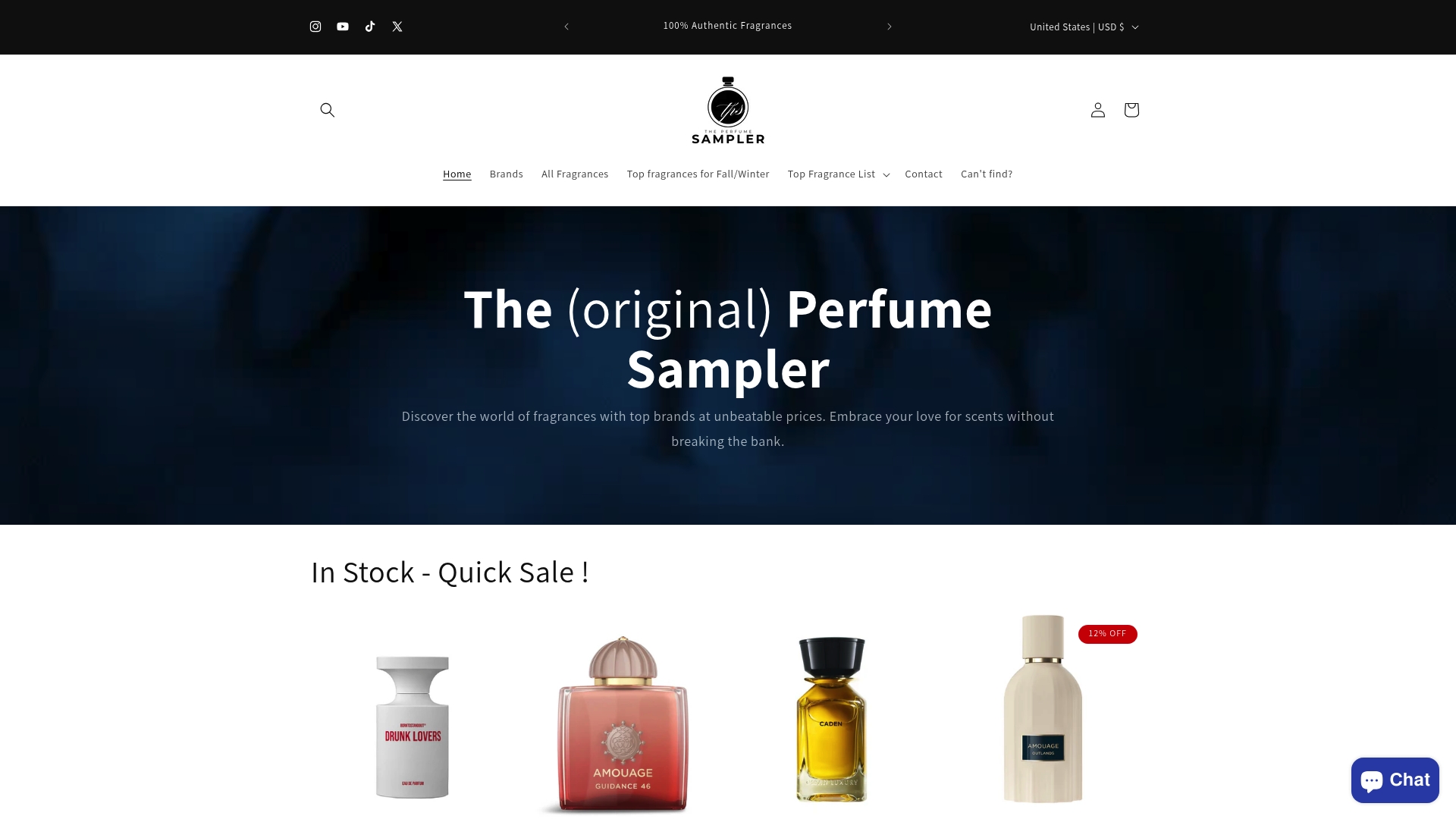
- Every fragrance we sell carries an authenticity guarantee.
- Sample sizes from 2ml to 10ml suit a quick test or a longer trial.
- Full bottles are available once you have confirmed the scent is right for you.
Browse our full fragrance collection to find a sample worth testing, or head straight to full bottles once you know what you want.
FAQ
Can perfume go off if unopened?
Yes, unopened perfume can change over time, though it is a quality shift rather than a safety hazard in most cases. Oxidation and light exposure gradually alter the scent, with citrus and green top notes typically fading first while resins and woods hold up longer.
What is the 3:1:1 rule for perfume?
This is not an established or widely recognised perfume industry guideline, and we could not verify a standard definition for it. Readers may encounter the term in informal fragrance discussions, but it is not something we can confirm as a recognised rule.
Is expensive perfume worth it?
Price often reflects ingredient quality, concentration and brand positioning rather than a guarantee of longer shelf life, since a well-made eau de toilette can outlast a poorly stored parfum. Testing a fragrance through a small decant before buying a full bottle is a practical way to judge whether the cost suits your taste, something our sample sizes are built for.
What is the 30/50/20 rule for perfume?
We found no verified industry standard matching this description, so we cannot confirm a definition. If you have seen it referenced elsewhere, treat it as informal guidance rather than an established fragrance rule.
How can I tell if my unopened perfume has expired?
Check the bottle for cloudiness, sediment or unusual colour darkening, then test a small amount on a blotter rather than your skin. A sour, metallic or papery smell signals real degradation, while slight mellowing in amber or vanilla scents is often normal maturation.
Sources
- Shelf life and expiration dating of cosmetics | FDA
- IFRA recommendations for good operating practices | IFRA
- How long does perfume last unopened? 2026 guide | The Beauty Radar