
Sampling citrus fragrances: a practical guide
TL;DR:
- Sampling citrus fragrances involves methodical testing to find your preferred notes before purchasing a full bottle. Using decants and full-wear evaluations across different conditions helps assess longevity, skin chemistry, and overall scent development. Proper sampling methods and keeping detailed notes lead to confident, satisfying fragrance choices.
Sampling citrus fragrances is the process of testing different scents methodically to identify your preferred fresh, vibrant notes before committing to a full bottle. Brands like Acqua Di Parma, Jo Malone, and Maison Margiela have made citrus perfumery a serious art form, with fragrance families ranging from citrus woody to citrus floral and citrus oriental. This guide to sampling citrus fragrances covers every step: understanding scent categories, choosing the right sample format, applying fragrances correctly, and evaluating what genuinely suits your skin and lifestyle.
What are citrus fragrances and their main categories?
Citrus fragrances are built around notes extracted from the peel, flower, or wood of citrus trees. Understanding different citrus notes helps you tailor choices to personal taste before you spend a penny on a full bottle. The broad citrus category includes fruits, flowers, and trees, with bergamot, neroli, lemon, grapefruit, and blood orange each delivering a distinct type of freshness.
Here is a quick breakdown of the key citrus notes and what they smell like:
- Bergamot: Floral and slightly spicy. The backbone of most classic colognes, including Acqua Di Parma Colonia.
- Lemon: Sharp, clean, and immediately recognisable. Fades fastest on skin.
- Neroli: Soft, honeyed, and floral. Derived from bitter orange blossom.
- Grapefruit: Tart and slightly bitter. Popular in sporty and unisex compositions.
- Blood orange: Warmer and richer than standard orange. Bridges fresh and sweet profiles.
Beyond individual notes, citrus fragrances fall into distinct families:
| Fragrance Family | Key Character | Example Brands |
|---|---|---|
| Citrus Woody | Fresh top, warm dry-down | Acqua Di Parma, Tom Ford |
| Citrus Floral | Light, airy, feminine leaning | Jo Malone, Chloé |
| Citrus Oriental | Warm, spiced, long-lasting | Hermès, Guerlain |
| Citrus Gourmand | Sweet, edible, modern | Maison Margiela, Byredo |
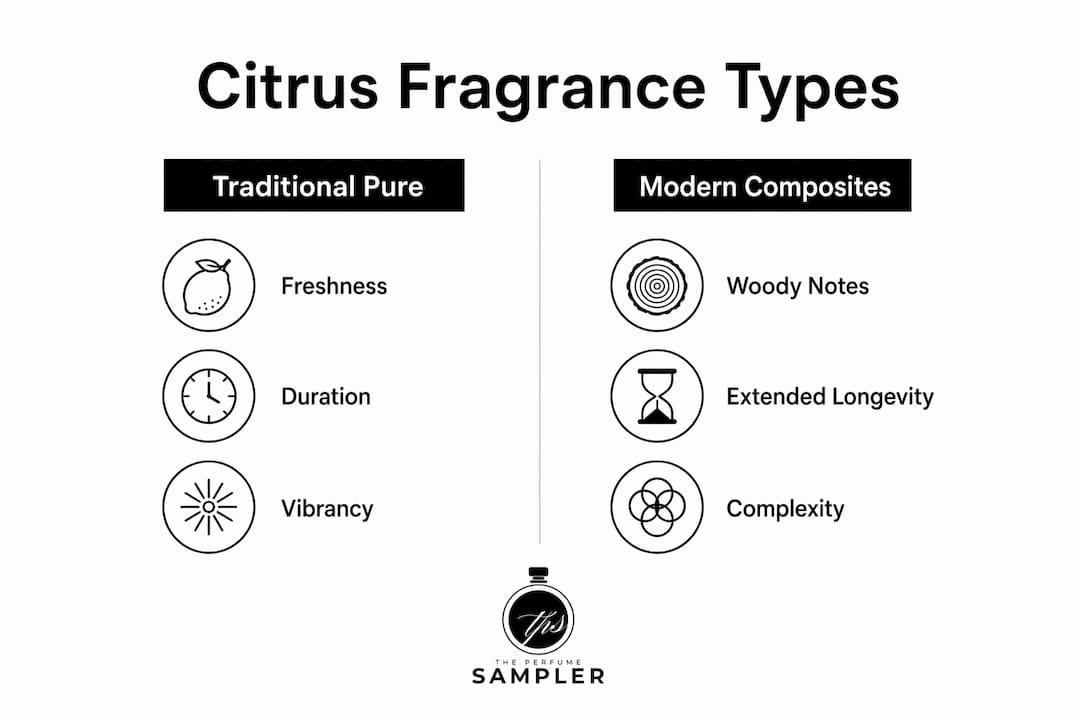
Longevity varies significantly across these families. Traditional pure citrus fragrances last 2–4 hours on skin, while modern enhanced citrus with woody, oriental, or gourmand bases last 6–8 hours or more. This matters enormously when you are deciding which samples to prioritise.
What types of fragrance samples are available?
The fragrance industry uses the term “decant” to describe a measured portion of a perfume transferred from the original bottle into a smaller container. Decants and sample sets make fragrance trials affordable and accessible, enabling confident purchases without the risk of a full-bottle commitment.
The main sample formats you will encounter are:
- Decants (2ml, 3ml, 5ml, 10ml): The most practical option. Spray-top decants replicate the full wearing experience accurately.
- Official brand samples: Small vials provided by boutiques or included with orders. Often 1–2ml and sufficient for one or two wears.
- Blotter strips: Paper strips used for a quick first impression. They do not show how a fragrance develops on your skin.
- Sample sets: Curated collections of 5–10 scents grouped by family or brand. Ideal for exploring citrus aromas across multiple styles in one purchase.
- Subscription services: Monthly boxes delivering a rotating selection of samples. Useful for discovery but less targeted than buying specific decants.
| Sample Type | Best For | Limitation |
|---|---|---|
| Decant (5ml or 10ml) | Full wear evaluation over several days | Costs slightly more than a vial |
| Official brand vial | Quick first impression | Too small for proper longevity testing |
| Blotter strip | Immediate top-note check | Does not reflect skin chemistry |
| Sample set | Broad discovery across a family | Less control over individual choices |
| Subscription box | Ongoing exploration | Random selection may not suit your taste |
Pro Tip: Always order a 5ml or 10ml decant of any fragrance you are seriously considering. A 2ml vial gives you one wear at best. You need at least three wears across different conditions to judge a citrus fragrance fairly.
How to sample citrus fragrances step by step
A structured approach to fragrance sampling techniques prevents wasted money and nose fatigue. Follow this process for accurate, reliable results every time.
-
Limit your session to five fragrances or fewer. Sampling fewer than six scents per session prevents nose fatigue and keeps your evaluations accurate. Your olfactory system becomes desensitised quickly, so restraint is the most important rule.
-
Start with blotters for elimination. Spray each fragrance onto a labelled blotter strip and smell them in sequence. Eliminate any that do not appeal within the first 30 seconds. This saves your skin for the candidates worth testing properly.
-
Moisturise your skin before applying. Moisturising skin beforehand extends citrus fragrance longevity by creating a base that improves adherence. Unscented body lotion on pulse points works best. Dry skin absorbs and dissipates light citrus notes far faster.
-
Apply 3–4 sprays to pulse points. Wrists, inner elbows, and the base of the throat are the standard locations. Apply to two or three points rather than rubbing wrists together, which crushes the top notes.
-
Wait 20–30 minutes before judging. Citrus top notes are volatile and fade quickly. The true character of a fragrance emerges in the heart and base notes, which take time to develop.
-
Test longevity across a full day. Wear the fragrance for 6–8 hours and note how it changes. A citrus woody composition from a brand like Acqua Di Parma will smell quite different at hour six than at hour one.
-
Use layering to extend wear. Layering citrus fragrances with a woody or oriental base product increases longevity and complexity. A matching scented body lotion under the spray is the simplest method.
Pro Tip: If your nose becomes overwhelmed mid-session, smell the inside of your elbow or the back of your wrist where no fragrance was applied. This resets your olfactory perception faster than smelling coffee beans, which is a persistent myth.
How to evaluate and choose your best citrus sample
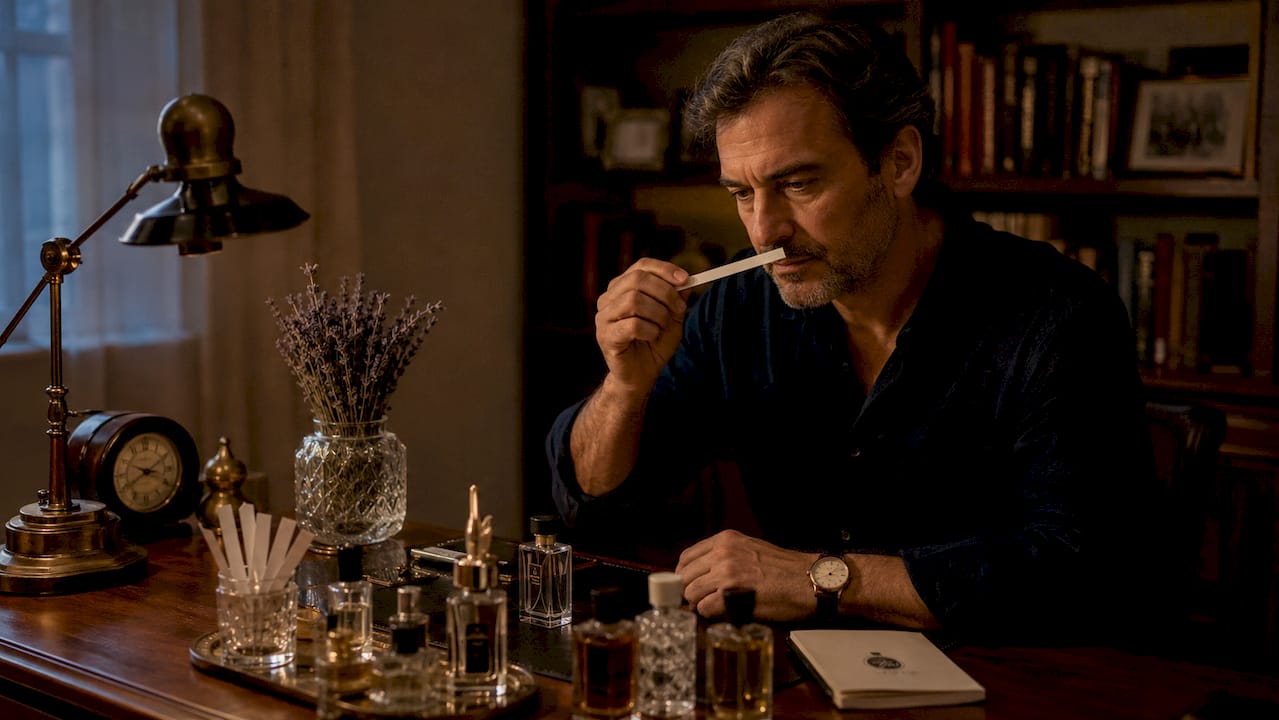
Evaluating a citrus fragrance requires patience and a consistent method. The scent you smell in the first 60 seconds is the top note, which is almost always citrus-forward and bright. What matters more is the middle note (heart) that emerges after 20–30 minutes, and the base note that remains after several hours.
Use this framework to assess each sample:
- Top note (0–20 minutes): Is the citrus sharp and synthetic, or does it smell like real fruit? Authentic citrus scents prioritise mimicking real fruit aroma over synthetic sweetness. Acqua Di Parma Blu Mediterraneo Arancia di Capri is a benchmark for genuine orange character.
- Heart note (20–60 minutes): Does the fragrance develop into something interesting, or does it simply fade? Citrus floral compositions from Jo Malone often reveal rose or jasmine at this stage.
- Base note (2–6 hours): Is there warmth, depth, or woodiness remaining? A strong base is the sign of a well-constructed citrus fragrance worth buying in full.
Body chemistry is a real factor. Sampling on skin versus blotters reveals different scent experiences influenced by your individual chemistry. A fragrance that smells sharp on a blotter may become soft and warm on your skin, or vice versa.
Keep a fragrance journal. Record the name, brand, date, and your notes on top, heart, and base for each sample. Rate each one out of ten after a full day’s wear. This removes the emotional bias of first impressions and gives you a reliable record to compare. When you are deciding between full bottle versus sample purchases, your journal becomes the most useful tool you have.
| Evaluation Stage | What to Assess | Good Sign |
|---|---|---|
| Top note (0–20 min) | Freshness and authenticity | Natural fruit character, not synthetic |
| Heart note (20–60 min) | Complexity and development | Floral, spice, or green nuance emerges |
| Base note (2–6 hours) | Longevity and warmth | Woody, musky, or oriental depth remains |
| Overall impression | Wearability across the day | Consistent and pleasant throughout |
Key takeaways
Sampling citrus fragrances effectively requires understanding scent families, using the right sample formats, and evaluating fragrances across a full day rather than judging by first impression alone.
| Point | Details |
|---|---|
| Know your citrus families | Citrus woody, floral, oriental, and gourmand each behave differently on skin and last varying lengths of time. |
| Use decants for proper testing | A 5ml or 10ml decant gives you enough wears to judge longevity and skin chemistry accurately. |
| Limit sessions to five scents | Testing fewer than six fragrances per session preserves olfactory accuracy and prevents fatigue. |
| Moisturise before application | Hydrated skin extends citrus fragrance wear time and improves how notes develop. |
| Record and rank your samples | A fragrance journal removes first-impression bias and helps you make confident full-bottle decisions. |
Why citrus sampling changed how i think about perfume
I spent years buying full bottles of citrus fragrances based on a single spray in a shop. The results were mixed at best. A lemon-forward scent that smelled clean and sharp in a boutique turned flat and synthetic by mid-afternoon. It took sampling Acqua Di Parma Blu Mediterraneo properly, across three separate wears, before I understood what a well-constructed citrus fragrance actually does over time.
The trend I find most interesting right now is the move towards smoother, muted citrus profiles that evoke a golden hour warmth rather than sharp acidity. Jo Loves With Love From Capri is a good example. It does not announce itself aggressively. It settles into something quieter and more considered. That quality is almost impossible to detect from a blotter in a department store.
My honest advice: avoid any citrus fragrance that smells identical at hour one and hour four. That flatness usually signals a synthetic construction with no real base. The best citrus scents change. They start bright, soften through the heart, and leave something warm and interesting behind. You only discover that through proper sampling, and you only sample properly when you have the right format and enough time to wear it fully.
— Rupesh
Try citrus fragrance decants from Theperfumesampler
Theperfumesampler stocks a wide selection of citrus fragrance decants from top designer and niche brands, available in 2ml, 3ml, 5ml, and 10ml sizes. Every decant is 100% authentic, drawn directly from the original bottle.
If you are new to sampling, the why decants? page explains exactly how decants work and why they are the most practical way to trial luxury fragrances before committing to a full bottle. Theperfumesampler also offers curated citrus sample packs, making it straightforward to compare multiple scent profiles in one order. Affordable sizes mean you can test properly, not just once, but across several days and conditions. That is the only way to know whether a fragrance is genuinely right for you.
FAQ
What is the best way to sample citrus fragrances?
Apply each fragrance to a pulse point on moisturised skin and wear it for a full day. Limit each session to five scents or fewer to avoid nose fatigue.
How long do citrus fragrances last on skin?
Traditional pure citrus fragrances last 2–4 hours, while modern citrus compositions with woody or oriental bases last 6–8 hours or more.
What is the difference between a decant and an official sample?
A decant is a measured portion of a fragrance transferred into a small spray bottle, typically 2ml–10ml. Official brand samples are usually smaller vials, often insufficient for more than one proper wear.
Does body chemistry affect how citrus fragrances smell?
Yes. Skin chemistry directly affects how a fragrance develops, which is why testing on skin rather than a blotter strip is the only reliable method for evaluating a citrus perfume.
When should i buy a full bottle instead of continuing with samples?
Buy a full bottle after wearing a sample across at least three separate occasions, including different temperatures and activities. Use a fragrance ranking guide to compare options before committing.