

Kinds of scents: the complete 2026 fragrance guide
TL;DR:
- Fragrance families are classified by dominant accords during dry-down, not all ingredients. The four main families are Floral, Oriental, Woody, and Fresh, each with distinct characteristics and subfamilies. Perfume concentration affects scent strength and longevity, with parfum lasting the longest and most complex.
Kinds of scents are defined by fragrance families, which are groups of aromas sharing dominant olfactory characteristics. The industry-standard classification system is the Fragrance Wheel, developed by Michael Edwards, which organises all perfumes into four primary families: Floral, Oriental (Amber), Woody, and Fresh. These four families are further divided into 14 subfamilies, giving perfumers and consumers a shared language for describing scent. Understanding this system makes it far easier to choose a fragrance you will actually wear, rather than guessing at the counter.
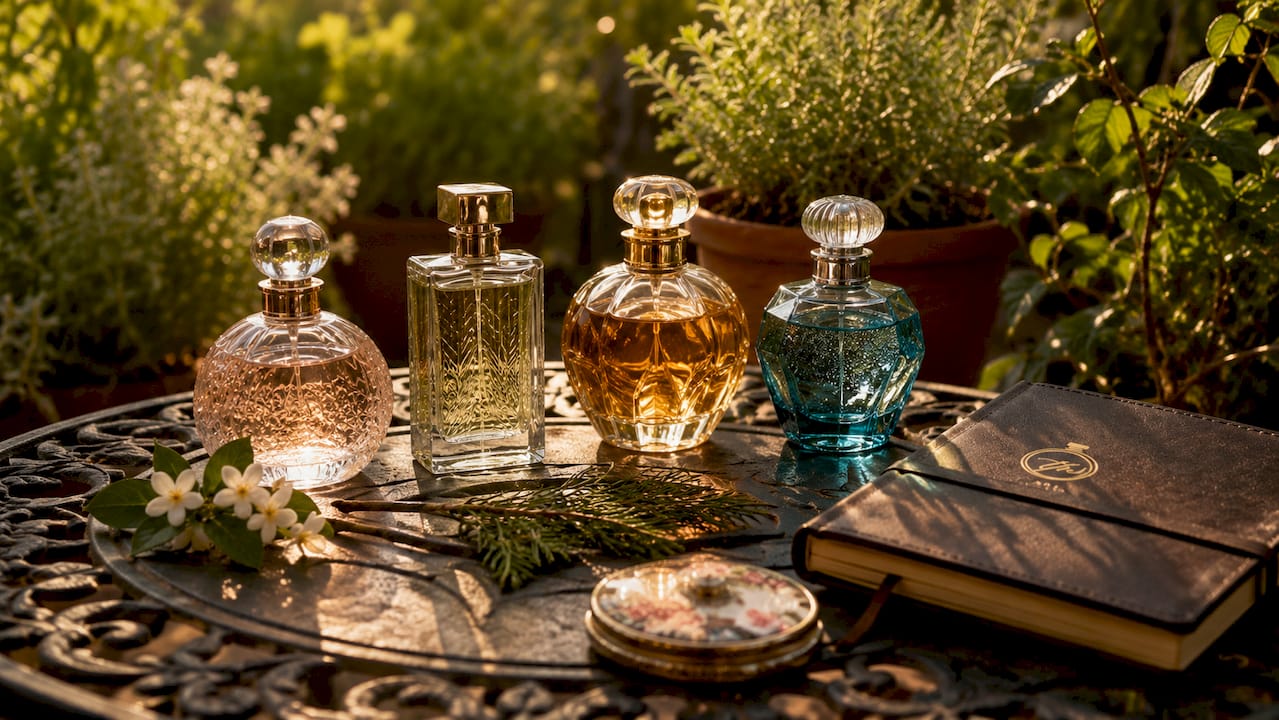
What are the main kinds of scents and fragrance families?
The Fragrance Wheel is the most widely used tool for classifying types of fragrances. It groups scents by their dominant accord during the dry-down phase, not by their full ingredient list. A perfume’s classification is determined by what you smell after the top notes have evaporated, which typically takes 15–30 minutes on skin.
The four primary families each have a distinct character:
- Floral: The largest family, built around rose, jasmine, peony, and lily. Subfamilies include Soft Floral, Floral Oriental, and Soliflore (a single flower focus). Floral scents range from light and powdery to rich and heady.
- Oriental (Amber): Warm, rich, and long-lasting, featuring vanilla, resins, and spices. Subfamilies include Soft Oriental, Oriental, and Woody Oriental. These are the classic evening fragrances.
- Woody: Grounded in sandalwood, cedarwood, vetiver, and patchouli. Subfamilies include Mossy Woods, Dry Woods, and Aromatic. Woody scents sit comfortably between warm and fresh.
- Fresh: Light, clean, and energising. Subfamilies include Citrus, Water (Aquatic), Green, and Aromatic. These are the most popular choices for daytime and warm weather.
A key point that surprises many people: a fragrance labelled with dozens of notes does not belong to all those families. Classification follows the dominant accord during dry-down, so a perfume with citrus top notes and a woody base is classified as Woody, not Citrus. This is why smelling a fragrance on your skin for at least 30 minutes before deciding is always worth the time.
Beyond the four primary families, several important subfamilies deserve attention. Gourmand scents, built on edible notes like caramel, chocolate, and coffee, have grown into a major category of their own. Earthy and Resinous scents, featuring oud, incense, and labdanum, attract a dedicated following among niche fragrance buyers. Chypre, once a dominant family built on oakmoss, has evolved into Earthy-Floral hybrids following EU restrictions on oakmoss use introduced in 2009.
| Fragrance family | Key notes | Typical character |
|---|---|---|
| Floral | Rose, jasmine, peony | Feminine, romantic, soft |
| Oriental (Amber) | Vanilla, resins, spices | Warm, rich, sensual |
| Woody | Sandalwood, cedarwood, vetiver | Grounded, sophisticated |
| Fresh (Citrus/Aquatic) | Bergamot, lemon, sea notes | Light, clean, energising |
| Gourmand | Caramel, chocolate, tonka | Sweet, edible, modern |
| Earthy/Resinous | Oud, incense, labdanum | Deep, smoky, niche |
How do perfume concentrations affect scent strength and duration?
Perfume concentration is the percentage of fragrance oil in the formula. It directly controls how strong a scent smells and how long it lasts on skin. Choosing the right concentration is as important as choosing the right fragrance family.
The four main concentration types are:
- Parfum (Extrait de Parfum): Contains 20–30% fragrance oil and lasts 6–8 hours or more. This is the richest and most long-lasting format. A single application to pulse points is usually sufficient.
- Eau de Parfum (EDP): Contains 15–20% fragrance oil and lasts 4–6 hours. This is the most versatile format, balancing longevity with wearability for most occasions.
- Eau de Toilette (EDT): Contains 5–15% fragrance oil and lasts 2–4 hours. Lighter and more affordable, EDT suits daytime and warmer climates where a heavy scent would feel overpowering.
- Eau de Cologne (EDC): Contains 2–5% fragrance oil and lasts 1–2 hours. Best used as a refreshing spritz rather than a full-day fragrance.
Higher concentrations do more than simply last longer. Richer perfume bases in Parfum and EDP formats emphasise woody, resinous, and gourmand base notes, giving the fragrance greater depth and complexity. An EDT version of the same fragrance often smells noticeably lighter and more linear because the base notes are less prominent.
Pro Tip: Apply Eau de Parfum or Parfum to moisturised skin. Dry skin absorbs fragrance faster, which shortens wear time. Unscented body lotion applied before spraying helps fragrances last longer on the skin.
Understanding perfume notes and layers also helps here. Top notes create the first impression but fade within 15–30 minutes. Heart notes define the character of the scent. Base notes, which linger for hours, are what concentration most powerfully affects.
What kinds of scents suit different moods and occasions?
Scent selection is most effective when it matches both your mood and your setting. Citrus and fresh scents are associated with energy and alertness, making them ideal for morning routines and office environments. Floral and aromatic scents promote calm and are well suited to relaxed or social settings. Woody and amber scents convey warmth and sophistication, making them the natural choice for evenings and cooler months.
A practical guide by setting:
- Morning and commute: Citrus or Aquatic EDTs. Light, clean, and non-intrusive in shared spaces.
- Office: Soft Floral or Aromatic Woody EDPs. Present enough to notice, restrained enough not to distract colleagues.
- Evening out: Oriental (Amber) or Gourmand Parfums. Rich base notes and high concentration carry well into the night.
- Leisure and weekends: Green or Earthy scents. Relaxed and grounded without formality.
- Colder months: Warm amber scents featuring vanilla, resins, and spices perform particularly well in autumn and winter. Their richness complements cold air and heavier clothing.
Seasonality also shapes which varieties of aromas feel appropriate. Fresh and citrus scents feel natural in spring and summer. Woody and Oriental scents feel more fitting from october through march. This is not a rule, but a pattern that most wearers find intuitive once they pay attention to it.
Fragrance preferences reflect personality, according to perfumer Stephen V. Dowthwaite. Floral scents tend to appeal to those who favour a softer, more romantic self-presentation. Woody and leathery scents correlate with sophisticated or more assertive personas. This connection between scent and identity is one reason why perfume supports self-expression in a way few other accessories can match.
Pro Tip: Citrus top notes are highly volatile and fade quickly on skin. If you love citrus but want it to last, choose a fragrance where citrus sits over a woody or musky base. The base anchors the lighter notes and extends the overall scent.
Layering different scent families is another way to adapt your fragrance to context. A light citrus body mist worn under a woody EDP creates a fresh-warm combination that works across a full day.
How do niche and mainstream fragrance preferences differ?
Mainstream and niche fragrance buyers gravitate towards different scent families. Mainstream retail sales in 2026 are led by Gourmand, Woody, and Floral families. These categories dominate department store shelves because they are broadly appealing and easy to wear. Niche buyers, by contrast, prefer Resinous and Earthy compositions, including oud, incense, and animalic accords that mainstream brands rarely feature prominently.
Demographic patterns also shape popular scent types. Younger adults tend to favour fruity and metallic scents, while mature adults lean towards heavier florals or classic chypre-style compositions. These age-linked preferences reflect both personal taste and the cultural associations built up around certain fragrance families over decades.
Regulatory changes have reshaped some categories significantly. The EU’s restrictions on oakmoss, introduced in 2009, effectively ended the classic Chypre family as it had been formulated for most of the 20th century. Modern Chypre fragrances now exist as Earthy-Floral hybrids, adapted to comply with IFRA (International Fragrance Association) guidelines without losing their signature dry, mossy character. This is a clear example of how regulation drives fragrance innovation rather than simply limiting it.
| Buyer type | Preferred families | Typical notes |
|---|---|---|
| Mainstream | Gourmand, Woody, Floral | Vanilla, cedarwood, rose |
| Niche | Resinous, Earthy, Chypre | Oud, incense, oakmoss |
| Younger adults | Fruity, Fresh, Metallic | Peach, bergamot, aldehydes |
| Mature adults | Floral, Chypre, Oriental | Jasmine, labdanum, amber |
Hybrid fragrances are also growing in popularity across both segments. Floral-Woody, Gourmand-Amber, and Aquatic-Earthy combinations reflect a consumer appetite for scents that do not fit neatly into a single category. Seasonal scent choices further complicate the picture, as the same buyer might reach for a fresh Aquatic in july and a rich Oriental in december.
Key takeaways
Understanding fragrance families and concentration levels is the most reliable foundation for choosing a scent you will wear consistently and confidently.
| Point | Details |
|---|---|
| Four primary families | Floral, Oriental, Woody, and Fresh cover the full spectrum of fragrance types. |
| Classification by dry-down | A perfume’s family is set by its dominant accord after top notes fade, not by its ingredient list. |
| Concentration controls longevity | Parfum lasts 6–8 hours; Eau de Toilette lasts 2–4 hours; choose based on occasion. |
| Mood and occasion matter | Fresh scents suit daytime; Amber and Woody scents suit evenings and colder months. |
| Niche vs mainstream | Mainstream buyers favour Gourmand and Floral; niche buyers prefer Resinous and Earthy compositions. |
Scent is personal: my honest view on finding what works
I have spent years paying close attention to how people talk about fragrance, and the single biggest mistake I see is treating scent selection like a checklist. People read that floral scents are “feminine” or that woody scents are “masculine” and then limit themselves accordingly. The Fragrance Wheel is a tool for understanding, not a set of rules for wearing.
The most interesting development in fragrance right now is how consumers are becoming genuinely curious about what they are wearing. Five years ago, most people bought a fragrance because they liked the bottle or recognised the brand. Now, buyers want to know whether something is an EDP or an EDT, whether it has an oud base, and how it will perform in cold weather. That shift in sophistication is real, and it is changing what brands produce.
My practical advice is to stop buying blind. Trying a fragrance on your skin for a full day tells you far more than any description. The dry-down is where a scent reveals its true character, and that is the version you will actually live with. Sampling across different families before committing to a full bottle is not indecisive. It is the sensible approach.
Layering is also underused. A woody base spray combined with a citrus EDP creates something neither fragrance achieves alone. Seasonal rotation matters too. Wearing the same scent year-round means missing out on how fragrance interacts with temperature and skin chemistry across different months.
— Rupesh
Try any scent family before you commit
Choosing a fragrance without wearing it first is a gamble. Theperfumesampler makes that unnecessary.
Theperfumesampler offers 100% authentic fragrance decants in 2ml, 3ml, 5ml, and 10ml sizes, covering Floral, Woody, Oriental, Gourmand, and Fresh families from both niche and designer houses. You can try fragrance decants across multiple scent families before spending on a full bottle. For those ready to commit, a curated range of full bottles is also available. Sampling first is the most reliable way to find a scent that genuinely suits your skin, mood, and lifestyle.
FAQ
What are the main kinds of scents in perfumery?
The four primary fragrance families are Floral, Oriental (Amber), Woody, and Fresh, as defined by Michael Edwards’ Fragrance Wheel. Each family is subdivided into 14 subfamilies covering everything from Citrus and Aquatic to Gourmand and Resinous.
How is a perfume’s fragrance family determined?
A perfume is classified by its dominant accord during the dry-down phase, after the top notes have evaporated. The ingredient list alone does not determine the family.
What is the difference between Eau de Parfum and Eau de Toilette?
Eau de Parfum contains 15–20% fragrance oil and lasts 4–6 hours. Eau de Toilette contains 5–15% fragrance oil and typically lasts 2–4 hours, making it lighter and better suited to daytime wear.
Which scent types last the longest?
Parfum (Extrait) lasts the longest at 6–8 hours or more, due to its 20–30% fragrance oil concentration. Oriental and Woody families also tend to have strong longevity because their base notes are naturally long-lasting on skin.
Are niche fragrances classified differently from designer fragrances?
Niche and designer fragrances use the same family classification system. The difference lies in the scent profiles they favour: niche houses lean towards Resinous and Earthy compositions, while mainstream designer brands focus on Gourmand, Woody, and Floral families.