
How to document fragrance reviews: a practical guide
TL;DR:
- Effective fragrance review documentation involves a structured approach that records sensory impressions, performance metrics, and contextual details across multiple wearings. A dual system combining physical notebooks and digital tools provides a reliable archive, while a two-phase review process ensures accurate scent evolution tracking. Separating longevity from projection and considering environmental factors leads to more precise, personalized fragrance evaluations.
Effective fragrance review documentation is a structured process that captures sensory impressions, performance metrics, and contextual notes across multiple wearings to record a fragrance’s full evolution. The practice goes beyond jotting down “smells nice.” It requires separating longevity from projection, tracking scent transitions at timed checkpoints, and building a consistent archive you can actually use. Tools like fragrance journals, digital spreadsheets, and apps such as WhatScent support this process. Whether you are new to reviewing or refining your workflow for luxury fragrance reviewing, a structured method produces far more reliable results than memory alone.
How to document fragrance reviews: tools and materials
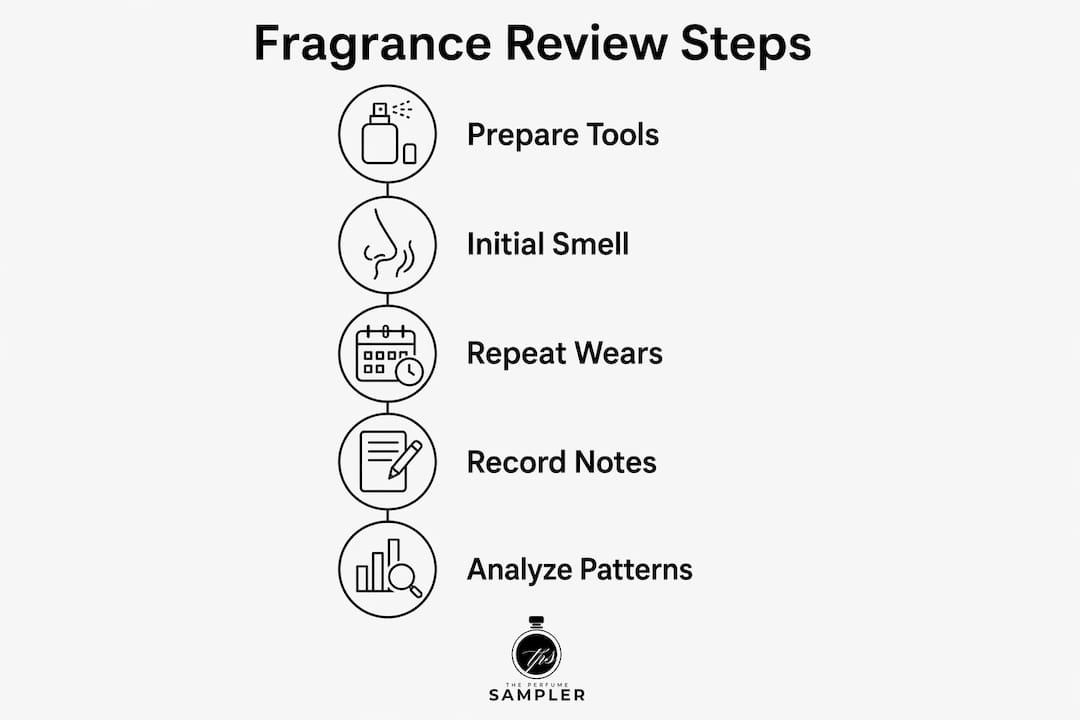
The right tools make the difference between a vague impression and a usable record. A dedicated fragrance journal, whether a Leuchtturm1917 notebook or a simple ring-bound pad, gives you a fixed home for every entry. Digital options such as a Google Sheets tracker or the WhatScent app add searchability and sorting that paper cannot match.
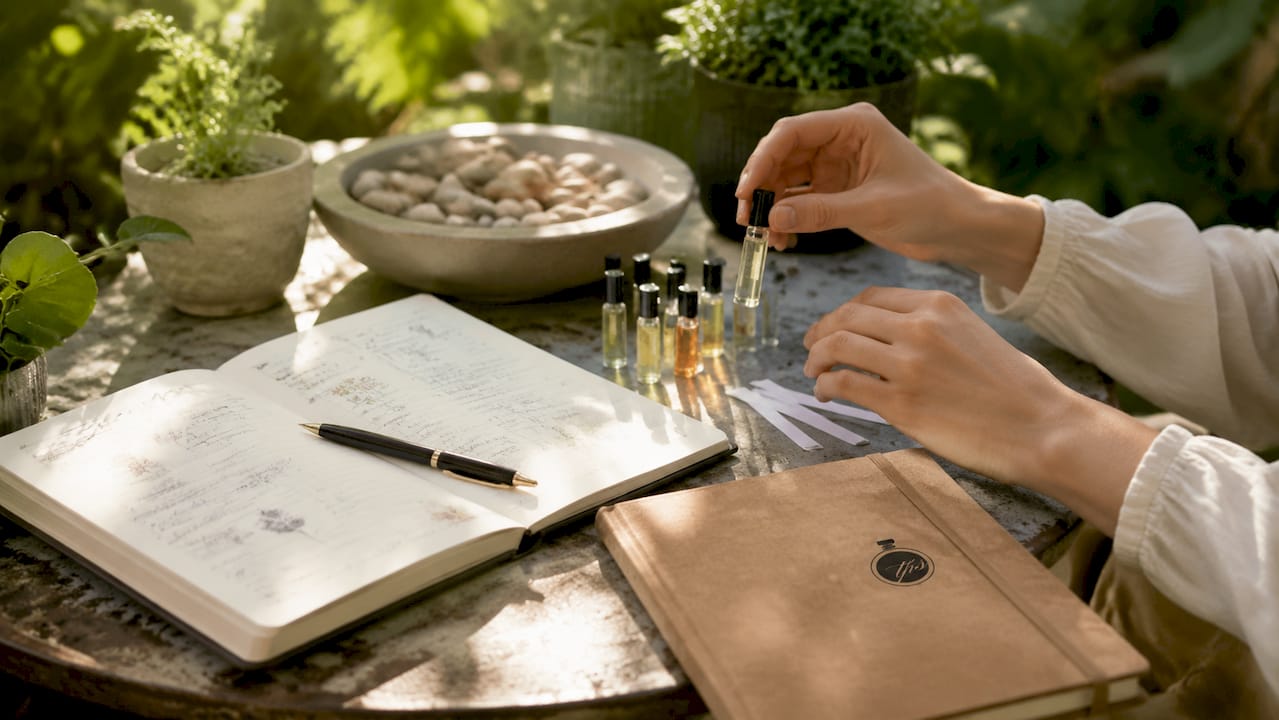
Every review entry should capture the same core fields. Structured templates with an index, legend, rating scales, and consistent layouts improve usability and make cross-referencing far easier over time. At minimum, record the brand, fragrance name, concentration (eau de parfum, eau de toilette, extrait), batch code, purchase source, and date of first wear.
A legend and rating scale are not optional extras. They turn a collection of notes into a searchable reference. Use a 1–5 star scale or a 1–10 point system and apply it consistently from your very first entry. An index at the front of a physical notebook, or a filter column in a spreadsheet, lets you locate any entry in seconds.
Smell memory prompts add real depth to entries. When a fragrance reminds you of a specific place, season, or material, write it down. These associations become useful later when comparing similar scents or explaining a fragrance to someone else.
Pro Tip: A hybrid system combining a physical notebook with a digital backup gives you the tactile pleasure of handwriting and the security of a searchable archive. Photograph your notebook pages and upload them to a cloud folder weekly.
How to conduct a multi-phase fragrance review
A single wearing produces an incomplete picture. A two-phase review process involving an observation-only first wearing followed by multiple additional wears produces accurate, time-stamped documentation of scent evolution. This is the method used by serious reviewers, and it is the most reliable approach available.
Phase one: observation wearing
- Apply the fragrance to your usual test spot, typically the inner forearm or behind the ear. Do not form a final opinion yet.
- At 0–2 minutes, note the immediate opening. Record the first impressions of top notes: citrus, aldehydes, green accords, or whatever presents itself.
- At 10–30 minutes, document the heart note emergence. Note how the opening has shifted and which new accords have appeared.
- At 1 hour, assess the transition into base notes. Record warmth, depth, and any significant changes in character.
- At 4 or more hours, note what remains. This is where you record skin-scent longevity and the final dry-down character.
Phase two: repeat wears
Wear the fragrance on at least two or three additional occasions before writing a final verdict. Each wear may reveal different facets depending on skin condition, temperature, and mood. Consistency across wears confirms whether your initial impressions were accurate or influenced by novelty.
Environmental factors such as temperature and humidity significantly affect fragrance performance. Record the weather conditions, the room temperature, and whether you had exercised recently. These details explain why the same fragrance can perform very differently across wearings.
Pro Tip: Apply fragrance to the same skin spot every time and conduct occasional blind tests to reduce bias. Blind testing, where you apply without knowing the name, removes brand expectation from your sensory judgement entirely. Your guide to blind fragrance trials explains how to set this up practically.
What are the key criteria and metrics to include?
A complete fragrance review covers both performance and sensory character. Performance metrics are the most commonly misrecorded. Longevity, projection, and sillage must be recorded separately to avoid conflating close-to-skin persistence with long-range scent trail.
The distinction matters. Full projection longevity measures how long others can detect the fragrance from a distance. Skin-scent longevity measures how long you personally detect it close to the skin. A fragrance may lose projection after three hours but remain detectable on skin for eight. Recording both figures produces a far more useful review. Understanding scent projection mechanics helps you measure and describe this accurately.
Projection and longevity also vary with skin chemistry, weather, application amount, and concentration. This is why contextual notes matter as much as the sensory description itself.
Beyond performance, record the following for every review:
- Complexity and evolution: Does the fragrance change significantly from opening to dry-down, or does it stay linear?
- Emotional and imagery associations: What does it evoke? A specific season, material, memory, or place?
- Pairing recommendations: Is it suited to daytime or evening wear? Formal or casual occasions? Warm or cold weather?
- Final verdict: A summary sentence and a numerical rating.
The table below compares the most common fragrance review formats and when each works best.
| Format | Best for | Strengths | Limitations |
|---|---|---|---|
| Written journal entry | Personal archives and long-form impressions | Captures nuance and emotional depth | Not easily searchable |
| Spreadsheet tracker | Cross-comparison and pattern recognition | Sortable, scalable, and consistent | Less room for descriptive prose |
| Video or audio review | Sharing with an audience | Conveys tone and enthusiasm naturally | Time-consuming to produce and edit |
| Structured template form | Standardised reviewing across many fragrances | Consistent fields, easy to compare | Can feel rigid for complex scents |
How to organise and update your fragrance reviews
A growing archive is only useful if you can find what you need quickly. The most effective method is a digital tracker with picklisted categories covering fragrance name, house, concentration, olfactory family, release year, personal rating, and notes. Picklists prevent inconsistent entries and make sorting straightforward.
Key practices for maintaining a long-term review archive:
- Index every entry. In a physical notebook, maintain a running index at the front. In a spreadsheet, use filter columns for house, family, and rating.
- Update after resniffs. Impressions change. Return to older entries after six months and add a dated note with any revised thoughts.
- Record purchase details. Log where you bought the fragrance, the size, the price, and whether it was a decant or full bottle. This supports future purchasing decisions.
- Track storage conditions. Note whether a fragrance is stored in a cool, dark location or exposed to light and heat. Storage affects performance over time.
- Flag resale intentions. If you decide a fragrance is not for you, note it clearly so you can act on it without re-reviewing from scratch.
Scent journaling builds patterns over time, tracking preferences across different contexts such as day versus evening wear. A single entry tells you about one fragrance. A hundred entries tell you about yourself as a fragrance wearer. That self-knowledge is what makes the archive genuinely useful for tracking fragrance preferences over the long term.
Pro Tip: Set a monthly reminder to review your last ten entries. Look for patterns: do you consistently rate woody orientals higher in autumn? Do you abandon florals after one wear? These patterns inform smarter future purchases.
Key takeaways
Documenting fragrance reviews accurately requires a structured, multi-phase approach that separates performance metrics, records environmental context, and builds a consistent archive over time.
| Point | Details |
|---|---|
| Use structured templates | Record brand, concentration, batch code, and purchase details in every entry for consistency. |
| Apply a two-phase review method | Complete an observation-only first wearing with timed checkpoints before forming a final verdict. |
| Separate longevity from projection | Record full projection longevity and skin-scent longevity as distinct metrics to avoid common errors. |
| Log environmental context | Note temperature, humidity, and skin condition, as these directly affect fragrance performance. |
| Build and maintain an archive | Use a hybrid system of physical notes and digital backups, and update entries after resniffs. |
Why structured documentation changed how I review fragrances
The single biggest mistake I see from enthusiasts starting out is treating a first wearing as a final verdict. A fragrance smells different on day one than it does on day five. Skin condition, mood, and even what you ate that morning all shift the perception. I learned this the hard way after dismissing a now-favourite fragrance after a single rushed wear in a warm shop.
The second most common error is conflating longevity types. Reviewers write “lasts six hours” without specifying whether that means others can still smell it or only you can. Those are very different statements. The sub-metrics approach that separates full projection longevity from skin-scent longevity is one of the most useful frameworks I have adopted.
Patience is the real skill here. Building a trustworthy review takes multiple wears, honest notes, and a willingness to revise your initial impression. The consistent, contextual note-taking that feels tedious at first becomes the foundation of a personal fragrance vocabulary you cannot build any other way. When I look back at entries from three years ago, I can see exactly how my preferences have shifted and why. That record is genuinely irreplaceable.
Do not neglect the emotional dimension either. A fragrance that evokes a specific memory or feeling is worth documenting in those terms. Sensory precision and emotional response are not in conflict. The best reviews contain both.
— Rupesh
Theperfumesampler decants: built for serious reviewing
Thorough fragrance documentation requires multiple wears over several days. A single spray at a counter does not give you enough material to work with. Decants solve this problem directly.
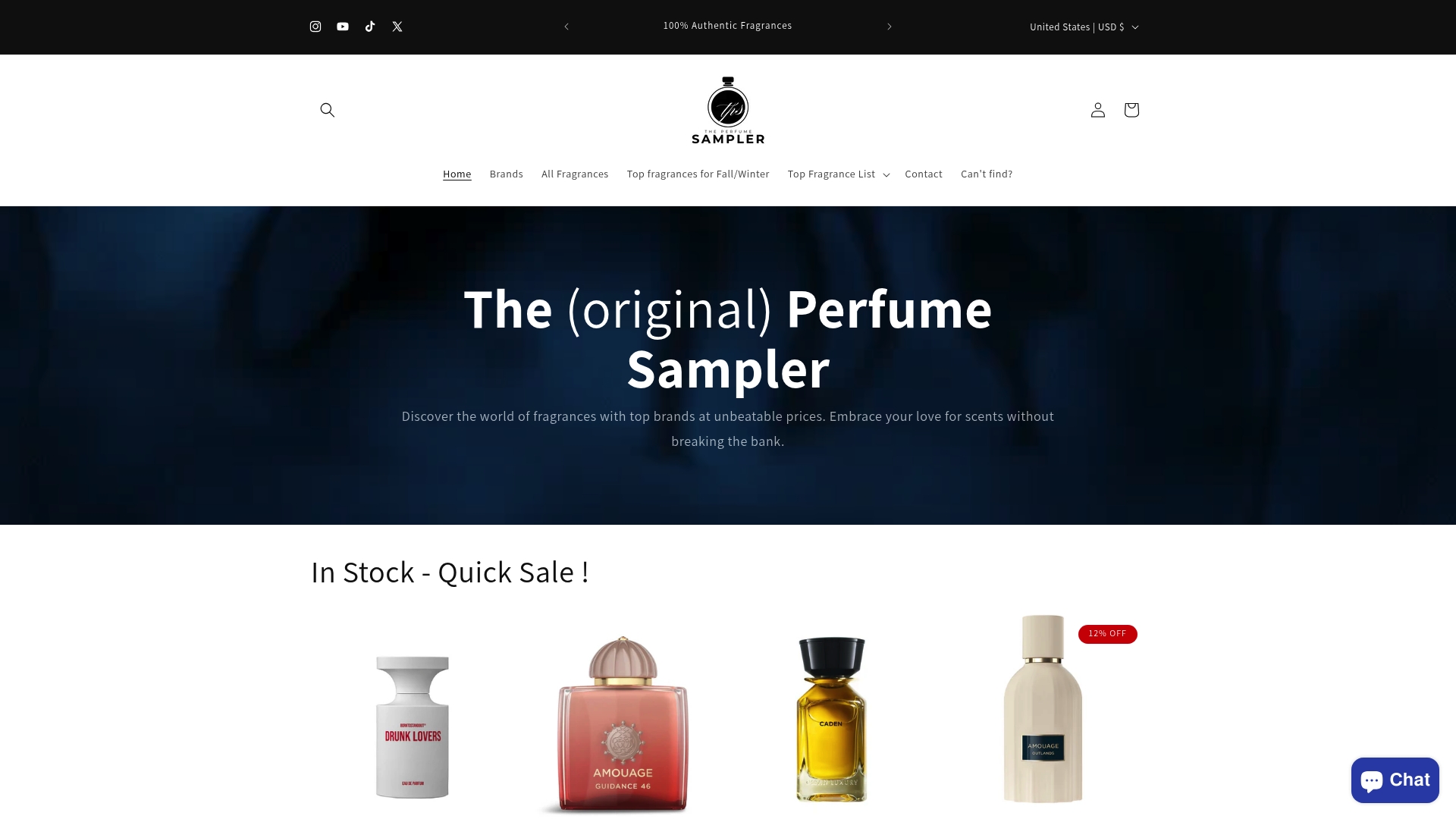
Theperfumesampler offers 100% authentic fragrance decants in 2ml, 3ml, 5ml, and 10ml sizes across a wide range of niche and designer houses. These sizes are designed for exactly the kind of multi-phase reviewing described in this guide. You get enough product for four to six wears without committing to a full bottle. Find out more about the benefits of decants and how they support a thorough review process. For enthusiasts building a serious review archive, decants are the most practical and cost-effective starting point.
FAQ
What is the best format for recording fragrance impressions?
A structured template covering brand, concentration, timed observations, performance metrics, and a final rating is the most reliable format. Combining a physical notebook with a digital spreadsheet gives you both descriptive depth and searchability.
How many wears does a proper fragrance review require?
A minimum of three wears is recommended. The first wearing is observation only. Subsequent wears add depth, confirm consistency, and allow for revised impressions before a final verdict is recorded.
What is the difference between longevity and sillage?
Longevity measures how long a fragrance remains detectable, either at distance or close to skin. Sillage refers to the scented trail a fragrance leaves in the air as you move. They are distinct metrics and should be recorded separately in any thorough review.
How do environmental conditions affect fragrance reviews?
Temperature, humidity, and physical activity all change how a fragrance performs on skin. Recording these conditions alongside your sensory notes explains performance variation across wearings and produces more accurate long-term records.
How do I reduce bias when reviewing fragrances?
Apply the fragrance to the same skin location every time and conduct occasional blind tests where you assess the scent without knowing the name or brand. This removes expectation from your sensory judgement and improves review reliability.