
How to build trial scent sets at home: a practical guide
You can build a reliable trial scent set in six steps: choose your fragrances, select the right vial sizes, prepare a clean workstation, decant and fill, label and log, then test and pack. That sequence works whether you are assembling a personal discovery kit, a gift, or a small batch to sell.
Six-step quick-start:
- Choose three to eight fragrances across distinct scent families.
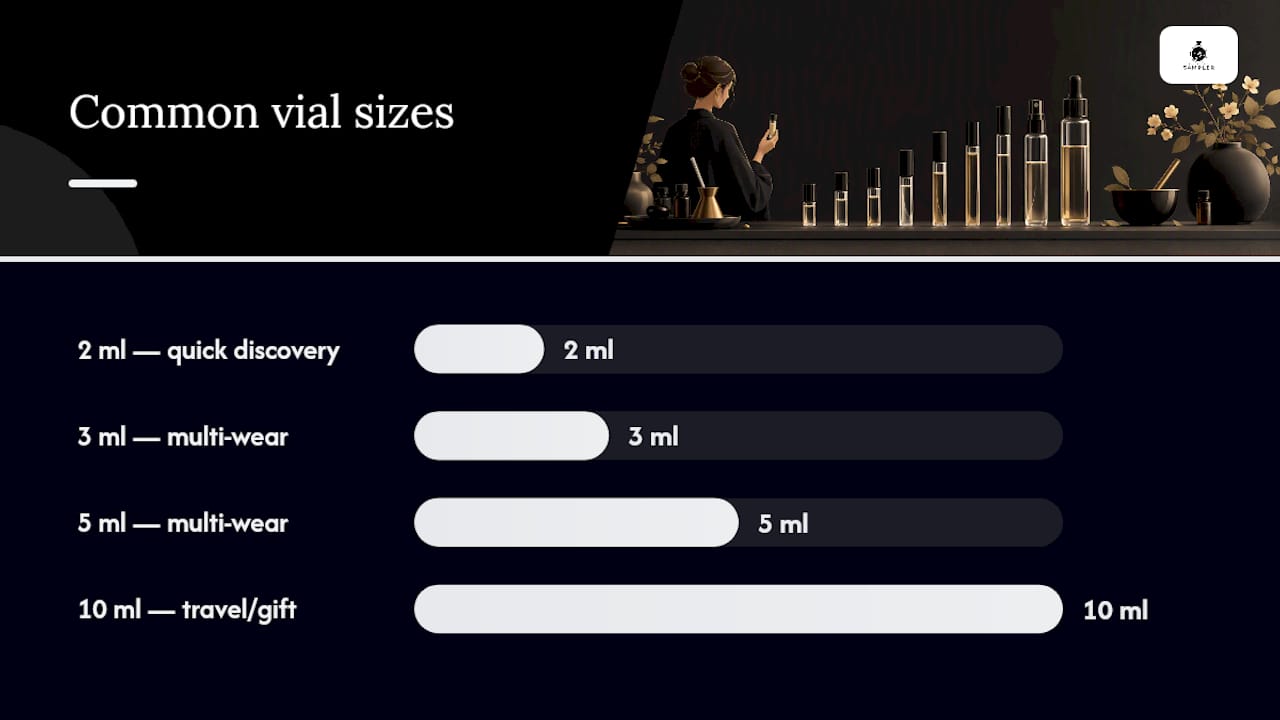
- Select vial sizes: 2ml for quick discovery, 3ml or 5ml for multi-wear testing, 10ml for travel or gifting.
- Set up a clean, ventilated workstation with gloves, syringes, and a digital scale.
- Decant each fragrance to 80–90% vial capacity using a blunt syringe or fine-tip dispenser.
- Label every vial with the fragrance name, size, and fill date; log each one in a tracking sheet.
- Test on skin, record your impressions at opening, heart, and dry-down, then pack securely.
Must-have items checklist: glass spray vials, blunt-tip syringes, digital scale, small funnel or glass pipette, nitrile gloves, adhesive labels, outer box or tuck box, foam or card inserts.
A 5-sample set takes roughly 45–90 minutes from setup to packed box, depending on your experience and the complexity of the fragrances.
Key takeaways
| Point | Details |
|---|---|
| Six-step method | Choose scents, select sizes, prepare workstation, decant, label and log, then test and pack. |
| Vial fill target | Fill to 80–90% capacity and leave headspace to prevent leakage during shipping. |
| Test on skin | Apply from 20–30cm to pulse points; wait for full dry-down before judging any fragrance. |
| Label everything | Include fragrance name, volume, and fill date on the vial; full ingredient list on the outer card. |
| Theperfumesampler | Offers ready-made decants in 2ml, 3ml, 5ml, and 10ml for discovery, testing, and gifting. |
Table of Contents
- What materials and tools do you actually need to build trial scent sets?
- How do you choose which fragrances to include in a discovery set?
- Step-by-step decanting and filling for clean, accurate results
- How to test fragrance samples reliably
- How to label and track your samples so nothing gets confused
- How to package and present a trial set so it looks professional
- Storage, shelf life and basic safety guidance for UK makers
- Why decants work and how Theperfumesampler supports reliable discovery
- What beginners consistently get wrong when building trial sets
- Ready-made decants from Theperfumesampler: skip the setup, keep the discovery
- Sources
What materials and tools do you actually need to build trial scent sets?
The right equipment makes the difference between a leaky, mislabelled vial and a professional-looking decant. Start with containers.
Vial formats: sprays versus splash vials
Glass spray atomisers are the standard for alcohol-based fragrances. They preserve the scent better than plastic, resist chemical interaction, and look more premium. Splash or roll-on vials suit oil-based or low-alcohol formulas. For most niche and designer fragrances, a glass spray atomiser is the correct choice.
Discovery sets typically use 2ml spray vials as the most common format, giving three to five wears and fitting neatly into compact packaging. Brands offering larger curated sets often use 1.5ml mini spray vials to allow eight to fifteen scents in a single pack.
Sample size chart
| Volume | Typical wears | Best use case |
|---|---|---|
| 1.5ml | 2–3 | Brand discovery, large multi-scent packs |
| 2ml | 3–5 | Single-scent discovery, gifting |
| 3ml | 5–8 | Multi-wear testing, seasonal sets |
| 5ml | 8–12 | Travel, layering tests, gifting |
| 10ml | 15–20+ | Extended testing, capsule wardrobe building |
Essential tools
- Blunt-tip syringes (1ml–5ml): precise fill control for narrow-neck atomisers.
- Glass pipettes or fine-tip dispensers: useful for splash vials and oil-based formulas.
- Digital scale (0.01g resolution): weighing before and after filling is faster and more accurate than counting drops for repeat batches.
- Handheld crimper: required only if you are using crimp-top atomisers rather than screw-cap vials.
- Nitrile gloves: protect skin from prolonged fragrance contact and prevent contamination.
- Small glass mixing cup: useful when blending or transferring from large bottles.
Glass versus plastic, and headspace
Glass is the correct material for alcohol-based fragrances. Plastic can absorb aromatic compounds over time, altering the scent. This prevents overflow during shipping when pressure or temperature changes cause slight expansion.
Pro Tip: Check pump and neck compatibility before buying vials in bulk. Some designer bottle necks use non-standard diameters. A quick test-fit with one vial before ordering fifty saves money.
How do you choose which fragrances to include in a discovery set?
A well-chosen set teaches you something. A random one does not. The goal is contrast across scent families so each sample gives distinct information about your preferences.
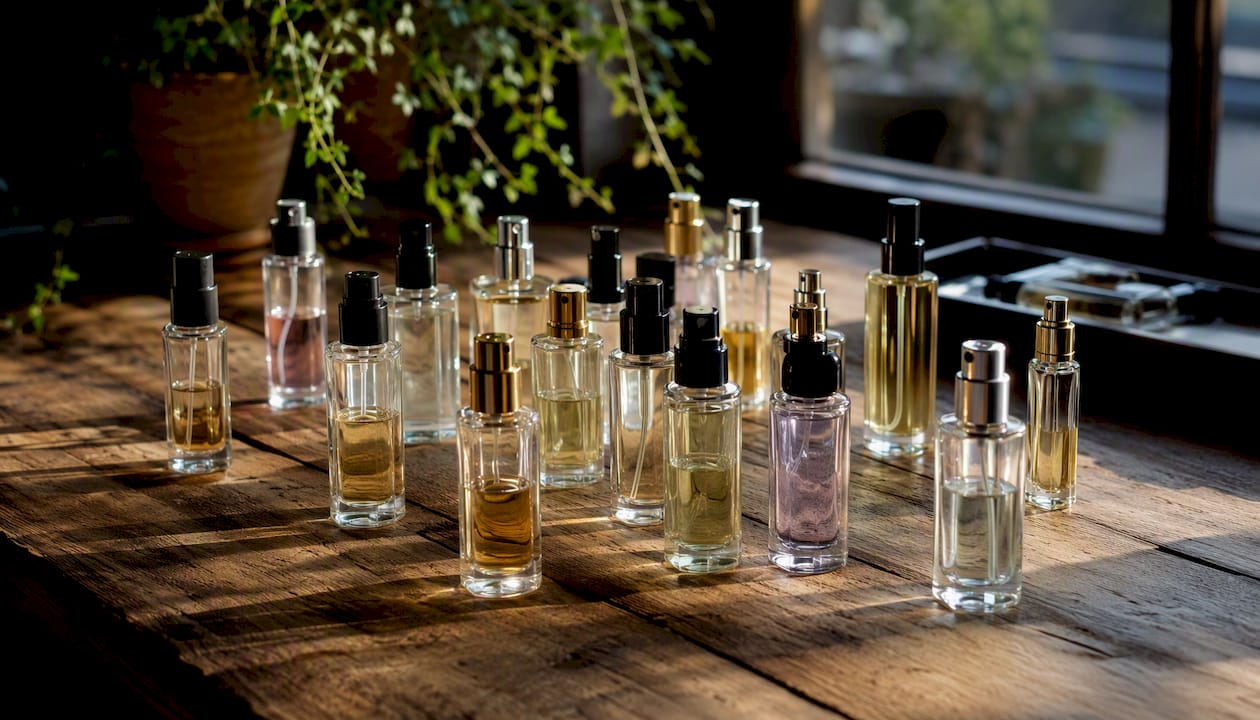
Starting with six to eight fragrances across clear family categories before expanding is a practical approach. Cover at least four families in a five-sample set: fresh/citrus, floral, woody, and either gourmand or skin/close. That spread reveals which direction suits you before you invest further.
How family coverage changes with set size
A 3-sample set works best as a focused comparison: pick one family and test three distinct interpretations, or choose three contrasting pillars (fresh, floral, woody). A 5-sample set allows full family coverage plus one wildcard. An 8-sample set lets you add seasonal options, layering pairs, or a blind trial element.
Practical selection criteria
Consider the wearer’s profile (gender-neutral, masculine, or feminine-leaning), the season (lighter citruses and aquatics for summer, richer woods and orientals for winter), and longevity expectations. A commuter needs projection and staying power; someone who prefers close-wear scents needs something quieter.
Curated sampler sets help consumers discover favourites affordably, and some brands include a credit toward a full-size purchase, which encourages follow-on buying. If you are building sets to sell or gift, adding a small redemption note increases perceived value.
Set themes to consider
- Starter capsule: one fresh, one floral, one woody, one oriental. Covers the four main pillars for a new fragrance explorer.
- Season pack: four to six scents suited to a specific season, labelled with occasion notes.
- Layered-pair pack: two complementary scents chosen to work together, with a short guide on how to layer them. Useful inspiration comes from layering principles applied to ambient scents, which translate well to personal fragrance pairing.
Step-by-step decanting and filling for clean, accurate results
Preparation prevents most errors. Before you open a single bottle, lay out every tool, wipe the workstation with isopropyl alcohol, and put on gloves.
Workstation setup
Work in a ventilated room at room temperature. Avoid direct sunlight, which can degrade fragrance during the filling process. Arrange vials in a small rack or tray so they cannot tip. Keep a roll of paper towel and a small waste container nearby for drips.
Filling methods
- Syringe fill (most common): Remove the spray pump from the source bottle. Insert a blunt-tip syringe directly into the bottle neck. Draw the required volume slowly to avoid air bubbles. Transfer to the target vial, inserting the syringe tip to the bottom of the vial and dispensing upward to minimise foam.
- Pump-press fill: For bottles where pump removal is difficult, press the pump into a small glass cup and transfer with a syringe. This avoids forcing the neck and risking damage.
- Weighing method for repeat fills: Weigh the empty vial, fill, then weigh again. Record the net weight. Use this as your target for every subsequent vial in the batch. Filling to 80–90% capacity and weighing before and after is the most accurate method for consistent batches.
Dos and don’ts
- Do fill slowly to prevent air pockets and foam.
- Do wipe the vial neck before inserting the pump or cap.
- Don’t overfill. A vial filled to the brim will leak when the pump is inserted.
- Don’t reuse syringes across different fragrances without rinsing with isopropyl alcohol first.
- Don’t use plastic syringes with high-concentration alcohol fragrances for extended periods; they can degrade.
Pro Tip: Weigh your first filled vial, then use that net weight as the target for every subsequent vial in the batch. It is faster than measuring by volume and catches errors before they become waste.
How to test fragrance samples reliably
Accurate testing requires clean skin, consistent application, and enough time for the full dry-down. Rushing this step produces unreliable impressions.
Applying fragrance to clean, hydrated skin on pulse points from 20–30cm and waiting for a full dry-down produces more accurate wear data, because scents interact with individual body chemistry and environment. Moisturise with an unscented lotion beforehand; dry skin shortens longevity and distorts the dry-down.
Blotter versus skin testing
| Method | Best for | Limitation |
|---|---|---|
| Blotter strip | Initial top-note impression, comparing multiple scents quickly | Does not reflect how the scent develops on your skin |
| Skin (inner wrist) | Full development, longevity, projection | One to two scents per session maximum |
| Inner elbow | Sensitive skin, lower projection testing | Less accessible for self-evaluation |
Blotters are useful for narrowing a shortlist. Skin testing is required for any final judgement.
Blind testing tips
Conceal labels before testing. Number the vials and record which number corresponds to which scent in a separate log. Test no more than two to three scents per session to avoid nasal fatigue. Coffee beans or plain bread can help reset between samples, though stepping outside for fresh air is equally effective.
Sample scorecard template
Log each test with these five fields:
- Opening (0–5 min): first impression, dominant notes.
- Heart (15–30 min): how the scent develops.
- Dry-down (1–2 h): what remains, character shift.
- Longevity (4–6 h): projection and staying power.
- Overall rating (1–5): personal preference score.
A fragrance sample library guide can help you build a structured logging system alongside your physical samples.
How to label and track your samples so nothing gets confused
A vial without a label is useless after 48 hours. Label every sample before it leaves the workstation.
What to put on the vial versus the outer card
Small vials have limited surface area. Prioritise these fields on the vial label itself:
- Fragrance name (abbreviated if necessary)
- Volume (e.g. 3ml)
- Fill date or batch number
The outer card or box insert carries the full ingredient list, concentration (EDP, EDT, etc.), brand name, and any allergen notes. Practical labelling on small bottles should include at minimum the product name and net contents; a full ingredient list can be placed on the outer packaging or an enclosed card.
Labelling materials
- Clear BOPP adhesive labels grip curved glass surfaces well and resist moisture from handling.
- Small printed adhesive labels (25mm x 10mm or similar) work for most 2ml–5ml vials.
- Handwritten labels are acceptable for personal use but look unprofessional for gifting or sale.
Digital tracking
A simple spreadsheet covers most needs. Log these fields per sample: fragrance name, brand, concentration, fill date, vial size, batch number, and a notes column. Add columns for T0, 15 min, 2 h, and 6 h impressions as you test.
For a more structured approach, a personal scent style guide can help you categorise preferences alongside your tracking data.
Scent diary entry example: Fragrance: X | Brand: Y | Size: 5ml | Date: 12 March 2026 | Opening: sharp bergamot, clean. Heart: soft iris, slightly powdery. Dry-down: warm sandalwood, light. Longevity: 4 h on skin. Rating: 4/5.
Store the completed scent card with the vial in a small resealable bag or a labelled slot in the box insert.
How to package and present a trial set so it looks professional
Presentation affects how a set is received, whether it is a personal gift or a product for sale.
Outer packaging options
- Tuck box (folded card): low cost, easy to customise with printed design, suitable for postal gifting. Perceived value is moderate.
- Rigid box with lid: higher perceived value, better protection, higher cost. Suits premium gifting.
- Sleeve over tray: a middle option that looks polished without the cost of a full rigid box.
Folded card inserts that hold bottles vertically in labelled slots offer a professional look without high cost and prevent bottle movement during transit. Foam inserts or moulded pulp achieve the same result at slightly higher cost but with better protection for glass vials.
Inserts and scent cards
Include a printed card with:
- The name and brief description of each fragrance.
- The scent family and key notes.
- Suggested wearing occasions.
- An ingredient list (required for any set intended for sale or gifting to others).
- A redemption note or credit offer if applicable, which encourages follow-on purchases.
Gift add-ons
- Small cotton pouch to hold the vials after unboxing.
- A personal handwritten note card.
- A miniature funnel for recipients who want to decant into their own atomiser.
For inspiration on giftable fragrance presentation, consider how home fragrance brands approach bundle packaging, as many of the same principles apply to personal fragrance sets.
Storage, shelf life and basic safety guidance for UK makers
Storage tips
- Store filled vials upright in a cool, dark location away from direct sunlight and heat sources.
- Avoid bathroom storage; humidity and temperature fluctuation degrade fragrance faster.
- Alcohol-based decants stored correctly typically remain stable for 12–24 months, though this varies by formula and concentration.
- Keep source bottles tightly sealed when not in use.
Safety and allergen guidance
For any set intended for gifting or sale in the UK, include an ingredient list on the outer packaging or enclosed card. Common fragrance allergens (such as linalool, limonene, and eugenol) should be listed where present. This is standard practice aligned with IFRA allergen awareness guidelines. This article provides general information only; consult a qualified regulatory adviser for specific compliance requirements.
Workstation hygiene and disposal
- Dispose of used pipettes and contaminated paper towel in a sealed bag.
- Rinse syringes with isopropyl alcohol between fragrances.
- Never pour fragrance waste down a drain in large quantities; absorb small spills with paper towel and dispose of in general waste.
Time and cost estimate
A 5-sample set using 2ml vials typically takes 45–90 minutes from workstation setup to packed box. Material costs for a basic DIY kit (vials, syringes, labels, a simple tuck box) run from approximately £8–£20 for a 5-sample set, depending on vial quality and packaging choice. Buying pre-made decants from a specialist retailer removes the equipment cost and time entirely.
Why decants work and how Theperfumesampler supports reliable discovery
Decants reduce purchase risk. A 2ml sample gives three to five wears, enough to assess a fragrance across different days, temperatures, and occasions before committing to a full bottle. A 10ml decant supports extended testing or travel use.
Theperfumesampler offers decants in four sizes: 2ml, 3ml, 5ml, and 10ml, covering every stage from quick discovery to multi-week testing. These sizes align directly with the use cases in the size chart above.
How decants support better decisions
- A 2ml or 3ml decant is enough to judge top notes, heart, and dry-down across multiple wears.
- A 5ml decant suits seasonal testing or layering experiments.
- A 10ml decant works for building a personal scent wardrobe before buying a full bottle.
Discovery sets also reduce buyer remorse. Testing a fragrance on your own skin, in your own environment, over several days, produces a more reliable preference signal than a single in-store spray.
Readers who prefer to skip the DIY process entirely can use Theperfumesampler’s ready-made decants as a complement to or replacement for home-assembled sets, with access to niche and designer fragrances that are difficult to sample elsewhere.
What beginners consistently get wrong when building trial sets
The most common mistake is choosing too many fragrances from the same family. A set of five woody fragrances teaches you very little about your preferences. Contrast is the point.
Testing with scented soap or hand cream on the skin is another frequent error. It distorts the dry-down and makes accurate comparison impossible. Use unscented moisturiser only, or test on bare skin.
Insufficient dry-down time is the third pitfall. Many people judge a fragrance on its top notes, which last only five to fifteen minutes. The heart and dry-down, which develop over one to two hours, are where a fragrance’s true character emerges. Schedule repeat wear tests on different days rather than testing multiple scents in a single session.
Treat the first set as an experiment. Record everything. The second set will be better because the first one taught you what to look for. Iteration, not perfection on the first attempt, is how a reliable personal testing method develops.
Ready-made decants from Theperfumesampler: skip the setup, keep the discovery
Building a trial set from scratch takes time, equipment, and access to the source bottles. Theperfumesampler removes all three barriers.
You select the size that matches your testing goal, whether that is a quick first impression from a 2ml or a multi-week assessment from a 10ml, and the decant arrives ready to use. No syringes, no scales, no sourcing bottles you may not be able to access.
For beginners, starting with a selection of 2ml or 3ml decants across four to five scent families is the fastest way to apply the discovery method in this guide without the DIY overhead. Browse the full range and find your next fragrance at Theperfumesampler.
Sources
- Studio fragrance EDP discovery set | Marks & Spencer
- Perfume discovery sets: how indie brands turn testers into buyers – Packamor
- How to build a perfume oil collection by scent family – Custom Fragrance Oil
- Best perfume sampler sets | Marie Claire
- Mini fragrance discovery set | TOCCA