
How to choose subtle scents: a practical guide
Choose skin-like musks, airy citruses or soft ambers, apply one or two sprays to pulse points, and always sample on skin before committing to a full bottle. That single rule covers the vast majority of subtle fragrance decisions. The notes and concentration you choose determine how far a scent travels; the application method determines whether it stays close or fills a room.
Three starting points worth testing immediately:
- Escentric Molecules — Molecule 01: a single-molecule scent built on Iso E Super that sits almost invisibly on skin and reads differently on everyone.
- Jo Malone London — English Pear & Freesia: a clean, airy floral with soft pear and white musk that projects gently and fades gracefully.
- Glossier — You: a skin-musk base with iris and ambrette that amplifies your natural scent rather than replacing it.
Key takeaways
Subtle scents work best when you choose the right notes, apply sparingly, and test on skin across multiple days before buying a full bottle.
| Point | Details |
|---|---|
| Choose skin-close notes | White musk, ambroxan, Iso E Super, iris and soft woods create a close-proximity scent bubble. |
| Match concentration to occasion | EDTs suit daytime and office wear; EDPs at one spray and extraits often project less than multiple EDT sprays. |
| Apply correctly | One to two sprays on pulse points over moisturised skin; never rub wrists together or over-spray. |
| Sample before buying | A 2ml–5ml decant covers a full 7–10 day skin trial across real-life conditions. |
| Theperfumesampler decants | Available in 2ml, 3ml, 5ml and 10ml sizes — the practical route to confident, low-risk subtle scent selection. |
Table of Contents
- How to match scent intensity to occasion and time of day
- Which fragrance families and notes read as subtle?
- How does concentration affect projection and subtlety?
- How to apply subtle scents so they last without projecting
- How to test subtle scents properly before buying
- UK-available subtle fragrance picks and why they work
- How to build a small capsule of subtle scents
- Why subtlety is often the smarter choice
- Sample first, then decide with confidence
- Sources
How to match scent intensity to occasion and time of day
The simplest rule: the closer you are to other people, the lower the projection should be. An office desk, a meeting room, or a morning commute demands a scent that stays within arm’s reach. A casual outdoor lunch or an evening dinner allows slightly more presence, though “more” here still means subtle rather than loud.
For office and workplace settings, stick to EDTs or light EDPs with citrus, clean musk or soft floral openings. One spray on the wrist or inner elbow is enough. Daytime social occasions give you room to try a light amber or a sheer woody accord, but the same one-to-two spray limit applies. Evening wear, even formal events, does not require heavy projection when the scent is well-chosen; a skin musk or a soft iris EDP worn close to the body reads as sophisticated rather than understated.
Season and time of day shift the equation further. Warm weather amplifies projection because heat opens the skin and accelerates diffusion. In summer, lean towards sparkling citruses, aquatic accords and airy florals. In cooler months, soft ambers, cashmeran and warm musks carry better without becoming oppressive.
Pro Tip: In enclosed spaces such as lifts, meeting rooms or cinemas, apply your scent at least 20 minutes before arrival and avoid the neck and chest. Wrists and inner elbows keep projection contained and reduce sensory fatigue for those around you.
Which fragrance families and notes read as subtle?
The concept of skin scents and scent bubbles
A skin scent is designed to sit close to the body rather than project outward. Perfumers describe these as “olfactory whispers” — detectable in close conversation but invisible to anyone more than a metre away. The related concept of a “scent bubble” describes an aura that envelops the wearer without radiating into a room. Both effects rely on specific materials that diffuse slowly and bond closely with skin.
Notes that create a subtle, close-proximity effect
- White musk: soft, clean, and skin-adjacent. Musks blend with your natural skin chemistry to create an intimate, personal warmth that varies from person to person.
- Ambroxan (ambrox): a synthetic molecule derived from ambergris that creates a warm, skin-like radiance with low projection. Used in many modern skin scents.
- Iso E Super: a woody, cedar-adjacent synthetic that behaves almost subliminally on skin. It is the sole ingredient in Escentric Molecules — Molecule 01 and is responsible for that scent’s near-invisible quality.
- Iris: powdery, cool, and restrained. Iris root accords tend to stay close and read as elegant rather than loud.
- Neroli: a bright, slightly bitter citrus-floral from orange blossom. It opens with presence but dries down quietly.
- Soft woods (sandalwood, cedarwood): warm and grounding without projecting. Sandalwood in particular melds with skin and extends longevity without adding volume.
- Aldehydes: the soapy, clean facet found in classic perfumery. At low concentrations they add a sheer, luminous quality rather than a retro heaviness.
- Cashmeran: a synthetic that reads as warm, slightly spicy and fabric-like. It sits close and adds depth without weight.
Perfumers and fragrance editors consistently point to sparkling citruses, airy florals and white musks as the safest choices for low sensory load, particularly for those sensitive to heavier accords.
Notes to use sparingly or avoid
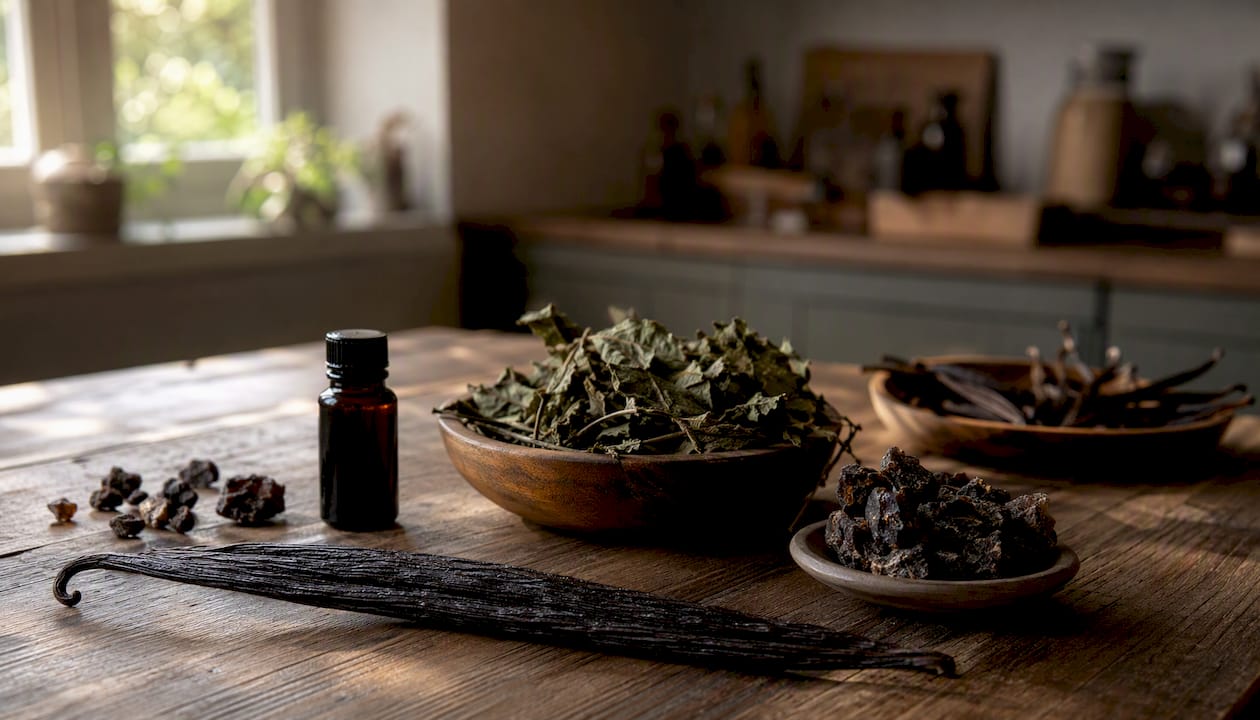
Heavy vanilla at high concentrations, dense patchouli, overt oud, and syrupy gourmand fruits all project strongly because their aromatic molecules are large and diffuse slowly but persistently. They are not inherently wrong choices, but they require careful dilution and minimal application to stay subtle. A single spray of a vanilla-heavy EDP on warm skin in summer will project far further than intended.
How does concentration affect projection and subtlety?
Concentration is the percentage of aromatic compounds in the formula. Higher concentration does not always mean louder projection, but it does affect how a scent develops and how long it lasts.
| Concentration | Typical aromatic content | Projection character | Longevity on skin |
|---|---|---|---|
| Body spray / cologne | 1–3% | Very low, evaporates quickly | 1–2 hours |
| Eau de Cologne (EDC) | 2–5% | Light, fresh, close | 2–3 hours |
| Eau de Toilette (EDT) | 5–15% | Moderate, good for daytime | 3–5 hours |
| Eau de Parfum (EDP) | 15–20% | Closer, richer, more skin-like | 5–8 hours |
| Extrait de Parfum | 20% | Intimate, skin-close, long-lasting | 8+ hours |
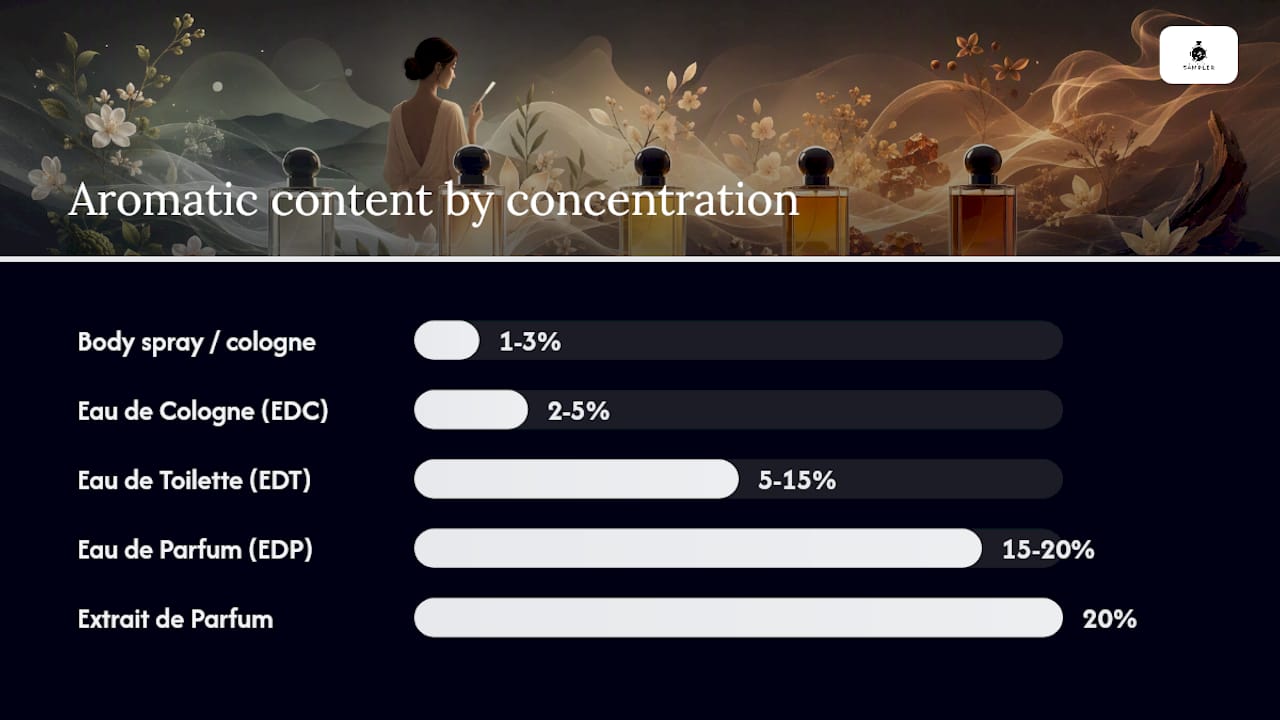
For subtle wear, EDTs are the practical default for daytime and office use. EDPs at one spray can actually project less than two sprays of an EDT, because the higher oil content causes the scent to meld with skin rather than radiate outward. Extrait concentrations, counterintuitively, often produce the most intimate effect of all: the low alcohol content means the scent does not blast off the skin on application but instead develops slowly and stays close.
Formulation matters as much as concentration. Synthetics like Iso E Super and ambroxan are engineered to diffuse at a controlled rate, which is why they create an airy, floating effect that reads as skin-like rather than loud. Natural resins and vanillas behave differently: they project heavily at first and then linger persistently. The Journal of Cosmetic Science documents how molecular weight and volatility determine diffusion rates, which is why two EDPs at the same concentration can project entirely differently depending on their ingredient profile.
How to apply subtle scents so they last without projecting
Follow this sequence for reliable, low-projection wear:
- Moisturise first. Apply an unscented body lotion or a matching body oil to pulse points before spraying. Hydrated skin holds fragrance molecules longer and reduces the initial burst of projection.
- Choose your pulse points carefully. Inner wrists, inner elbows and the base of the throat are warm enough to diffuse scent gently. Avoid the chest and neck for office or close-contact settings.
- Limit to one or two sprays. For most EDTs and EDPs, one spray on each wrist is sufficient for a full working day. Over-spraying increases immediate projection only briefly and risks overwhelming those nearby.
- Do not rub. Rubbing wrists together crushes the top notes and accelerates dry-down, shortening the scent’s development arc.
- Consider fabric application for longevity. A light spray on a cotton scarf or shirt collar extends detectable wear without increasing skin projection. Avoid silk and delicate fabrics, as alcohol can mark them.
- Time your application. Apply 15–20 minutes before leaving the house so the alcohol dissipates and the scent settles before you are around others.
Layering a body oil or matching lotion under an EDP is one of the most effective ways to extend wear while keeping projection low. The oil creates a base that the fragrance molecules bond to, slowing evaporation without amplifying the scent’s radius. For guidance on specific layering combinations, Theperfumesampler’s layering techniques guide covers product pairing in detail.
Skin chemistry affects every scent differently. Drier skin tends to absorb fragrance faster and project less; oilier skin holds scent longer and can amplify certain notes. Test any new fragrance on your own skin, not a blotter, and wait at least three hours before judging projection and longevity.
How to test subtle scents properly before buying
In-store testing is unreliable for subtle fragrances. The ambient scent of a department store, the artificial warmth of the environment, and the temptation to spray multiple options in quick succession all distort your perception of how a scent will actually behave on your skin across a day.
A structured sample plan produces far more accurate results:
- Day 1–2 (blind skin test): apply one fragrance to a single pulse point with no other scent present. Note the immediate impression, then check again at 30 minutes and at 3 hours. Record what you notice at each stage.
- Day 3–5 (single-product days): wear the scent as you normally would for a full day. Note how it performs in different environments (heated office, outdoors, evening). Ask a close contact for their impression at arm’s length.
- Day 6–7 (layering trial): apply over a matching body lotion or a neutral oil. Compare longevity and projection against your day 1–2 baseline.
- Day 8–10 (occasion test): wear the scent in the specific context you are buying it for — a work day, a social event, or a formal occasion. This is the most reliable data point.
Industry experts consistently recommend testing over multiple hours in real-life conditions rather than relying on blotter impressions, precisely because subtle fragrances behave so differently once the top notes settle.
Pro Tip: Keep a simple notes app entry for each fragrance you trial. Log the date, concentration, number of sprays, application points, and your impression at 30 minutes and 3 hours. After five or six trials, patterns emerge quickly — you will know whether you consistently prefer musks or citruses, and whether EDTs or EDPs suit your skin better.
Decants and samples make this workflow practical without the cost of buying full bottles speculatively. A 2ml or 5ml decant from Theperfumesampler covers several days of testing at a fraction of the full-bottle price, which means you can run the full 7–10 day plan across multiple fragrances before making any significant purchase.
UK-available subtle fragrance picks and why they work
These eight fragrances are all available in the UK and each earns its place on a subtle scent shortlist for a specific reason.
-
Chanel — Chance Eau Tendre (EDT): built on grapefruit, jasmine and white musk, this reads as clean and airy rather than floral. Projection is light; longevity is moderate. Best for daytime and office wear. Apply one spray to the wrist.
-
Jo Malone London — English Pear & Freesia (Cologne): the cologne concentration keeps projection genuinely close. Pear, freesia and white musk create a fresh, skin-adjacent effect that suits year-round daytime wear. Widely available at John Lewis and Jo Malone counters; mid-range pricing.
-
Byredo — Mojave Ghost (EDP): magnolia, ambrette and sandalwood produce a dry, almost powdery skin scent. It is one of the quieter EDPs in the niche category and performs well in close-contact settings. Available at Liberty London and Selfridges; premium pricing.
-
Escentric Molecules — Molecule 01 (EDT): Iso E Super alone, nothing else. Projection is almost imperceptible to the wearer but detectable to others at close range. Longevity is exceptional. It works well as a layering base under other subtle scents. Available at most UK department stores and online; mid-range pricing.
-
Diptyque — Eau Rose (EDT): a sheer, watery rose with white musk that stays close and reads as effortlessly clean. Projection is low; longevity is around 3–4 hours. Best layered over a body lotion for extended wear. Available at Diptyque boutiques and online; premium pricing.
-
Issey Miyake — L’Eau d’Issey (EDT): one of the original aquatic-floral skin scents. Lotus, cyclamen and white musk create a clean, almost transparent effect. Projection is genuinely low. Widely available across UK department stores and online; accessible pricing.
-
Loewe — 001 Woman (EDP): iris, musk and a soft woody base produce a scent that reads as skin rather than perfume. It is a deliberate “your skin but better” formula. Available at Loewe boutiques and selected UK retailers; premium pricing.
-
Glossier — You (EDP): ambrette, iris and a musk base that amplifies the wearer’s natural skin scent. Projection stays within a close personal radius. Available online via Glossier UK; accessible pricing.
Fragrance editors and reviewers consistently note that these close-range, low-projection fragrances are best identified through sampling rather than counter testing, because their subtlety is precisely what makes them hard to evaluate in a busy shop environment.
A practical note on price: subtle fragrances span a wide price range in the UK, from accessible options under £50 to niche EDPs above £150. Sampling a 2ml or 5ml decant before purchasing any of these reduces the risk of an expensive mistake, particularly for the premium and niche options.
For readers interested in exploring quieter oriental and oud interpretations, OudHaven’s niche Emirati fragrance range includes several low-projection options worth considering alongside the Western picks above.
How to build a small capsule of subtle scents
A capsule of three to five subtle fragrances covers every situation without overlap or redundancy. The goal is one scent per context, chosen so each slot is clearly distinct in character.
- Everyday skin scent: a white musk or ambroxan-based formula that works as a near-invisible daily base. Glossier — You or Loewe — 001 Woman fit this slot well. Test in a 5ml decant before committing.
- Fresh daytime spritz: a citrus or aquatic EDT for warm months or active days. Issey Miyake — L’Eau d’Issey or Chanel — Chance Eau Tendre work here. A 2ml sample covers initial testing; a 5ml decant suits a seasonal trial.
- Evening soft amber: a slightly warmer, richer option for dinners or social evenings. Byredo — Mojave Ghost or a soft sandalwood EDP fills this slot. One spray on the wrist is enough.
- Travel-safe option: carry-on liquid rules require containers of 100ml or smaller in a clear bag. A 10ml decant or a refillable travel atomiser keeps you compliant and covers a week of travel comfortably.
- Layering topper: Escentric Molecules — Molecule 01 functions as a transparent amplifier over any of the above. Apply it first, then layer your chosen scent on top for extended longevity without added projection.
Rotate the fresh daytime and evening slots seasonally. Swap citruses and aquatics for soft ambers and cashmeran-based options as the weather cools. Matching your scent to your outfit and occasion is a practical way to keep the capsule feeling intentional rather than arbitrary.
Why subtlety is often the smarter choice
There is a tendency in fragrance culture to equate projection with quality. A scent that “lasts all day and announces itself from across the room” is often described as impressive, while a skin scent that only the wearer and their closest companions notice is sometimes dismissed as weak. That framing is wrong, and it leads to poor purchasing decisions.
The most considered fragrance choices are almost always the quieter ones. A scent that integrates with your skin chemistry, stays consistent across hours rather than morphing dramatically, and leaves a subtle impression on those close to you is doing exactly what a well-chosen personal fragrance should do. Skin scents, as perfumers describe them, tend to be linear and consistent across their development, which means what you smell at hour one is close to what you smell at hour six. That reliability is a feature, not a limitation.
The practical implication is straightforward: sampling matters more for subtle scents than for loud ones. A heavy oud or a dense floral announces itself immediately and you know within minutes whether you like it. A skin musk or a soft iris EDP reveals itself slowly, and the only way to know whether it works on your skin is to wear it for a full day in real conditions. That is precisely why a decant-first approach, testing on skin across multiple days, produces more confident purchases than any amount of counter testing.
Sample first, then decide with confidence
Choosing a subtle scent is low-risk when you test it properly. Theperfumesampler offers fragrance decants in 2ml, 3ml, 5ml and 10ml sizes, covering every stage of the testing workflow described in this guide.
A 2ml decant is enough for two or three skin tests. A 5ml covers a full 7–10 day trial. A 10ml lets you wear a fragrance across different seasons and occasions before deciding whether a full bottle is worth it.
Explore why decants are the practical choice for subtle scent selection, or browse the full-bottle collection once you have confirmed your choice through sampling.
Sources
- The best fresh perfumes that don’t give me a headache | Allure
- 11 best lightweight perfumes that smell subtly expensive | Who What Wear
- 9 subtle skin scents that exude quiet luxury | InStyle
- Best fragrances for creating a scent bubble without filling the room | Perfume Cultures
- 11 best lightweight perfumes to give you a floaty, sheer and subtly expensive scent | ELLE UK
Recommended
- Why try multiple scents affordably: a practical guide – ThePerfumeSampler
- How to choose romantic fragrances: a practical guide – ThePerfumeSampler
- Guide to personal scent style: build your scent wardrobe – ThePerfumeSampler
- How to detect scent differences: a practical science guide – ThePerfumeSampler