

How to detect scent differences: a practical science guide
TL;DR:
- Humans can distinguish over one trillion different odors, with scent perception influenced by genetics and environment.
- Structured testing, consistent conditions, and knowledge of fragrance concentration enhance scent discrimination skills significantly.
Your nose can distinguish at least one trillion different odours. That figure, confirmed by researchers at Rockefeller University using 26 test subjects and 264 comparative trials per participant, makes the human olfactory system one of the most capable sensory instruments in nature. Detecting scent differences relies on specialised olfactory receptors binding to specific odour molecules, triggering neural signals that the brain decodes as distinct aromas. The practical skill of comparing scent strengths and concentrations builds directly on this biology.
Getting better at scent discrimination is a learnable process. A few fundamentals apply every time you compare fragrances:
- Smell one fragrance at a time, then pause before moving to the next.
- Apply different scents to separate skin points (left wrist, right wrist, inner elbow) to avoid cross-contamination.
- Observe how each fragrance changes over time: top notes fade within minutes, heart notes emerge over 30 minutes, and base notes settle after several hours.
- Keep a written record of your impressions at each stage.
- Limit active testing to two or three fragrances per session to reduce sensory overload.
Pro Tip: Sniff the inside of your elbow or the back of your hand between fragrances. Your own skin’s neutral scent acts as a reset, reducing the carry-over effect that distorts comparison.
How does the olfactory system actually detect scent differences?
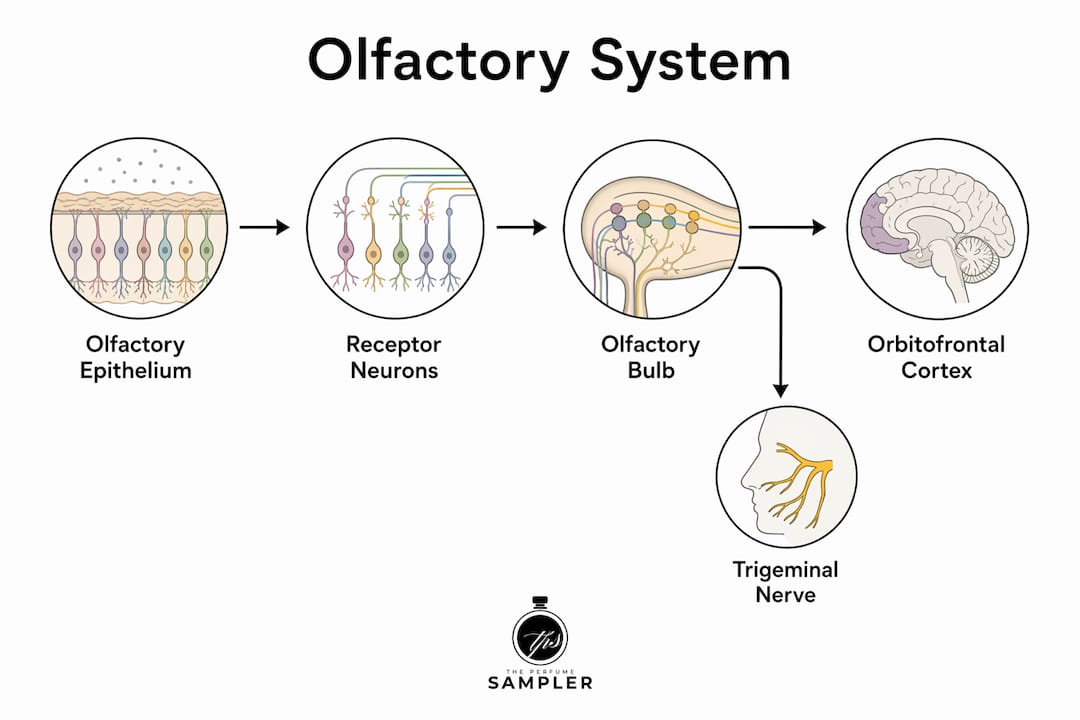
The nose detects scent through a sheet of specialised tissue called the olfactory epithelium, located at the top of the nasal cavity. Embedded in this tissue are millions of olfactory receptor neurons, each carrying receptor proteins on their surface. When you inhale, volatile odour molecules dissolve into the mucus layer and bind to these receptor proteins, triggering an electrical signal.
Humans carry around 400 types of olfactory receptors, each tuned to respond to specific chemical structures. No single receptor maps to one smell. Instead, a given molecule activates a combination of receptor types, producing a unique activation pattern, much like a chord on a piano rather than a single note. The olfactory bulb, a structure at the base of the brain directly above the nasal cavity, receives these patterns and begins processing them.
From the olfactory bulb, signals travel to the piriform cortex, the amygdala, and the orbitofrontal cortex. The amygdala connects scent to emotional memory, which is why a fragrance can trigger a vivid recollection instantly. The orbitofrontal cortex handles conscious identification and comparison of scents. This multi-region processing is what allows you to detect subtle differences between two similar fragrances rather than perceiving them as identical.
“We know exactly the range of sound frequencies that people can hear, not because someone made it up, but because it was tested. We didn’t just make up the fact that humans can’t see infrared or ultraviolet light. Somebody took the time to test it. For smell, nobody ever took the time to test.” — Leslie Vosshall, Rockefeller University, on the study that established the one trillion odour threshold.
Key biological components involved in scent detection
- Olfactory epithelium: the sensory tissue lining the upper nasal cavity where receptor neurons sit.
- Olfactory receptor neurons: specialised nerve cells that carry receptor proteins and transmit signals to the brain.
- Receptor proteins (approximately 400 types): bind to specific molecular structures and generate combinatorial activation codes.
- Olfactory bulb: the first brain structure to process incoming scent signals before relaying them further.
- Piriform cortex: handles primary odour recognition and pattern matching.
- Amygdala: links scent signals to emotional memory and learned associations.
- Orbitofrontal cortex: responsible for conscious scent identification and comparative judgement.
| Biological component | Primary function |
|---|---|
| Olfactory epithelium | Houses receptor neurons; first contact point for odour molecules |
| Olfactory receptor neurons | Convert chemical signals into electrical nerve impulses |
| ~400 receptor protein types | Create combinatorial activation patterns unique to each scent |
| Olfactory bulb | Processes and relays scent patterns to higher brain regions |
| Amygdala | Associates scents with emotional memory |
| Orbitofrontal cortex | Enables conscious scent identification and comparison |
Pro Tip: When you actively try to name what you are smelling, you engage the orbitofrontal cortex more deliberately. Putting a word or category to a scent, even a rough one like “woody” or “citrus,” trains this region and sharpens your ability to recognise fragrance notes over time.
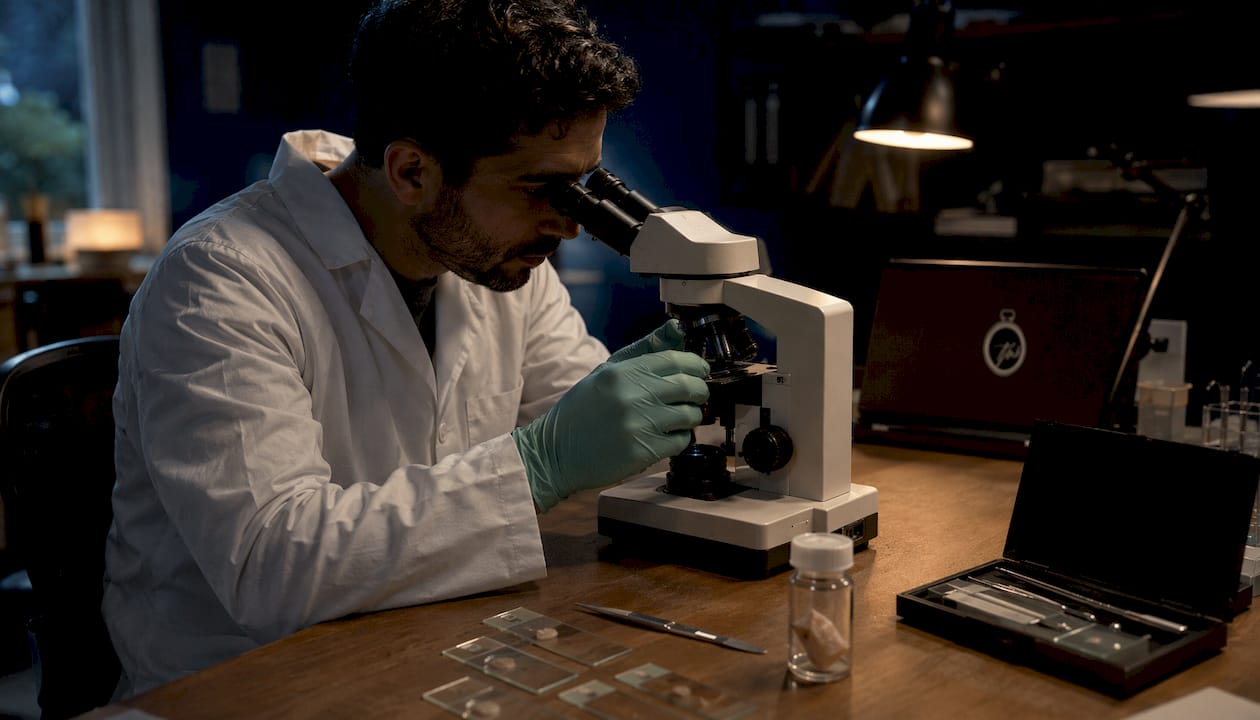
What factors influence how you perceive and differentiate scents?
Scent perception is not uniform across people or situations. Genetic variation in olfactory receptor genes means two people smelling the same fragrance may register genuinely different experiences. Some individuals carry receptor variants that make them more sensitive to specific molecules, such as the woody compound androstenone, which a portion of the population cannot detect at all. This is not a deficiency; it reflects the natural diversity in human receptor expression.
Cognitive and psychological factors layer on top of the biology. Olfactory adaptation, commonly called nose fatigue, occurs when continuous exposure to a scent temporarily reduces your sensitivity to it. This is why a perfume you applied an hour ago seems to have faded, even though others around you can still smell it clearly. Scent memory also shapes perception: a fragrance associated with a strong past experience will be processed differently from one encountered for the first time, because the amygdala pulls in emotional context alongside the raw chemical signal.

Environmental conditions add a further layer of variability. Skin chemistry, temperature, and humidity all alter how a fragrance projects and how long it lasts. Dry skin absorbs fragrance oils faster, shortening longevity. Higher ambient temperatures accelerate the evaporation of top notes, making a scent open more intensely but fade more quickly. Humidity can amplify projection, which is why the same fragrance often smells stronger in summer.
Fragrance concentration is one of the most practical variables to understand. Eau de Parfum contains a higher proportion of aromatic oils than Eau de Toilette, affecting not just strength but also which notes dominate. Different concentrations of the same fragrance can have distinct note compositions, not simply a louder or quieter version of the same formula. Understanding fragrance concentration levels is therefore central to comparing scents accurately.
Key factors influencing scent perception
- Genetic receptor variation: individual differences in receptor genes alter sensitivity to specific molecules.
- Olfactory adaptation: prolonged exposure reduces sensitivity temporarily; regular breaks restore it.
- Scent memory and emotional association: prior experience with a scent changes how the brain processes it.
- Skin chemistry: pH, hydration level, and natural oils affect how fragrance molecules interact with the skin.
- Temperature and humidity: heat accelerates evaporation; humidity amplifies projection.
- Fragrance concentration: higher oil content changes both strength and note composition, not just volume.
- Note structure: top, heart, and base notes evaporate at different rates, altering the scent profile over time.
Fragrance enthusiasts who understand these variables gain a real advantage when comparing scent variations. Testing the same fragrance across different skin types, times of day, and seasons produces a far more complete picture than a single application.
What does research say about human scent discrimination and testing methods?
The scientific evidence for human olfactory capability is more impressive than most people expect. A landmark study confirmed that humans can discriminate at least one trillion different odours, using 128 odorant molecules combined into complex mixtures of 10, 20, or 30 components. Participants were presented with three vials at a time, two matching and one different, and asked to identify the outlier. From 264 such comparisons per participant across 26 subjects, researchers extrapolated the minimum discrimination capacity. The actual number is almost certainly higher, because the study used only 128 of the many thousands of known odorant molecules.
Scientific measurement of scent goes well beyond the human nose. Gas chromatography separates the individual chemical compounds in a fragrance, allowing analysts to identify each molecule and its concentration. Electronic noses use arrays of chemical sensors to produce a digital fingerprint of a scent, enabling objective comparison without human perceptual bias. These instruments are used in quality control for fragrance production and in research settings where subjective human variation would compromise results. They complement rather than replace human testing, since they cannot capture the emotional and contextual dimensions of scent experience.
For practical scent discrimination, expert testers rely on side-by-side fragrance application on different wrists, observing development at fixed intervals: immediately after application, at 30 minutes, and at three hours. This method removes memory bias, because you are comparing live scents rather than relying on a recollection of how something smelled earlier. Writing brief notes at each interval builds a reliable record that holds up better than unaided memory.
Psychological training techniques also sharpen discrimination. Structured exposure to raw aroma materials, such as individual essential oils or aroma chemicals, trains the nose to isolate specific notes within complex blends. Starting with clearly distinct scent families (citrus versus woody versus floral) and gradually introducing more similar pairs builds the perceptual vocabulary needed for fine discrimination. This approach mirrors how professional perfumers train, though a focused amateur can make meaningful progress with consistent practice over several weeks.
Pro Tip: Test fragrances at the same time of day and under the same conditions each session. Your olfactory sensitivity varies with fatigue, hunger, and even the season. Consistent conditions make your comparisons far more reliable.
Practitioners rely on systematic side-by-side testing with controlled variables and timed observation intervals to overcome memory bias and identify fragrance development distinctions.
Sampling a fragrance across multiple concentrations, rather than testing only one version, reveals how the same formula behaves at different oil ratios. Fragrance experts advise sampling various concentrations of a perfume rather than assuming strength alone dictates scent behaviour, since note compositions can differ between an Eau de Toilette and an Eau de Parfum of the same line. Contrast testing related fragrances side by side improves recognition by allowing natural scent development differences to emerge, which is the most direct route to objective discrimination.
Theperfumesampler’s approach to fragrance sampling reflects this principle directly. Testing a fragrance in a 2ml or 5ml decant before purchasing a full bottle gives you the time and quantity needed to observe how a scent develops across multiple wearings and conditions. That kind of extended, real-world testing is what the research supports as the most reliable method for genuine scent discrimination.
Try fragrances before you commit
Theperfumesampler offers fragrance decants in 2ml, 3ml, 5ml, and 10ml sizes, covering high-end niche and designer fragrances. Testing a scent properly across multiple wearings is the only way to know how it performs on your skin, in your environment, and across its full development arc. A small decant gives you that opportunity without the cost of a full bottle.
Why decants work is straightforward: you get enough product to test a fragrance across different conditions and days, which is exactly what the science of scent discrimination recommends. All products are 100% authentic. Browse the full range at Theperfumesampler and find fragrances worth knowing properly. You can also explore a curated selection of fragrances at Jeffi Inc for further comparison options.
Key takeaways
The human olfactory system can discriminate at least one trillion different odours, and practical scent differentiation improves significantly with structured testing, environmental awareness, and knowledge of fragrance concentration.
| Point | Details |
|---|---|
| Olfactory capacity | Humans can discriminate at least one trillion odours, confirmed by controlled research using 26 subjects and 264 trials each. |
| ~400 receptor types | Around 400 olfactory receptor types create combinatorial activation patterns that allow recognition of complex scent mixtures. |
| Concentration affects composition | Eau de Parfum and Eau de Toilette can have distinct note compositions, not simply different strengths of the same formula. |
| Side-by-side testing works | Applying different fragrances to separate wrists and observing at 0, 30, and 180 minutes removes memory bias from comparison. |
| Training improves discrimination | Structured exposure to individual aroma materials and incremental complexity builds reliable scent recognition over time. |