
Try It Safely With 2–5ml Decants: Can Men Wear Women's Perfume?
Yes, men can wear women’s perfume. Fragrance has no chemical gender. The label “for her” is a marketing decision, not a rule about the ingredients inside the bottle. What actually matters is your body chemistry and personal taste, not what the packaging says. The rest of this guide covers which notes suit men well, how to sample safely, and where to start.
TL;DR:
- Fragrances marketed as “for her” often share core ingredients with men’s scents and do not have inherently feminine or masculine chemical properties.
- Certain scent profiles like floral-woody, amber floral, and leather with floral notes tend to work well on men because of their structured, complex nature.
- Skin chemistry significantly affects fragrance development, making testing on skin over blotter paper essential for accurate assessment.
- Wearing women’s perfume rarely provokes negative reactions if the scent appeals to personal taste and confidence, regardless of gender marketing.
- Sample small decants of diverse profiles first, then build a personal fragrance wardrobe with two to three versatile options suited to different occasions.
Table of Contents
- Why “for him” and “for her” exist and why it matters little for you
- Which women’s fragrance families work well on men?
- How do you test a women’s perfume on your skin?
- How much should you wear, and when?
- Will people react badly to a man wearing women’s perfume?
- How do you build a fragrance wardrobe around this?
- Can you layer perfumes to create your own scent?
- How do you match fragrance notes to your own taste?
- A personal take on trying women’s fragrances as a man
- Try it affordably: sampling women’s fragrances before you commit
- Sources
Why “for him” and “for her” exist and why it matters little for you
Fragrance houses split their ranges by gender for retail convenience, not chemistry. Department stores needed a way to organise shelves and target advertising, so “masculine” and “feminine” became sales categories somewhere in the 20th century. That framing stuck, even as formulas kept borrowing from each other constantly.
Ingredient overlap between men’s and women’s fragrances is substantial. Most fragrances marketed to men and women share core ingredients, and scent families like woody, amber, and citrus appear on both sides of the aisle. A rose absolute might anchor a women’s floral and also sit quietly inside a men’s oud blend. Bergamot turns up in nearly everything. The perfumer’s palette does not care which shelf a bottle ends up on.
Industry figures back this openly. One French perfumer has argued that gendered fragrance marketing is a social construct layered on top of chemistry that was never gendered to begin with. Perfumer Mark Buxton has made a similar point in interviews, framing packaging and branding as customer cues rather than formulaic fact, and many current launches drop the distinction entirely by going unisex from the start.
The practical takeaway: ignore the label when shortlisting scents. Look at the notes, the accord family, and how the fragrance behaves on skin over several hours. That is where the real answer to “will this suit me” lives, not on the bottle’s marketing copy.
Which women’s fragrance families work well on men?
Certain scent profiles cross the gender line with almost no friction, because their supporting notes read as grounded rather than sweet. Rose paired with woods is the clearest example. On its own, rose can feel delicate. Set against cedar, vetiver, or sandalwood, it reads as rich and composed. Jasmine follows a similar pattern when paired with leather. The animalic depth of leather takes the edge off jasmine’s sweetness and gives it structure.
Vanilla is trickier. Worn alone, it leans dessert-like fast. Tempered by black pepper, cardamom, or a smoky incense note, it becomes warm rather than sugary. Amber-woody blends are the safest entry point of all, since amber already carries a resinous, slightly masculine-coded weight in most people’s noses, regardless of the label on the box.
The fastest way to shortlist candidates is to change how you read fragrance descriptions. Skip anything marketed with words like “sweet,” “candy,” or “girly.” Instead, look for these descriptor combinations when browsing:
- Floral-woody
- Amber floral
- Oriental with vetiver
- Chypre (mossy, earthy floral)
- Leather floral
- Spiced amber
- Woody musk
- Green floral
Each of these signals a scent built with structure and depth rather than pure sweetness. Community write-ups on men wearing women’s fragrances consistently point to floral-woody and amber-woody profiles as the easiest starting point, precisely because the wood or amber base gives the floral top notes somewhere to land. If you want a shortcut to narrowing this down before you buy anything, a guide to personal scent style can help you match a scent personality to a shortlist of profiles worth sampling.
How do you test a women’s perfume on your skin?
Skin chemistry changes everything about how a fragrance develops, which is why testing on paper alone tells you almost nothing useful. Your skin’s pH, oil levels, and warmth all interact with the fragrance’s molecules, and that interaction is unique to you. Practitioner guidance on testing and sampling consistently recommends skin over blotter for this exact reason, and the same principle underpins why two people can wear the same bottle and smell noticeably different, something covered in more depth in a guide to skin chemistry and scent.
A simple routine gets you a reliable read within a couple of weeks:
- Apply one spray to a clean patch of skin, ideally the inner wrist or forearm.
- Wait 15 to 20 minutes for the top notes to settle before judging anything.
- Check back after two to three hours to catch the heart notes.
- Note how it smells again after five or six hours, once the drydown has taken over.
- Repeat the test on a different day, since humidity and skin temperature shift the result.
Perfume testing guidance from Delacourte recommends spacing tests 24 to 48 hours apart to avoid olfactory fatigue, and using an unscented moisturiser as a consistent skin base so you are not comparing apples to oranges between sessions.
Pro Tip: Buy decants in 2ml to 5ml sizes rather than committing to a full bottle straight away. A small sample gives you three to five full skin tests, which is more than enough to know whether a fragrance is worth the investment.
Keep the testing itself low-key. Spray once, not three or four times, and give the scent time to settle before you walk into a room full of people. Judging a fragrance in the first sixty seconds, before the alcohol has burned off, is the single most common mistake first-time testers make.
How much should you wear, and when?
Placement matters as much as quantity. Pulse points, the wrists, the neck, and behind the ears, all carry warmth that helps a fragrance project without needing more product. One or two sprays on skin, not clothing, is enough for most eau de parfum concentrations.
Concentration determines how long you can expect a scent to last and how far it will carry. Eau de parfum typically holds for several hours with moderate sillage. Extrait de parfum concentrations run higher and can last considerably longer, sometimes even lasting well into the next day on some skin types, which means a single spray goes further than you’d expect. Parfum sits between the two.
For daytime or office wear, one spray on the inner wrist is plenty. Evening or formal settings can handle two, ideally one on the neck and one on the wrist. When in doubt, under-apply. You can always layer a second light spray later; you cannot remove an overdose.
Will people react badly to a man wearing women’s perfume?
The idea that “women’s perfume equals feminine scent” oversimplifies how fragrance actually works. Plenty of fragrances marketed to men contain heavy floral notes, rose and violet especially, and nobody blinks. The gender coding lives in the marketing, not the molecule, as Cartier’s in-house perfumer Mathilde Laurent has suggested when describing scent choice as personal discovery rather than trend-following.
Scent also does real social work. A 2014 study in Human Nature found that scent can influence how desirable someone is perceived to be in social contexts, which suggests wearing something you genuinely like, rather than something you think you are supposed to wear, has a tangible upside.
If someone comments, a light response works better than a defensive one: “It’s just a scent I like,” or “Rose and vetiver, not gender.” Confidence reads as intention, not explanation, embodying the spirit of embracing individuality in personal style.
How do you build a fragrance wardrobe around this?
A useful wardrobe covers different moods and occasions rather than chasing one “signature” scent for every situation. Think in terms of three or four roles: a daytime signature, an evening option with more weight, a warm-weather version, and a colder-months alternative with richer amber or spice.
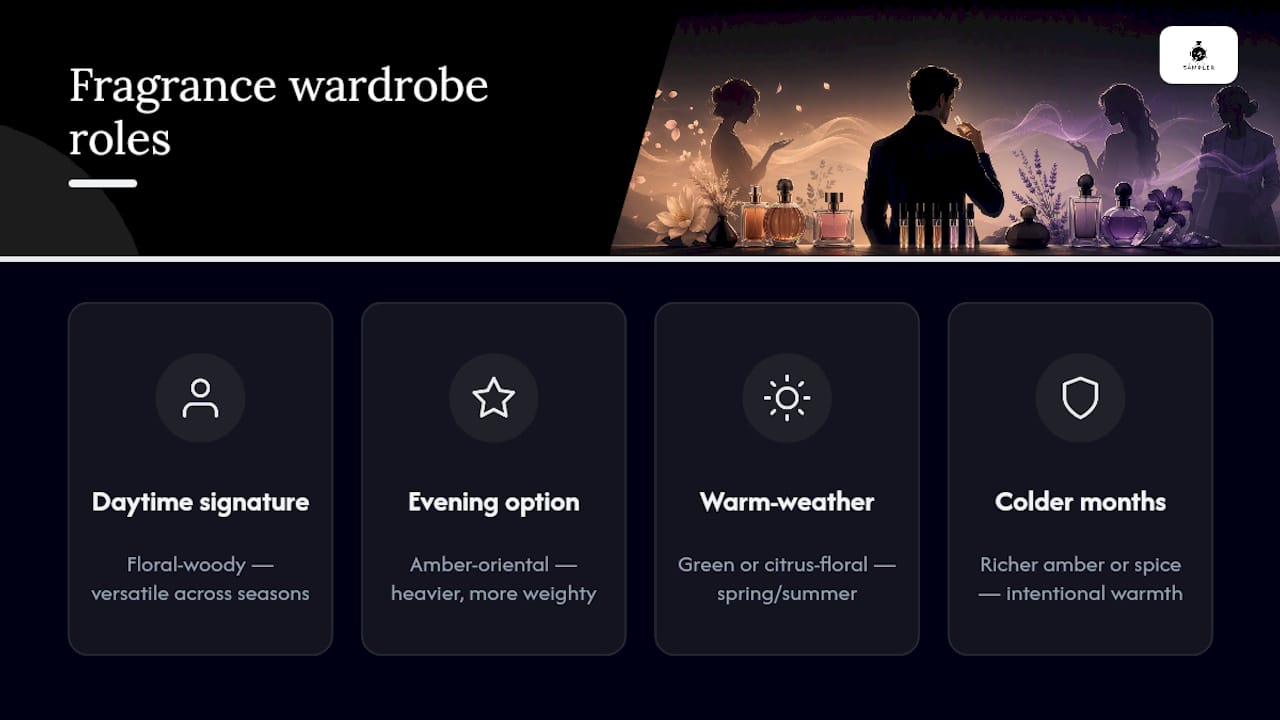
Start by choosing one floral-woody scent, since that profile tends to be the most versatile across seasons. Add an amber-oriental for evenings and colder weather, where the extra warmth reads as intentional rather than overwhelming. A green or citrus-floral fills the gap for spring and summer, when heavier ambers can feel cloying against heat and humidity.
Build this gradually rather than buying four full bottles at once. Decants let you test a rose-woods scent against a jasmine-leather option side by side, without spending on a bottle you might wear twice. A complete guide to finding your signature scent walks through this process in more depth, including how to sequence testing so you are not overwhelmed by six new scents at once.
The goal is not to own dozens of bottles. It is to have two or three reliable options that cover your actual life, tested properly before you commit. A wardrobe built this way tends to get worn, rather than sitting unused on a shelf because it never quite matched the occasion it was bought for.
Can you layer perfumes to create your own scent?
Layering lets you build a custom profile from two fragrances that individually feel slightly off but complement each other combined. The most reliable technique for a first attempt is pairing a floral-heavy women’s fragrance with a woody or leather-based scent, applied to different pulse points rather than mixed in the bottle.
Guidance on introducing masculine anchors into floral scents recommends exactly this approach: apply the floral fragrance to one wrist and the woody or leather scent to the neck, letting body heat blend the two naturally as the day goes on. This retains the floral top notes you were drawn to while grounding the overall effect in something that reads as more structured.
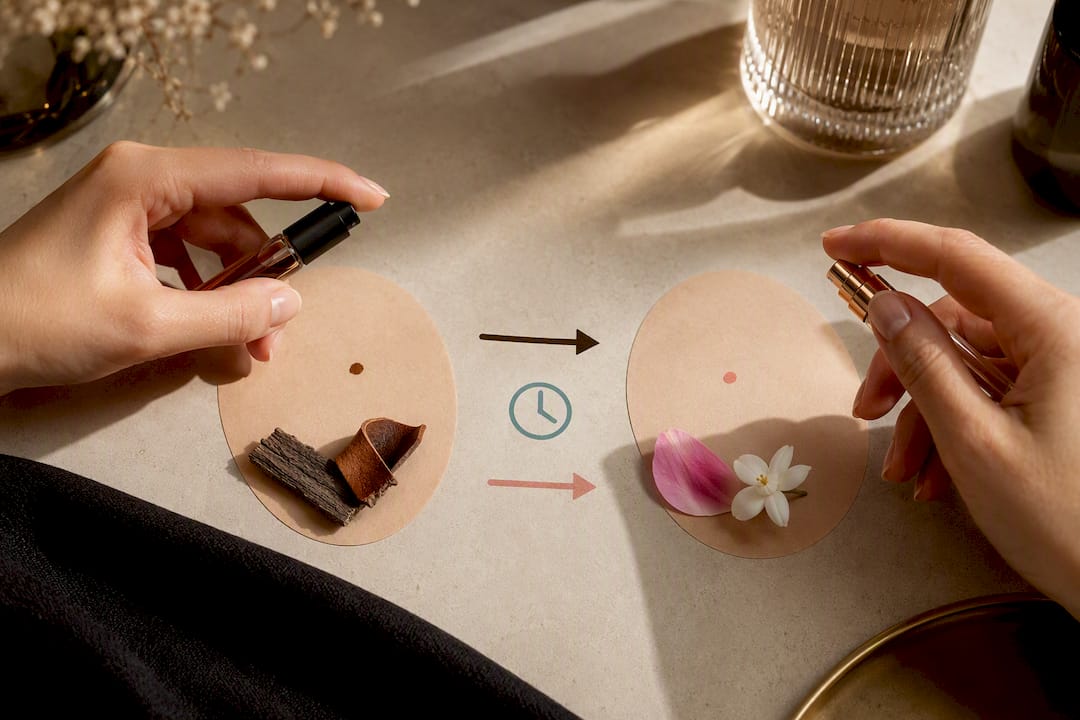
Start simple. Layer only two scents at a time until you understand how they interact, since three or more fragrances stacked together quickly turns muddy rather than complex. Apply the heavier, longer-lasting scent first and let it settle for a minute or two before adding the lighter one on top.
Test any layering combination on skin before wearing it out. A pairing that smells promising on paper can shift completely once your skin’s warmth and oils get involved, which is the same reason single-fragrance testing matters so much in the first place. Keep notes on combinations that work, because a good pairing is easy to forget by the time you reach for it again three months later.
How do you match fragrance notes to your own taste?
Reading a fragrance’s note list is a skill worth building before you buy anything. Notes are usually organised into top, heart, and base, representing what you smell in the first minutes, the middle hours, and the long drydown, respectively. If you consistently dislike a fragrance’s base notes, no amount of appealing top notes will save it for you long term, since the base is what you and everyone around you smell for most of the day.
Start by identifying two or three notes you already know you like from other products, whether that is a specific soap, a candle, or a fragrance you have smelled on someone else. Cedar, bergamot, rose, and vetiver are common starting points because they are easy to recognise once you know what to look for.
From there, search fragrance descriptions for those specific notes rather than relying on vague marketing language. A listing that names “vetiver, iris, and sandalwood” tells you far more than one described simply as “elegant” or “sophisticated.” Cross-reference two or three fragrances that share a note you like, and you will start noticing patterns in which supporting notes tend to work well alongside it.
This process takes longer than grabbing whatever is on the counter, but it consistently produces better matches. Preference is personal and specific, and the only reliable way to find it is by testing against notes you already know suit you.
A personal take on trying women’s fragrances as a man
Rupesh: The men who get the most out of women’s perfume are rarely the ones chasing a bold statement. They are the ones who tried a rose-and-vetiver blend on a quiet Tuesday, liked how it settled after three hours, and quietly kept wearing it. That is the whole story, minus the drama.
What surprises most first-timers is how fast the “will this smell feminine” worry disappears once they actually test something on skin. The worry lives in the label. It rarely survives contact with the actual scent.
— Rupesh
Try it affordably: sampling women’s fragrances before you commit
The biggest barrier to trying a women’s perfume isn’t taste. It’s the risk of spending on a full bottle you end up never wearing. You can reduce that risk by purchasing decants in small sizes, allowing you to test a fragrance properly across several days before deciding whether it earns a place in your wardrobe.
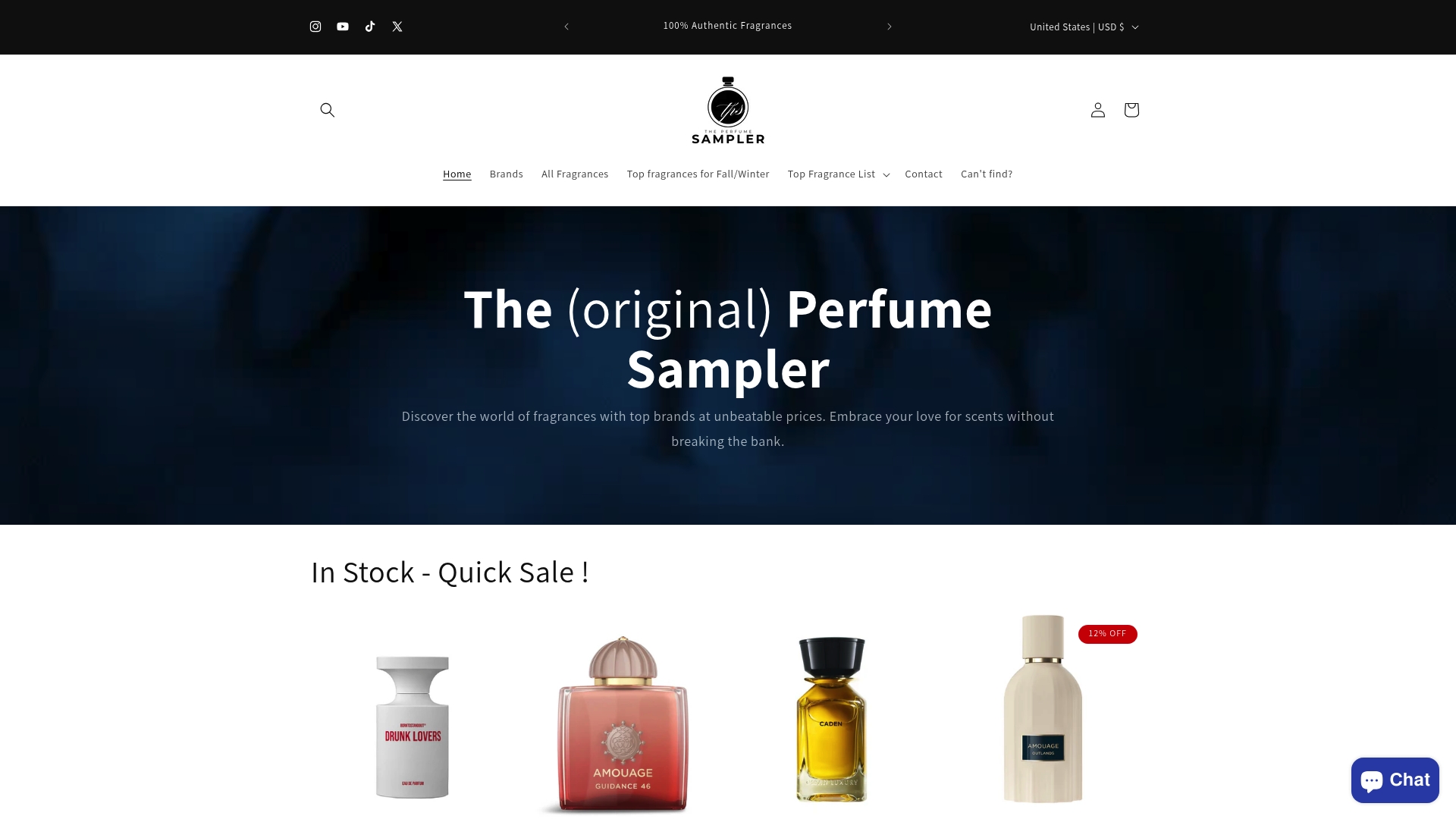
A sensible starting approach is picking two or three decants from contrasting profiles, say, a rose-woods blend, an amber-oriental, and a green floral, and testing each over roughly two weeks using the skin-testing routine covered earlier. That gives you a real comparison rather than a rushed decision made in a shop under fluorescent lighting.
Read more on why decants make sense for testing before buying, or browse a specific starting point like the Born To Stand Out Drunk Lovers Eau de Parfum sample listing to see how sizing and pricing work in practice.
Sources
This guide draws on perfumer interviews from Allure and Wonderland, ingredient analysis from HowStuffWorks, testing methodology from Delacourte, and social-perception research from Human Nature via BGSU ScholarWorks.
- Here’s what one French perfumer has to say about women wearing men’s fragrances | Allure
- 2014 study on scent and social perception (Human Nature — hosted at BGSU ScholarWorks)
- Why More Men Should Wear Women’s Fragrances — Fragroom