
Why professionals wear perfume: confidence, branding, and scent
TL;DR:
- Perfume significantly influences confidence, perception, and professional branding through rapid emotional and social responses. Using a consistent signature scent enhances recall and projects competence, authority, and approachability in workplace settings. Systematic sampling and thoughtful application ensure fragrances support rather than undermine professional image and personal presence.
Perfume is widely dismissed as a finishing touch, something pleasant but essentially cosmetic. That assumption is wrong. Mood elevation and self-signalling are two of the primary psychological reasons professionals reach for fragrance each morning, and the evidence behind both is substantial. Scent shapes how you feel walking into a room, how others perceive your competence, and how consistently you project a professional identity. For anyone serious about personal branding, fragrance deserves a place in the strategy, not just the bathroom cabinet.
Table of Contents
- The science behind scent: mood, confidence, and behaviour
- Fragrance, first impressions, and professional perception
- Signature scents and personal branding: building lasting impressions
- Practical strategies: affordable ways to trial high-end perfume
- Why fragrance-driven branding works (and the pitfalls)
- Explore premium scents with affordable decants and samplers
- Frequently asked questions
Key Takeaways
| Point | Details |
|---|---|
| Boosts workplace confidence | Perfume elevates mood and self-perception, helping professionals feel more assured. |
| Shapes first impressions | Wearing fragrance enhances attractiveness and perceived competence in business interactions. |
| Personal branding tool | Developing a signature scent builds professional identity and leaves lasting impressions. |
| Affordable exploration | Decants and samplers allow cost-effective trial of premium fragrances before investing. |
| Choose subtle, consistent scents | Avoid overpowering aroma; subtlety and consistency yield better results for professionals. |
The science behind scent: mood, confidence, and behaviour
Having set the context, let us look at how scent actively shapes confidence and behaviour. The process begins in the brain, and it is more direct than most people realise.
Fragrance bypasses the rational brain entirely. When you inhale a scent, olfactory receptors send signals straight to the limbic system, the region responsible for emotion, memory, and motivation. This is unlike any other sense. Vision and sound travel through multiple processing stages before reaching emotional centres. Scent arrives almost instantly. The result is that scent drives emotional responses faster and more reliably than most other stimuli, and this has measurable consequences for workplace behaviour.
The psychological mechanism at work is called self-signalling. When you wear a fragrance you associate with confidence or success, your brain interprets the scent as a cue that you are prepared and capable. This internal shift in self-perception leads to changes in posture, vocal tone, and social assertiveness. The effect is subtle but consistent across studies.
“Olfactory conditioning links specific scents to success states, acting as confidence anchors. Studies show athletes and professionals perform better with associated fragrances than without them.”
This concept, known as the olfactory anchor effect, is directly relevant to high-stakes professional situations. A scent worn consistently during successful meetings or presentations becomes a conditioned trigger. Over time, applying that fragrance before an important negotiation can activate the same mental state you experienced during previous wins.
Research also points to a social dimension. One study found that perfume synergises with natural body odour to enhance the transmission of positive emotions, which in turn improves performance on creativity tasks. This is not a minor effect. In collaborative professional settings, the emotional tone of a room genuinely influences output quality.
Key psychological effects of fragrance in professional settings:
- Reduces anxiety and social tension before and during meetings
- Increases self-rated attractiveness and confidence
- Acts as a conditioned anchor for high-performance mental states
- Enhances positive emotion transmission in group work environments
- Improves perceived readiness and competence in the wearer
Fragrance effects: a quick reference
| Effect | Mechanism | Professional relevance |
|---|---|---|
| Mood elevation | Limbic system activation | Reduces pre-meeting anxiety |
| Confidence boost | Self-signalling | Improves assertiveness |
| Olfactory anchoring | Conditioned association | Reinforces peak performance states |
| Social warmth | Positive emotion transmission | Supports collaboration |
| Perceived competence | External perception shift | Strengthens professional image |
Pro Tip: Choose one signature fragrance for high-stakes days and wear it consistently. Over several months, the scent will become a reliable confidence anchor you can trigger on demand.
For a deeper understanding of how luxury fragrance and confidence connect in practice, and how perfume supports self-expression in professional contexts, both are worth exploring in detail.
Fragrance, first impressions, and professional perception
With a better grasp on psychological impacts, we can see the importance of fragrance in professional perception. First impressions form within seconds, and scent contributes to that rapid judgement more than most professionals acknowledge.
Research confirms that pleasant scents increase perceived attractiveness, competence, and warmth. These three dimensions are precisely what colleagues, clients, and hiring managers evaluate during a first encounter. A scent that is appropriate, subtle, and well-chosen does not simply make you smell nice. It actively shapes the qualities others attribute to you.
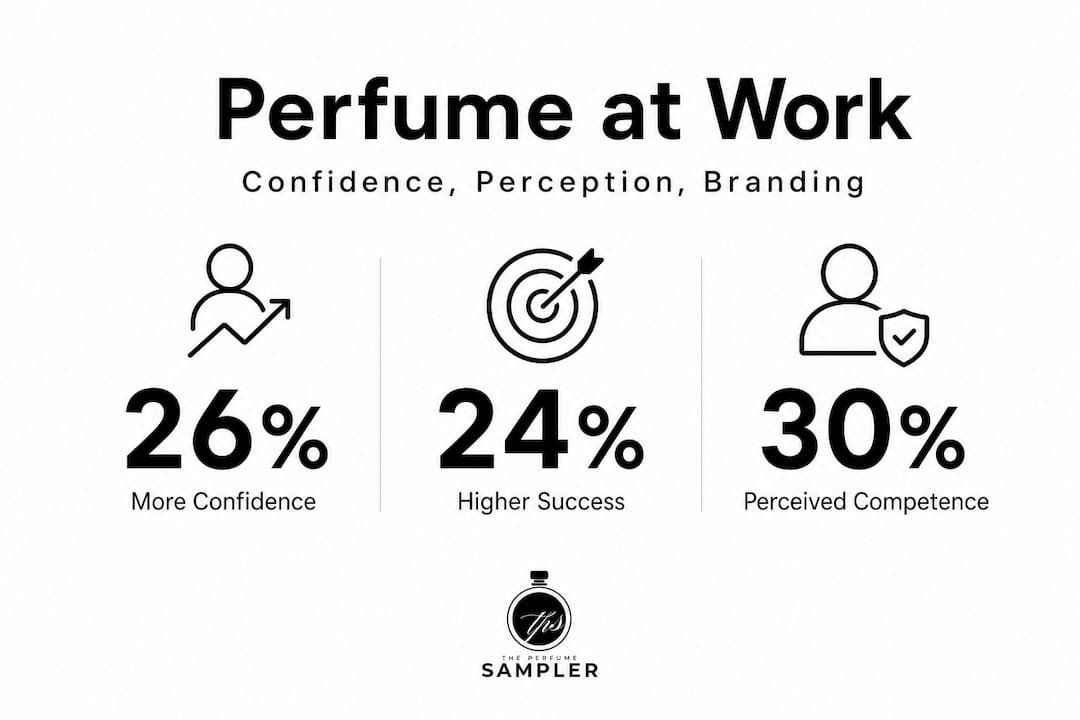
The numbers are striking. Men wearing cologne rated 26% higher on perceived confidence and 24% higher on perceived success compared to those wearing no fragrance. In workplace settings generally, appropriate fragrance increases perceived competence by up to 30%. These are not trivial margins. They are the difference between being remembered as assured or forgettable.
Comparing professional perception cues:
| Cue | Impact on first impression | Control level |
|---|---|---|
| Clothing and grooming | High | Full control |
| Posture and body language | High | Moderate control |
| Fragrance choice | Moderate to high | Full control |
| Voice tone | Moderate | Partial control |
| Eye contact | Moderate | Full control |
Fragrance stands out in this table because it operates at a subconscious level for the observer. People rarely think, “that person smells good, therefore they are competent.” The association happens automatically, which makes scent a quietly powerful tool. The role of scent in skincare follows a similar logic: sensory cues that are not consciously evaluated still shape overall impressions.
Practical tips for scent selection in professional settings:
- Keep projection moderate. Scent should be detectable within arm’s length, not across the room.
- Match fragrance family to the context. Clean, woody, or citrus-forward scents tend to read as professional and authoritative.
- Avoid heavy, sweet, or intensely animalic fragrances in formal or conservative environments.
- Test longevity before an important day. Spray on skin the evening before to gauge how the scent develops over several hours.
- Consider the workspace. Open-plan offices require lighter application than a private meeting room.
Understanding perfume projection and how scent radiance works is essential before choosing your office fragrance. A scent that performs beautifully on paper may behave differently on your skin. Reviewing the best workplace perfumes for everyday office wear gives you a curated starting point based on sillage, longevity, and scent profile.
Signature scents and personal branding: building lasting impressions
Now that we see the impact, let us focus on applying scent as a branding tool. Fragrance, used consistently and deliberately, becomes part of how others remember you.
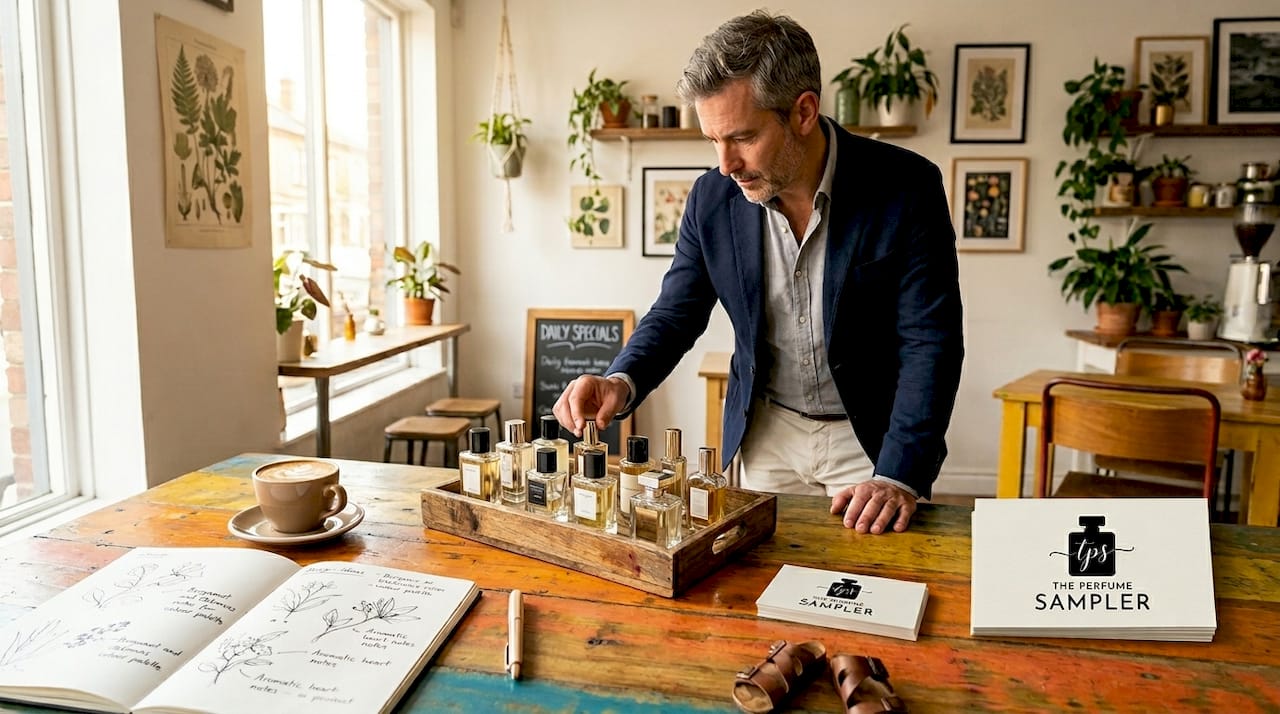
A signature scent functions as a personal branding asset. In the same way that a distinctive handshake or a memorable way of speaking becomes associated with your professional identity, a consistent fragrance creates a sensory imprint. Colleagues begin to associate your scent with your presence, your reliability, and your character. This is not accidental. It is a branding mechanism that operates through repetition and association.
The process of building a scent profile for professional use does not need to be rushed. Here is a practical framework:
- Identify the impression you want to create. Authoritative and grounded? Fresh and approachable? Creative and distinctive? Each intent points to different fragrance families.
- Narrow to two or three fragrance families. Woody and aromatic scents convey stability. Citrus and green notes suggest energy and clarity. Soft musks project approachability.
- Sample before committing. Never buy a full bottle based on a paper strip or a description. Wear the fragrance on skin for a full working day before deciding.
- Test across different conditions. Heat, humidity, and physical exertion all change how a fragrance performs. Ensure it reads as intended in your actual working environment.
- Wear it consistently over several weeks. Once chosen, consistency is what builds the associative memory in others. Rotating too frequently breaks the personal branding effect.
- Calibrate your application. Two to three sprays on pulse points is sufficient for most professional environments. More is rarely better.
“Subtle, consistent scents work best for professionals. Overpowering fragrances create cognitive dissonance when they are mismatched with body language and communication style.”
This is a critical point. A powerful, complex fragrance worn with hesitant body language sends contradictory signals. Scent amplifies the impression you already project. If confidence is not yet genuine, a heavy or imposing fragrance does not substitute for it. Subtlety and consistency serve professionals far better than volume or novelty.
The role of scent in overall sensory presentation follows the same principle. Sensory cues that align and reinforce each other create a coherent impression. Those that conflict create unease, even if the observer cannot identify why.
Pro Tip: If you are finding your signature scent for the first time, start with broadly liked fragrance families. Vetiver, cedarwood, bergamot, and neroli are consistently associated with professionalism and are unlikely to alienate colleagues or clients.
Selecting affordable luxury fragrance does not mean compromising on quality. It means being strategic about where you spend before you have confirmed that a scent truly works for you.
Practical strategies: affordable ways to trial high-end perfume
With branding in mind, let us consider affordable, practical ways to explore quality fragrances. The biggest mistake professionals make is buying blind. A full bottle of a luxury fragrance can cost anywhere from £80 to several hundred pounds. Committing that amount without testing longevity, projection, or skin compatibility is a significant risk.
The solution is systematic sampling. Woody and citrus notes are particularly effective for leadership contexts, building what researchers describe as an olfactory anchor for negotiations and key interactions. But knowing this intellectually is different from knowing which specific fragrance expresses those notes in a way that works on your skin and suits your professional context.
Practical sampling methods for professionals:
- Decants: Small measured portions of a fragrance, typically 2ml, 3ml, 5ml, or 10ml. These allow you to live with a scent across several different days and settings before deciding.
- Discovery sets: Curated collections of multiple fragrances in sample sizes. Ideal for exploring a house’s range or comparing similar scent profiles.
- Layering trials: Some professionals layer a base fragrance with a lighter scent to create a personalised blend. Sampling both components first is essential before committing to two full bottles.
- Wear testing across conditions: Test a sample on a typical working day, a day with physical activity, and an evening event. A fragrance that excels in one context may underperform in another.
Common pitfalls to avoid:
- Judging a fragrance solely on the opening notes. Most quality fragrances evolve significantly over two to four hours.
- Testing multiple samples on the same day. Your olfactory perception fatigues quickly. Test one or two maximum.
- Applying to clothing only. Skin chemistry transforms a fragrance. Testing on fabric alone gives an incomplete picture.
- Choosing based on someone else’s recommendation alone. Fragrance is deeply personal. What works for a colleague will not necessarily work for you.
Pro Tip: Use the office luxury fragrance guide to pre-screen options before sampling, and review the fragrance concentration guide to understand the difference between Eau de Toilette, Eau de Parfum, and Parfum. Concentration affects longevity and projection significantly, and choosing the wrong concentration for your environment is a common and avoidable error.
Why fragrance-driven branding works (and the pitfalls)
Our view at The Perfume Sampler is that fragrance is one of the most underutilised professional tools available, but it is also one of the easiest to misuse.
The evidence for fragrance’s positive impact on confidence, perception, and branding is consistent. The psychological mechanisms are well-documented. The practical framework for building a signature scent is straightforward. And unlike many personal branding investments, high-quality fragrance does not require substantial financial outlay if you approach it intelligently through sampling.
However, the risks deserve equal attention. One study found that while fragrance typically enhances positive emotion and creative task performance, the same research acknowledges that perfume does not always enhance biological signals uniformly. The interaction between fragrance and individual body chemistry is variable. What reads as sophisticated on one person may project very differently on another.
The real risk is treating fragrance as a shortcut rather than a complement. Scent amplifies what is already present. It does not create professional credibility from nothing. A professional who is already confident, consistent, and well-presented will benefit considerably from a well-chosen signature scent. One who relies on fragrance to compensate for other gaps will find it ineffective.
Factors affecting perfume performance, including skin pH, hydration, and temperature, also mean that a fragrance you tested in a shop may perform quite differently in your daily environment. This reinforces the case for thorough testing via decants before any significant purchase.
The professionals who benefit most from scent branding are those who approach it with the same deliberateness they apply to other presentation decisions. Choose with intent. Test thoroughly. Apply with restraint. And remain consistent once you have found what works.
Explore premium scents with affordable decants and samplers
Building a professional fragrance wardrobe does not require spending hundreds of pounds upfront.
At The Perfume Sampler, we offer 100% authentic fragrance decants in 2ml, 3ml, 5ml, and 10ml sizes, giving you the flexibility to trial high-end designer and niche fragrances without committing to a full bottle. Our why decants page explains exactly how the process works and why it is the most practical approach for professionals building a considered scent profile. If you are looking for a strong starting point, the Boss Bottled Absolu Parfum Intense decant is a well-regarded option for professional settings: woody, warm, and consistently well-received. Try before you commit. That is the sensible approach.
Frequently asked questions
How does wearing perfume affect workplace confidence?
Perfume boosts mood and self-perception through limbic system activation and self-signalling, leading to reduced anxiety and higher self-rated attractiveness and assertiveness in professional settings.
Are certain fragrance notes better for professional settings?
Woody and citrus notes are considered optimal for professional environments because they convey grounding, clarity, and leadership, and consistently build olfactory anchors that reinforce performance states during negotiations.
Can perfume really impact how competent or attractive I appear?
Research shows that workplace fragrance increases perceived competence by up to 30%, and men wearing cologne are rated 26% higher on perceived confidence, making appropriate scent selection a measurable advantage.
What are affordable ways to trial luxury perfumes before buying?
Decants and discovery sets in sizes from 2ml to 10ml allow professionals to test longevity, projection, and skin compatibility across multiple days before committing to a full-size purchase.
What mistakes should I avoid when choosing a professional fragrance?
Avoid overpowering scents that conflict with your body language, as mismatched fragrance creates cognitive dissonance in observers, and avoid buying without proper skin testing, which is the single most common and costly error.
Recommended
- Top fragrances for professionals: elevate your scent – ThePerfumeSampler
- How perfume empowers self-expression and personal style – ThePerfumeSampler
- The best workplace perfumes for everyday office wear – ThePerfumeSampler
- Key factors for picking fragrance: Affordable luxury scents – ThePerfumeSampler