
Sampling Oud Perfumes: 2–10ml Decants and an Authenticity Guarantee
Ordering curated oud decants or a discovery set is the fastest way to find an oud you actually like without gambling on a full bottle. Test each sample on skin over several days, not one spray, because oud shifts significantly as it dries down. Choose a seller with a clear authenticity guarantee, such as Theperfumesampler, and you avoid the two most common oud mistakes: buying blind and buying fake.
TL;DR:
- Authentic oud samples should come from trusted sellers with clear sourcing and authenticity guarantees, especially since fake oud is common and easy to mistake.
- Sample sizes of 3ml or 5ml are most practical for thorough testing, with spray atomizers providing the most control and consistent comparison.
- Test oud at three different intervals—10 to 15 minutes, three hours, and eight hours—to accurately assess its development and drydown.
- Start with blended or lighter oud fragrances, such as oud-rose or oud-amber, to avoid overwhelming beginners with pure, intense oils.
- Keep samples stored upright, in the dark, and label them with open dates to prevent degradation and ensure accurate, repeatable testing over time.
Table of Contents
- Where to buy oud perfume samples
- What’s in an oud sample kit: sizes, formats and extras
- How to sample oud at home: a practical testing workflow
- Which oud should you try first?
- When does a sample become a full bottle purchase?
- Why Theperfumesampler is a reliable place to start
- How to store oud perfume samples to keep them fresh
- Natural oud versus synthetic oud in samples
- Tips for comparing multiple oud samples effectively
- How to interpret fragrance notes specific to oud samples
- Common mistakes when sampling oud perfumes
- The oud sampling advice that actually holds up
- Start sampling oud today with Theperfumesampler
- Sources
- FAQ
Where to buy oud perfume samples
Four channels sell oud samples, and each one comes with different trade-offs.
- Brand discovery sets sold directly by fragrance houses, often bundling a handful of their own oud releases at a fixed price.
- Niche-house sampler shops that decant smaller, specialist ouds not always stocked in mainstream stores.
- Independent decant retailers, including Theperfumesampler, who buy full bottles and split them into 2ml to 10ml portions across niche and designer brands.
- Perfume boutiques and counters, useful for a quick blotter test but rarely for take-home samples you can wear over several days.
What you get from each varies. Brand sets tend to be polished but limited to one house’s range. Independent decant shops usually offer far wider selection across brands, plus clearer sizing (2ml, 3ml, 5ml, 10ml) so you know exactly how much wear you’re paying for. Boutique counters give you nothing to take home unless you ask for a card spray, which tells you little about how an oud develops over hours.
Spotting a reputable seller matters more with oud than most fragrance families, because genuine oud oil is expensive and easy to fake. Look for an explicit authenticity guarantee, transparent information about where the decant was sourced (from a sealed retail bottle, not an unmarked bulk supply), and a track record of customer reviews that mention accuracy against the original. A seller unwilling to say where its stock comes from is one to avoid, regardless of how attractive the price looks.
What’s in an oud sample kit: sizes, formats and extras
Sample sizes determine how much testing you can actually do, and the differences matter more than they first appear.
- 2ml: roughly 10 to 15 light sprays, enough for a couple of skin tests but tight if you want to wear it a full day more than once.
- 3ml: a comfortable middle ground, giving you two or three full-day wears to judge longevity properly.
- 5ml: the size most sampler-retailers recommend for oud specifically, since oud often needs a full day’s wear to reveal its drydown.
- 10ml: closer to a travel bottle than a sample, useful once you’ve narrowed down a shortlist and want to live with a scent for a week or more.
Format matters too. Spray atomisers are the easiest to control and dose consistently, which matters when you’re comparing sillage across several oud samples. Glass decants with a dabber or rollerball give more precise, sparing application, better suited to strong oud oils where a full spray would be overwhelming. Pure oud attars, sold as oils rather than alcohol-based sprays, sit close to the skin and need almost no product to register.
Beyond the liquid itself, look for labelled vials (fragrance name and concentration clearly marked), a sample-to-full-bottle credit if you decide to upgrade, and packaging that protects glass in transit. A leaking vial ruins a comparison before it starts.
How to sample oud at home: a practical testing workflow
Oud rewards patience more than almost any other fragrance family, because body chemistry significantly changes how oud develops on skin, which is why a blotter test alone tells you very little.
- Blotter first. Spray or dab the sample on a paper blotter to get a first read on the opening notes without committing skin time.
- One spray, one pulse point. Apply to your wrist or inner elbow, somewhere warm, and resist the urge to test more than one or two scents on skin the same day.
- Check at three intervals. Smell it again at 10 to 15 minutes (top notes settling), around three hours (the heart emerging), and at eight hours (the drydown, where oud usually shows its true character).
- Rotate testing days. Give your skin a rest day between different oud samples so residual scent from one doesn’t muddy your read on the next.
- Write it down. Note the opening, the heart, and the drydown separately, along with how far the scent projected and how long it lasted.
Spraying on skin gives you the most honest picture of longevity and sillage, while a spray on clothing lasts longer but tells you less about how the oud interacts with your own chemistry. If you’re testing several samples across a week, keep a simple log with the date, time sprayed, and your three checkpoint notes so you can compare fairly rather than relying on memory.
Pro Tip: Test oud samples on non-shower days when possible. Oud clings to skin and hair longer than most fragrance families, and washing too soon can mask exactly the drydown phase you’re trying to judge.
Which oud should you try first?
Not all oud is created equal in intensity, and starting with the wrong one is the single biggest reason people decide, wrongly, that oud “isn’t for them.”
- Blended soft ouds such as oud-rose, oud-honey, or oud-amber combinations, which introduce oud’s character without its full weight.
- White or floral-leaning oud blends, where lighter florals soften the wood and smoke into something easier to wear day to day.
- Mainstream designer oud fragrances, generally built for wider appeal with gentler projection than niche or Middle Eastern house releases.
- Single-origin or pure oud oils, best saved until you’ve built a sense of what you actually enjoy in blended forms.
Beginners are consistently steered toward blended ouds or designer oud fragrances rather than pure oud oil, and the reasoning holds up: pure oud can smell barnyard-like, medicinal, or intensely smoky to an untrained nose, while blended versions ease you into that vocabulary gradually. A sign you’re ready to move up is when you find yourself wanting more of the “raw” wood note that blended ouds only hint at, rather than being put off by it.
When does a sample become a full bottle purchase?
Discovery sets and single decants sit at very different price points, and understanding the maths helps you decide when to commit.
A curated discovery set covering several ouds typically costs less overall than buying the same number of single decants separately, though single decants let you be selective rather than paying for scents you already know aren’t for you. Either way, cost-per-wear is the number that matters: divide the sample price by how many full wears you got out of it, and compare that against the full bottle’s price per estimated wear.
- Check whether the seller offers a sample-to-full-bottle credit, where part or all of what you spent on the decant is deducted from a later full bottle order.
- Read the fine print on credits carefully, since some retailers apply the discount only within a set window or on specific bottle sizes.
- Look for repeated preference across multiple wears, not just one good day, before deciding.
- Confirm the oud suits your climate and wardrobe, since heavy ouds can feel wrong in high heat or with lighter summer clothing.
- Make sure longevity and sillage sit at a level you’re happy repeating daily, not just impressed by once.
Some discovery sets bundle a credit toward a full-size bottle, which meaningfully lowers the effective cost of testing several ouds before you buy. It’s worth checking for before assuming single decants are always cheaper.
Why Theperfumesampler is a reliable place to start
Certain retailers sell niche and designer fragrance samples across various small sizes, alongside full bottles for when you’ve settled on a favourite. Some decants come with an authenticity guarantee, which matters most in a category like oud where fakes and diluted “oud accords” are common.
Two internal resources are worth reading once you’ve done a first round of testing. What is an oud fragrance? The complete guide covers the background on how oud is sourced and why it varies so much between origins. Test perfume on skin or clothes with a 2ml decant walks through the practical side of skin versus fabric testing in more depth than a quick workflow can.
Between decant sizes, sample credits, and gift-ready sets, the structure is built around exactly what this guide recommends: sample small, compare deliberately, and only commit to a full bottle once an oud has earned it across several wears.
How to store oud perfume samples to keep them fresh
Oud samples degrade faster than you’d expect if they’re left somewhere warm or bright, and a decant that’s been sitting on a sunlit windowsill for a few weeks will smell noticeably flatter than one stored properly.
Keep vials upright, in the dark, and somewhere temperature-stable, ideally a drawer or box rather than a bathroom cabinet, where humidity and heat swings are worse than in most other rooms. Glass decants with tight caps or dabber tops hold up better over time than loosely capped sprays, since air exposure is the main thing that oxidises the top notes and dulls a fragrance’s opening.

If you’re working through several samples over weeks rather than days, label each vial with the date you opened it. Oud’s heavier, resinous notes are relatively stable compared with citrus or light florals, but the fragrance as a whole still shifts once air gets in regularly. A sample opened and resealed a dozen times will smell subtly different by your final test than it did on day one, which can distort a longer comparison if you don’t account for it.
Avoid storing samples near strong-smelling items such as candles or other opened fragrances, since scent can migrate between containers stored close together over time. A simple lidded box, kept in a cupboard rather than on display, does the job for most collectors testing several samples across a month or more.
Natural oud versus synthetic oud in samples
Genuine natural oud comes from resin-infused agarwood, and its character shifts dramatically by origin and age. Hindi oud tends to be the boldest and most leathery, while Cambodian oud leans sweeter and softer, and neither smells much like the other despite both carrying the same name.
Most mass-market fragrances labelled “oud,” however, use synthetic oud accords built from aromachemicals designed to mimic the wood, smoke, and leather facets of the real thing. That’s not automatically a downside. Synthetic oud accords are far more consistent from batch to batch, considerably cheaper, and often gentler on skin than intense natural oud oils, which makes them a sensible entry point while you’re still working out which facets of oud you like.

The giveaway is usually longevity and depth. Natural oud tends to shift more noticeably over eight hours, revealing new facets as it dries down, while synthetic versions often stay closer to their opening character throughout the wear. Neither is objectively better. A synthetic oud-rose blend can be a genuinely lovely, wearable fragrance, while a raw natural oud oil might be too intense for daily use. Knowing which one you’re smelling helps you judge a sample fairly instead of comparing a delicate synthetic blend against a powerhouse natural oil and assuming one is simply “weaker.”
Tips for comparing multiple oud samples effectively
Comparing five oud samples in one sitting is close to useless, because oud’s opening notes are strong enough to fatigue your nose within minutes of the second or third spray.
Test no more than two samples per day, and separate them by several hours if possible, ideally testing one in the morning and a different one in the evening. Coffee beans are the classic palate reset in perfume stores, but a simple approach that works just as well at home is stepping outside for fresh air between tests, or smelling the inside of your own wrist (which carries no fragrance) to recalibrate.
Keep the conditions as similar as possible across samples: same amount sprayed, same pulse point, similar temperature and humidity if you can help it, since skin runs warmer in summer and projects fragrance differently than in winter. A workflow built around staged note capture, checking in at the opening, the three-hour mark, and full-day wear, helps distinguish a sample that’s genuinely wearable from one that only impresses in its first ten minutes.
If you’re deciding between two strong contenders, wear one for a full day, then the other the next day, rather than testing both simultaneously on different arms. Simultaneous testing feels efficient but makes it harder to judge sillage and longevity fairly, since the stronger-projecting oud will always seem to “win” regardless of which one you’d actually enjoy wearing longer.
How to interpret fragrance notes specific to oud samples
Oud note lists read differently from most fragrance families, and taking them too literally is a common source of disappointment.
“Oud” on a note list rarely means pure agarwood oil; it usually signals an oud accord, natural or synthetic, blended with supporting notes like rose, saffron, amber, or leather that shape how the wood presents. A note list showing oud alongside rose and honey suggests a softer, more approachable scent than one pairing oud with smoke, incense, and leather, which will lean darker and more intense.
Pay attention to where oud sits in the pyramid. Listed as a top note, it will announce itself immediately and fade faster. Listed as a base note, which is far more common, it won’t fully emerge until the drydown, meaning your first ten minutes with a sample tell you almost nothing about its actual oud character. This is exactly why testing only at the blotter stage misleads so many newcomers into either loving or dismissing an oud based on notes that haven’t even surfaced yet.
Terms like “oud wood,” “agarwood,” and “oud accord” are sometimes used loosely by brands, so treat the note list as a guide to structure rather than a guarantee of ingredient purity. If authenticity matters to you, that’s a separate question best answered by the seller’s own sourcing information rather than the marketing copy on a note list.
Common mistakes when sampling oud perfumes
The biggest mistake is judging an oud within the first ten minutes, then writing it off before the drydown, where most ouds show their real character, has even started.
A close second is starting with an intense single-origin oud oil as a first fragrance, rather than a blended oud, which is far more likely to overwhelm an untrained nose and put someone off the entire category unfairly. Testing too many samples in one sitting is another common error, since nose fatigue after the second or third spray makes every subsequent oud smell muddier and less distinct than it actually is.
Storing samples poorly is easy to overlook. A decant left in a hot car or on a sunny shelf for a few weeks will smell noticeably different, usually flatter, by the time you finally test it, which can lead to unfairly writing off a fragrance that would have performed better fresh. Buying from unverified sellers is the costliest mistake of all, since counterfeit or heavily diluted “oud” samples are common enough in this category that an authenticity guarantee genuinely matters, not just as marketing language.
Finally, many people test only on skin or only on clothing, rather than both, missing useful information either way. Skin testing shows you true longevity and how the oud interacts with your chemistry, while clothing testing shows you how it lingers over a longer stretch, and the two often tell slightly different stories worth comparing.
The oud sampling advice that actually holds up
Most oud guides tell you to “start slow,” which is true but not especially useful on its own. What actually separates a good first oud experience from a disappointing one is the testing window, not the caution. Judging an oud within an hour is the conventional shortcut, and it’s also the single reason so many newcomers wrongly conclude oud “isn’t for them,” because they never waited long enough to smell the drydown that most oud blends are actually built around.
The overrated advice is chasing rare, single-origin oud oils early. They photograph well and generate excitement online, but they’re a poor teaching tool for a nose that hasn’t yet learned to separate “intense” from “unpleasant.” Blended ouds do that job far better, and cheaply enough that testing five of them costs less than one wrong full bottle.
If there’s one thing worth prioritising above everything else in this guide, it’s the multi-day log. Memory is unreliable across a week of testing several samples, and the difference between a scent you liked and one you actually want to keep wearing usually only shows up once you compare written notes side by side.
— Rupesh
Start sampling oud today with Theperfumesampler
Theperfumesampler gives you a direct, guaranteed-authentic way to try oud without the risk of an unverified seller or a full bottle you’re not sure about. Decants run from 2ml through to 10ml across niche and designer oud fragrances, so you can test lightly or wear something for a full week before deciding.
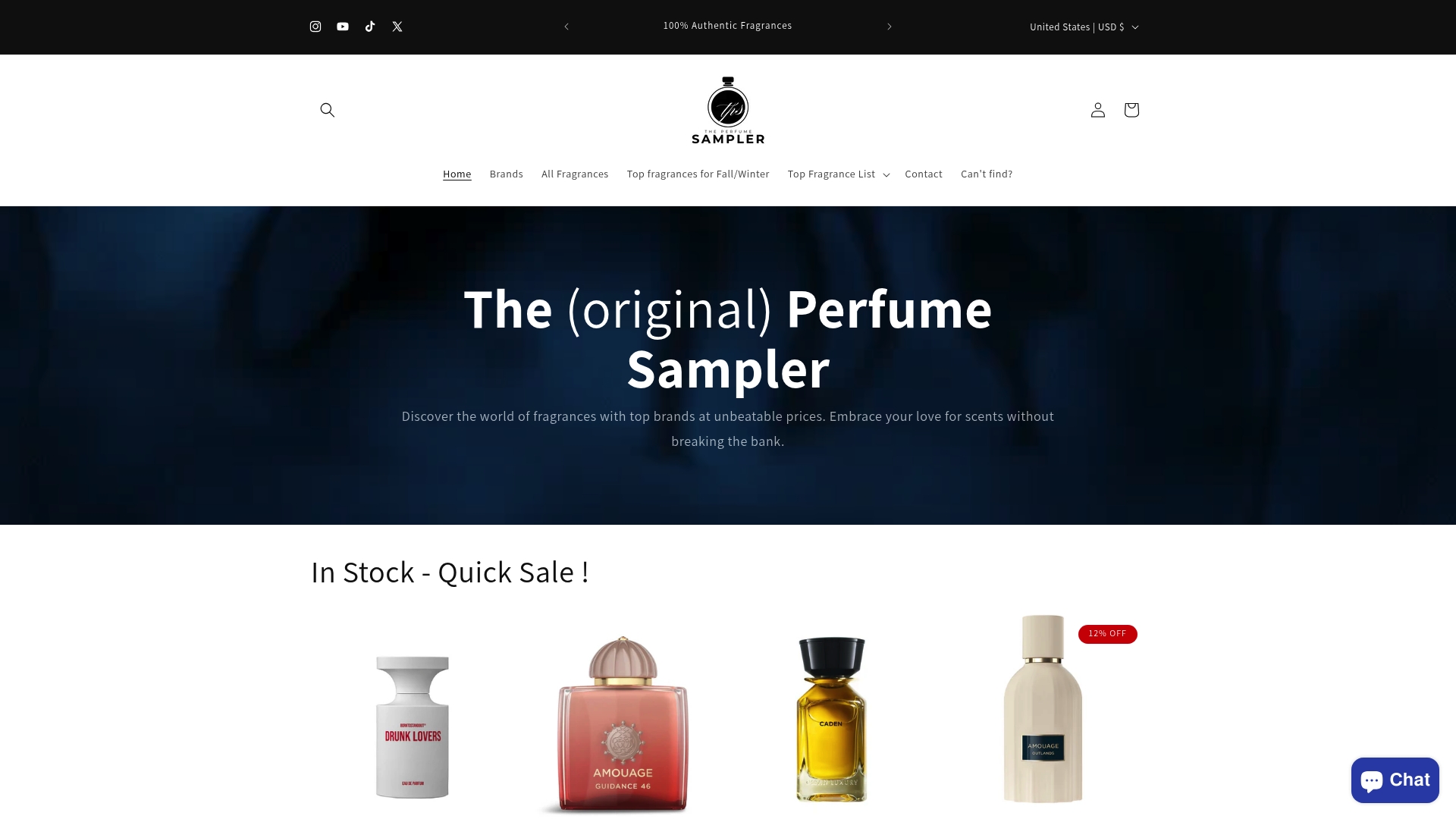
Curated oud discovery sets are the easiest starting point if you’re not sure which style suits you yet, while single decants work well once you’ve narrowed your shortlist. Some samples come with an authenticity guarantee similar to full bottles, so you’re less likely to worry about the genuineness of what you’re wearing. Browse the full fragrance catalogue to see current oud decants and sets, and once you’ve found the one that earns repeated wear, the matching full bottles are ready when you are.
Sources
- How To Choose the Best Oud Perfume?
- A Beginner’s Guide To Oud Perfume: How To Choose, Wear, And Love Oud
- What Is Oud? A Complete Guide from Dubai’s Perfumers – The Scent Library
FAQ
Where can I find oud samples?
You can find oud samples through independent decant retailers such as Theperfumesampler, brand-specific discovery sets, and niche-house sampler shops. Independent decant sellers usually offer the widest range across brands, in sizes from 2ml to 10ml, which makes them the most practical starting point.
What is the best-smelling oud perfume?
There’s no single “best” oud, since preference depends heavily on whether you enjoy softer blended styles or bold, smoky single-origin oud. Beginners are generally advised to try blended oud fragrances like oud-rose or oud-amber first, since these show oud’s character without overwhelming an untrained nose.
Can Muslims wear oud?
Yes, oud has deep roots in Middle Eastern and Islamic culture and is widely worn across the Muslim world for both religious occasions and daily use. Its long history as a valued fragrance material in the region makes it one of the most culturally significant scents in perfumery.
Which brand of oud perfume is best?
No single brand suits every wearer, since oud ranges from gentle designer blends to intense niche single-origin oils. Sampling across several brands in small decant sizes, rather than committing to one brand’s full bottle, is the most reliable way to find which house’s interpretation of oud actually suits you.