
Test Smarter: Buy 2ml–10ml Fragrance Samples for Enthusiasts
The best places to buy authentic fragrance samples are specialist decant shops such as Theperfumesampler, brand boutiques and department store counters, subscription discovery boxes, and vetted community swap forums. Each suits a different budget and testing style, but all four demand the same thing before you pay: proof the seller is decanting from genuine stock, not knock-offs.
TL;DR:
- Always verify that fragrance decants come from genuine stock with clear labels, source photos, and explicit authenticity guarantees before purchasing.
- For accurate testing, opt for spray atomisers or decants of at least 3ml, which provide better insight into scent longevity and development than tiny samples.
- International shipping may face delays, restrictions, or extra fees due to perfume’s flammable classification, so confirm seller policies and costs before ordering.
- Free samples are best obtained through brand promotions, store visits, or event engagements, rather than unreliable marketplace listings with vague or no seller information.
- Using small initial sizes for first impressions and gradually moving to larger decants helps prevent bias from insufficient sampling and saves money on full bottles.
Table of Contents
- Where to buy fragrance samples: seller categories compared
- How do you verify a fragrance seller is trustworthy?
- What sample formats and sizes should you actually buy?
- Can you get fragrance samples for free?
- Your first 10 samples: a practical buying plan
- International shipping considerations and availability
- Why sample sizes matter more than people think
- Ready to build your own sample collection?
- Sources
Where to buy fragrance samples: seller categories compared
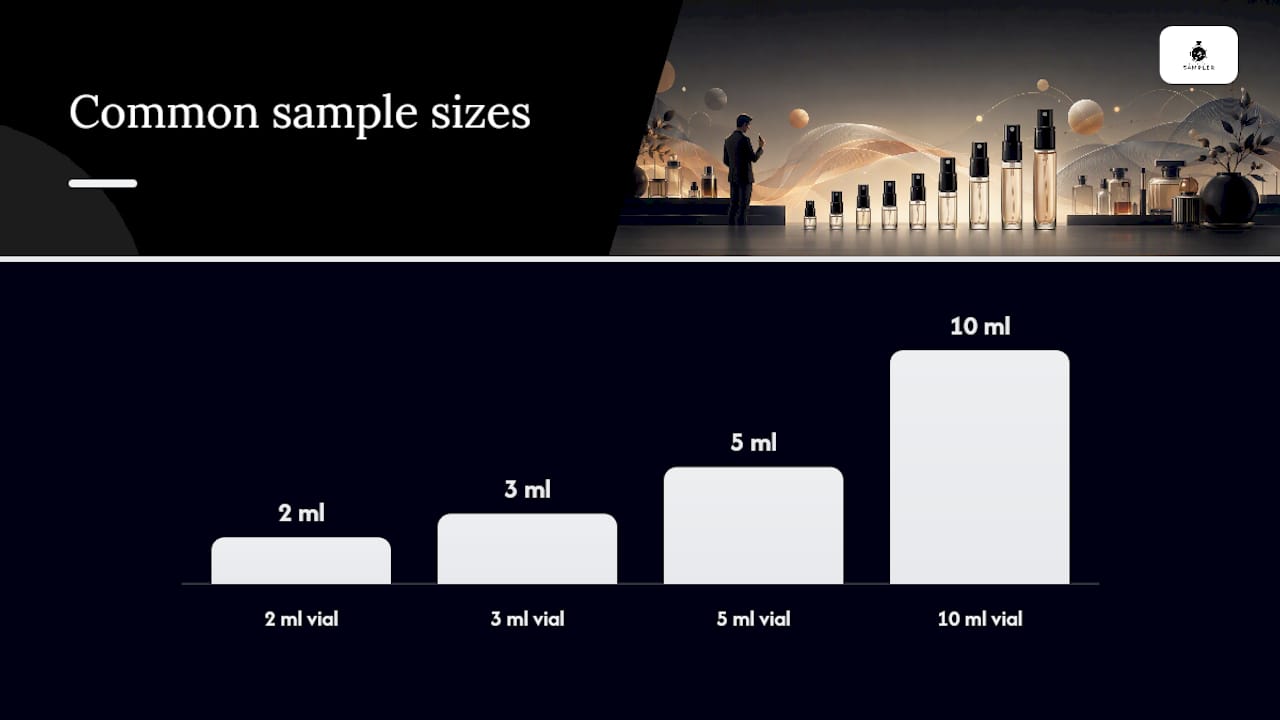
Specialist decant shops are the most consistent starting point. They sell fragrances in 2ml, 3ml, 5ml and 10ml sizes with the volume printed on the listing, which lets you compare price per millilitre before you buy. Prices scale with the fragrance itself, so a niche release costs more per millilitre than a mainstream designer scent, but you always know exactly what you’re paying for.
Brand boutiques and department store counters give you something decant shops can’t: an immediate spritz with no waiting for post. Staff can usually be asked directly for a tester spray, and many counters run gift-with-purchase samples during launch periods. Independent scent bars, like the Scent Bar location in Los Angeles or the scent bar near Elizabeth Street in New York, offer the same in-person testing plus decanting services if you’d rather leave with a vial than a full bottle.
Subscription and discovery boxes suit people who want curation over control. You get a handful of samples picked for you each month, which is convenient but means less say over exactly what lands in the box.
Community swaps and forums round out the list, and long-standing threads such as this guide to buying fragrance samples in the United States collect honest pricing and format advice from enthusiasts who’ve bought hundreds of samples between them. Swaps work well between trusted members but carry more risk with strangers.
- Specialist decant shops: labelled 2ml–10ml sizes, clear pricing, postal delivery.
- Boutiques and counters: free in-person spritzes, no waiting, limited to what’s on the counter.
- Subscription boxes: low effort, curated picks, less control over selection.
- Community swaps: often cheapest, but only as safe as the person on the other end.
General marketplaces without seller specialisation carry the highest counterfeit risk. If a listing has no stated volume, no seller history, and a price that looks too good, treat it as a warning rather than a bargain.
How do you verify a fragrance seller is trustworthy?
Authenticity checking isn’t complicated once you know what to look for, but skipping it is how people end up with diluted or fake juice in a nice-looking vial.
- Check for a stated authenticity guarantee. Reputable decant sellers say plainly that stock comes from genuine bottles, not aftermarket blends.
- Look for clear volume statements. A listing should say 2ml, 5ml or 10ml, not “sample size” with no number attached.
- Read photos closely. Genuine decant sellers usually show the vial next to the source bottle or batch code, not just a stock image.
- Scan reviews for specifics. Reviews mentioning longevity, shipping speed or packaging condition carry more weight than generic five-star praise with no detail, which is a common sign of sock-puppet reviews.
- Confirm the return and refund policy before paying. A seller with no stated policy on damaged or leaking samples is a seller with no accountability.
Packaging tells you a lot too. Professional decants arrive in sealed atomisers or leakproof vials with typed labels, not handwritten notes on a sandwich bag. Community-driven checklists, including the discussion in that Reddit sample-buying guide, consistently point to batch codes and seller photos as the two easiest authenticity checks anyone can do in thirty seconds.
Pro Tip: Before buying from a new seller, search their name plus “review” on a search engine and a forum separately. A seller with only glowing reviews on their own site but silence everywhere else is worth a second look.
Walk away if a seller refuses to state volume, has no return policy, or pressures you to pay outside the platform’s normal checkout.
What sample formats and sizes should you actually buy?
Format matters as much as the fragrance itself. Dabber vials hold a small amount of oil applied with a wand, useful for scent memory but poor for judging how a fragrance projects. Spray atomisers replicate how you’d wear the full bottle and are the better choice for a genuine test. Decants are simply larger refills, usually 5ml to 10ml, poured from an authentic bottle into a smaller vessel. Sample cards, common at counters, are fine for a first impression but tell you nothing about longevity.
A 1ml vial typically gives enough sprays for a single day’s wear test. A moderately sized decant can last several weeks of casual daily testing, which makes it the better buy once you’ve already liked something from a smaller sample. Retailers that list sprays-per-millilitre on their product pages make this maths easy to do before you order.
- 1ml to 2ml: first impressions, three to six sprays.
- 3ml to 5ml: proper longevity and wear testing over several weeks.
- 10ml: confirmed favourites you’re not ready to commit a full bottle to yet.
Keep decants away from heat and direct sunlight. Concentration and packaging quality affect how faithfully a sample represents the full bottle, so a cheaply sealed vial left on a windowsill can smell noticeably different after a month than the same juice fresh from the seller.
Can you get fragrance samples for free?
Free samples exist, but they take a bit more patience than clicking “buy”. Brand websites often run gift-with-purchase promotions where a sample ships alongside a full-size order, and department stores routinely hand out testers if you simply ask a counter associate which spritzes they’d recommend.
- Sign up for brand newsletters around launch periods, when sample giveaways are most common.
- Ask counter staff directly for a spritz rather than waiting to be offered one.
- Watch in-store events and launches, which often include sample bars set up specifically for testing.
- Treat “free sample” listings on general marketplaces with caution. If postage costs more than a paid sample would, it’s not really free.
Your first 10 samples: a practical buying plan
Start small and let the fragrances earn their place in your collection.
- Shortlist five to ten fragrances from reviews or recommendations you trust.
- Order 1ml to 2ml sprays of each to judge first impressions cheaply.
- Expand to a 5ml or 10ml decant only for the two or three that impress you after a full day’s wear.
- Track each one with a date, a short note, and how long it lasted on your skin.
- Move to a full bottle once a decant has survived repeated wears without you tiring of it.
Pro Tip: Keep a simple note on your phone rather than a spreadsheet. Date, fragrance, and one honest sentence is enough to spot patterns after a dozen samples.
International shipping considerations and availability
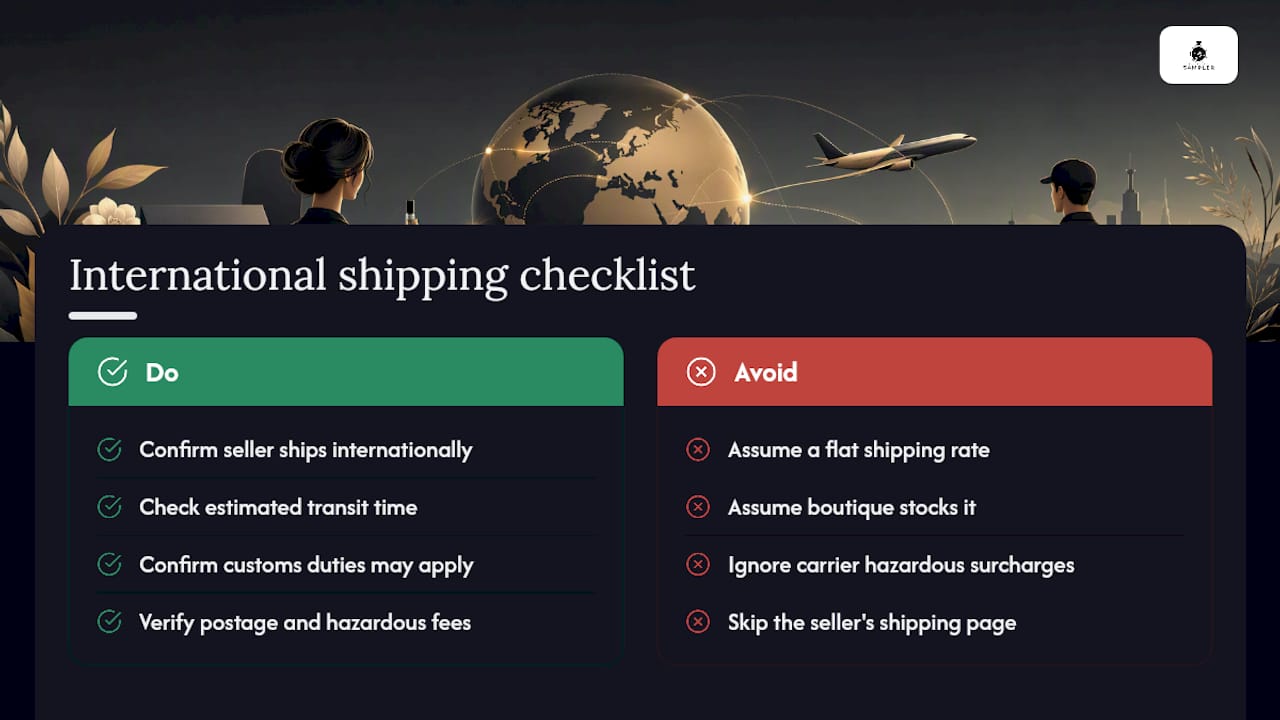
Fragrance samples ship differently to full bottles because of how carriers classify perfume as a flammable liquid. Most specialist decant sellers can ship within the United States without issue, but international orders often face extra restrictions, longer transit times, or carrier surcharges tied to that flammable classification.
Availability also varies by seller. A niche house sold through one boutique might not be stocked by another, so if you’re chasing a specific fragrance, check the seller’s current catalogue before assuming it’ll be there. Postage costs for samples are usually modest given the low shipping weight, but confirm this at checkout rather than assuming a flat rate, since some carriers charge a hazardous materials fee regardless of package size.
If you’re ordering from outside the seller’s home country, check three things before paying: whether the seller ships internationally at all, what the estimated transit time looks like, and whether customs duties might apply on arrival. Sellers that spell this out clearly on their shipping page are generally more reliable than ones that leave it to a vague “contact us for international orders” note. Domestic buyers within the United States have the easiest path, typically facing nothing more than standard postage and the usual few days’ transit.
Why sample sizes matter more than people think
Rupesh’s take on this: most fragrance buyers underestimate how much a wrong-size sample skews their opinion. A single spritz from a card at a counter tells you almost nothing about how a scent develops over six hours on your own skin, yet plenty of people write off a fragrance for life based on exactly that.
The smarter approach treats sample buying as a ladder, not a single decision. Small vials for first impressions, then a 5ml or 10ml decant for anything that survives that first test. Theperfumesampler’s own range of decant sizes reflects that logic directly, offering 2ml through 10ml so a fragrance can be tested properly before you spend full-bottle money on it.
Readers who want the deeper mechanics of picking sample formats should look at the breakdown of affordable scent trial formats, which goes further into vial types than this guide has room for.
— Rupesh
Ready to build your own sample collection?
Some specialist sellers offer a clear, stated authenticity commitment on every decant, poured from genuine bottles and labelled with its exact volume before it ships. No guessing what’s actually in the vial, no digging through seller history to check if it’s legitimate.
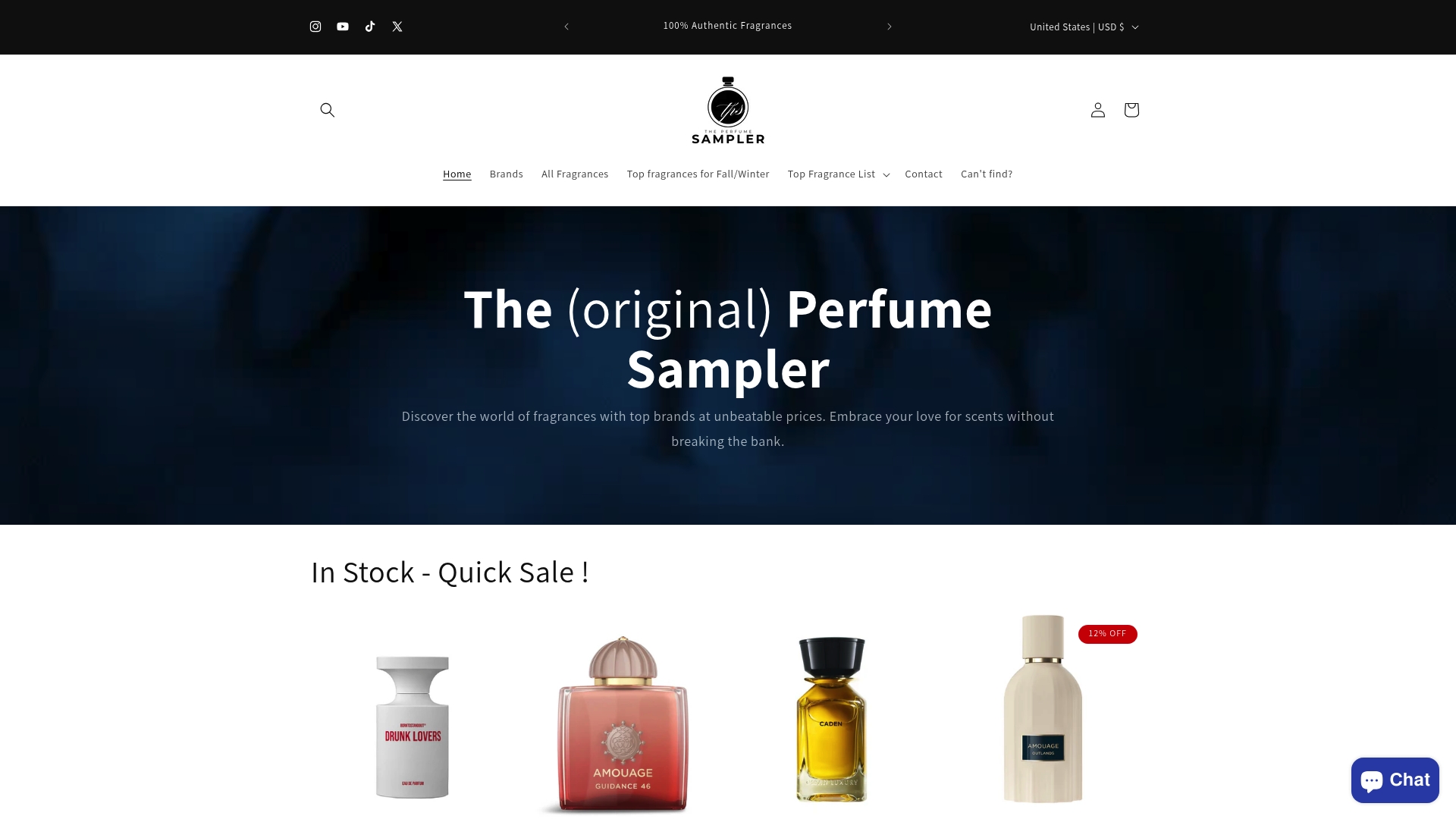
Some sellers offer decants across various sizes with options from niche and designer houses, alongside full bottles for those ready to commit once a sample has proven itself. The why decants page explains sizing and pricing logic in full, and a listing like the BOSS Bottled Absolu Parfum Intense shows exactly how a product page states volume and price before you commit to anything.
Start with two or three small sizes from your shortlist, track how they wear over a few days, and order a larger decant for the one that earns it.