

How to select seasonal fragrance for every time of year
Choose green florals and citrus for spring, aquatics and transparent scents for summer, warm spices and woods for autumn, and ambers or oud for winter. That is the whole principle. The fastest way to act on it is to build a seasonal capsule with one bottle or decant per season, rather than buying full bottles blind.
This week, start small:
- Spray now: a citrus or green floral if the weather is mild to warm.
- Test on skin, not paper: wear it for three hours before judging it.
- Store off-season bottles away from heat, light, and bathroom humidity.
A 5–8 fragrance rotation is the practical sweet spot that most collectors settle on, according to fragrance retailer Perfumegini. Anything larger tends to gather dust rather than get worn.
Key Takeaways
Matching note families to temperature and humidity, rather than to the calendar, is the single most reliable way to choose a fragrance that performs as expected.
| Point | Details |
|---|---|
| Match notes to climate | Green florals and citrus suit spring, aquatics suit summer, spiced woods suit autumn, ambers and oud suit winter. |
| Build a core four | Keep one dedicated fragrance per season rather than a single scent stretched across all conditions. |
| Cap active rotation | Around 5–8 fragrances in active use avoids both repetition fatigue and neglected bottles. |
| Test on skin, not paper | Judge fragrances at the one, two, and three hour marks after applying to a pulse point. |
| Sample before buying full bottles | Theperfumesampler’s 2ml to 10ml decants let you test seasonal candidates affordably before committing to a full bottle. |
Table of Contents
- Why does fragrance change with the weather?
- What are the best fragrance notes for each season?
- How do you build a seasonal fragrance wardrobe?
- How do you test a fragrance for seasonal suitability?
- Do seasonal fragrances actually matter, or can you wear one scent year-round?
- What does the research say about heat and humidity’s effect on fragrance?
- What mistakes ruin a seasonal fragrance rotation?
- A personal take on seasonal scent identity
- Why decants make seasonal testing practical
- Frequently asked questions
- Sources
Why does fragrance change with the weather?
Fragrance is chemistry in motion. Heat speeds up evaporation, so the lightest molecules, your top notes like citrus and aldehydes, burn off fast and hit the nose hard. That is why a scent that smelled restrained in an air-conditioned shop can feel loud on a 30°C afternoon.
Cold does the opposite. Lower temperatures slow diffusion, so heavier base notes cling closer to the skin and projection drops. This is exactly why a fragrance that seems shy in December can bloom unexpectedly in July.
Humidity adds another variable. Damp air holds scent molecules near the skin for longer, which can make heavy orientals feel thick and cloying in summer. Dry heat, by contrast, accelerates evaporation, stripping a fragrance down to its base faster than usual.
- Heat amplifies top notes and shortens their lifespan.
- Cold suppresses projection but preserves heavier notes for longer.
- Humidity traps molecules close to skin; dry air speeds their loss.
- Skin chemistry shifts with sweat, sun exposure, and hydration levels.
One practical insight worth remembering: heat makes lighter molecules evaporate faster, which is precisely why a rich amber that felt perfect in winter can turn cloying the moment the mercury rises.
What are the best fragrance notes for each season?
Matching notes to climate is not about rules for their own sake. It is about physics working with you instead of against you. Certain molecules perform better in certain conditions, and picking accordingly means your fragrance behaves the way you expect it to.
Spring notes and examples
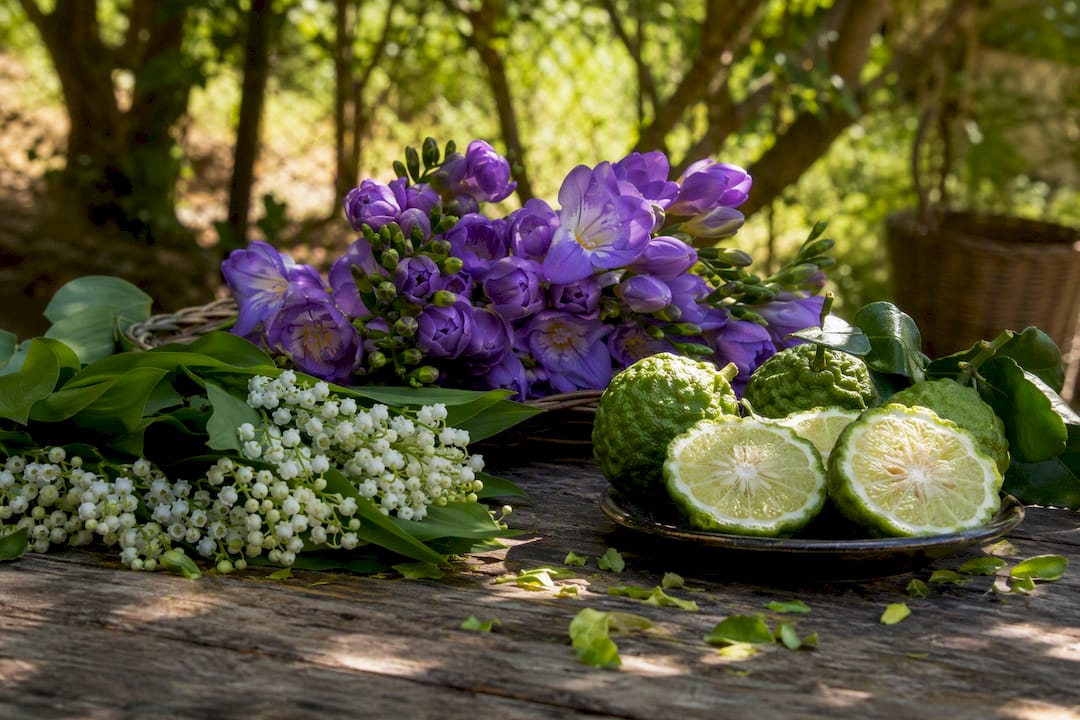
Spring calls for green florals, soft musks, and pale citrus. These notes suit the transitional weather because they are not overpowering when temperatures fluctuate between cool mornings and mild afternoons. Look for lily of the valley, freesia, and bergamot on the notes list. They read as fresh and slightly sheer rather than dense.
Summer notes and examples
Heat rewards transparency. Citrus, aquatic accords, ozonic notes, and light florals hold up because they are already volatile by nature, so they do not need cool air to perform. Bergamot remains a widely used citrus top note in warm-weather perfumery, prized for its immediate lift and perceived freshness. Pair it with neroli or marine accords for something that feels crisp rather than heavy on skin that is already warm.

Autumn notes and examples
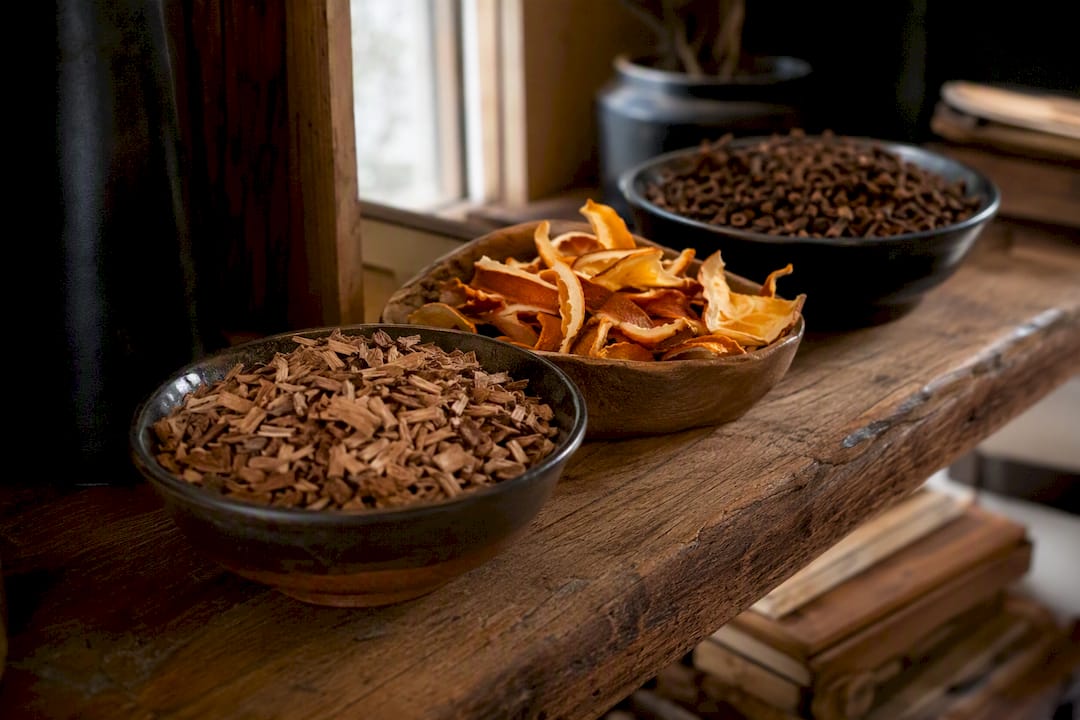
As air cools, warm woods, spices, and gentle gourmands come into their own. Cedarwood, cinnamon, and vetiver suit the season because their heavier molecules need cooler air to avoid feeling suffocating. This is the time to move away from anything overtly sheer.
Winter notes and examples
Cold air demands weight. Ambers, resins, oud, and gourmand notes hold their shape because low temperatures slow their diffusion, meaning you need a denser starting material to get any projection at all. Vanilla, benzoin, and oud all fit here. A fragrance like Boss Bottled Absolu Parfum Intense illustrates the type: rich enough to survive freezing air without vanishing within the hour.
When reading a fragrance description, scan for where a note sits. Top notes (usually citrus, aldehydes, light fruits) tell you about the first ten minutes. Heart notes (florals, spices) show up after 30 minutes and define the character. Base notes (woods, musks, ambers, resins) are what remains after two hours, and they are the real indicator of seasonal suitability. Our guide to personal scent style breaks this down further if you are building a signature scent alongside your seasonal rotators.
Pro Tip: You do not need four separate bottles to feel seasonally dressed. A single well-chosen fragrance can flex across seasons if you apply it more sparingly in summer and layer a heavier body oil or balm underneath it in winter to slow its evaporation.
How do you build a seasonal fragrance wardrobe?
A simple starting point is a seasonal model with one fragrance for each main season. That alone solves most of the seasonal mismatch problem without turning your shelf into a museum.
From there, a rotation of 5–8 fragrances in active use tends to work best. Fewer than that and you risk repetition fatigue; more, and half your collection sits untouched. A boxed seasonal capsule, physically separating what is in use from what is stored, makes decision-making faster and helps you rediscover bottles you had forgotten.
Buying strategy matters as much as note selection:
- Sample before you commit. A 2ml or 3ml decant lets you test a note family across a full day without spending on a bottle you might dislike by hour three.
- Use decants to fill wardrobe gaps. If your collection is heavy on winter ambers but thin on summer citrus, decants let you test several candidates cheaply before choosing one to buy in full.
- Reserve full bottles for proven favourites. Once a fragrance survives a real wear test across a full season, it has earned bottle status. Our full bottle versus sample guide walks through that decision in more depth.
Keep your current season’s bottles visible on your dresser or vanity. Store the rest in a cool, dark cupboard, away from bathroom steam and direct sunlight, so they age slowly rather than degrading before their season comes round again.
How do you test a fragrance for seasonal suitability?
A reliable test takes patience, not guesswork. Follow this sequence and you will know within a day whether a fragrance earns a place in your rotation:
- Blotter first. Spray a strip and note the initial impression, but treat it as a rough guide only. Paper does not react to warmth the way skin does.
- Skin test next. Apply to a pulse point and let it develop uninterrupted for at least 30 minutes before judging the heart notes.
- Take a timed walk. Ten minutes outdoors in current conditions tells you more about projection than an hour indoors under air conditioning.
- Review at the one, two, and three hour marks. Note how the fragrance moves from top to heart to base, and whether it survives the transition gracefully.
On hot days, apply less than usual since heat naturally boosts projection; on cold days, apply slightly more or move application to clothing rather than skin, since fabric releases scent more slowly than warm skin does. Our workflow for perfume note analysis using decants covers this process step by step.
Track three things during every test: how strong projection is at each stage, how long the scent lasts before fading, and whether the notes you smelled on paper actually appear on skin.
- Top note behaviour in the first 15 minutes
- Heart note character between 30 minutes and two hours
- Base note performance after three hours
- Overall longevity and how it compares to the season’s demands
Pro Tip: Test no more than three fragrances in a single sampling session. Your nose fatigues fast, a phenomenon called olfactory adaptation, and by the fourth scent you are essentially guessing rather than smelling.
Do seasonal fragrances actually matter, or can you wear one scent year-round?
Seasonal rotation is not mandatory, but the physics behind it is real. A fragrance built around heavy resins will always struggle in July heat, and a delicate aquatic will always feel thin in January. That said, plenty of people wear one signature scent successfully across all four seasons by adjusting how they wear it rather than what they wear.
Scent, memory, and emotion are closely linked, which is partly why people resist giving up a signature fragrance even when it performs poorly in certain conditions. If a single scent matters to your identity, dosage and layering solve most of the seasonal mismatch: fewer sprays and clothing application in summer, more sprays and skin application in winter.
- One useful benchmark: many people shift seasonal capsules around 24°C (75°F) for summer scents and 13°C (55°F) for winter scents, using overlap weeks either side of the switch rather than a fixed calendar date.
- Layer heavier base notes underneath and lighter top notes on top, since reversing that order lets the heavy base mask anything fresh you have applied over it.
What does the research say about heat and humidity’s effect on fragrance?
Fragrance chemistry is not folklore; there is a measurable basis for seasonal advice. Warm air raises the vapour pressure of scent molecules, which is the technical reason top notes evaporate faster and hit harder in summer, while cold air slows that same process and keeps heavier molecules closer to the skin.
Humidity plays a separate role again: damp air can trap molecules near the skin’s surface, intensifying sillage, while dry heat accelerates their loss into the surrounding air. Editorial coverage on seasonal fragrance choice consistently ties climate and mood together as the two variables worth tracking before you buy.
For further reading:
- Fragrance wardrobe building and seasonal rotation guide, for a fuller breakdown of temperature-led note behaviour.
- How scent, emotion and memory are intertwined, for the psychological side of why certain scents feel “right” for a season.
- Seasonal scent wardrobe guide, for practical mood-matching advice.
What mistakes ruin a seasonal fragrance rotation?
The most common error is wearing full-strength eau de parfum in summer heat, then wondering why the scent feels overwhelming by lunchtime. Reduce your spray count instead. A close second mistake is judging a fragrance from a blotter alone; paper never reveals how a scent reacts to body heat and skin chemistry.
Storing bottles in the bathroom is another quiet killer. Steam and temperature swings degrade citrus and aldehyde compositions especially fast, so keep them somewhere cool, dark, and stable instead.
- Do rotate your visible bottles with the season and box the rest away.
- Do sample before buying a full bottle of anything untested.
- Don’t apply the same dosage in July that you use in January.
- Don’t leave fragile citrus blends anywhere near direct sunlight or steam.
A personal take on seasonal scent identity
You do not need a shelf of twelve bottles to smell “seasonally appropriate”. Four well-chosen fragrances, tested properly rather than bought on impulse, will outperform a large collection assembled without a testing method. That is the whole philosophy behind sampling before committing: buy the miss in 2ml, not 100ml.
Treat these guidelines as a starting point rather than gospel. If a heavy oud makes you happy in August, wear it lighter and enjoy it anyway.
Why decants make seasonal testing practical
Building a seasonal wardrobe by buying full bottles blind gets expensive fast, especially once you are testing four different note families across a year. A 2ml or 5ml decant solves that problem directly: you get enough product for a full multi-hour wear test, on real skin, in real weather, at a fraction of the full-bottle price.
That is the exact workflow this guide has walked through: blotter, skin, outdoor walk, three-hour review. A decant gives you enough volume to run that test properly without gambling on a bottle you might use twice. Theperfumesampler stocks decants in 2ml, 3ml, 5ml, and 10ml sizes across niche and designer houses, so you can test a summer citrus and an autumn woody side by side without committing to either. Read why decants make sense for the full reasoning, then browse the current sample range and start filling the gaps in your own seasonal capsule.
Frequently asked questions
How do I select seasonal fragrance without buying every bottle full-size? Start with decants or samples in 2ml to 5ml sizes for each season, wear-test each one across a full day, and only buy a full bottle once a scent proves itself in real conditions.
How often should I rotate seasonal fragrances? Most people shift capsules around four times a year, guided by temperature thresholds near 24°C for summer scents and 13°C for winter scents, rather than fixed calendar dates.
Can one fragrance work for every season? Yes, if you adjust dosage and application. Spray less on skin in summer, apply more to clothing in winter, and layer a heavier base underneath in cold weather to slow evaporation.
What is the best way to store out-of-season fragrance bottles? Keep them in a cool, dark place away from bathroom steam and direct sunlight. Citrus and aldehyde-heavy compositions degrade fastest under heat and light.
How many fragrances should I keep in active rotation? Around five to eight tends to work well for most collections, balancing variety against the risk of bottles sitting unused for months.
Sources
These references cover the science, the workflow, and the note definitions behind seasonal fragrance choice:
- How scent, emotion and memory are intertwined — and exploited
- Fragrance wardrobe building and seasonal rotation guide
- How to create a perfume rotation schedule
- Seasonal scent wardrobe: your guide to year-round fragrance
- Bergamot orange
Recommended
- The importance of seasonal scents for mood and memory – ThePerfumeSampler
- Guide to personal scent style: build your scent wardrobe – ThePerfumeSampler
- How to optimise scent usage for home and personal wear – ThePerfumeSampler
- What is a fragrance gift guide: choose scents with confidence – ThePerfumeSampler