
Sample First, Decant Second for Perfume Buyers, Shop Tested by Rupesh
A sample is a small, factory-sealed vial made by the fragrance house itself, carrying the exact formula and batch code of the retail bottle. A decant is fragrance poured from a full bottle into a smaller vial by a third-party seller, usually in 2ml, 5ml or 10ml sizes. Use samples to explore new scents cheaply, decants to confirm a serious contender before buying the bottle, and travel sprays once you already know what you’re carrying day to day.
TL;DR:
- Samples are factory-sealed and identical to the full bottle, while decants are poured by third parties from owned bottles, risking slight variations.
- About 10-15 sprays come from every milliliter, making 5ml decants suitable for a week’s worth of testing at a lower cost than multiple samples.
- Decants can lose scent fidelity over time due to oxidation if not stored properly, especially when bottles have been opened or exposed to heat and light.
- Purchasing decants legally depends on proper labeling and provenance; sellers should disclose batch codes and storage details to avoid legal issues.
- Starting with samples for discovery, moving to decants for testing longevity, and then to travel sprays for portability offers the most cost-effective and practical approach for fragrance evaluation.
Table of Contents
- Decant vs sample: definitions and typical formats
- Comparing samples, decants and travel sprays
- When to choose a sample, a decant or a travel spray
- Does a decant smell the same as the bottle?
- Is decanting perfume illegal? The trademark question
- How to test a fragrance properly, step by step
- Rupesh’s expert tips on decanting technique and choosing a seller
- Why we recommend sample-first, decant-second
- Buy authentic samples and decants without the guesswork
- Sources
- FAQ
Decant vs sample: definitions and typical formats
The confusion is understandable because both terms describe small amounts of fragrance, and sellers don’t always use them consistently. Once you know who fills the vial and how, the labelling makes much more sense.
A sample is made by the brand at the factory. It ships in a factory-sealed vial or mini bottle, usually 1ml or 2ml, and it carries the same formula and batch code as the full-size bottle. You’re smelling exactly what you’d get from the counter, at a fraction of the size and cost.
A decant, by contrast, is fragrance transferred from a full retail bottle into a smaller vial or atomiser by a third party, typically in 2ml, 5ml or 10ml. The word itself simply means to pour a liquid from one container into another, which is exactly what a decanter does with a full bottle before selling the excess in smaller portions. Some decants use fine-mist atomisers similar to what you’d find on a designer bottle; others come in simple rollerball or dab vials.

Testers and travel sprays sit slightly apart from both. A tester is typically a full-size bottle used in-store, minus the outer packaging, and it isn’t usually sold to the public in that form. A travel spray is a small, refillable atomiser (often 5ml to 10ml) meant for carrying fragrance day to day, filled either by the brand or by the owner from a full bottle at home.
Here’s the shorthand worth remembering when you’re browsing listings:
- Every decant is technically a sample of the fragrance, but not every sample is a decant.
- Samples come from the brand; decants come from a bottle someone else already owns.
- Travel sprays are about portability, not testing.
- Testers are for in-store evaluation and rarely reach consumers as a standalone product.
Comparing samples, decants and travel sprays
Choosing between them comes down to five practical questions: what you’re trying to achieve, how much juice you need, what it costs per wear, how much authenticity risk you’re carrying, and how it fits in a pocket or bag.
Roughly 10 to 15 sprays come out of every millilitre, depending on the atomiser and how heavy-handed you are with the trigger. A 1ml sample gives you 10 to 15 sprays, which is enough for a single wear or two light tests. A 5ml decant typically provides enough sprays for about a week of daily wear, which is why serious testing often moves to decant size once a scent survives the first sniff.
A few patterns are worth flagging:
- If you’re trying ten fragrances to narrow down a list, samples are the only sane option. Buying ten 5ml decants at once is expensive and mostly wasted, because most scents get eliminated within a day.
- If you’re down to two or three finalists, a decant beats buying more samples. You need to see how a scent behaves after eight hours, in different weather, against your own skin chemistry, and a 1ml vial simply doesn’t hold enough for that.
- If you already know your signature scent, a travel spray refilled from your own bottle is more economical than repeatedly buying decants of something you already own.
The maths tips in favour of decants once you’re past the discovery phase. Buying five separate 1ml samples of the same fragrance to test it across five different days costs more, per millilitre, than a single 5ml decant that does the same job with less hassle and no repeat ordering.
When to choose a sample, a decant or a travel spray
Matching the format to the goal saves money and stops you accumulating a drawer full of half-used vials you’ll never finish.
- Discovery stage: reach for a sample. You want breadth, not depth. A 1ml or 2ml sample tells you within minutes whether a fragrance is worth further attention, and buying a curated sample set lets you cover six or eight scents for less than the price of one full bottle.
- Shortlist stage: upgrade to a decant. Once a fragrance survives the first wear and you’re genuinely considering a purchase, a 5ml decant gives you the days you need to judge longevity, sillage and how it settles on your skin over a working week.
- Confirmed favourite: consider a travel spray. If you already own the bottle or have decided to buy it, a refillable travel spray solves the practical problem of carrying fragrance without lugging a 100ml bottle.
A rough threshold worth adopting: if you find yourself buying a third sample of the same fragrance just to test it again, that’s the signal to move to a decant instead. Two samples for a quick gut check is reasonable; a third suggests you’re already interested enough to justify the bigger size.
Two common strategies work well in practice. The discovery set approach means buying five to eight samples from a single fragrance family (say, woody orientals) to work out which sub-style you actually prefer. The two-step method is simpler: sample first, and only decant the scents that make it past a 24-hour skin test. Both approaches rely on the same documented value of sampling before committing to bigger sizes.

Pro Tip: Keep a simple running list, even a note on your phone, of every fragrance you sample and your one-line verdict. After ten or fifteen samples, patterns in what you actually like start to emerge that you’d never predict from the shop counter.
Does a decant smell the same as the bottle?
A decant should smell the same as its source bottle, but that depends entirely on what happens to the fragrance after it leaves the factory seal. Once a bottle is opened, the fragrance inside starts a slow interaction with air, light and temperature that a sealed sample never experiences.
Oxidation is the main factor. Exposure to air causes the top notes to fade faster and can shift the balance of a composition over months, particularly when the source bottle has been opened and re-opened repeatedly or stored somewhere warm. A decant poured from a bottle that’s been sitting half-full on a sunny windowsill for a year will not smell identical to one poured the week the bottle was opened, even though both technically came from “the same” fragrance.
Signs of poor handling or degraded stock to watch for:
- A noticeably weaker or flatter opening compared to how the fragrance is normally described.
- Discolouration in the liquid, especially a darker amber tint than expected for a fresh formula.
- Leaking or poorly sealed vials on arrival, which suggests careless filling.
- A seller who can’t say roughly when the source bottle was opened or how it’s been stored.
A reputable decant listing should show clear photos of the source bottle, state the batch code, and ideally mention storage conditions. Sellers who can’t or won’t answer basic questions about provenance are the ones to be cautious with, regardless of how attractive the price looks.
Is decanting perfume illegal? The trademark question
Decanting itself isn’t illegal in the United States, but how a seller markets and labels a decant determines whether they’re on solid legal ground. The relevant principle is the first sale doctrine, which generally allows the resale of genuine branded goods once they’ve been legitimately purchased.
The limitation matters more than the permission. Courts have found that first sale protection can break down when a resold product is materially different from the original, or when a seller’s presentation implies affiliation with or endorsement by the brand. A decant, by definition, is no longer in its original packaging, which is exactly the kind of “material difference” that can complicate a straightforward first sale defence.
Legal commentary on the fragrance industry specifically warns that the first sale doctrine isn’t a blanket shield for anyone decanting and reselling perfume. The safest sellers avoid using brand logos or trademarks on their own packaging, clearly label vials as hand-poured decants rather than official products, and never imply they’re an authorised retailer or partner of the brand.
Practical advice for buyers:
- Favour sellers who disclose the source bottle, batch code, and roughly when it was decanted.
- Be wary of any listing using brand artwork, logos or packaging designed to look official.
- Read the legal steps a decant seller should follow if you’re weighing up buying from an independent decanter versus a specialist retailer.
How to test a fragrance properly, step by step
A fair test isn’t about spraying once and deciding. It’s a short routine, repeated consistently, that separates a genuine favourite from something that just smelled nice for the first ten minutes.
- Start with a blotter test. Spray the fragrance onto a paper blotter or strip and give it a minute before you smell it. This tells you the top notes without any interference from your own skin chemistry.
- Apply to skin and watch the first hour. Fragrance behaves differently on skin than on paper, and the first 20 to 30 minutes reveal how quickly the top notes burn off and what starts to emerge underneath.
- Wear it for a full day, more than once. A single wear tells you very little. Repeat the test across two or three different days, ideally in different weather and activity levels, before drawing conclusions.
Keep a simple record each time: number of sprays, time of day, temperature, and any reaction (skin irritation, headache, or simply not liking how it develops after four hours). A consistent routine, same spray count, same application point, same rough conditions, is the single most reliable way to compare fragrances fairly against each other.
For genuinely fair comparisons, apply two candidates to different arms on the same day rather than testing them a week apart from memory. Memory of scent fades fast, and a same-day side-by-side removes most of the guesswork.
Pro Tip: Test new fragrances on days you’re not wearing anything else scented, including strong deodorant or hair product. Competing smells will skew your read on projection and longevity more than people expect.
Rupesh’s expert tips on decanting technique and choosing a seller
Having worked with fragrance formulas as a parfumer, the detail most buyers overlook is how much the atomiser affects perceived quality. A fine, even mist reads completely differently on skin than a coarse spray, even from the identical juice, because droplet size changes how quickly the fragrance evaporates and how the top notes present themselves.
A few things worth knowing before you buy or fill your own decant:
- Fine-mist atomisers generally preserve the character of a fragrance better than basic dab or rollerball vials, particularly for citrus-forward or delicate compositions.
- Good filling technique, using clean syringes and quality atomisers, reduces air exposure during transfer and helps the decant stay closer to how the original bottle smells.
- Open new decants away from direct sunlight and check the seal is intact before your first spray.
- When vetting a seller, look for batch code proof, clear photos of the source bottle, and an honest statement about how and when the fragrance was stored.
Pro Tip: If a seller can’t show you a batch code matching their source bottle, treat that as a hard line, not a minor gap. It’s the easiest authenticity check available and it takes them thirty seconds to provide.
Why we recommend sample-first, decant-second
Most of the confusion we see comes from buyers jumping straight to a full bottle or a large decant before they’ve actually confirmed they like a fragrance beyond the first wear. That’s an expensive way to learn.
The sample-first, decant-second logic matches how fragrance preference actually develops. Start with curated sample sets to explore widely, move to a 2ml to 5ml decant once something earns your attention, and only then think about a full bottle.
— Rupesh
Buy authentic samples and decants without the guesswork
Buyers can find an alternative to gambling on unlabelled listings and mystery vials: some retailers offer fragrances backed by an authenticity guarantee and have positive customer ratings on TrustPilot.
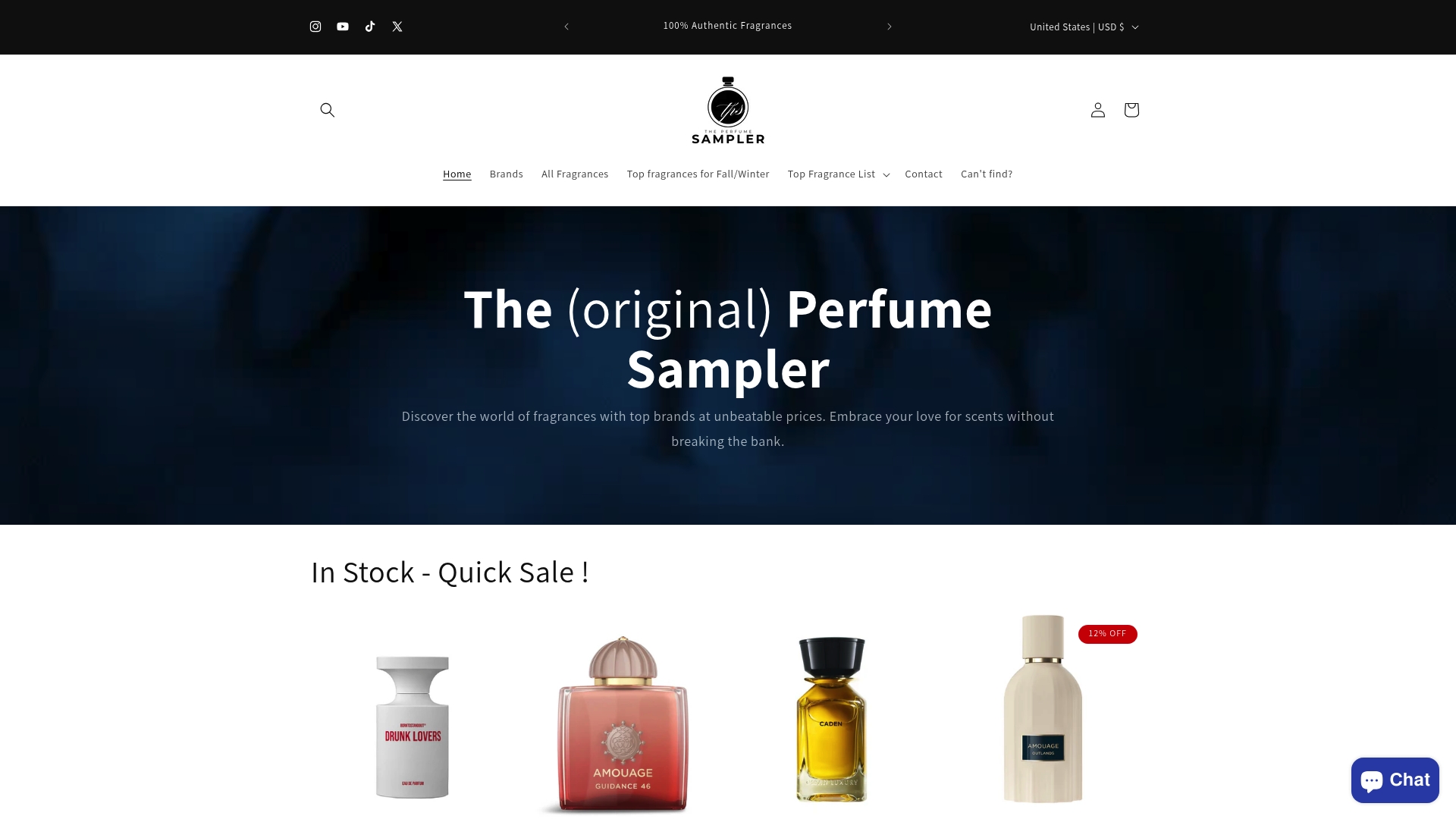
Samples and decants in sizes like 2ml, 3ml, 5ml and 10ml are commonly available, covering both niche houses and established designer names; sizes can be matched to stages like discovery, shortlist confirmation, or readiness to commit. Choosing a seller who discloses provenance and batch codes, rather than an anonymous marketplace listing, removes most of the authenticity risk this article has covered.
If you’re not sure where to start, read why decants make sense for a fuller breakdown of the sizing logic, or go straight to browse all fragrances and pick a shortlist to sample this week. Once you’ve found your favourite, full bottles are available for when you’re ready to commit.
Sources
For a deeper look at the definitions covered here, Gouttes Rares breaks down decant sizing conventions in more detail, while TSS explains why factory samples carry batch code guarantees that decants can’t always match. On the legal side, Loeb’s analysis of fragrance trademark disputes is worth reading in full if you’re considering selling decants yourself. Formulation standards for fragrance ingredients are set by the International Fragrance Association, whose guidance underpins how reputable brands and decanters alike handle safety and labelling.
- Scott Fetzer Company v. House of Vacuums, Inc. (court discussion of first sale doctrine and affiliation/confusion)
- Fragrance fakes & decanting dilemmas: how luxury brands can defend their scents — Loeb legal analysis
FAQ
Is decanting perfume illegal?
Decanting itself isn’t illegal in the US under the first sale doctrine, which generally permits reselling genuine goods. Risk arises when a seller implies brand affiliation or sells a materially altered product without clear labelling.
Does decanting ruin the fragrance?
Decanting doesn’t ruin a fragrance on its own, but poor handling can degrade it over time. Exposure to air, light and heat after a bottle is opened causes gradual oxidation, which is why storage and handling matter more than the act of decanting itself.
How many sprays is a 5ml sample?
A 5ml decant or sample generally provides enough sprays for about a week of daily testing, based on typical spray counts per millilitre, making 5ml a common size for serious evaluation.
What does “decant sample” mean?
“Decant sample” usually refers to a small vial of fragrance hand-poured from a full retail bottle rather than a factory-sealed sample from the brand. It carries the same juice as the source bottle but doesn’t come with the brand’s own packaging or seal.
Should I buy a sample or a decant first?
Buy a sample first if you’re exploring a new fragrance for the first time, since it’s the cheapest way to rule scents in or out. Move to a decant once a fragrance survives your initial test and you want to confirm longevity and skin chemistry over several days, and browse Theperfumesampler’s full range when you’re ready to shop either size.