
Decant Sellers: 5 Legal Steps to Sell Perfume Samples
Perfume decanting for personal use is low risk. Commercial resale sits in a legal grey area: it can be lawful, but only when sellers avoid implying brand affiliation, keep the product unaltered, and meet labelling and shipping obligations. The main risks come from trademark and false association claims, trade dress rules on distinctive packaging, and cosmetics regulation rather than the act of decanting itself.
TL;DR:
- Decanting perfume for personal use is low risk, but commercial resale carries legal risks mainly related to trademark claims, false association, and packaging design.
- Resellers must avoid implying brand endorsement, keep original product information intact, and comply with labelling and shipping regulations under MoCRA to stay within legal bounds.
- Material differences such as packaging alterations, missing batch codes, or product condition changes can void first sale protection and increase legal vulnerability.
- Using the brand name descriptively is generally safe, but any visual or marketing similarity that suggests official affiliation can lead to legal action.
- Maintaining proper documentation, sourcing from legitimate retailers, and following operational and labelling standards reduce the risk of enforcement actions.
Table of Contents
- Which laws govern perfume decant legality?
- First sale doctrine: what it allows and where it fails for decants
- Trademark, false association, and trade dress risks
- Labelling, cosmetics rules, and shipping constraints
- Practical compliance checklist for sellers
- How brands actually respond to decant sellers
- Balancing sampling with compliance: an editorial view
- Sample fragrances the compliant way with Theperfumesampler
- Sources
Which laws govern perfume decant legality?
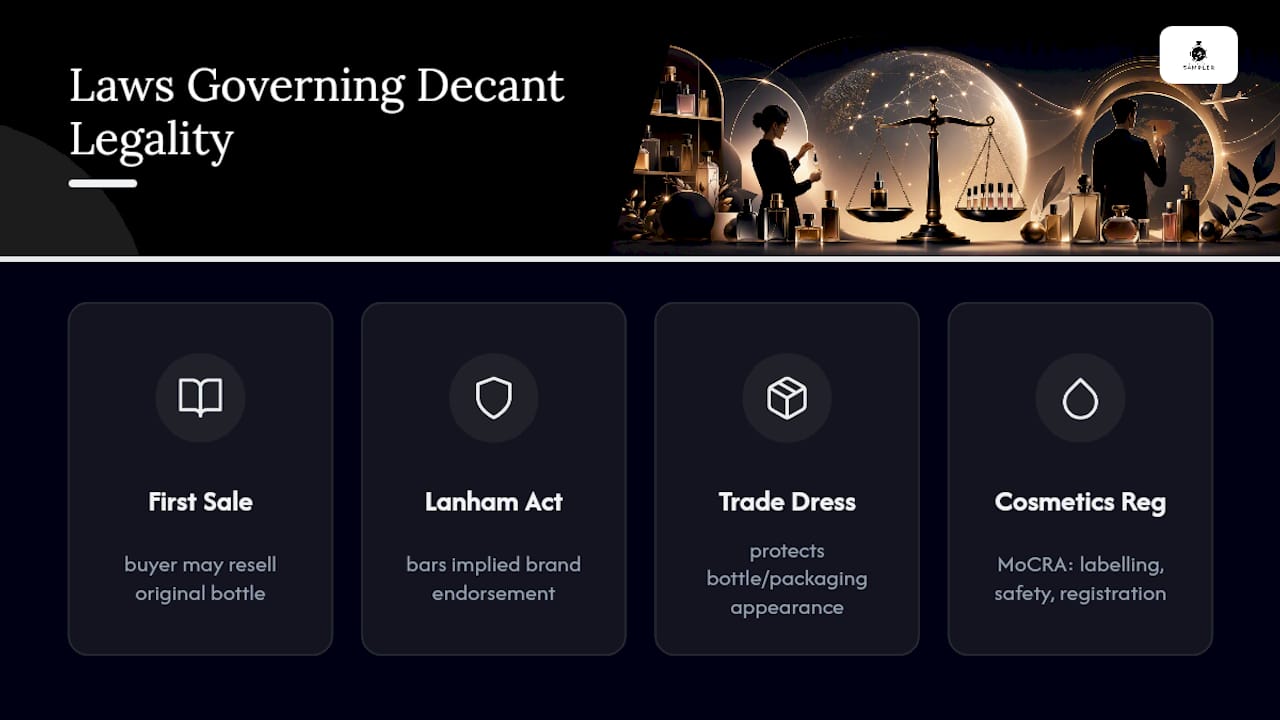
Four legal areas decide whether a decant business stands on solid ground: the first sale doctrine, the Lanham Act, trade dress protection, and cosmetics regulation. Each does a different job, and understanding how they interact matters more than memorising any single rule.
The first sale doctrine is the foundation. Once a brand sells a bottle of perfume, its trademark rights over that specific bottle are largely exhausted, meaning the buyer can generally resell it without the brand’s permission. It is the same principle that lets you sell a used handbag or a second-hand car without asking the manufacturer first.
The Lanham Act governs trademark use and false association in the United States. It stops sellers from marketing decants in a way that implies the brand endorsed, licensed, or produced the repackaged product. This is where most decant legal problems actually originate, not from the resale itself.
Trade dress protects the distinctive look of a bottle, cap, or packaging design, separate from the trademark on the label. Copying a brand’s shape or presentation too closely, even with genuine liquid inside, can expose a seller to a separate claim.
Cosmetics regulation, chiefly the Modernization of Cosmetics Regulation Act (MoCRA) enforced by the FDA, covers labelling, ingredient safety, and facility registration for anyone repackaging a cosmetic product for sale.
These doctrines rarely operate in isolation. A seller might survive a trademark challenge but still face a labelling complaint, because exhaustion under the first sale doctrine does not shield goods that have been materially altered, as explained in the next section. Because exact facts vary by seller, product, and marketing choices, anyone facing a real dispute should treat this article as background, not a substitute for legal advice on their specific situation.
First sale doctrine: what it allows and where it fails for decants
Exhaustion normally means once a genuine bottle changes hands, the trademark owner cannot control its resale. You can buy a full bottle and sell it on, with the original label and packaging intact, largely without issue.
Decanting complicates that picture because you are no longer reselling the bottle as sold. You are opening it, splitting the contents into smaller vials, and creating a new physical product. Courts and legal commentators have generally accepted that first sale permits resale of genuine products but is not absolute; the exception that matters most is the material difference test.
Under this test, a product loses first sale protection when it differs meaningfully from what the brand originally put on the market. For decants, that can include:
- Packaging that no longer matches the original bottle, batch code, or seal.
- Changes to product condition through repeated exposure to air, light, or heat during repackaging.
- Loss of quality control information, such as batch codes that let a brand trace a defective or counterfeit unit.
- Removal of ingredient lists, warnings, or expiry information that originally accompanied the product.
This is why “the liquid is genuine” is not a complete legal defence. A brand can argue that a 5ml vial with a handwritten label and no batch code is materially different from the bottle it came from, even though the fragrance inside is identical. The safest position keeps as much of that original information intact as possible, transferring batch codes onto new labels rather than discarding them, and disclosing clearly that the product has been repackaged.
Trademark, false association, and trade dress risks
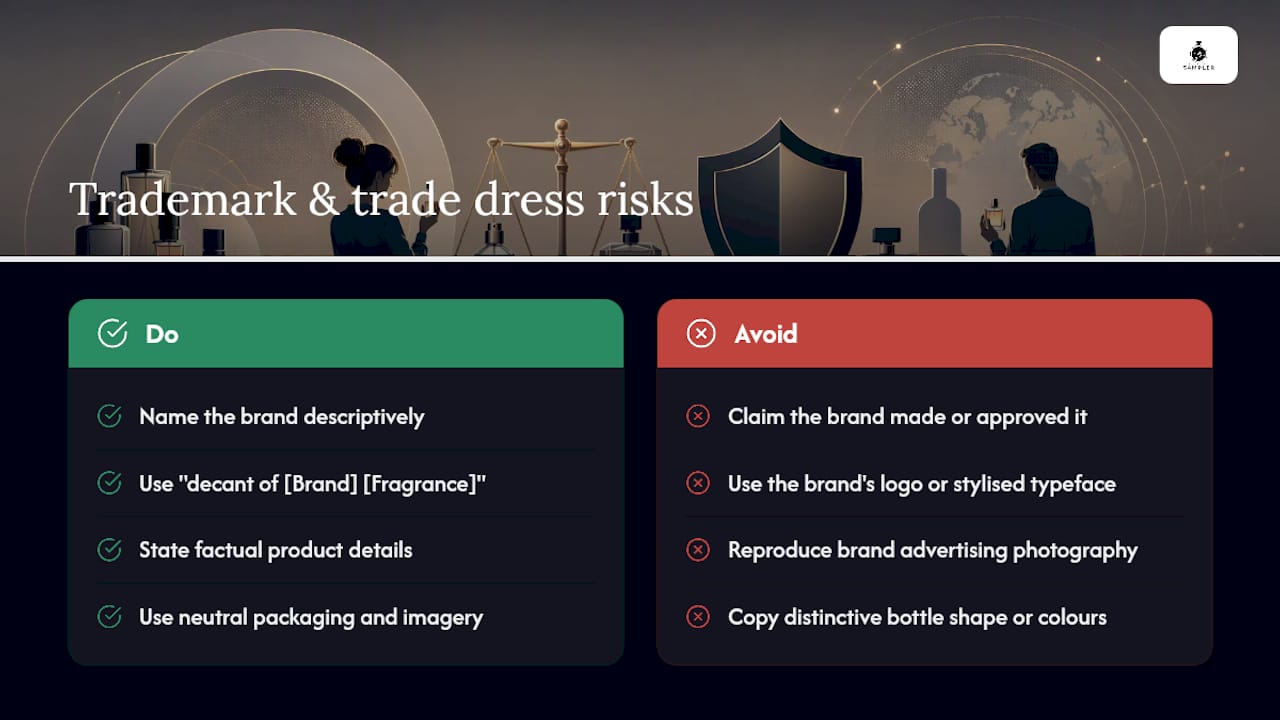
Naming the brand you decanted is usually fine. Suggesting the brand made, approved, or sold the decant is where liability starts.
Descriptive use is the legal safe harbour here. You can say “decant of [Brand Name] [Fragrance Name]” because that is a factual description of what is in the vial. What you cannot do is use the brand’s logo, stylised typeface, or marketing imagery in a way that suggests official partnership. Practitioners note that decanting can harm brand value and prompt enforcement even when the product itself is completely genuine, precisely because presentation implies a relationship that does not exist.
False association claims focus on consumer confusion. If your listing photo, packaging, or storefront design makes a buyer plausibly believe they are purchasing an authorised product, you risk a Lanham Act claim regardless of the fragrance’s authenticity. Phrases like “official,” “authorised retailer,” or reproducing brand advertising photography all raise this risk substantially.
Trade dress protects the distinctive shape, colour scheme, or packaging design of a product, independent of its name. Chanel’s rectangular bottles or Jean Paul Gaultier’s torso-shaped flacon are recognisable enough that copying their look for a decant vial, rather than using neutral packaging, could invite a separate claim. Trademark owners increasingly combine several legal levers at once, pairing a trade dress argument with a false association claim to strengthen their position.
The practical rule: describe, don’t decorate. State facts about the product; avoid visually borrowing the brand’s identity.
Labelling, cosmetics rules, and shipping constraints
Trademark law is only half the picture. Regulatory compliance is often where brands find easier ground to challenge a decant seller, because labelling or safety breaches are simpler to prove than confusion in the marketplace.
MoCRA gave the FDA expanded authority over cosmetics, including fragrance, covering facility registration, product listing, and adverse-event reporting for commercial sellers. If you are repackaging and selling perfume as a business rather than a hobby, these obligations apply to you, not just to the original brand.
A compliant decant label should state:
- The product identity, described accurately (for example, “Decant of [Fragrance Name] by [Brand]”).
- Net quantity in millilitres.
- Your name and contact details as the distributor or repackager.
- A clear repackaging disclosure, stating the product was not filled or sealed by the original manufacturer.
Shipping adds a separate layer of constraint. Perfume is alcohol-based, which classifies it as a hazardous material under most carrier and postal rules. Couriers typically require ground shipping only for anything above a small volume threshold, proper hazmat-rated packaging, and correct labelling on the outer box. Marketplaces such as eBay and Etsy also run their own policies on fragrance listings, and violating a platform’s terms can get a listing removed even where the underlying legal position is defensible.
Practical compliance checklist for sellers
Reducing legal exposure comes down to discipline in five areas: sourcing, labelling, marketing, operations, and recordkeeping.
Sourcing and authenticity. Buy only from legitimate retailers or verified wholesale channels, and keep receipts or invoices as provenance records. Territorial exhaustion rules mean grey-market stock carries extra risk, since first sale protection in one country doesn’t always transfer cleanly to goods imported from another. Documenting exactly where a bottle was first sold matters more than most sellers realise.
Labelling and disclosure. Every vial should name the fragrance descriptively, state net volume, identify you as the repackager, and carry a repackaging disclosure. Templates on trademark risk for online sellers can help you word this correctly, and a practical guide to product trademark risks is a useful reference for descriptive-use wording specifically.
Quality control and batch tracking. Store stock away from heat and light, decant into sealed secondary containers rather than reused vials, and retain the original batch code wherever possible. This isn’t just good practice; it directly supports the material-difference defence discussed earlier.
Marketing rules. Avoid brand logos, official product photography, or language like “authorised” or “official partner.” Descriptive naming only.
Operational compliance. Use hazmat-appropriate packaging for shipping, check your chosen marketplace’s fragrance policy before listing, register for sales tax where required, and monitor MoCRA obligations if you’re operating at commercial scale.
Recordkeeping. Keep sourcing invoices, batch records, and correspondence for at least as long as your return or complaint window. If you receive a cease-and-desist or takedown notice, don’t ignore it or panic. Preserve every document, adjust the listing that triggered it, and consult a trademark attorney if the brand disputes your right to sell at all.
Pro Tip: Buyers can spot the same authenticity red flags sellers should avoid creating. A guide on spotting counterfeit luxury goods is worth reading from both sides of the transaction, since the checks a savvy buyer runs are exactly what a compliant seller should be able to answer confidently.
How brands actually respond to decant sellers
Most enforcement starts small. A brand’s legal team typically sends a cease-and-desist letter first, often citing trademark misuse or a labelling failure rather than the decanting itself. Marketplace complaints to platforms like eBay or Etsy are common too, since a takedown request is faster and cheaper for a brand than litigation.
Scale matters enormously here. Small hobbyist resellers moving occasional vials often go unenforced, while sellers running dedicated storefronts, using brand logos, or sourcing from grey-market channels attract far more attention. Evidence of deliberate branding imitation is the strongest trigger for formal action.
If you’re targeted, preserve every document related to sourcing and the disputed listing, revise anything that uses brand imagery or implies affiliation, and speak to a trademark attorney before responding formally. Most disputes resolve through a modified listing, not a courtroom.
Balancing sampling with compliance: an editorial view
The instinct to treat decant legality as a simple yes or no question misses what actually protects a business: the gap between “technically permitted” and “safe to run at scale” is filled entirely by operational discipline, not by finding a clever legal loophole.
What surprises most new sellers is that trademark law is rarely the thing that ends a decant business. It’s the boring stuff: a missing repackaging disclosure, a shipment sent without proper hazmat packaging, a listing photo that borrows official product imagery without meaning to. Theperfumesampler’s approach reflects that reality directly, offering decants across 2ml, 3ml, 5ml, and 10ml sizes with sourcing and labelling practices built around provenance rather than shortcuts.
The businesses that survive scrutiny aren’t the ones with the best legal argument. They’re the ones with the cleanest paperwork.
— Rupesh
Sample fragrances the compliant way with Theperfumesampler
Every risk covered above traces back to one thing: how a decant is sourced, labelled, and presented. Theperfumesampler runs on exactly that discipline, selling niche and designer fragrance samples in 2ml, 3ml, 5ml, and 10ml sizes, alongside full bottles for anyone ready to commit to a signature scent.
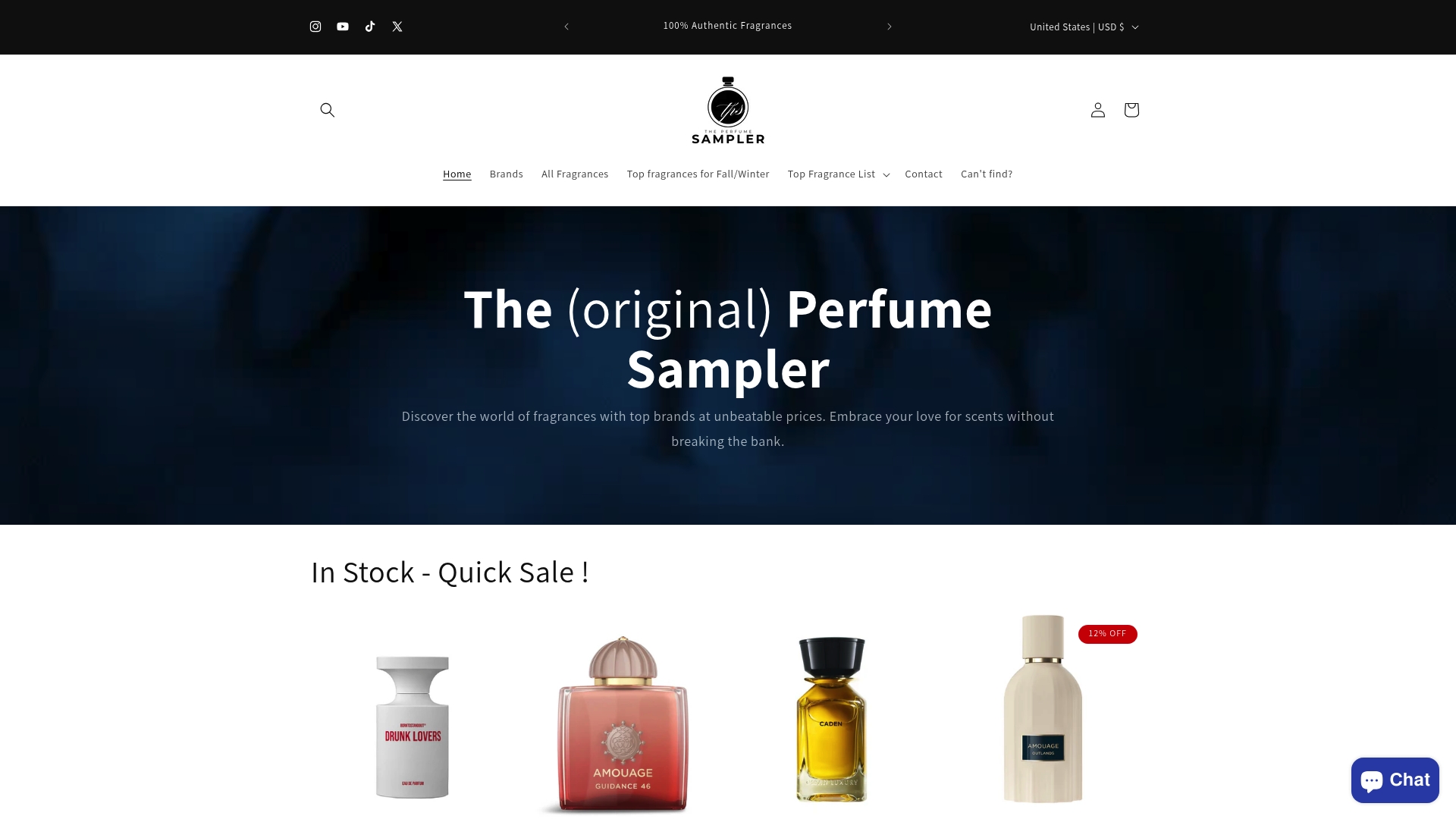
Every decant is drawn from genuine stock, sized clearly, and labelled so you know precisely what you’re getting, no guesswork about authenticity or volume. If you’re curious why sampling beats buying a full bottle blind, the why decants page walks through the reasoning in full. And if you already have a fragrance in mind, the Boss Bottled Absolu Parfum Intense page shows exactly how sample and full-bottle options sit side by side. Start with a sample, decide with confidence, and buy the full bottle only once you know it’s right for you.
Sources
- Fragrance fakes & decanting dilemmas: how luxury brands can defend their scents
- Is decanting perfume legal? Personal use vs. selling — LegalClarity
- The scent of confusion: how smell-alikes and decanting practices threaten luxury fragrance brands