
Why 5ml Decants Cost More Per Ml for US Buyers and Small Sellers
Decant pricing comes down to one core calculation: divide the full bottle price by its volume in millilitres, multiply by the decant size, then add the seller’s costs. That last part explains why a 5ml decant almost always costs more per millilitre than the full bottle it came from. Packaging, labour, waste and authentication checks all sit on top of the baseline maths.
TL;DR:
- Smaller decants, especially 2ml and 5ml sizes, have a disproportionately higher effective per‑ml price due to fixed costs like packaging and labor.
- Sellers justify markups beyond the baseline cost by accounting for packaging, authentication, theft risk, shipping, and demand for rare or discontinued fragrances.
- The baseline per‑ml cost is calculated by dividing the full bottle price by its volume, but real costs vary significantly based on decant size and seller practices.
- Shipping regulations require secure packaging, hazard labels, and surface-only shipping methods, all of which increase the final decant price especially for international or air shipments.
- Buyers should request a detailed cost breakdown from sellers and compare the per‑ml baseline before judging whether a decant price is fair.
Table of Contents
- The simple pricing formula and how to use it
- What sellers add on: the cost drivers that justify a markup
- Worked examples: pricing 2ml, 5ml and 10ml decants from a common bottle price
- Legal, labelling and shipping essentials sellers must follow
- How ThePerfumeSampler sets decant prices
- When a decant makes sense and when to buy the bottle
- How to get started with affordable decants
- Sources
- FAQ
The simple pricing formula and how to use it
The starting point for any decant price is the per‑ml value of the original bottle. Take the retail price of the bottle, divide it by the bottle’s volume in millilitres, and that gives the baseline cost per millilitre. Multiply that figure by the decant size, and you have the raw material cost before anything else is added.
A seller pricing a single decant typically works through the same steps each time:
- Find the full bottle’s retail price and its stated volume in millilitres.
- Divide the price by the volume to get the per‑ml baseline.
- Multiply the per‑ml baseline by the decant size (2ml, 5ml or 10ml).
- Add fixed costs: vial, atomiser, label, packaging materials.
- Add a labour allowance for the time spent decanting and quality‑checking.
- Add a small margin that reflects demand, rarity or discontinued status.
- Round the final figure to a sensible retail price.
Rounding matters more than it looks. A vial rarely holds an exact 2.00ml, so sellers usually build in a small tolerance and label the net quantity as sold rather than claiming laboratory precision. eCFR §701.13 permits common or decimal fractions for quantities under 1 fluid ounce and recommends limiting decimal places to two, which is why most listings show “2ml” or “5ml” rather than a longer decimal.
The per‑ml baseline is necessary for comparing two decants of the same fragrance, but it is not sufficient on its own to explain a final price. It tells you what the liquid is theoretically worth. It does not tell you what it cost the seller to get that liquid into your hands safely and legally.
Pro Tip: Always check the per‑ml baseline first, then look for a cost breakdown before judging whether a decant price is fair.
What sellers add on: the cost drivers that justify a markup
The gap between the theoretical per‑ml price and the shelf price of a decant comes from a short list of real costs, not arbitrary padding. Anyone buying decants regularly starts to recognise the pattern once they see it laid out.
- Packaging: vials, atomisers, caps and labels all cost money per unit, and small quantities do not benefit from bulk pricing the way full bottles do.
- Labour and time: decanting is manual work involving careful pouring, cleaning equipment between fragrances, and checking fill levels, all of which takes minutes per unit that add up across a batch.
- Waste: a portion of the liquid in any bottle is unusable once the spray mechanism can no longer draw it up, and that loss has to be absorbed somewhere in the pricing of the decants that were successfully filled.
- Authentication and chain‑of‑custody checks: verifying batch codes, photographing seals before opening, and keeping dated records all take time and add a small cost per bottle processed.
- Inventory and opportunity cost: once a bottle is opened for decanting, it can no longer be sold as new and sealed, so the seller is trading a higher‑value full‑bottle sale for a series of smaller ones.
- Shipping and hazardous materials handling: perfume is flammable, and domestic surface shipping rules mean extra packaging, absorbent material and specific labelling, all of which raise the cost per parcel.
- Rarity and demand: discontinued fragrances, limited editions and scents with strong niche followings command a different baseline than mainstream designer releases, independent of the maths.
None of these costs show up in the basic per‑ml formula, which is exactly why two sellers offering the same fragrance in the same size can land on noticeably different prices. The seller with a lower price has usually cut one of these corners, not found a cheaper bottle.
Worked examples: pricing 2ml, 5ml and 10ml decants from a common bottle price
Working through actual numbers shows how quickly the baseline per‑ml price gets overtaken by other costs, particularly at the smallest sizes. Take a fragrance with a full bottle price of $150 for 100ml, purely as a worked illustration.
The baseline per‑ml price is $150 divided by 100, which equals $1.50 per millilitre. From there, the maths for each decant size looks like this before any additional costs are applied:
The effective per‑ml price on the 2ml decant is more than double the full bottle’s baseline rate, purely because the fixed packaging and labour cost is spread across so little liquid. This is a worked illustration using round figures, not a market average, but the pattern it shows holds across most decant pricing: the smaller the size, the higher the fixed costs weigh per millilitre.
On the label, net quantity should be stated as sold, “2ml” or “5ml”, rather than an unrounded decimal, in line with the fractional labelling conventions in FDA cosmetics labelling rules. The gap between a decant’s effective per‑ml price and the full bottle’s baseline is not a markup trick. It reflects that a 100ml bottle spreads its fixed costs across far more product than an 8ml sample ever does, which is worth understanding before assuming a decant is overpriced.

Legal, labelling and shipping essentials sellers must follow
Decant pricing does not exist in a vacuum. Labelling and shipping rules shape both what a seller can legally claim and what fulfilment actually costs, and both feed back into the final price.
- Net quantity declarations: FDA cosmetics labelling regulations require a clear statement of identity and a truthful net quantity in fluid measure on every cosmetic product, decants included, and there is no federal rule that specifically prohibits selling decants as long as labelling stays accurate.
- Fractional volumes: under 21 CFR §701.13, quantities under 1 fluid ounce can be shown as common or decimal fractions, with decimal places kept to two, which governs how a 2ml or 5ml vial should be labelled.
- Domestic shipping limits: USPS guidance confirms perfume is flammable and restricted, allowing up to 16 ounces per package via surface transport only, with international mail and most air routes prohibited.
- Packaging instructions: USPS Publication 52 sets out specific packaging, labelling and quantity limits for perfume in the mail, including absorbent inner packaging and required hazard marks.
For sellers, this means every parcel carrying a decant needs secure secondary packaging, correct hazard labelling and a surface‑only shipping method, all of which cost more than shipping a non‑flammable item, and none of which are optional extras. A full legal checklist for sellers covers these steps in more depth. Destinations reachable only by air with no surface option are effectively off‑limits for perfume shipments under these rules.
How ThePerfumeSampler sets decant prices
ThePerfumeSampler prices every decant using the same baseline method described above: full bottle price divided by bottle volume, multiplied by decant size, then adjusted for real costs. The sizes on offer are 2ml, 3ml, 5ml and 10ml, alongside full bottles for buyers ready to commit.
- Each price starts from the current retail cost of the full bottle, not a discounted or estimated figure.
- Packaging, labour and an authentication check are factored in before a final price is set.
- Shipping provisions are built into pricing where surface‑only handling applies, in line with USPS packaging rules.
- Every listing carries an authenticity guarantee, so buyers know the liquid in the vial matches the bottle it was decanted from.
Buyers can ask any seller for this kind of breakdown before purchase: baseline per‑ml cost, packaging fee, labour allowance and shipping provision. A seller who can show this openly, rather than quoting a single flat number, is easier to trust.
Pro Tip: Ask a seller to show their baseline per‑ml maths before comparing prices across different listings, since a lower headline price sometimes hides a smaller actual fill.

When a decant makes sense and when to buy the bottle
Decants earn their price when you are testing a fragrance you have not worn before, chasing something rare or discontinued, or buying a gift where a full bottle would be wasted on someone who might not love the scent. In those cases, paying more per millilitre buys certainty before a bigger spend.
A full bottle wins once you know a fragrance is your signature scent and you will wear it down to the last spray, since the per‑ml cost drops sharply at that volume. A typical 2ml decant gives roughly 25 sprays, enough for genuine testing but not for daily wear over months. Match the size to the job: testing calls for milliliters, ownership calls for bottles.
— Rupesh
How to get started with affordable decants
Some sellers offer niche and designer fragrance decants in various sizes, plus full bottles for those ready to commit. Every fragrance carries an authenticity guarantee, backed by why decants make sense as a way to try luxury scents without paying full‑bottle prices upfront.
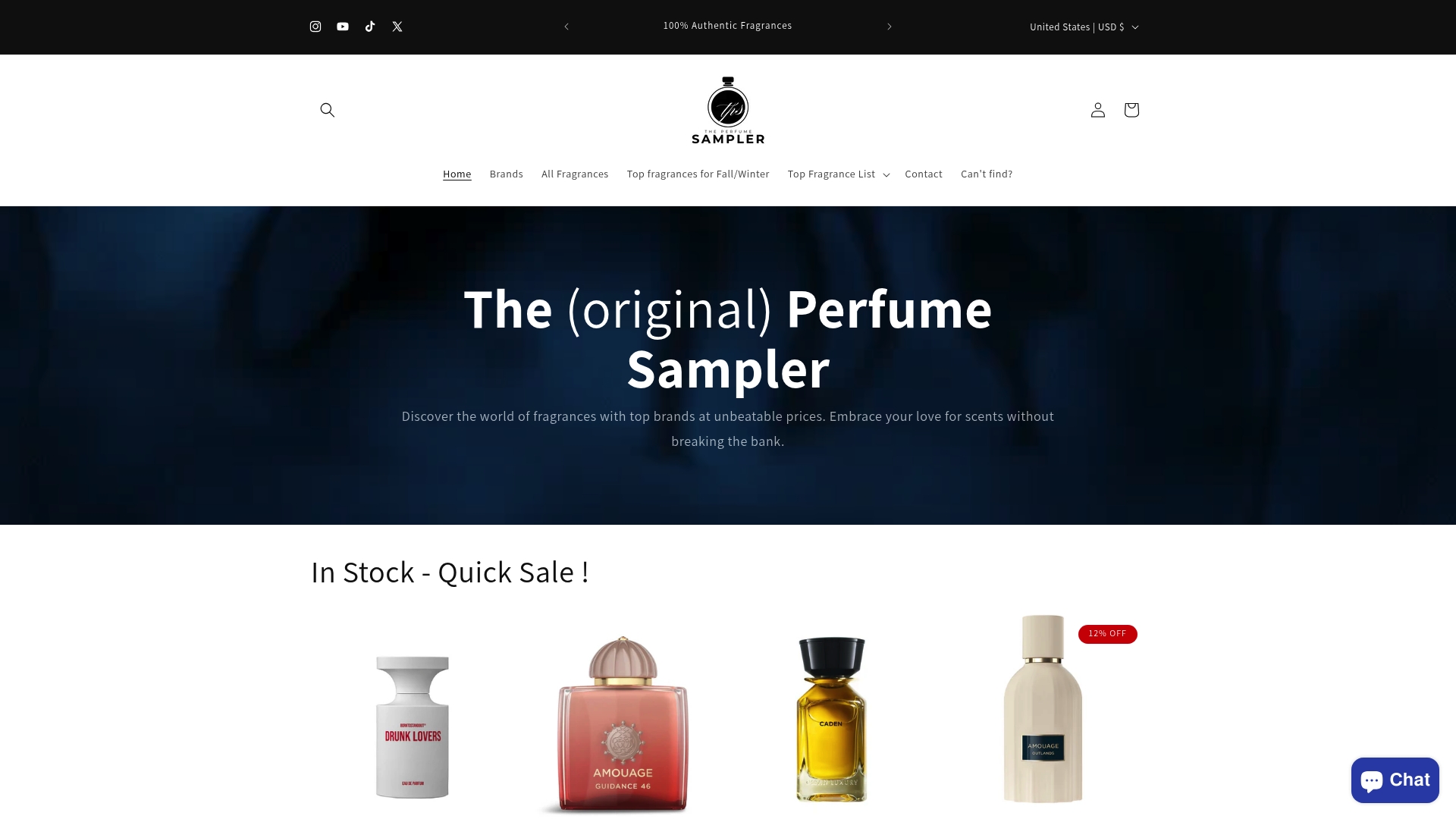
- Browse all fragrances to compare decant sizes across niche and designer brands.
- Move to a full bottle once you have confirmed a fragrance is the one you want to own.
Sources
FDA and eCFR set labelling rules for decants; USPS and Publication 52 govern how perfume can legally ship domestically, both of which shape final pricing.
- Cosmetics labeling regulations | FDA
- eCFR :: 21 CFR Part 701 Subpart B – Package form
- When it comes to shipping this item, these precautions make scents – USPS Employee News
- USPS Packaging Instruction 3B | Postal Explorer
FAQ
What is the 30/50/20 rule for perfume?
This is not a recognised regulatory or industry standard, and definitions vary widely depending on where it is quoted. Treat any claim of a fixed formula like this with caution unless it is tied to a named, verifiable source.
Is decanting perfume illegal?
No federal rule specifically prohibits decanting or reselling perfume samples in the United States, provided sellers meet FDA cosmetics labelling requirements around truthful, accurate net quantity statements. Sellers still need to follow shipping rules for flammable liquids and avoid any labelling that misrepresents the product.
How many sprays is a 1ml decant?
A 1ml decant typically gives somewhere around a dozen sprays, depending on the atomiser and spray volume, making it useful for a quick first impression rather than extended testing. For a size that gives more room to properly evaluate a scent, a 2ml decant offers roughly 25 sprays.
What cologne costs $5000?
Prices at that level are usually tied to rare, limited‑edition or vintage releases from niche houses rather than any single named fragrance, and figures shift constantly with availability. Rather than quoting an unverified figure, check current listings directly with a retailer or the brand for accurate, up‑to‑date pricing.