
Spot Fake Decants Before Paying: 7 Point Chain of Custody Checklist
The quickest way to spot a fake decant is to check the seller and the chain of custody first. Physical checks come second. A genuine decant comes from a seller who can show where the bottle originated, backs the sale with buyer-protected payment, and never pressures you to skip normal checks. Prices far below the going rate, vague answers about sourcing, and refusal to accept card or PayPal Goods & Services are the four fastest red flags.
TL;DR:
- Sellers with poor reputation, vague sourcing answers, or those refusing card or PayPal payments should be avoided, as these are common red flags for fakes.
- Verifying provenance relies on clear source photos, purchase receipts, consistent seller history, and honest responses about decanting origin, rather than visual cues alone.
- Physical cues like an uneven fill level, cloudiness, or sloppy labeling suggest poor handling but do not guarantee authenticity, highlighting the importance of multiple checks.
- Batch codes and QR scans are unreliable indicators on their own, as counterfeiters can copy these details convincingly to mimic genuine packaging.
- Using buyer-protected payment methods like credit cards or PayPal reduces the risk of loss if a decant turns out to be fake or not as described.
Table of Contents
- How to spot fake decants: a seven-point checklist
- How do you verify a seller’s provenance?
- What do fill level and label quality actually tell you?
- Which checks don’t actually prove a decant is real?
- Which payment methods protect you if a decant turns out fake?
- What should you do the moment a decant arrives?
- What reputable decant sellers do differently
- A lower-risk way to buy verified fragrance decants
- Sources
- FAQ
How to spot fake decants: a seven-point checklist
Run through these checks before you commit to any decant purchase, especially from a private seller or a marketplace listing you have not bought from before.
- Seller history. Look for a traceable purchase history, reviews, and a consistent posting pattern rather than a brand-new account with no track record.
- Price test. Compare the price per ml against known retail cost. Pricing dramatically below market rate is a documented warning sign of counterfeit or diluted product.
- Source photos. Ask for a photo showing the decant vial alongside the original bottle it was poured from, not just a stock image.
- Payment protection. Only pay through methods that let you dispute a transaction if the item is not as described.
- Batch code. Treat a matching code as one small piece of supporting evidence, never the deciding factor.
- Fill level and packaging. Check that the liquid level and label quality look consistent with a carefully poured sample.
- Walk-away signals. Payment pressure, evasive replies, or a refusal to answer basic sourcing questions.
Pro Tip: Ask the seller for one photo you did not request in their original listing, such as the source bottle next to today’s newspaper or a handwritten note with the date. A genuine seller can produce this in minutes; a scammer usually stalls.
How do you verify a seller’s provenance?
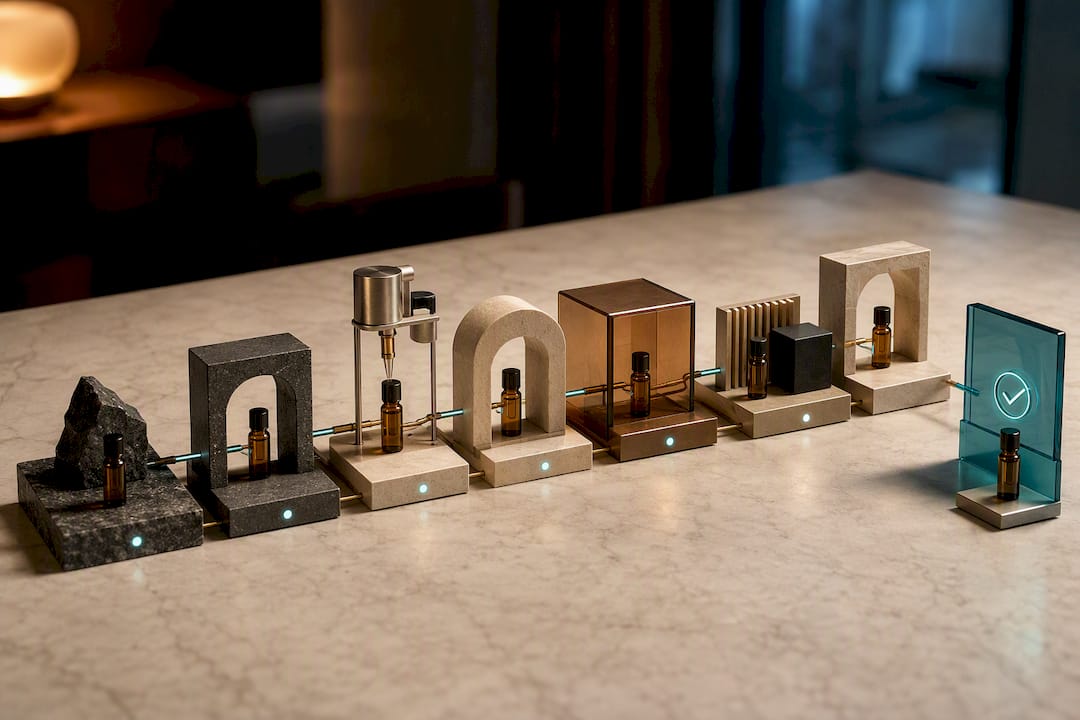
Chain of custody matters more for decants than for a sealed retail box, because the liquid has already left its original packaging. There is no barcode or seal left to check once it is sitting in a small vial, so the seller’s own account of where it came from carries most of the weight. Practical guides on buying decants safely consistently point back to this one factor over any single visual cue.
Acceptable proof looks like this:
- A photo of the decant vial next to the full source bottle, taken by the seller, not lifted from a catalogue.
- A purchase receipt or screenshot from an authorised retailer, with the date visible.
- A consistent selling history on the same account, ideally with prior buyer feedback mentioning that specific fragrance.
- A straight answer to “Where did this bottle come from and when did you decant it?” that does not change between messages.
Red flags run the other way: a seller who cannot produce a source photo, who gives a different origin story to different buyers, or whose account was created days before the listing went live. If the answers feel rehearsed or oddly generic, ask a second, more specific question and see whether the story holds.
What do fill level and label quality actually tell you?
Physical checks will not prove authenticity on their own, but they do tell you something about how carefully a decant was handled, and that is worth reading correctly.
- Fill level. A 5ml vial filled to roughly 4.5 to 4.8ml is normal, allowing for a small headspace. A vial noticeably underbilled, or one that looks topped up unevenly, suggests either dilution or a rushed, careless pour.
- Clarity. Cloudiness, floating particles, or a colour that looks off for the fragrance in question can point to contamination or a formula that has aged badly in storage.
- Label quality. A printed label with the fragrance name, batch reference, and fill volume suggests a seller who treats decanting as a proper process. A handwritten scrawl on masking tape is not automatically fake, but it tells you less.
- Atomiser condition. A leaking spray top or a cap that does not seal properly will affect how the fragrance performs and how it holds up over time, regardless of what is inside.
Reputable decanters generally rely on sterile tools and consistent, printed labelling, and sloppy presentation is one of the more reliable secondary signals that something is off with either the product or the process behind it.
Which checks don’t actually prove a decant is real?
Some checks feel thorough but carry far less weight than buyers assume. Counterfeit fragrance is a large, well-funded industry, and fakes have grown far more convincing at mimicking the details buyers rely on, according to investigative reporting on fragrance authenticity.
- A matching batch code. Codes are printed strings, not encrypted seals, and counterfeiters copy them onto fake packaging with no difficulty at all.
- A QR code that scans. Anyone can generate a QR code linking to a real brand’s website; the scan tells you nothing about the vial in your hand.
- High-resolution photos of the retail box. A crisp photo of the outer packaging proves the seller has access to a photo, not that your decant came from that specific bottle.
- A quick sniff test. Fragrance changes with age, storage temperature, and dilution. A short sniff on arrival will not reliably catch a well-made fake or a heavily diluted pour.
Treat all four as background colour, not evidence, when you’re deciding whether to buy or whether to trust what already arrived.
Which payment methods protect you if a decant turns out fake?
Card payments and PayPal Goods & Services keep a dispute route open if the item never shows up or turns out to be counterfeit. Avoid PayPal Friends & Family, bank transfers, and fast-transfer apps for anything you have not bought from before. The FTC’s guidance on online shopping notes that scammers gravitate toward payment routes that cannot be reversed, precisely because there’s no recourse once the money has moved.
- Confirm the seller accepts a buyer-protected method before you agree on a price.
- Check the platform’s return window and read the fine print on what qualifies for a refund.
- Keep every message, listing screenshot, and payment confirmation in one folder as you go.
- If something feels off after paying, contact the seller first, then escalate to the platform, then your card issuer if neither resolves it.
Pro Tip: Screenshot the listing itself, not just your conversation. Sellers sometimes edit or delete listings after a dispute opens, and a saved screenshot with the price and description intact strengthens your case considerably.
What should you do the moment a decant arrives?
- Photograph the unopened package first, then the opened box, then the vial itself against a plain background.
- Check the fill level and label against what the listing promised, and photograph any batch code visible on the vial or box.
- Compare that code against anything the seller supplied earlier. A match is useful supporting evidence, not proof on its own.
- Test the fragrance over several wears, since dilution or old stock sometimes only shows up once the scent has had time to develop and fade.
- If something doesn’t match, contact the seller within the platform’s stated window, escalate to a platform claim if needed, then involve your card issuer as a final step.
What reputable decant sellers do differently
Careful decanting looks unglamorous but consistent: sterile tools, printed labels, and fill sizes that stay honest across every batch, whether that’s 2ml or 10ml. What separates a trustworthy seller from a risky one is rarely a single dramatic detail. It’s the accumulation of small, boring signals: sourcing that’s stated plainly rather than danced around, a return policy that’s written down rather than promised verbally, and educational content that explains the decanting process rather than just selling the outcome. Buyers who have been burned once tend to gravitate toward established decant services for exactly this reason. An operation with a track record and a public returns policy has more to lose from cutting corners than an anonymous marketplace account does.
— Rupesh
A lower-risk way to buy verified fragrance decants
Everything above points to the same underlying problem: with a private seller, you are trusting a stranger’s word on sourcing, fill accuracy, and what happens if something goes wrong. Theperfumesampler removes that guesswork by selling decants in 2ml, 3ml, 5ml, and 10ml sizes with sourcing that’s stated upfront rather than left for you to interrogate through back-and-forth messages.
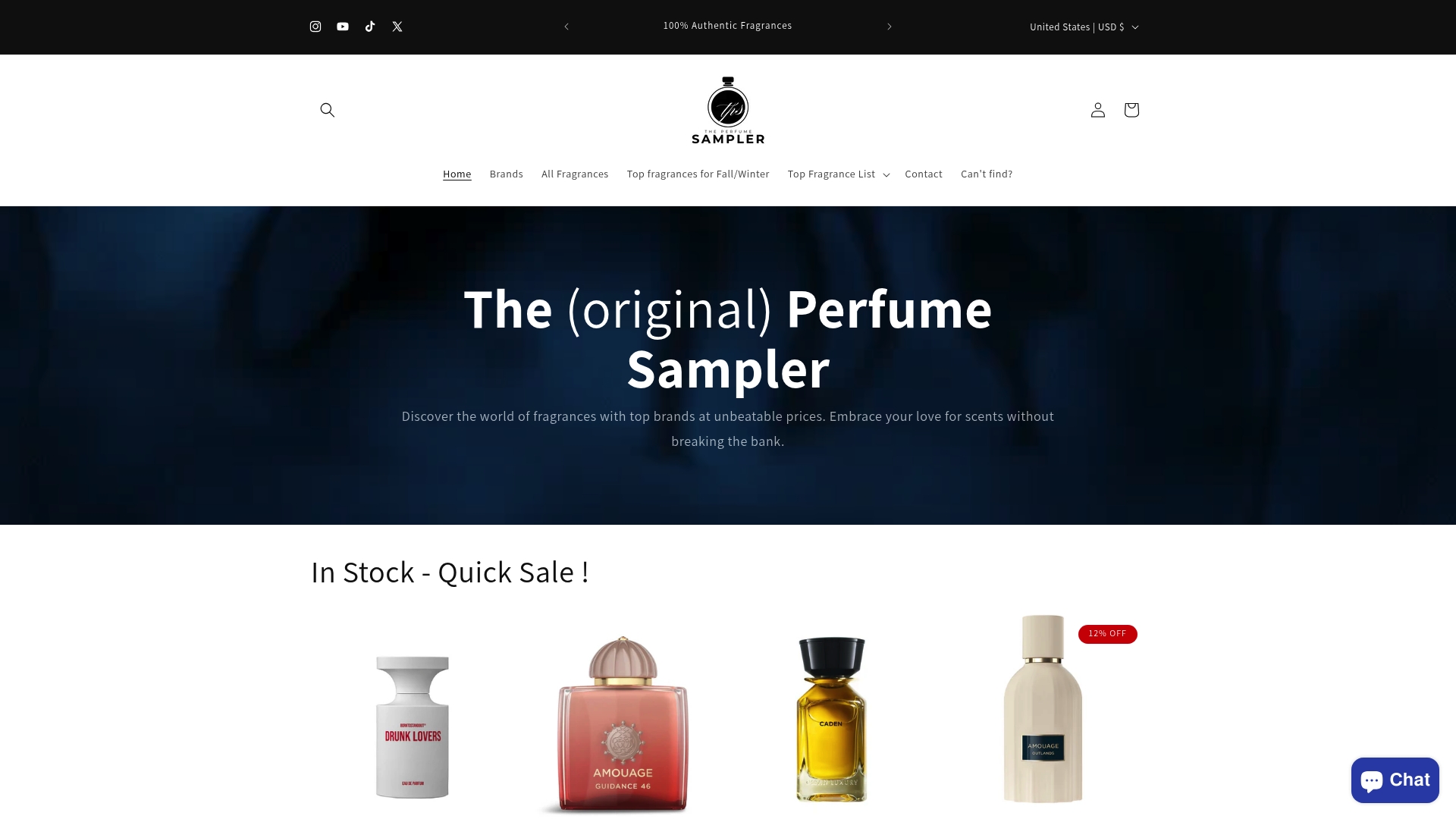
That structure directly answers the risks covered in this article. There’s no anonymous account to vet, no vague provenance story to test, and no payment method that leaves you without recourse. Browse the full fragrance catalogue to try a scent in decant size before deciding whether it earns a place as a full bottle, and check the decanting process if you want to see exactly how a sample gets from bottle to vial before it reaches your door.
Sources
- FBI — Counterfeit cosmetics and fragrances (news story)
- FTC — Online shopping consumer guidance
- Perfume Decant Scam Checks Before You Buy Online
- How to Buy Perfume Online (Without Getting Faked) — MySecretCart
- How Do I Know If a Perfume Sample Is Authentic? | Soocian
FAQ
What are common signs of fake perfume?
Prices well below market rate, cloudy or discoloured liquid, a leaking or loose atomiser, and sloppy or handwritten labelling on what should be a professionally decanted vial.
Can I scan a QR code to see if a perfume is original?
Not reliably. A QR code that scans correctly only confirms it links to a real brand page; it says nothing about whether the specific vial in your hand came from a genuine bottle.
Is buying perfume decants legit?
Yes, decants are a legitimate way to try fragrances in smaller sizes, and services like Theperfumesampler sell them with clear sourcing and standard sizes from 2ml to 10ml. Risk rises mainly with unverified private sellers, not with the concept of decanting itself.
Is there a website that sells fake fragrances?
Counterfeit listings turn up across general marketplaces and social media resale groups, which is why seller provenance and buyer-protected payment matter more than the platform’s name alone.
Does a matching batch code prove a decant is authentic?
No. A batch code can confirm a production date range for a genuine bottle, but counterfeiters copy real codes onto fake packaging, so it only works as supporting evidence alongside seller history and payment protection.