
Cost-saving perfume hacks: smell great for less
TL;DR:
- Smart selection of concentrated Eau de Parfum with appealing base notes reduces cost per wear, making fragrances more affordable.
- Applying perfume directly to pulse points, moisturizing beforehand, and storing in a cool, dark place extend scent longevity and preserve value.
- Using decants and trial-sized samples prevents costly blind buys, enabling a well-curated, budget-friendly fragrance collection.
Perfume is one of life’s genuine pleasures, but full-bottle prices can make building a collection feel out of reach. Luxury fragrances regularly exceed £150 to £200 a bottle, which means one impulse purchase can sting badly. The good news is that a set of practical cost-saving perfume hacks can change how you shop, apply, and store your scents without sacrificing quality or impression. This article covers selection, application, storage, budget-friendly scent solutions, and how to build a collection you will actually use, all without overspending.
Table of Contents
- Key takeaways
- 1. The best cost-saving perfume hacks start with smart selection
- 2. Application techniques that make your perfume go further
- 3. Proper storage is a hidden way to save money on perfume
- 4. Cheap perfume alternatives vs. luxury originals: a direct comparison
- 5. Buying travel-size and sample perfumes to avoid costly mistakes
- 6. Building a fragrance collection on a budget
- My honest take on saving money with perfume
- Try before you buy with Theperfumesampler
- FAQ
Key takeaways
| Point | Details |
|---|---|
| Choose the right concentration | Eau de Parfum lasts longer per wear, lowering your cost per use over time. |
| Apply to pulse points | Spraying skin directly rather than the air wastes up to 80% of each application. |
| Store correctly to preserve value | Heat and humidity degrade fragrance bonds. Cool, dark storage protects your investment. |
| Use decants to avoid blind buys | A 2ml sample provides roughly two weeks of daily use before you commit to a full bottle. |
| Build slowly with a clear strategy | A one-in-one-out rotation and small decants keep your collection affordable and intentional. |
1. The best cost-saving perfume hacks start with smart selection
The most expensive mistake in perfume is buying blind. You pay full price, wear it once, and realise it is not what you expected. Avoiding that scenario is where the best affordable fragrance tips begin.
Start with concentration. Eau de Parfum (EDP) contains a higher concentration of fragrance oil than Eau de Toilette (EDT), typically 15 to 20 per cent versus 5 to 15 per cent. A smaller amount goes further per wear, so the cost per use over a bottle’s lifespan is often lower than a cheaper EDT that fades within two hours. For budget-conscious buyers, EDP is almost always the better choice.
Next, focus on base notes. Base notes like amber, sandalwood, patchouli, and musk provide the depth and staying power that make affordable fragrances smell expensive. Top notes are what you smell in the first spray, but they fade fast. A perfume rich in base notes will carry through a full day and create a lasting impression at a fraction of the cost of a heavily marketed luxury bottle.
- Look for EDPs with amber, musk, or sandalwood as primary base notes
- Choose original affordable lines over mass-produced generic copies for better scent evolution quality
- Read ingredient lists or reviews before purchasing, not just marketing descriptions
- Explore affordable luxury scents from credible sources before committing
Pro Tip: Before buying any full bottle, ask yourself whether the scent works through all three note stages on your skin. Top notes are easy to love in the shop. Base notes are what you live with all day.
2. Application techniques that make your perfume go further
How you apply perfume matters as much as what you apply. Most people spray into the air and walk through the mist. This wastes money. Misting the air wastes roughly 80 per cent of the product per application. Over a bottle’s lifespan, that is a significant loss.
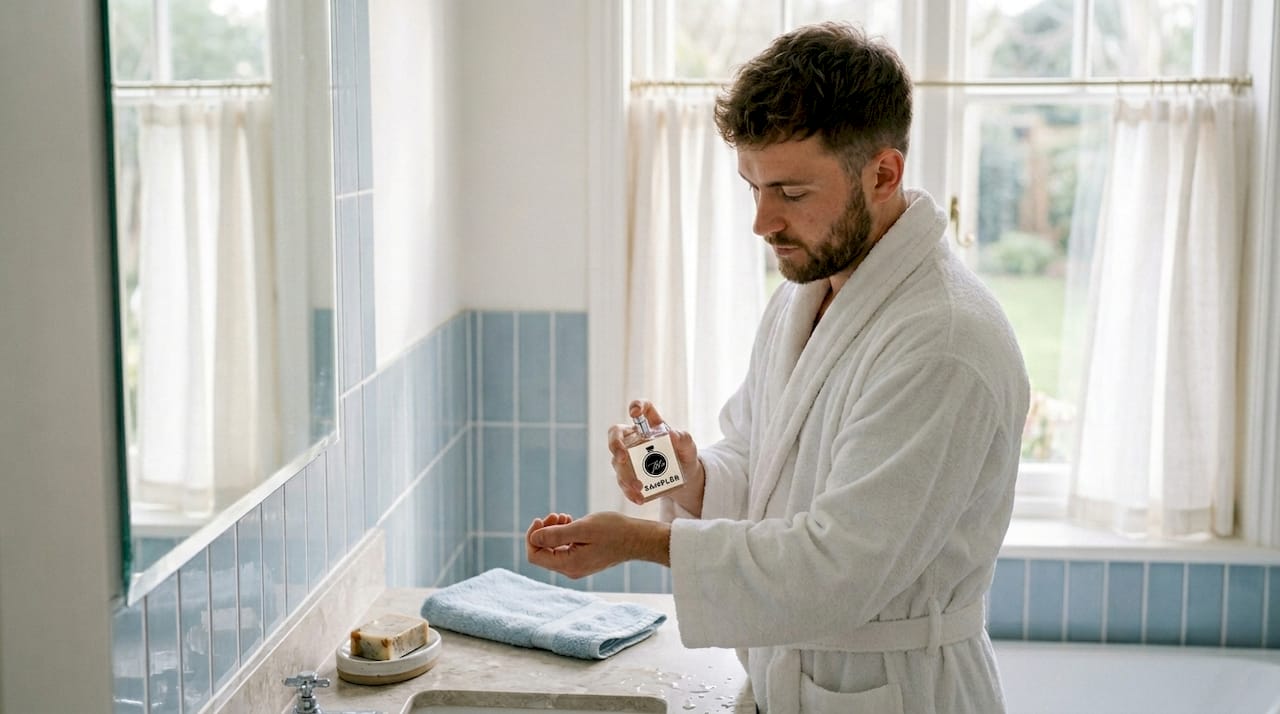
Apply directly to pulse points instead. These are areas where blood vessels sit close to the skin surface, generating warmth that activates and projects fragrance. Key pulse points include the wrists, the base of the throat, behind the ears, the inner elbows, and the backs of the knees.
Skin condition plays an equally important role. Applying unscented moisturiser or a small amount of petroleum jelly to pulse points before spraying traps fragrance molecules against the skin, meaningfully extending how long the scent lasts. This is one of the simplest and most underused diy perfume tips available.
- Moisturise first, then spray directly onto warm skin
- Do not rub wrists together after applying. Rubbing breaks the molecular structure and shortens longevity
- Spray onto hair or the inside of a scarf for longer-lasting scent diffusion throughout the day
- For travel, saturate a cotton pad and seal it in a small container rather than carrying a full bottle
Layering is another powerful technique. Layering heavier base-note fragrances first, then applying lighter scents on top, creates a chemical fixative effect that extends total scent duration and sillage. A budget body lotion in a complementary scent worn under your main fragrance can double its perceived longevity at minimal extra cost.
Pro Tip: Apply your main fragrance immediately after a shower when your pores are open and your skin is clean. Fragrance adheres far better to freshly washed, lightly moisturised skin than to dry or previously perfumed skin.
For a full guide on getting the most from each application, the expert steps on longevity at Theperfumesampler are worth bookmarking.
3. Proper storage is a hidden way to save money on perfume
Most people keep their perfumes on a bathroom shelf or dressing table by a window. Both locations are problematic. Heat and humidity damage fragrance chemical bonds, degrading the scent quality and shortening the usable life of the bottle. Light accelerates this process further. A perfume you paid £60 for that spoils in six months has a far higher cost per wear than one stored correctly and used over two years.
The best storage locations are cool, dry, and dark:
- A bedroom wardrobe or chest of drawers is preferable to a bathroom cabinet
- Avoid windowsills, radiator shelves, and any spot that receives direct sunlight
- Store bottles upright to reduce the surface area of perfume exposed to the small amount of air in the cap
- Keep original boxes where possible. They provide an extra layer of light protection
Minimising air exposure also matters. Each time you spray, a small amount of air enters the bottle. Over time, oxidation alters the fragrance. Using a spray bottle rather than a splash bottle reduces how much air gets in per use. If you decant into a smaller atomiser for daily use, seal the main bottle tightly and open it as infrequently as possible.
4. Cheap perfume alternatives vs. luxury originals: a direct comparison
The dupe market has grown substantially, and some cheap perfume alternatives do a credible job of echoing luxury originals at a fraction of the price. Designer-inspired alternatives can be found for as little as £6 to £15 compared to luxury fragrances costing £200 or more. That is a genuine saving, but there are important caveats.
Most dupe brands use computer-generated scent compositions. They capture the opening impression of a fragrance well, but lack the layered note evolution, the dry-down character, and the sillage of the original. If you want something that smells vaguely similar for a low-stakes occasion, a dupe works. If you want the full experience of a well-crafted fragrance, it will disappoint you.
The smarter middle ground is original affordable lines from credible brands, rather than copies. Here is a direct comparison of popular options:
| Luxury original | Affordable alternative | Price difference | Scent likeness | Longevity |
|---|---|---|---|---|
| Maison Francis Kurkdjian Baccarat Rouge 540 (approx. £280) | Zara Red Temptation (approx. £18) | £262 | High on opening, weaker dry-down | 3 to 5 hrs vs. 8 to 12 hrs |
| Dior Sauvage EDP (approx. £100) | Lidl Suddenly Man (approx. £4) | £96 | Moderate similarity | 2 to 3 hrs vs. 6 to 8 hrs |
| Chanel Coco Mademoiselle EDP (approx. £110) | Zara Gardenia (approx. £16) | £94 | Good opening, less complex | 3 to 4 hrs vs. 7 to 10 hrs |
The table shows that dupes save money on upfront cost but typically deliver half or less of the longevity. On a cost-per-wear calculation over a month, the gap narrows considerably. For a clear-eyed look at what dupes can and cannot deliver, the honest guide to what a dupe perfume is at Theperfumesampler is a useful read.
5. Buying travel-size and sample perfumes to avoid costly mistakes
One of the most practical ways to save on fragrances is to stop buying blind entirely. A 2ml sample provides approximately two weeks of consistent daily use. That is enough time to experience how a fragrance develops on your skin across different weather conditions, activities, and times of day.
Most consumers overestimate how quickly they get through a bottle. A 10ml decant used daily can last two to three months. For many people, that is enough to decide whether the scent suits them before committing to a 50ml or 100ml bottle. The reasons to consider travel sizes before buying a full bottle are clear-cut:
- No expensive blind buy regret
- You can trial multiple scents for the same price as one full bottle
- Smaller sizes are easier to transport and comply with airline liquid restrictions
- Decants allow rotation across seasons without overspending on rarely worn bottles
Theperfumesampler sells genuine designer and niche fragrance decants in 2ml, 3ml, 5ml, and 10ml sizes. For anyone following a budget-friendly approach to fragrance, this model is one of the most practical ways to access luxury scents without full-bottle pricing.
6. Building a fragrance collection on a budget
A fragrance collection does not have to be large to be satisfying. The goal is a small, well-chosen set of scents that cover different occasions and seasons. The one-in-one-out rule is a good starting point: before buying a new bottle, finish or gift the one you use least. This prevents accumulation and keeps spending predictable.
- Start with one versatile EDP that works across multiple seasons. Woody or warm florals suit this role well.
- Add a light, fresh option for warmer months. A citrus or aquatic scent covers daytime and casual settings.
- Use decants to trial candidates before each purchase. Test on skin, not paper strips.
- Set a quarterly fragrance budget and track it. Impulsive fragrance purchases are the most common source of buyer’s remorse in this category.
- Join online fragrance communities. Members frequently share samples, swap near-full bottles, and flag genuine sales.
Pro Tip: Prioritise scents that perform well across multiple occasions rather than niche purchases designed for a single setting. A fragrance you wear three times a week delivers far better value than one you reach for twice a year.
For more guidance on building a collection sensibly, the Theperfumesampler article on why travel-size perfume makes financial sense is worth reading before your next purchase.
My honest take on saving money with perfume
I have spent years watching people make the same expensive mistakes with fragrance. The biggest is prioritising brand names over scent composition. Paying for a famous logo on a bottle is a choice. Paying for quality base notes, proper concentration, and a fragrance that genuinely suits your skin chemistry is a decision. Those are very different things.
The second mistake is underestimating storage. I have seen good fragrances ruined by a bathroom shelf in less than a year. Proper storage is not glamorous advice, but it is one of the most financially sound perfume habits you can build.
On dupes: I respect the appeal, but I would be honest with you. A dupe captures the opening act of a fragrance, not the full performance. If the original is genuinely out of your budget, a dupe is better than nothing. But before you write off the original, try a 5ml or 10ml decant first. The cost per wear often makes the genuine article more accessible than you think.
The most satisfying fragrance collections I have come across are not the largest ones. They are the most considered ones. A few well-chosen, properly stored, intelligently applied scents will serve you far better than a shelf full of half-used bottles you bought on impulse.
— Rupesh
Try before you buy with Theperfumesampler
The single most effective way to put these cost-saving perfume hacks into practice is to stop buying full bottles without testing first.
Theperfumesampler offers genuine designer and niche fragrance decants in 2ml, 3ml, 5ml, and 10ml sizes. You get the authentic scent experience at a fraction of the full-bottle price. Whether you want to trial a new release, rotate across multiple fragrances on a fixed budget, or simply enjoy luxury scents without the luxury price tag, decants are the practical solution. Explore the full range and find out exactly why decants work for budget-conscious fragrance lovers. Or browse options like the Boss Bottled Absolu sample to see the kind of designer access available at accessible prices.
FAQ
How can I make my perfume last longer without spending more?
Apply perfume directly to moisturised pulse points rather than spraying into the air, which wastes roughly 80 per cent of the product. Layering a lightly scented body lotion underneath your main fragrance also extends longevity without extra cost.
Are cheap perfume alternatives worth buying?
Budget-friendly dupes capture the opening notes of a luxury scent but typically lack the scent evolution and longevity of the original. For occasional use they offer good value, but for daily wear the cost-per-use advantage narrows quickly.
What is the best way to store perfume to avoid wasting money?
Store perfume in a cool, dry, dark place such as a wardrobe or drawer. Heat, humidity, and direct light all degrade fragrance chemical bonds, shortening the bottle’s usable life regardless of what you paid for it.
How long does a 2ml perfume sample last?
A 2ml sample provides approximately two weeks of consistent daily use, which is sufficient to assess how a fragrance develops on your skin before committing to a full bottle.
Is Eau de Parfum really more cost-effective than Eau de Toilette?
Yes. EDP contains a higher concentration of fragrance oil and requires fewer sprays per application. Over the lifespan of a bottle, the cost per wear is typically lower than a cheaper EDT that requires reapplication throughout the day.
Recommended
- Why buy travel size perfume: Luxury scents for less – ThePerfumeSampler
- Uncovering perfume prices: What makes fragrance cost vary? – ThePerfumeSampler
- Why professionals wear perfume: confidence, branding, and scent – ThePerfumeSampler
- Key factors for picking fragrance: Affordable luxury scents – ThePerfumeSampler