
The best powdery perfumes to sample before you buy a bottle
The best powdery perfumes right now include Frédéric Malle Iris Poudre, Chanel No. 19 Poudre, Guerlain Insolence, and Dior Homme, each built on iris, vanilla, or musk for that soft, cosmetic warmth fragrance lovers chase. Start with 2ml or 5ml decants rather than full bottles, because powdery scents shift dramatically between the sharp opening and the creamy dry-down. Expect a spectrum from vintage “lipstick” powder to modern, skin-close clean powder.
TL;DR:
- Testing powdery perfumes with decants is recommended because their scent development and longevity vary significantly from bottle to skin.
- Iris, violet, vanilla, heliotrope, and musks create the core powdery accord, with variations influencing whether a scent feels vintage or modern.
- Vintage powder fragrances like Shalimar and Quelques Fleurs suit cool weather and evening wear, while modern clean powders like Like This and Chance Eau Tendre are versatile for everyday use.
- The drydown of powdery scents typically shifts from sharp, cosmetic top notes to a musky, skin-close finish after several hours.
- Proper sampling involves waiting for top notes to settle and testing on skin over multiple wears, especially because initial impressions often misrepresent the drydown.
Table of Contents
- What makes a fragrance “powdery” and how this list was built
- The best powdery perfumes to try first
- Best powdery perfumes by subtype and occasion
- How powdery accords are actually built
- How to sample powdery perfumes properly
- Avoiding common mistakes when buying powdery perfumes online
- Layering powdery perfumes for a personalised profile
- How powdery scents evolve from spray to drydown
- What sampling powdery perfumes taught me to value
- Try these powdery picks affordably through decants
- Sources
What makes a fragrance “powdery” and how this list was built
Powdery perfumes get their signature softness from a specific, recognisable set of raw materials, not a vague marketing category. Iris, violet, rose, vanilla, heliotrope, opoponax resin, and musks are the recurring cast, and the ones you smell depend entirely on which of them dominates the blend.
That’s the standard fragrance industry term worth knowing: perfumers call this family the “powdery accord”, distinct from gourmand, woody, or fresh accords, even though it often overlaps with them. When you see “powdery” used loosely online to describe anything soft or muted, that’s a simplification. A true powdery accord has a specific cosmetic, almost talc-like quality that comes from iris ketones, violet ionones, or heliotrope’s marzipan facet, not just low projection.
The picks below were chosen for wide availability, a clearly identifiable powdery note, and a mix of vintage and modern interpretations, so you get both the archetypes and the contemporary reworkings. Where a scent leans dated or “cosmetic” rather than skin-like, that’s flagged, because it changes who the fragrance suits.
The best powdery perfumes to try first
This shortlist mixes iconic powder bombs with newer, cleaner interpretations, so you can compare the classic style against where the category has moved. Each entry lists the standout powdery note, the surrounding structure, and who tends to wear it well.
-
Frédéric Malle Iris Poudre is the reference point for iris-driven powder, built around orris butter, rose, and vanilla over a soft musk base. It reads as classic and slightly formal, best suited to autumn or winter evenings when you want a scent that feels considered rather than casual. Sample sizes let you test the opening’s sharpness before deciding whether the drydown wins you over.
-
Chanel No. 19 Poudre softens the original No. 19’s green austerity with vetiver, iris, and a rounder musk base. It works for daytime office wear when you want structure without the sweetness of a gourmand powder.
-
Guerlain Insolence leans hard into violet, paired with candied notes and a warm base, making it one of the most recognisably “violet powder” fragrances on the market. It suits cooler weather and evening wear, since the sillage builds slowly but lingers.
-
Dior Homme (original formulation) proved powdery notes work on a masculine frame, pairing iris with cocoa and leather for a scent that’s earthy rather than floral. This is the pick for readers who want powder without any floral sweetness, ideal for autumn office or dinner wear.
-
Chanel Coco Mademoiselle uses a lighter touch, with patchouli and vanilla giving it a warm, slightly powdery finish rather than a dominant iris note. It’s versatile enough for daytime or evening, and its citrus opening keeps it from feeling heavy.
-
Prada Infusion d’Iris is drier and more mineral than most iris fragrances, with orris and cedar creating a cool, almost paper-like powderiness. It reads as understated and works well for office wear across most seasons.
-
Guerlain Shalimar represents the vintage powder bomb archetype, built on bergamot, vanilla, and opoponax resin over animalic musk. It’s polarising by design and best sampled before committing, since the sweetness and heft suit evening wear far more than daytime.
-
Etat Libre d’Orange Like This takes a modern, skin-scent approach to powder, softening iris with musk for something closer to clean laundry than cosmetics. It’s genuinely wearable year-round and appeals to readers who find classic powder bombs too heavy.
-
Byredo Gypsy Water isn’t a pure powder fragrance, but its vanilla and amberwood base gives it a soft, dusty warmth that powder fans often gravitate toward. It works well for casual autumn wear when you want warmth without an overtly floral signature.
-
Diptyque Philosykos offers a green, milky take on powder through fig and coconut-adjacent creaminess rather than iris or violet. It’s an unconventional entry for readers who want the “soft skin” effect without the cosmetic association.
-
Maison Francis Kurkdjian Grand Soir anchors a powdery amber accord with vanilla and benzoin, delivering warmth that reads more gourmand-adjacent than floral. It’s suited to cold weather and evening occasions, given its projection and staying power.
-
Chanel Chance Eau Tendre takes the most mainstream, easy-wearing approach, using iris alongside grapefruit and white musk for a light, everyday powder effect. It’s the pick for readers newer to the category who want to test whether powdery notes suit them at all.
Cross-referencing availability against Fragrantica’s popular powdery releases confirms all twelve remain in active production and easy to source as decants rather than only as discontinued vintage stock.
Best powdery perfumes by subtype and occasion
Powdery doesn’t mean one thing, and the category splits into distinct subtypes with different wearing profiles. Fragrance writers at Cafleurebon trace this back to classic powder bombs like Téint de Neige and Iris Poudre, which established violet powder, rice powder, and rose powder as separate lineages within the same family.
Vintage powder (lipstick style)
- Guerlain Shalimar: opoponax and vanilla over animalic musk, dense and unapologetically retro.
- Houbigant Quelques Fleurs: an older-school floral powder with rose and violet layered thick.
These suit cold weather and evening occasions, since the sweetness and heft can feel overpowering in warm weather or daytime settings.
Modern clean powder (skin-scent)
- Etat Libre d’Orange Like This: musk-forward, closer to soft laundry than cosmetics.
- Chanel Chance Eau Tendre: light iris over citrus, built for everyday wear.
Clean powder works year-round and across genders. Editors covering the category note that many modern powdery releases read as unisex, worn by men and women who want a soft, close-to-skin impression rather than a gendered floral statement.
Floral-powder
- Guerlain Insolence: violet-dominant, candied, evening-leaning.
- Prada Infusion d’Iris: drier, cooler iris with cedar.
Floral-powder suits office wear when the iris is dry and restrained, or evening wear when the violet or rose leans sweeter.
Gourmand-powder
- Maison Francis Kurkdjian Grand Soir: amber, benzoin, and vanilla.
- Guerlain Shalimar (crossover pick): vanilla and opoponax bridge this and the vintage category.
Gourmand-powder is best reserved for autumn and winter, since the vanilla and resin notes tend to feel heavy in heat.
How powdery accords are actually built
The powdery effect comes from a defined shortlist of materials, and knowing them changes how you read a fragrance’s notes before buying. Iris (orris), violet, heliotrope, vanilla, rose, musks, and opoponax resin form the backbone, with each contributing a different texture rather than a generic “soft” quality.
- Iris/orris gives a dry, slightly cosmetic, almost carrot-like facet that reads as the most classically “powder compact” note.
- Violet brings a candied, slightly metallic sweetness, the note behind most vintage lipstick associations.
- Heliotrope adds a marzipan warmth that softens sharper iris or violet notes.
- Vanilla rounds the accord into something creamier and closer to gourmand territory.
- Musks anchor everything else to the skin.
That last point matters more than it sounds. Musks are essential to powdery perfumes because they provide the sensual, earthy base that stops airy top notes evaporating within an hour, giving the accord staying power and a skin-like quality rather than a fleeting dusting of powder.
Modern perfumery leans on synthetics like cashmeran and ambroxan to recreate that skin-close warmth without the heavier, more old-fashioned feel of pure resin bases. This is largely why a 2026 release smells different from a 1980s powder bomb using the same core notes. Editors tracking the shift describe it as a move away from “dated” lipstick impressions toward clean, wearable accords, achieved by pairing iris or violet with lighter woody or musky bases instead of dense animalic resins.
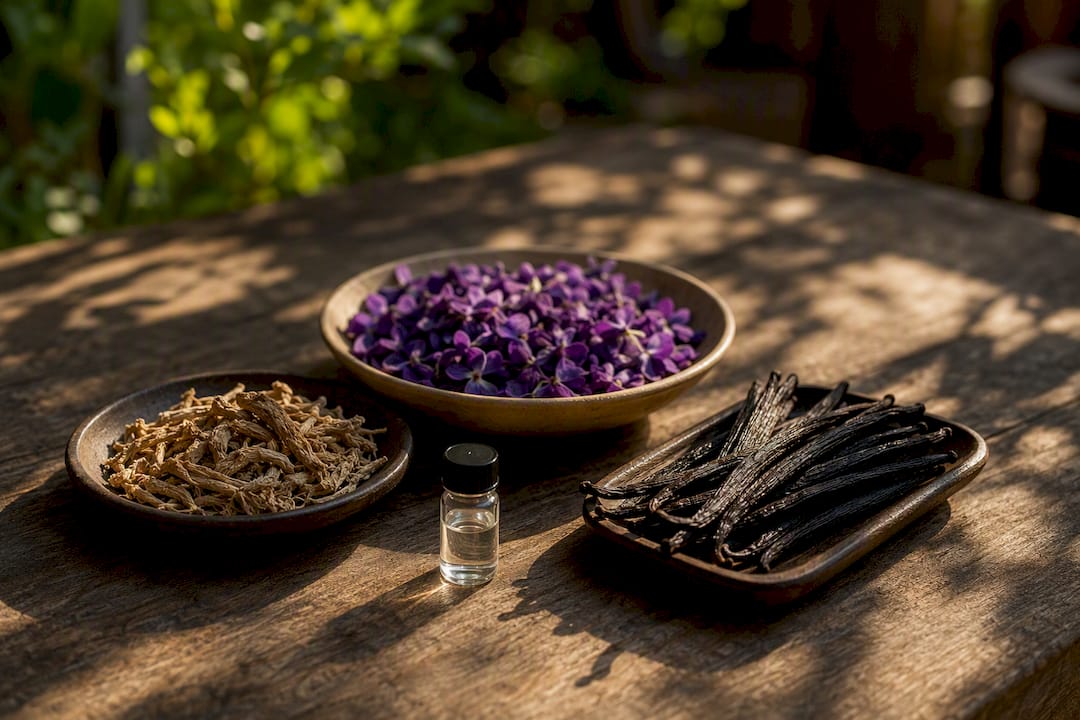
Pro Tip: If a powdery fragrance smells chalky or “cosmetic” rather than warm on first spray, check whether iris or orris is listed high in the notes. Iris-heavy formulas read cooler and drier than violet or vanilla-led ones, and that distinction matters more to how a scent wears than any marketing description.
How to sample powdery perfumes properly
Powdery scents are notoriously deceptive in strength. A fragrance that smells barely-there on a paper blotter can turn into a long-lasting, close-to-skin scent once it meets your body chemistry, which is exactly why sampling matters more here than for most other fragrance families.
- Blotter test first. Spray the decant onto a card and smell it after 30 seconds. This catches an overly sharp or synthetic iris opening before you commit skin to it.
- Wait 15 to 30 minutes. Let the alcohol burn off and the top notes settle before judging anything.
- Apply to skin, not just the blotter. Wrist and inner elbow both work; the inner elbow tends to run warmer and can push powdery notes into fuller bloom faster.
- Track the timeline. Note what you smell at the opening (often a sharp, cosmetic iris or “lipstick” impression), at the one-hour mark (usually a creamier vanilla or heliotrope stage), and at three hours plus (the musky, skin-close drydown that tells you whether this is a keeper).
- Repeat over two or three separate wears. Skin chemistry, weather, and even hydration levels change how powdery accords develop, so one test isn’t conclusive.
A practical decant-based workflow built around exactly this kind of staged testing makes it far easier to separate a fragrance you like on paper from one you’ll actually reach for. Powdery accords also vary structurally: rice- and violet-based powders tend to read more transparent and long-lasting, while iris and orris can turn chalkier depending on the formulation, so the same sampling method can produce very different verdicts across two “powdery” fragrances.
This is precisely why 2ml to 10ml decants suit this category better than blind full-bottle purchases. You get enough volume for three or four proper wear tests without the financial risk of discovering, three hours in, that the drydown reads more talcum powder than you’d hoped.
Avoiding common mistakes when buying powdery perfumes online
Online descriptions routinely oversell how “clean” or “light” a powdery fragrance is, because those words photograph well in marketing copy but say nothing about how the scent actually wears. Cross-check any listing’s note breakdown against the accord families above; if a “light powdery” description hides opoponax or heavy vanilla in the base notes, expect more weight than advertised.
Scent fading is another frequent complaint, particularly with vintage-formula powder bombs bought secondhand. Reformulations happen quietly, and a bottle labelled identically to one from a decade ago can smell noticeably thinner today. Buying a small decant from a current batch sidesteps this problem entirely, since you’re testing what’s actually being sold now rather than trusting an old review.
Watch for retailers using stock note lists copied from a fragrance database rather than the actual product page. If a description reads identically across five unrelated sites, it’s likely generic rather than verified. Favour listings, or a workflow like blind fragrance trials, that let you judge the scent on skin rather than on marketing language alone. Finally, be wary of “dupe” listings claiming to match a designer powder scent exactly; powdery accords are complex enough that near-identical claims rarely hold up past the opening ten minutes.
Layering powdery perfumes for a personalised profile
Powdery notes layer unusually well because their softness leaves room for a second fragrance to add structure without clashing. A common approach is pairing a dry iris fragrance, such as Prada Infusion d’Iris, with something citrus-forward to lift the opening and stop the iris reading too flat or cosmetic.
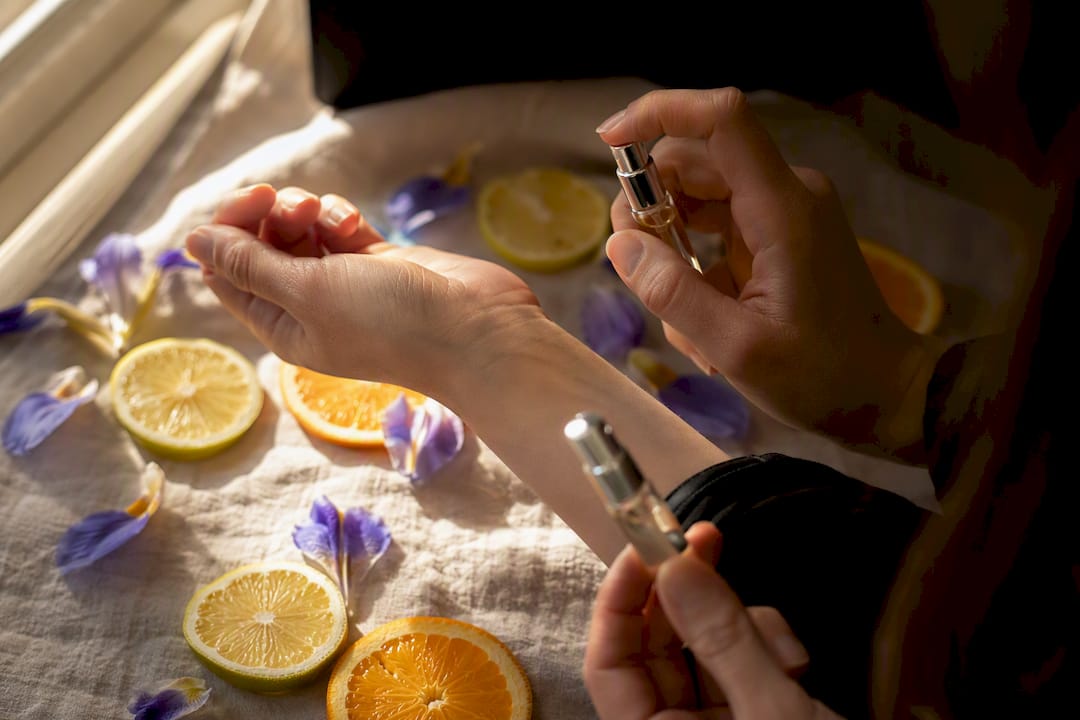
Vanilla-heavy powders like Guerlain Shalimar layer naturally with lighter woody scents, since the wood adds dryness that balances the resin’s sweetness. If you find a violet-dominant fragrance like Guerlain Insolence too candied on its own, a musk-only layer underneath (sprayed an hour before the main scent) can mute the sweetness and push it toward a cleaner, skin-like finish.
The safest starting rule: layer within the same weight class. Pairing two heavy powder bombs usually creates a cloying result, while combining a light, clean powder with a single stronger accent note (a woody base, a soft musk, a citrus top) tends to work more reliably. Testing layering combinations is another strong argument for decants over full bottles, since experimenting with a 60ml bottle of each scent gets expensive fast if the combination doesn’t work.
How powdery scents evolve from spray to drydown
Powdery perfumes rarely smell at the end of the day like they did at the moment of application, and that evolution is arguably the defining trait of the category. The opening frequently brings a sharp, sometimes almost sharp-edged iris or violet note, the “lipstick” impression that gives vintage powder bombs their reputation.
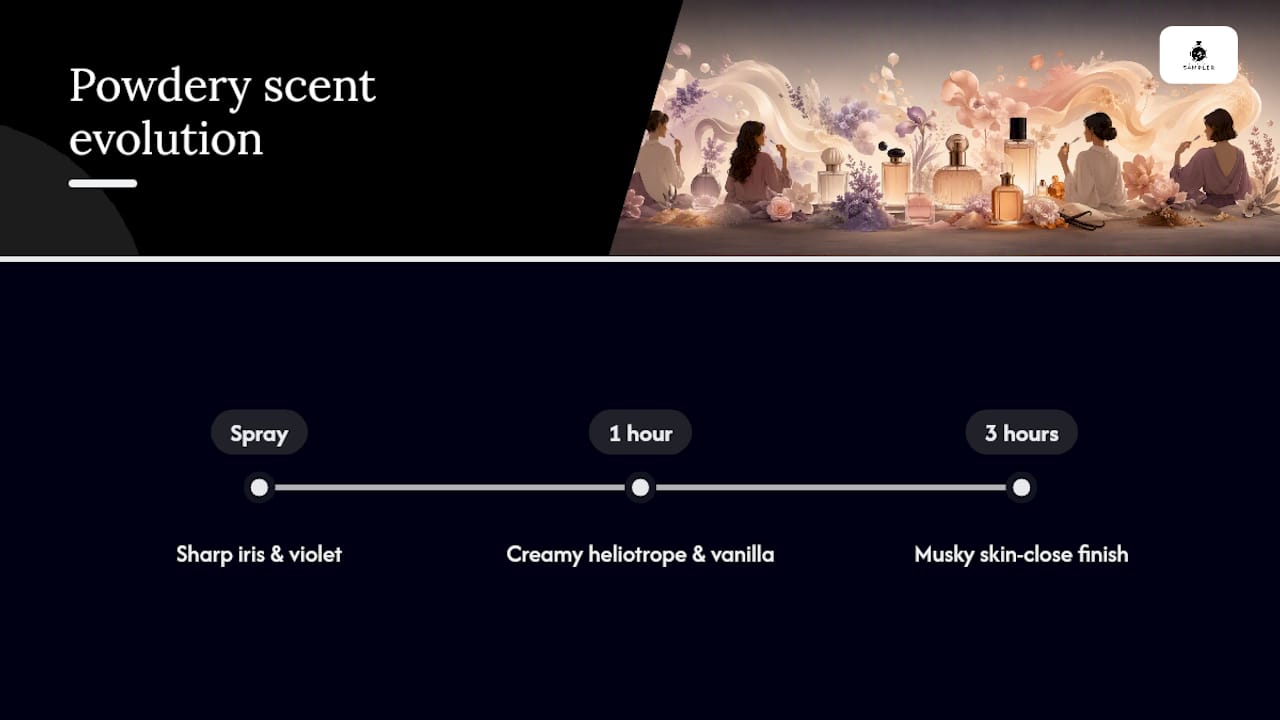
Within the first hour, that sharpness usually softens as heliotrope or vanilla notes emerge, rounding the accord into a creamier scent. This shift from sharp opening to soft, evolved drydown is exactly why testing a powdery fragrance for only five minutes in a shop gives you almost no useful information about how it will actually wear.
By the three-hour mark, most well-constructed powdery perfumes settle into a musky, skin-close finish with much lower projection than the opening suggested. Longevity varies significantly by concentration and note density: iris-heavy Eau de Parfums like Iris Poudre tend to run six to eight hours, while lighter Eau de Toilette formulations such as Chanel Chance Eau Tendre may fade to a close skin scent within four hours. Projection also drops steadily after the first ninety minutes for nearly every fragrance in this family, which is worth knowing before you assume a powdery scent has “disappeared” when it has simply moved from room-filling to skin-close.
What sampling powdery perfumes taught me to value
Category experience with powdery fragrances teaches you fairly quickly that first impressions lie. The sharp, almost soapy opening of a fragrance like Guerlain Insolence tells you nothing reliable about how it will smell three hours later, and judging a powder scent from a shop tester spritz is close to useless.
My personal top three, for what it’s worth: Frédéric Malle Iris Poudre for the purest, most technically interesting iris construction; Etat Libre d’Orange Like This for readers who want the powdery effect without any of the cosmetic weight; and Dior Homme for anyone who assumes powder is inherently a feminine category, because its cocoa-leather-iris combination proves otherwise.
The insight that changed my own approach came from testing Chanel No. 19 Poudre against the original No. 19 side by side. Sprayed together on separate wrists, the “softened” reformulation read almost identical to the original after four hours, once the initial green sharpness burned off. It reinforced something worth remembering: opening notes are marketing, drydown is the product. Judge accordingly, and always on skin, never on paper alone.
— Rupesh
Try these powdery picks affordably through decants
Testing multiple powdery perfumes at full-bottle prices can be quite expensive before you’ve confirmed which drydown suits your skin. Theperfumesampler solves that specific problem: every fragrance on this list is available as a decant, so you pay for the sample, not the bottle, while you work through the blotter-to-skin testing method covered above.
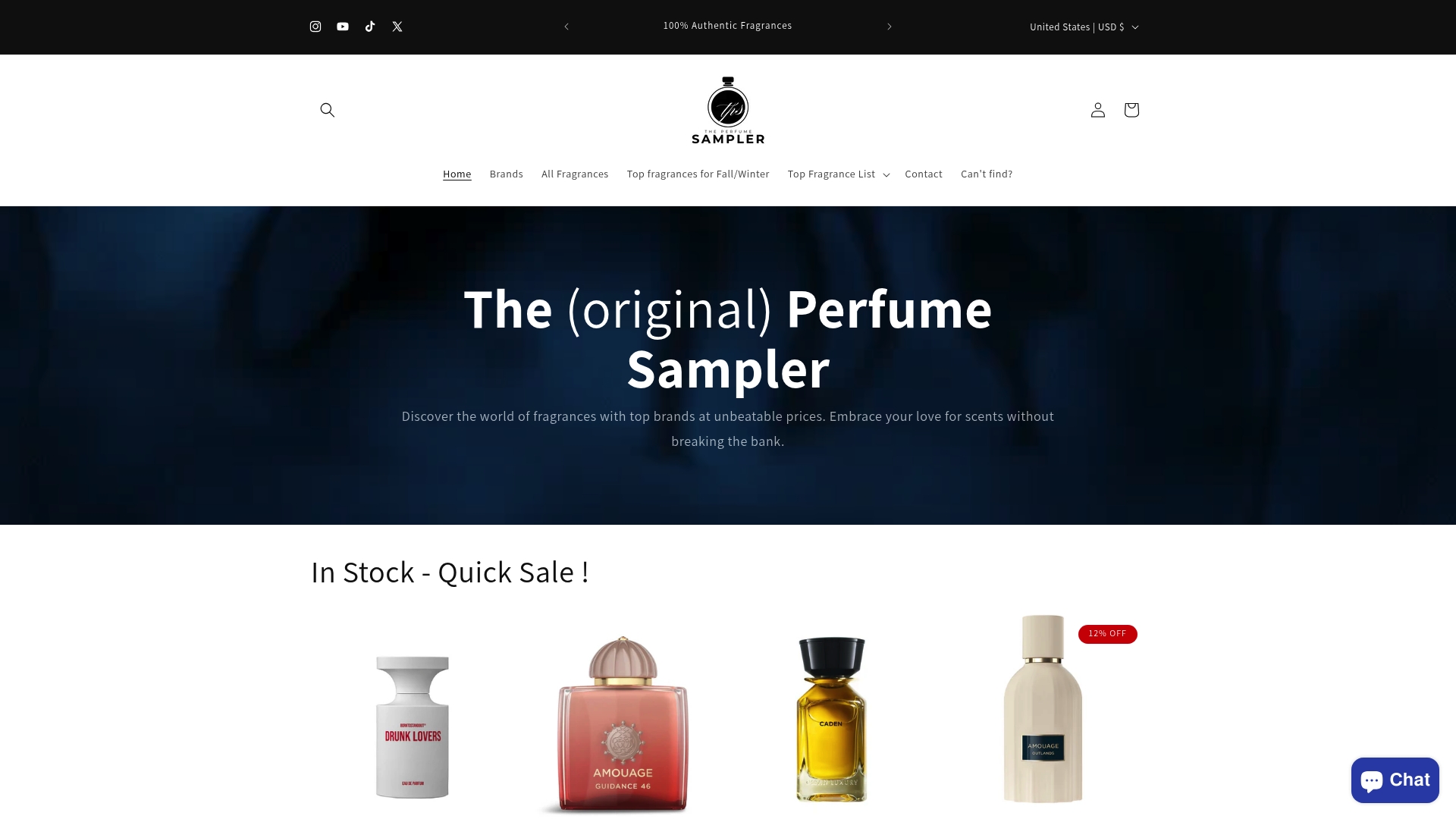
Decants come in 2ml, 3ml, 5ml, and 10ml sizes, which map neatly onto the sampling workflow. A 2ml decant covers one or two proper wear tests, useful for narrowing a shortlist quickly, while a 5ml or 10ml size gives you enough volume to confirm longevity across several wears before deciding whether a full bottle is worth the investment. If you’re new to why this approach beats blind full-bottle buying, the why decants page breaks down the reasoning in more detail.
For readers building a shortlist from this list, start with the fragrances that intrigued you most on paper, order them as decants, and run the three-hour skin test on each before ordering anything larger. Orders ship promptly, and every decant is drawn from genuine, authenticated stock rather than diluted or reformulated bulk, so what you sample is what you’d get in the full bottle. Browse the current powdery selection and place a decant order today to start narrowing your shortlist.
Sources
The claims in this guide draw on established fragrance references rather than guesswork. For a deeper breakdown of powdery raw materials, Fragrantica’s powdery notes page remains the standard reference. Marie Claire’s roundup of modern powdery perfumes covers how the category has evolved toward cleaner, skin-like formulations, while Who What Wear’s powdery perfume guide offers additional picks worth cross-referencing. For a historical view of the category’s archetypes, Cafleurebon’s feature on powdery perfumes traces violet, rice, and rose powder subtypes back to their classic origins.
- Powdery Notes
- The 10 Best Powdery Perfumes Are Clean-Smelling, Chic, and Modern—Never Dated
- The 19 Best Powdery Perfumes to Add