
Best Honey Perfumes to Sample with 2–10ml Decants by Style
The best honey perfumes are not a single fragrance but a range of styles, from fruity and fresh to warm and gourmand to woody and realistic. Choose by the style that suits your skin and season, then sample it as a decant before you buy a full bottle. That approach beats chasing one “best” bottle, because honey behaves so differently depending on what it is paired with.
TL;DR:
- Honey perfumes vary widely in style, from fruity and fresh to warm gourmand and woody, requiring sampling to match personal skin chemistry and season.
- Realistic honey scents with beeswax and tobacco deepen the note for a darker, textured fragrance, while sweeter versions rely on vanilla or tonka for softness.
- Concentration impacts honey scent behavior, with eau de toilette offering lighter, more fleeting impressions, and parfum versions providing stronger, longer-lasting effects.
- Sampling multiple decants over days ensures accurate perception of honey’s complex interactions with skin and prevents costly full-bottle purchases.
- Interest in honey fragrances has surged over 1,000% in early 2026, reflecting a shift toward textured gourmand scents that emphasize tactile warmth and versatility.
Table of Contents
- What are the best honey perfumes right now?
- What does honey smell like in perfume, and how do perfumers shape it?
- How do you choose the right honey perfume for you?
- Why sampling is the smartest way to test honey perfumes
- Why honey has become perfumery’s defining gourmand note
- Start testing honey perfumes without buying blind
- Sources
What are the best honey perfumes right now?
Honey is not one scent. It is a family of effects, and the best honey perfumes on the market right now split cleanly into styles depending on what perfumers pair the honey accord with. Editorial roundups consistently organise their picks this way, by style and occasion rather than by a single ranked list, because honey wears so differently from one composition to the next.
Best overall honey style. This is the balanced middle ground: honey sweetness softened with florals and a touch of powder, wearable from desk to dinner. It suits anyone who wants the trend without committing to something overtly sugary. Expect moderate to strong longevity (six to eight hours) and a price range roughly $80 to $180 for a 50ml bottle.
Best fruity or fresh honey. Here, honey plays a supporting role behind citrus, pear, or berry notes, giving fruit a rounder, less tart edge. Reach for this in spring or summer, or for daytime wear when you want warmth without heaviness. Projection tends to be lighter, and longevity sits around four to six hours.
Best warm or gourmand honey. Rum, tobacco, or tonka bean turn honey boozy and dessert-like, closer to a glass of amaretto than a flower garden. This is a cold-weather, evening style, best for anyone who genuinely likes food-adjacent scents. Longevity is usually strong, eight hours or more, with noticeable projection.
Best woody or realistic honey. Beeswax, vetiver, and dry woods push honey towards something closer to an actual beehive: waxy, slightly smoky, less sweet than you might expect. Guerlain’s tobacco honey formulas sit firmly in this camp, using tobacco leaf to deepen the honey into something darker and more textured. It suits people who find syrupy gourmands cloying but still want honey’s warmth.
Best floral honey. Jasmine, ylang ylang, or orange blossom carry the honey note, so it reads as a rich floral first and a honey scent second. This works well for anyone transitioning from a classic floral wardrobe into something a bit more indulgent.
Best hair or body honey mist. Lighter concentrations built for layering rather than standalone wear, these mists suit humid climates or anyone who prefers scent close to the skin. Expect two to four hours of noticeable scent and prices typically under $60.
Best beachy or summer honey. Coconut, tiare flower, or salt notes combine with honey for something sun-warmed rather than dessert-like. Ideal for holidays or hot weather when heavier gourmands feel like too much.
Best affordable honey. Designer-tier honey fragrances, often fruity-floral rather than deeply gourmand, deliver the trend at a lower price point, typically $50 to $90. They rarely have the depth of a niche composition but work well as an easy introduction.
Best long-lasting, high-oil honey. Concentrated parfum or extrait versions push honey into near-solid territory: dense, waxy, and built to last twelve hours or more on skin. These suit collectors who want maximum longevity and don’t mind a stronger initial projection.
What does honey smell like in perfume, and how do perfumers shape it?
Honey in perfumery is not one ingredient but a spectrum of effects. At one end sits realistic beeswax and honeycomb, waxy and faintly smoky. At the other sits syrupy gourmand honey, closer to dessert than to a hive. In between, you get floral-honey impressions, often built to resemble manuka, and subtle honey backbones that simply add warmth to another note without announcing themselves.
Perfumers rarely use honey alone. Bee Shapiro, founder of Ellis Brooklyn, describes honey as offering “a more nuanced approach to sweetness,” rich without tipping into one-dimensional candy territory, and that nuance comes largely from what honey is paired with:
- Tobacco or oud deepens honey into something darker, smokier, and less obviously sweet.
- Rum pushes honey towards a boozy, dessert-like accord, warm and slightly intoxicating.
- Tonka bean or vanilla rounds out the sweetness and adds a soft, powdery finish.
- Hay brings a dry, sun-baked quality that keeps honey from feeling syrupy.
- Florals like jasmine or orange blossom let honey lift the flower rather than dominate it, adding richness without cloying.
Concentration matters too. An eau de toilette version of a honey scent will read lighter and fruitier, while the eau de parfum or parfum concentration of the same fragrance often reveals the waxy, animalic side of the honey accord that only shows up after an hour or two on skin.
Pro Tip: If a “honey” perfume smells suspiciously sugary within the first five minutes, check the note list. Genuine honey and beeswax accords tend to soften over time rather than staying sweet, while cheaper vanilla-heavy formulas usually stay flat and candy-like from start to finish.
How do you choose the right honey perfume for you?
Picking a honey perfume is less about finding “the best” bottle and more about matching style to context. Work through these steps before you narrow your shortlist:
- Decide how realistic you want the honey to feel. If you want something closer to actual beeswax, look for woody, animalic honey styles. If you want dessert-like sweetness, gourmand honey with rum or tonka is the better fit.
- Match the style to season and occasion. Fruity and floral honey suits daytime and warmer months; gourmand and woody honey suits evenings and cooler weather.
- Set your longevity and projection expectations. Hair mists and lighter eau de toilette formulas fade faster but stay close to skin; parfum concentrations project further and last longer, which matters if you work in close quarters with colleagues.
- Set a price ceiling before you browse, since honey fragrances range from under $60 to well over $200, and budget doesn’t always predict quality.
- Consider ingredient preferences. Some honey accords use real beeswax absolutes, others rely entirely on synthetic recreations. Neither is inherently better, but it’s worth knowing which you’re wearing if that matters to you.
When you test a sample, apply it to skin rather than just a card, and check it at three points: immediately, after 30 to 60 minutes, and again after three to six hours, since honey accords can behave very differently across that window. Keep a short note on each, and watch for red flags: a honey that stays flat and sugary the whole time, or one that turns unexpectedly animalic and waxy on your particular skin.
Why sampling is the smartest way to test honey perfumes
Honey notes are some of the most skin-dependent accords in perfumery. The same bottle can smell like warm beeswax on one person and syrupy vanilla on another, which is exactly why testing across several days on your own skin matters more here than with almost any other fragrance family.
A practical workflow looks like this:
- Pick three to five honey styles that interest you (say, one fruity, one gourmand, one woody-realistic).
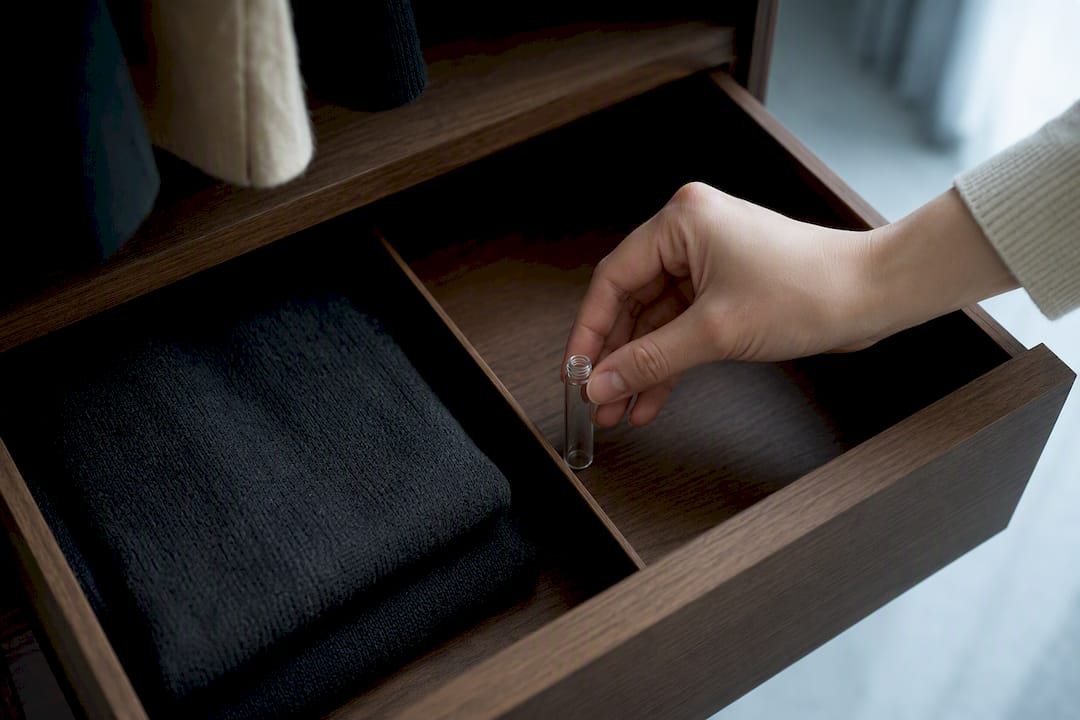
- Order 2ml to 10ml decants of each rather than committing to a full bottle blind.
- Wear each one for a full day, testing it against different clothing and skincare, since layered lotions can shift how honey reads.
- Note the opening, the two-hour mark, and the drydown for each, so you can compare properly once all your samples are through.
Decants solve the biggest problem with honey perfumes specifically: a note list can promise “honey and tobacco” and still smell nothing like what you imagined once it meets your skin chemistry. Rupesh’s category-led picks above are designed to narrow that search before you spend on a full bottle, and testing multiple sizes (2ml through to 10ml) lets you compare styles side by side rather than guessing from a single spray at a counter.
Pro Tip: Store honey-forward decants away from direct sunlight and heat. The waxy, resinous notes that make realistic honey accords work can shift faster than lighter florals when exposed to warmth.
Why honey has become perfumery’s defining gourmand note
Honey’s rise is not a passing quirk of one season. Searches for honey fragrance notes jumped by more than 1,000% year on year in early 2026, and that scale of interest tells you this is a genuine shift in what people want from a gourmand, not just a marketing push from a handful of brands.
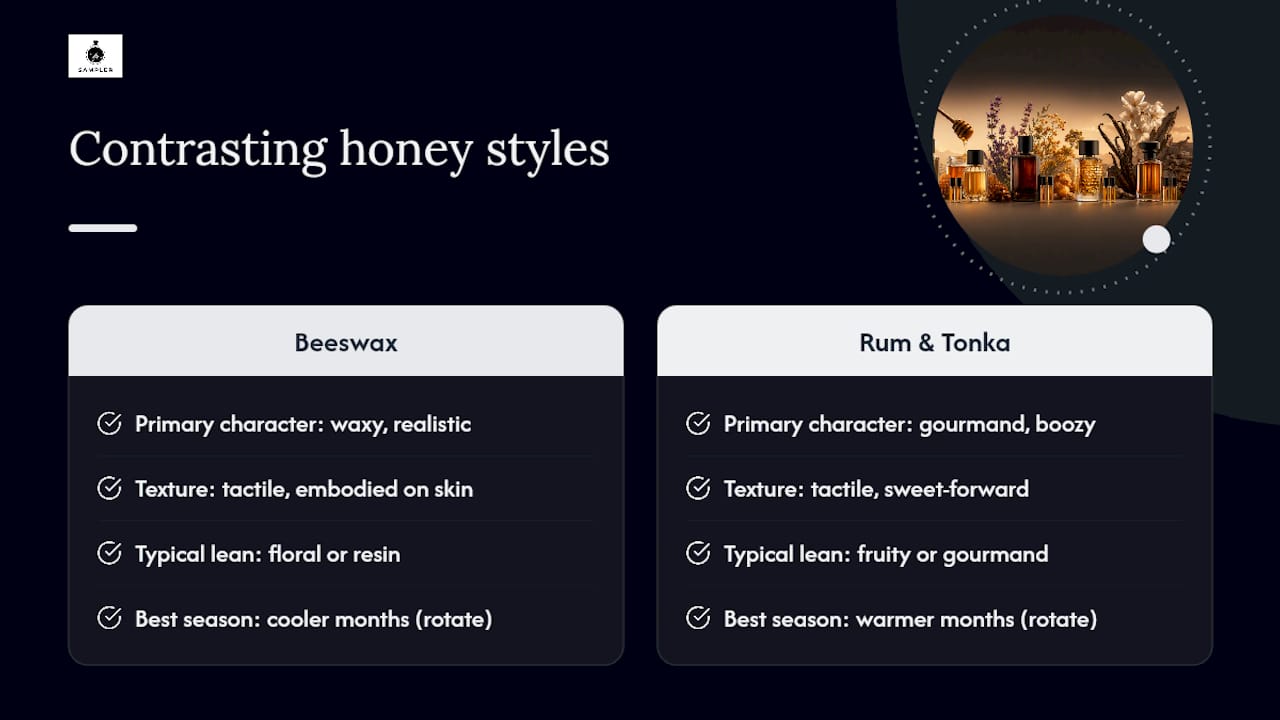
What makes honey different from other trending sweet notes is its texture. It doesn’t just smell sweet, it feels tactile, almost embodied on skin, sitting somewhere between a floral and a resin. That’s what makes it so useful for perfumers and so interesting to collect: a single honey accord can lean fruity, boozy, waxy, or floral depending on nothing more than what sits next to it in the formula.
If you’re building a small collection rather than buying one bottle, I’d resist the urge to buy two honey scents that do the same job. Pair a realistic, beeswax-heavy option against a properly gourmand, rum-and-tonka style, and you’ll understand the range far faster than reading another list of names. Rotate them by season: fruity-honey in warmer months, tobacco or oud-honey once the weather turns. That contrast, more than any single “best” bottle, is what teaches you what you actually like.
— Rupesh
Start testing honey perfumes without buying blind
Committing to a full bottle of an untested honey fragrance is a real gamble, given how much these scents shift from one person’s skin to another’s. Decants in various sizes allow you to test three or four honey styles for a fraction of the cost of one full bottle gone wrong.
A sensible starting approach: pick one fruity-honey option, one gourmand or woody honey, and one floral-honey pick, then order decants of each rather than guessing from note lists alone. That gives you a genuine side-by-side comparison on your own skin, over several days, before you spend on anything full-size. Full bottles remain available too, for once you’ve found the style that actually works. Read more on why decants make sense for honey and other skin-dependent notes, then build your shortlist and place your first order today.
Sources
- Honey fragrances are on the rise—these are the scents we’re stuck on | NewBeauty
- The best honey perfumes are way beyond buzzworthy | Allure
- Honey perfumes are a gourmand hyperfixation | Marie Claire