
Ambergris Perfumes: Sample with 2–10ml Decants for Collectors
The fastest, lowest-risk way to find your ambergris signature is sampling, not full-bottle buying. Decants from 2ml to 10ml let you test the American Chemical Society’s ambrein-driven marine, animalic character across several houses for a fraction of retail cost. Theperfumesampler stocks exactly this range. Below, a ranked shortlist of ambergris-forward releases worth requesting first.
TL;DR:
- Most ambergris scents are complex blends, often used as a supporting note, which makes sampling essential to identify your preferred facet.
- Genuine ambergris is rare and costly, so most perfumes rely on synthetics like Ambroxide or Ambrocenide, which can be easier to evaluate and more consistent.
- Decants of 2ml to 10ml offer a practical way to test various ambergris-related fragrances, focusing on scent prominence, longevity, and versatility before purchasing full bottles.
- The scent profile of ambergris varies significantly depending on age, origin, and exposure, resulting in a wide range from marine and animalic to powdery and citrus-brightened.
- When testing, consider how the ambergris scent persists through dry down, how it interacts with supporting notes, and whether it suits your preferred season and occasion.
Table of Contents
- The best ambergris perfumes worth sampling first
- What is ambergris and why does it smell the way it does?
- Real ambergris versus synthetic substitutes: what you’re actually smelling
- How to try ambergris fragrances without overspending
- How do you decide which ambergris perfume to keep?
- Why sampling shaped this list
- Start sampling ambergris perfumes today
- Sources
The best ambergris perfumes worth sampling first
Ambergris rarely appears alone. It shows up as a facet inside a larger composition, which is why the same raw material can smell salty and skin-like in one bottle and powdery, almost bready, in another. That subjectivity is exactly why community threads on Basenotes matter: enthusiasts pool notes on which current-production releases genuinely deliver the note, rather than just naming it on a box.
Here is a curated shortlist to work through, roughly ordered from most overtly ambergris-driven to those that use it as a supporting player.
- Roja Amber Aoud Eau de Parfum — Animalic, resinous, and warm, this leans into a salty amber facet layered over oud and woods. It suits evening wear and colder months, sits in the luxury price tier, and is a strong first sample if you want ambergris pushed to the front. Theperfumesampler carries this as a ready-to-sample release.
- Guerlain Absolus Allegoria Ambre Samar — Guerlain explicitly names ambergris-style material in its notes for this release, which makes it a useful reference point for what a modern house considers an “ambergris” accord. Expect sweetness and warmth rather than raw marine funk, and treat the label disclosure as a genuine collector’s signal.
- A niche marine-animalic amber composition — Several smaller houses build entire lines around a briny, skin-warm amber that reads closer to raw tincture than to sweet amber gourmands. These suit anyone who wants the saline, slightly iodine-like facet that perfumer commentary keeps flagging as one of ambergris’s most divisive characteristics.
- A powdery, soft-focus amber fragrance — Some compositions dial ambergris towards the powdery, almost vanillic end of its range, pairing it with musks and light woods. This facet suits daytime wear and office settings far better than the animalic versions, and works well as a gentler entry point.
- A citrus-brightened amber blend — Pairing ambergris with bergamot or grapefruit lifts the material and stops it feeling linear, which matches what collectors often prefer over a pure, unadorned amber base.
- A woody-dry amber built on modern synthetics — Compositions leaning on Ambroxide or Ambermax deliver a drier, more piercing woody amber than tincture-based scents, useful if you want the silhouette of ambergris without the animalic weight.
- A classic-style oriental amber — Older-style orientals often used ambergris as a fixative under vanilla, labdanum, and incense; sampling one alongside a modern release shows how much the material’s role has shifted from foundation to accent.
- A unisex, minimalist skin scent with an amber base — Contemporary minimalist releases sometimes use ambergris-adjacent materials sparingly, producing something closer to a “your skin but warmer” effect than a statement fragrance.
Keep a few practical tags in mind while you shortlist:
- Scent facet: salty and animalic, powdery, or citrus-brightened, note which one drew you in.
- Occasion: animalic ambers suit evenings and cold weather; powdery and citrus versions suit daytime.
- Price tier: niche and artisan houses sit higher than mainstream designer releases using synthetic substitutes.
- Material likelihood: assume synthetic unless the brand explicitly discloses ambergris or ambergris tincture, as Guerlain does on some listings.
Sample before you commit. A 2ml decant gives you enough for several proper wear tests, which is more than enough to judge whether a particular ambergris facet works on your skin. For a broader spread of amber-adjacent options beyond this list, Theperfumesampler’s niche amber fragrance roundup is worth working through as well.
What is ambergris and why does it smell the way it does?
Ambergris begins as a waxy substance formed in the intestines of sperm whales. It spends years, sometimes decades, floating and oxidising in seawater before washing ashore as the pale, fossil-like lumps that perfumers and collectors prize. That prolonged oxidation is the whole story: fresh material smells faecal and unpleasant, but years of sun and salt water transform it into something entirely different.
The material’s principal components, ambrein, epicoprostanol and coprostanone, are what give aged ambergris its distinctive marine, animalic, sweet character rather than the raw smell it starts with.
That chemical shift explains why no two pieces of ambergris smell quite alike. Age, origin, and exposure conditions all affect the balance of those compounds, according to the American Chemical Society’s profile of ambrein. Some pieces lean saline and iodine-like, others read as tobacco or dry wood, and perfumer commentary consistently notes this multi-faceted quality as one reason “ambergris” means different things in different bottles.
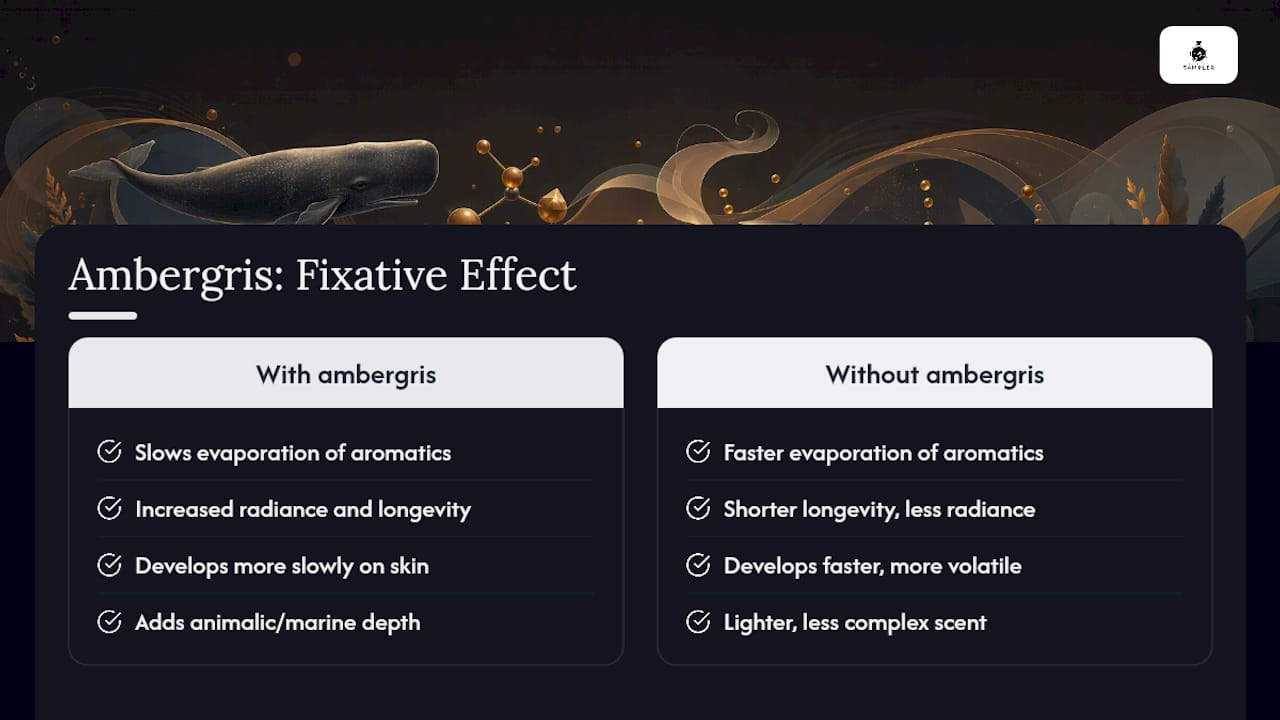
Beyond scent, ambergris earns its place in perfumery through function as a fixative, slowing the evaporation of other aromatic molecules and anchoring a composition so it develops more slowly on skin. It works as a fixative, slowing the evaporation of other aromatic molecules and anchoring a composition so it develops more slowly on skin. Fragrances built around genuine ambergris, or its closer synthetic analogues, tend to show noticeably better radiance and longevity than compositions relying on lighter, more volatile materials alone.
Real ambergris versus synthetic substitutes: what you’re actually smelling
Almost everything you buy today uses a synthetic stand-in, not the raw material itself. Genuine ambergris is scarce, its supply depends entirely on chance beachcombing finds, and its price fluctuates with that scarcity, which is why Fragrantica’s own notes on the material describe both its rarity and its wildly inconsistent market pricing.
Perfumers reach for a handful of standard replacements instead:
- Ambroxide (Ambroxan): warmer, musky, and the closest in feel to aged natural tincture.
- Cetalox: a cleaner, more transparent amber effect, often used to add lift rather than depth.
- Ambermax: brighter and drier, pushing towards a piercing woody accord.
- Ambrocenide: similarly dry and sharp, favoured where perfumers want an ambergris silhouette without animalic weight.
These four synthetics account for the overwhelming majority of “ambergris” notes in commercial perfumery today, since natural material’s cost and unpredictable supply make it impractical for most production runs, according to CaFleureBon’s overview of ambergris in perfumery.
None of this makes synthetic ambergris a lesser experience. Ambroxan-based compositions can be genuinely beautiful, and they are far more consistent bottle to bottle than tincture ever could be. Where authenticity does matter is on the label: if a brand explicitly states “ambergris” or “ambergris tincture” rather than the generic “amber,” as Guerlain does on select releases, that disclosure is worth noting as a genuine point of difference rather than marketing shorthand.
How to try ambergris fragrances without overspending
Decants solve the two real problems with ambergris perfumes: cost and rarity. Full bottles of niche, ambergris-forward releases regularly sit in the luxury price tier, and many are hard to find at retail counters at all.
- Start with a 5ml or 10ml decant for anything you suspect could become a signature scent, since that gives enough wear time across different conditions and moods.
- Use 2ml or 3ml samples to rule fragrances in or out quickly, roughly 20 to 30 sprays depending on the atomiser.
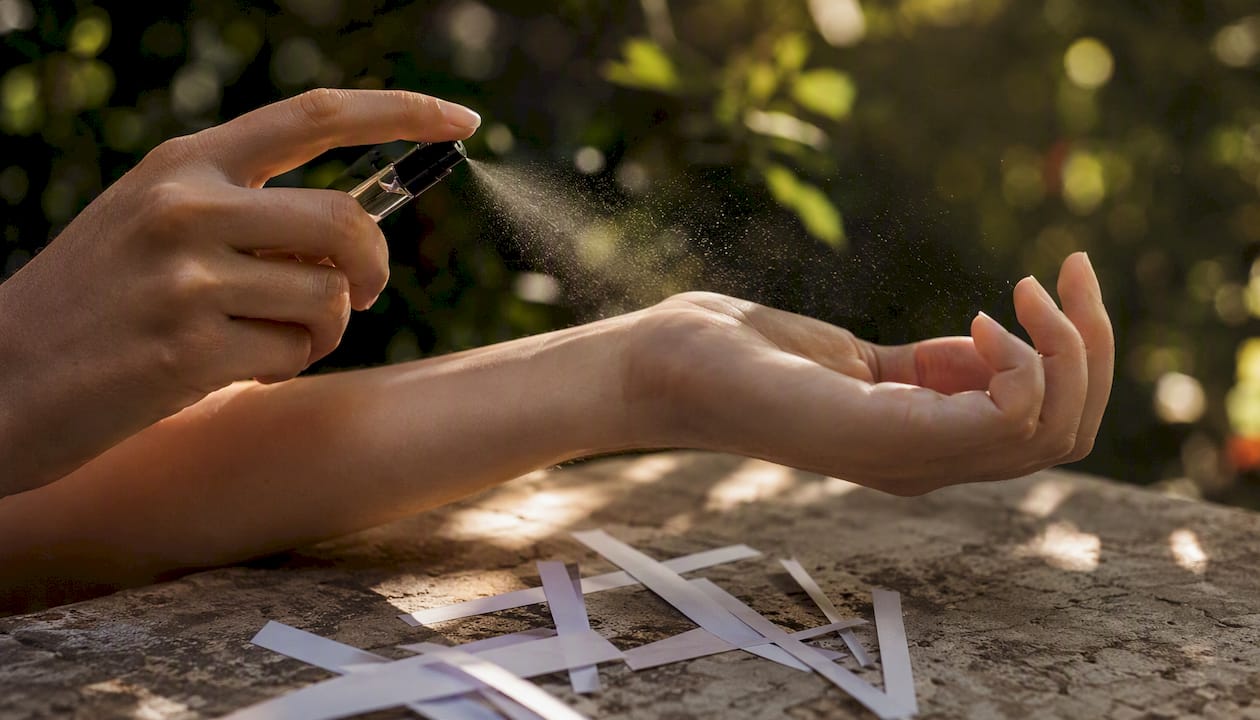
- Apply to skin, not just paper. Ambergris develops through body heat, and its dry down, usually one to two hours in, is where the material actually reveals itself.
- Test alongside a control, a fresh citrus and a straightforward woody scent, so you can isolate what the ambergris facet is actually contributing.
- Check the seller’s authenticity practices before buying decants, since genuine niche access at sample size depends on sourcing from real retail stock rather than repackaged fakes.
Pro Tip: Do your ambergris testing on a day you’re not wearing other scented products, hand cream and scented deodorant both mask the saline, animalic subtleties that separate a good ambergris fragrance from a mediocre one.
For a fuller walkthrough of testing technique, Theperfumesampler’s guide to sampling niche fragrances covers dry-down timing and skin chemistry in more depth.
How do you decide which ambergris perfume to keep?
Judge a sample against four axes: how prominent the ambergris actually is, what surrounds it, how long it lasts, and how flexible it is across seasons and occasions. A fragrance that smells wonderful for the first ten minutes but collapses into generic musk after an hour has failed the longevity test, regardless of how convincing its opening was.
Ask yourself these questions while wearing the sample through a full day:
- Does the ambergris facet still register three hours in, or has it faded into something generic?
- Is the surrounding composition, citrus, oud, vanilla, actually complementing the amber, or fighting it?
- Would you wear this in summer, winter, or both?
- Does the projection suit your setting, office-appropriate versus evening-only?
Watch for two red flags in particular. First, marketing copy that name-drops “ambergris” purely for prestige without any corresponding ingredient disclosure, common among mass-market releases chasing the word’s cachet. Second, inconsistent batches, a known risk with natural-tincture-based niche releases where supply is irregular.
| Decision factor | What to check | Quick rule |
|---|---|---|
| Ambergris prominence | Present after 3 hours on skin | Keep if still detectable |
| Supporting notes | Complement, not compete | Reject if amber gets buried |
| Longevity | Full dry down (2 to 6 hours) | Sample overnight if possible |
| Versatility | Works across at least two seasons | Prioritise for full-bottle buys |
Why sampling shaped this list
Ambergris is one of the hardest materials to judge from a description alone, which is exactly why this list leans on wearing fragrances rather than reading marketing copy about them. Rupesh has spent years tracking how amber and ambergris notes actually behave on skin across niche and designer releases, and that hands-on comparison, not brand claims, is what separates the picks above from a generic “notes list” roundup.
The sampling-first approach exists because full-bottle buying on a note this variable is a genuine gamble. One house’s “ambergris” is another house’s dry woody accord entirely. Further author credentials and testing notes will be expanded here as more comparative data becomes available.
— Rupesh
Start sampling ambergris perfumes today
Theperfumesampler gives you a cheaper route into ambergris fragrances than buying blind at full retail price: 2ml, 3ml, 5ml, and 10ml decants let you test several ambergris facets, salty and animalic, powdery, citrus-brightened, side by side before committing to a bottle that might not suit your skin.
Each decant is drawn from genuine retail stock, so what you sample is exactly what you would get in the full bottle, at a fraction of the cost and without the waste of a bottle you rarely open. If you’re curious why this approach beats buying full-size on a guess, the why decants page breaks down sizing and value in more detail. Once you’ve found your favourite through sampling, full bottles like BOSS Bottled Absolu Parfum Intense are ready when you’re sure. Start with a decant of your top pick from this list and work outward from there.
Sources
- American Chemical Society — ‘Molecule of the Week: Ambrein’
- Alpha Aromatics blog — ‘Ambergris’
- CaFleureBon — ‘Ambergris in perfumery’
- Basenotes community thread — ‘The best ambergris fragrances currently in production (2024 edition)’