
What is an economical fragrance choice?
TL;DR:
- A good economical fragrance provides at least 6 to 8 hours of longevity and well-balanced notes. It uses quality base notes like sandalwood and vanilla, and projects moderately without overwhelming. Shopping smart by sampling and comparing cost-per-wear helps maximize value without sacrificing scent quality.
An economical fragrance choice is defined as a scent that delivers genuine quality, satisfying longevity, and sensory appeal at an accessible price. The term goes beyond simply buying cheap. The industry now measures value by three benchmarks: how long a fragrance lasts on skin, how well its notes are composed, and whether the overall experience justifies the cost. Understanding these factors separates a true bargain from a bottle that disappoints within an hour.
What characteristics define a good economical fragrance?
A good economical fragrance lasts at least 6–8 hours on skin. Anything that fades within two hours is poor value, regardless of how appealing it smells in the first few minutes. Longevity is the single most reliable indicator of quality at any price point.
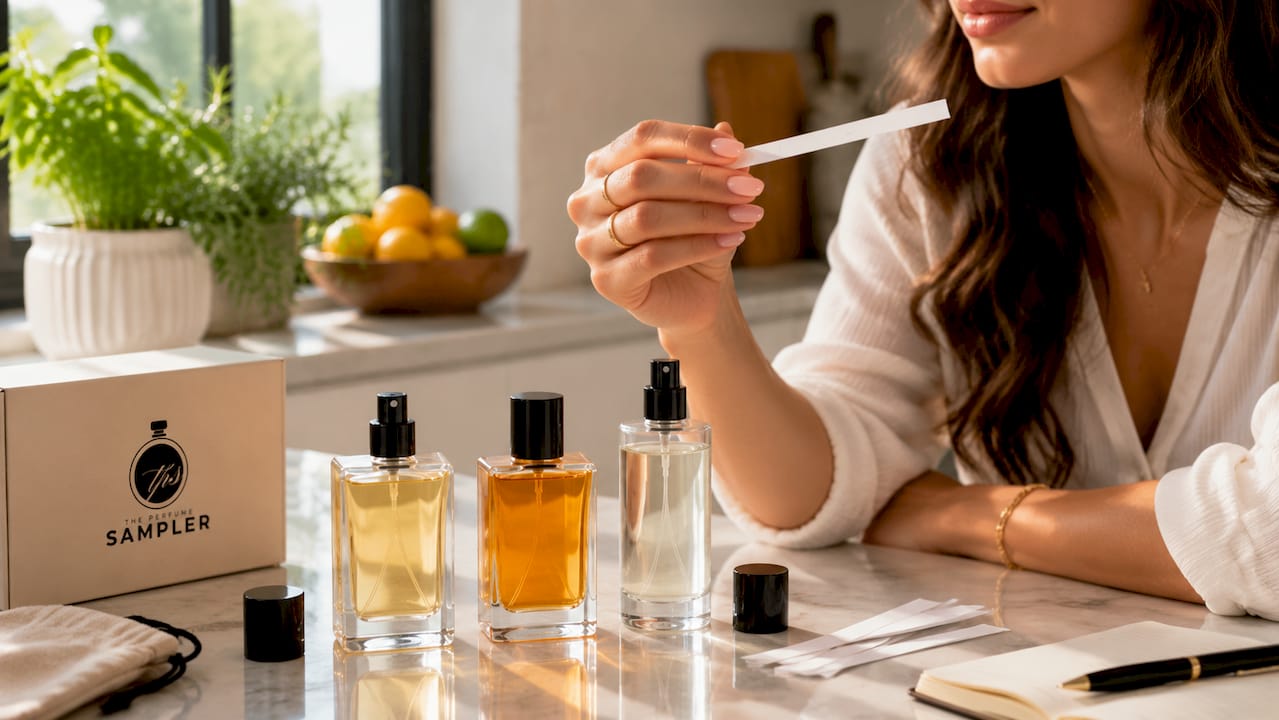
Note composition matters just as much as duration. The best affordable options use well-structured accords that evolve naturally from top to base, rather than relying on a single synthetic blast that disappears quickly. Creamy woody notes such as sandalwood, vanilla, musk, iris, and benzoin add a rich, expensive feel without substantially increasing production cost.
Sillage, the trail a fragrance leaves in the air, should be moderate. Projection that is too weak makes a scent feel cheap. Projection that is too aggressive becomes antisocial. The sweet spot is a scent that others notice when you enter a room, but that does not overpower a shared space.
Key attributes to look for in a budget fragrance:
- Longevity of 6–8 hours minimum on skin
- Base notes that anchor the scent: sandalwood, vanilla, musk, or benzoin
- Natural evolution from top notes through to dry-down
- Moderate sillage that projects without overwhelming
- Synthetic ingredients used to support, not replace, quality composition
Pro Tip: Spray on your wrists and wait a full 30 minutes before judging a fragrance. The top notes burn off quickly, and the true character of the scent only reveals itself in the heart and base.
Avoid fragrances built around sharp synthetic musks or excessively sweet fruit notes. These often signal a poorly balanced formulation. A fragrance that smells medicinal, plasticky, or cloyingly sweet in the dry-down is not a bargain at any price.
How does fragrance concentration affect value and longevity?
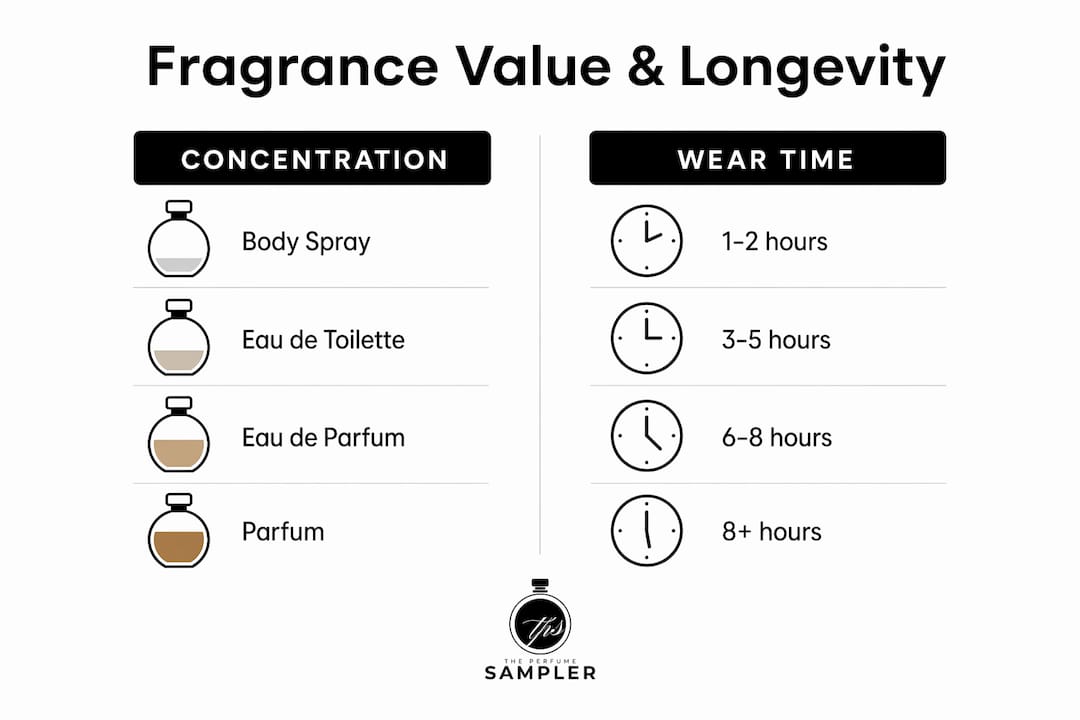
Fragrance concentration is one of the most misunderstood cost drivers in perfumery. Higher concentration means more fragrance oil per millilitre, which directly affects both price and how long the scent lasts on skin. Understanding concentration helps shoppers make genuinely informed decisions rather than buying on price alone.
| Concentration | Oil content | Typical wear time | Price point |
|---|---|---|---|
| Body spray | Under 3% | 1–2 hours | Lowest |
| Eau de Toilette (EDT) | 5–15% | 3–6 hours | Low to mid |
| Eau de Parfum (EDP) | 15–20% | 6–10 hours | Mid to high |
| Parfum (extrait) | 20–40% | 8–12+ hours | Highest |
EDT sits at the affordable end of the spectrum and suits shoppers who want a lighter, fresher feel. EDP offers noticeably better longevity and projection for a modest price increase. Parfum delivers the longest wear but commands a premium that puts it outside most budget considerations.
The concept of cost-per-wear changes the calculation entirely. 1–2 sprays of EDP can outlast four or five sprays of EDT, meaning the bottle lasts significantly longer. A £45 EDP used sparingly often costs less per wear than a £25 EDT applied generously throughout the day.
Pro Tip: When comparing two fragrances on price, divide the bottle cost by the number of sprays it contains. Most 50ml bottles hold around 500 sprays. That calculation tells you the true cost per application.
Many affordable fragrances priced under £80 achieve strong performance by substituting rare natural ingredients with high-quality synthetic aroma chemicals such as vanillin. This is not a compromise. Vanillin, for example, delivers a clean, warm vanilla character that performs consistently across different skin types.
Smart shopping strategies to maximise fragrance affordability
Savvy shoppers reduce fragrance costs without sacrificing quality by combining multiple saving methods. Stacking cashback portals, coupon codes, and seasonal sales can reduce costs by 30–50% on the same bottle. That reduction requires no compromise on the fragrance itself.
Five practical strategies for fragrance on a budget:
- Sample before you commit. Buying a full bottle blind is the most common and costly mistake in fragrance shopping. Fragrance decants in 2ml, 3ml, 5ml, and 10ml sizes let you wear a scent for several days before spending on a full bottle.
- Stack your savings. Combine cashback sites, discount codes, and end-of-season sales. These methods work independently, but together they compound the saving.
- Choose smaller bottle sizes strategically. A 30ml bottle costs more per millilitre than a 100ml bottle, but it reduces the financial risk of buying a fragrance you later dislike.
- Consider inspired fragrances. Well-crafted inspired fragrances closely emulate designer scent profiles and offer comparable longevity at a fraction of the price. Quality varies, so sampling remains the safest approach.
- Buy from reputable sources. Counterfeit fragrances are a genuine problem in the market. Purchasing from established retailers protects you from diluted or falsely labelled products.
Application habits also affect value:
- Apply fragrance to moisturised skin. Unscented lotion applied before spraying slows scent evaporation and extends wear time, meaning you use less product per application.
- Target pulse points: wrists, neck, and the inside of elbows. These areas generate warmth that activates the fragrance continuously.
- Avoid rubbing wrists together after spraying. This breaks down the top notes and shortens the overall scent arc.
Pro Tip: Layer a fragrance over a matching or complementary body lotion. This technique, common in niche perfumery, significantly extends longevity without requiring an extra spray.
The sample size benefits of this approach go beyond cost. Wearing a fragrance across different days, temperatures, and occasions gives you a far more accurate picture of how it performs on your skin chemistry than a single in-store test.
Understanding fragrance notes and ingredient choices in budget scents
Note selection is where affordable fragrances either succeed or fail. The best budget options use ingredients that convey luxury without requiring expensive raw materials. Sandalwood, iris, vanilla, benzoin, and oud all create a rich, warm impression that reads as high quality to the nose. These notes also anchor the dry-down, which is where longevity is won or lost.
Synthetic aroma chemicals play a legitimate and important role in affordable perfumery. Vanillin delivers consistent warmth. Iso E Super adds a woody, cedar-like depth. Hedione contributes a fresh, jasmine-like quality. These materials are not shortcuts. They are tools that skilled perfumers use to build complex, lasting accords at accessible price points.
Notes that signal quality in a budget fragrance:
- Sandalwood and cedarwood: warm, creamy, long-lasting base
- Vanilla and benzoin: sweet, resinous depth that anchors the dry-down
- Iris and violet: powdery, sophisticated heart notes
- Oud accords: rich and distinctive, even in synthetic form
- Balanced musks: clean and soft, not sharp or synthetic-smelling
Notes that often indicate a poorly formulated cheap scent:
- Sharp, chemical musks that smell clinical or plasticky
- Excessively sweet candy-like fruit notes with no depth
- Harsh aldehydes that do not soften over time
- Single-note compositions with no evolution from top to base
The perception of what constitutes an economical fragrance choice has shifted considerably. The market no longer equates low cost with low quality. Shoppers now expect affordable fragrances to perform with the same complexity and longevity as higher-priced options, and many do. The key is knowing which notes and structures to look for.
You can find further guidance on identifying these qualities in this budget fragrance guide from Theperfumesampler.
Key takeaways
An economical fragrance choice is defined by longevity, note quality, and concentration, not by the lowest price on the shelf.
| Point | Details |
|---|---|
| Longevity is the core benchmark | A fragrance must last at least 6–8 hours on skin to represent genuine value. |
| Concentration drives cost-per-wear | EDP requires fewer sprays than EDT, making it more economical over the life of the bottle. |
| Note quality separates bargains from cheap scents | Sandalwood, vanilla, and iris signal quality; sharp synthetic musks signal poor formulation. |
| Sampling reduces financial risk | Testing decants before buying full bottles prevents costly mistakes and wasted spend. |
| Stacking savings maximises affordability | Combining cashback, codes, and sales can reduce fragrance costs by 30–50%. |
My honest view on buying fragrances economically
The biggest mistake I see shoppers make is treating price as a proxy for quality. It is not. A £20 fragrance built on well-chosen synthetic musks and a creamy sandalwood base will outperform a poorly formulated £80 bottle every single time. Price tells you what a brand charges. It does not tell you how the fragrance performs on your skin.
Skin chemistry changes everything. A fragrance that smells extraordinary on one person can turn sharp and medicinal on another. This is why testing before buying is not optional. It is the only rational approach. Wearing a 5ml decant for three or four days across different temperatures gives you real data. A 30-second sniff in a shop gives you almost nothing.
I have also noticed that shoppers who build a deliberate scent wardrobe spend less overall. Buying one fragrance that genuinely works for each occasion, whether that is a clean office scent, a warm evening fragrance, or a fresh weekend option, costs far less than accumulating bottles that overlap or disappoint. Deliberate buying beats impulse buying every time.
The fragrance market in 2026 genuinely rewards the informed shopper. Affordable options have never been better. The gap between a well-chosen budget fragrance and a designer bottle has narrowed significantly. The shoppers who benefit most are those who understand concentration, note composition, and application technique. That knowledge costs nothing and saves a great deal.
You can find practical perfume cost-saving hacks that complement this approach on the Theperfumesampler blog.
— Rupesh
Fragrance sampling: a practical route to affordable choices
Theperfumesampler offers fragrance decants in 2ml, 3ml, 5ml, and 10ml sizes, covering high-end niche and designer fragrances. This approach removes the single biggest barrier to economical fragrance shopping: buying blind.
Testing a fragrance properly before committing to a full bottle is the most cost-effective decision a shopper can make. Theperfumesampler’s decant range lets you wear a scent across multiple days and occasions before spending on a full bottle. The why decants? page explains the full range of options and how sampling works in practice. For shoppers who want to enjoy luxury fragrances without paying luxury prices, decants are the most direct route. Theperfumesampler also stocks full bottles of high-end designer fragrances for those ready to commit. You can also find a complementary range of affordable fragrances at Jeffi Inc for additional options.
FAQ
What is an economical fragrance choice?
An economical fragrance choice is a scent that delivers strong longevity, quality note composition, and sensory satisfaction at an accessible price. It prioritises value over simply being the cheapest option available.
How long should a budget fragrance last on skin?
A good budget fragrance should last at least 6–8 hours on skin. Fragrances that fade within two hours are considered poor value regardless of their initial appeal.
Is EDP or EDT better value for money?
EDP offers better long-term value because its higher oil concentration means fewer sprays are needed per wear. One or two sprays of EDP typically outlast four or five sprays of EDT, extending the life of the bottle.
Does applying fragrance to moisturised skin really help?
Applying fragrance to moisturised skin slows evaporation and extends wear time. Using an unscented lotion before spraying reduces how much fragrance you need per application, making the bottle last longer.
Are inspired fragrances worth buying?
Well-crafted inspired fragrances closely replicate designer scent profiles and offer comparable longevity at a significantly lower price. Quality varies between products, so sampling before purchasing a full bottle remains the safest approach.