
Avoid Buyer’s Regret: Online vs In Store Samples With 2–5ml Decants
For quick screening and expert guidance, in-store testing wins. For repeat wear, privacy and niche access, online sampling wins. Most shoppers do best with a hybrid approach: screen scents at the counter, then confirm finalists with online decants from a source like Theperfumesampler. The checklist below shows exactly how to run that process without wasting money on a bottle you regret.
TL;DR:
- In-store testing allows for quick comparison of multiple scents and guidance from staff, but testers may be contaminated and niche options limited.
- Online sampling provides access to a wider range of fragrances, longer wear time, and greater privacy, but shipping delays and authenticity verification are necessary considerations.
- Proper testing involves using blotters, labeling, and wearing finalists on separate days to avoid nose fatigue and inaccurate judgment.
- Combining free in-store samples with paid online decants offers the most balanced approach for exploring and confirming fragrances cost-effectively.
- For sensitive skin, patch testing and choosing the right application methods are essential, as shared testers carry residue risks and online samples require careful authenticity checks.
Table of Contents
- In-store vs online samples: what the counter does best
- What online fragrance sampling does best
- How do you test a fragrance properly?
- How much do fragrance samples cost?
- Should you sample fragrance online, in-store, or both?
- What about allergies and skin sensitivity?
- How do you navigate counter etiquette and get access to testers?
- How do you judge scent notes when buying online?
- How Rupesh approaches fragrance sampling
- How Theperfumesampler makes wearable testing simple
- Sources
- FAQ
In-store vs online samples: what the counter does best
Standing at a fragrance counter still offers something no screen can replicate. You can compare eight scents in fifteen minutes on blotters, catch how each one opens and settles, and rule half of them out before any touches your skin.
Counter staff add real value here too. A good sales associate can narrow a wide range down to three or four options based on what you already wear, though their taste is not yours. Treat their picks as a shortlist, not gospel.
The physical downsides are real, though. Testers get contaminated by dozens of other hands and wrists during the day, hygiene varies wildly between stores, and niche or discontinued fragrances rarely make it onto department store counters at all.
Research from the Wisconsin School of Business frames in-store sampling as an experiential trigger that boosts both immediate trial and longer-term purchases, because it gives shoppers vivid sensory information no online listing can match.
A measurable sales lift. A study published through the Allied Business Academies found in-store free sampling produces measurable increases in sales, though the size of that lift depends heavily on situational factors.
- Blotters let you compare many scents in one sitting without commitment.
- Staff guidance narrows choices fast, but stays a suggestion, not a verdict.
- Presentation and even the presence of a demonstrator change how well a sample performs, according to that same Allied Business Academies research.
- Contaminated testers and limited niche stock are the trade-off for that convenience.
What online fragrance sampling does best
Online sampling solves the two biggest gaps in-store shopping leaves open: selection and time. A specialist retailer can stock hundreds of niche and discontinued lines that will never sit on a department store shelf, and you get to wear a scent for days rather than sniffing a strip for thirty seconds.
Privacy matters more than shoppers expect. Nobody rushes you, nobody suggests a scent because it is on promotion, and you can test at home on unscented skin without a queue behind you.
Format flexibility is the other advantage. Paid decants and discovery sets come in sizes from 2ml through 10ml, so you choose how much fragrance you actually need rather than accepting whatever a brand decided to give away. Industry coverage in Glossy notes that some brands sell individual online samples for a few dollars while the same fragrance sits free at a counter, so pricing is brand-specific and worth checking before you order.
The trade-offs are practical rather than fatal. Shipping takes days, so you cannot smell before you buy, and heat during transit can occasionally affect a sample’s condition. Verifying that an online seller offers genuine, authentic stock matters as much as picking the right notes, a point echoed in this look at online luxury shopping.
- Wider access to niche, discontinued and hard-to-find fragrances.
- Wear time stretches to days rather than minutes.
- Sizes from 2ml to 10ml let you match spend to need, as this guide on sample formats and sizing explains.
- Shipping delays and authenticity checks are the price of that convenience.
How do you test a fragrance properly?
Most buyer’s regret comes from testing badly, not from choosing badly. Follow a structured process and the fragrance that survives to the final round is far more likely to still smell right on day five.
- Start with blotters. Spray each candidate onto a labelled paper strip, never straight onto skin at this stage.
- Label every strip immediately. Note the fragrance name and spray count so you are not guessing an hour later.
- Use paper to eliminate, not to decide. Cut your list down to two or three finalists based on the blotter smell alone.
- Reserve skin for the finalists only. Skin chemistry changes everything, so save it for scents that have already earned a place on your shortlist.
- Apply to clean, unscented skin. Lotion, deodorant and other fragrance residue will distort what you smell.
- Wear each finalist on a separate day. Testing two fragrances on the same day contaminates the comparison and tires your nose.
- Record the details. Spray count, application site (wrist, forearm, inner elbow) and time applied all matter when you compare notes later.
- Match sample size to your test. A 2ml decant suits a quick confirmation; 5ml to 10ml gives you several full-day wears or a scent you can carry while travelling.
- Stop after four or five scents in one sitting. Your nose fatigues quickly, and every fragrance after that starts smelling the same.
Pro Tip: Give a finalist at least six to eight hours on skin before judging it. Drydown and projection often tell a completely different story from the opening notes you smell in the first five minutes.
Testing on skin versus clothes also changes how long a scent lasts and how it develops, so decide early which surface you are judging on and stay consistent across all your finalists.
How much do fragrance samples cost?
Free and paid routes both have a place in a sensible sampling budget. Department store counters, brand reward programmes and in-store promotional events remain the easiest way to get a fragrance onto your skin at no cost.
Paid decants and discovery sets fill the gap those free routes leave. Byrdie reports that some luxury counters give samples away free while the same brand charges a small amount for the equivalent online, and that the minis and discovery-set market has grown steadily since 2019 as a route into full-size purchases. Treat any specific price you see quoted as brand-specific, rather than industry standard.
Before ordering online, check the seller’s return policy and look for signs of genuine stock, correct batch coding, and clear sourcing information. A sensible budget mixes both channels: collect free counter samples for the wide net, then spend a small amount on decants for the two or three scents that survived the blotter test. This breakdown of why sampling pays off makes the maths clear.
- Free counter samples and reward-programme freebies for casual exploration.
- Paid decants and discovery sets for scents worth a proper multi-day trial.
- Always check return policy and authenticity signals before paying for an online sample.
- Combine both channels rather than relying on just one.
Should you sample fragrance online, in-store, or both?
The right channel depends on what you actually need right now, not on a general preference for shopping online or in person.
- Need expert help narrowing a huge range? Go in-store first and let staff shortlist for you.
- Buying a gift and short on time? In-store still wins, since you can decide and purchase in one visit.
- Hunting a niche or discontinued fragrance? Go online, since counters rarely stock it.
- Want to judge how a scent wears over several days? Order a decant online and wear it properly.
- Somewhere in between? Run the hybrid approach: screen in-store, confirm online.
| Scenario | Best route | Why |
|---|---|---|
| Buying a last-minute gift | In-store | Immediate purchase, no shipping wait |
| Exploring niche or discontinued scents | Online | Wider stock than any single counter |
| Testing longevity and skin chemistry | Online decant | Multi-day wear a blotter cannot show |
| First-time buyer overwhelmed by choice | Hybrid | Staff narrow it, decants confirm it |
What about allergies and skin sensitivity?
Skin reactions to fragrance are common enough that testing method matters as much as scent choice. Patch test any new fragrance on a small area, such as the inner forearm, and wait a full day before applying it more widely, regardless of whether the sample came from a counter or a decant.
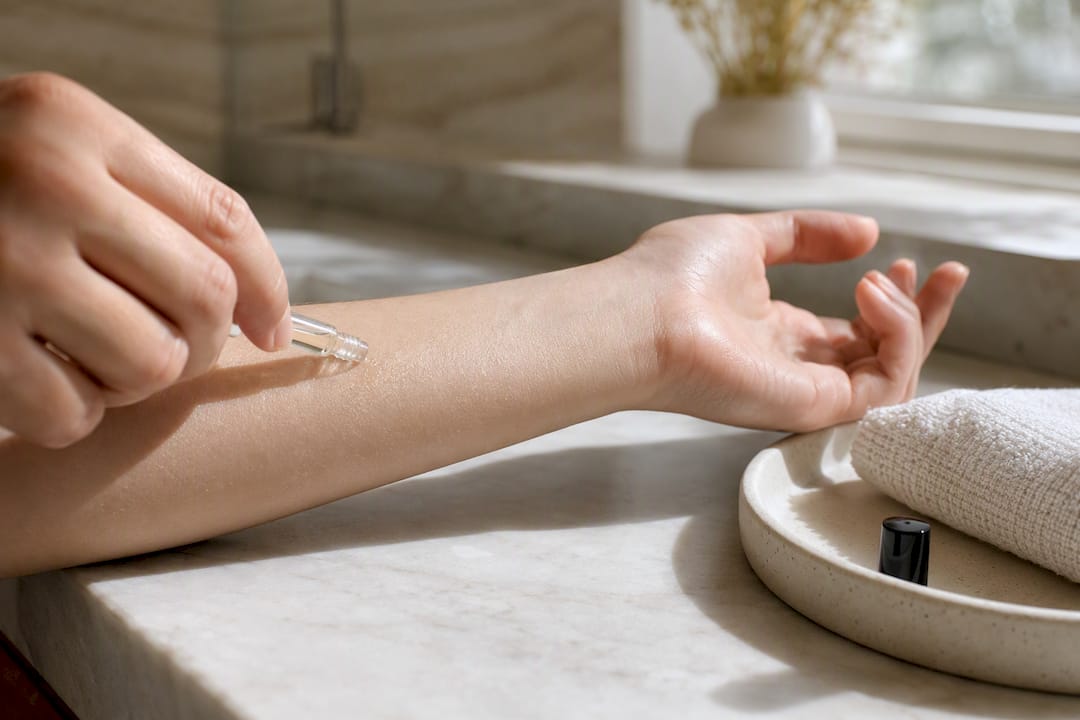
In-store testing has one specific risk: shared testers occasionally carry residue from other ingredients, including alcohol-based sprays or lotions used by previous shoppers, which can complicate a reaction and make it hard to know what actually triggered it. Online decants sidestep that, since the sample only ever touches your skin, but they remove the chance to ask a trained associate about known irritants in a specific fragrance family before you buy.
If you have a known sensitivity to particular ingredients, such as certain synthetic musks or high concentrations of citrus oils, ask counter staff directly. Many can point you toward gentler concentrations or alternative formulations. When ordering online, check product descriptions for concentration level, since a parfum strength carries a higher dose of the same allergens as an eau de toilette. Whichever route you choose, test one new fragrance at a time and leave at least 24 hours before introducing another, so a reaction is always traceable to a single source.
How do you navigate counter etiquette and get access to testers?
Fragrance counters run on unwritten rules that make the whole process smoother once you know them. Staff generally expect you to ask before spraying, rather than helping yourself to open testers, particularly at busy department store counters where several brands share close floor space.
Arriving with a short list already narrowed to three or four fragrances, rather than asking to try everything on the shelf, tends to get better attention from staff and produces better recommendations. Mentioning fragrances you already like gives an associate a genuine reference point rather than a blank brief.
Timing matters more than most shoppers realise. Early weekday mornings see far less counter traffic than weekend afternoons, which means testers are less likely to be depleted or contaminated, and staff have more time to talk through options properly. If a counter is out of paper blotters, it is entirely reasonable to ask for a fresh strip rather than spraying directly onto skin from an open tester bottle that dozens of other hands have touched that day.
Some brands restrict certain niche or limited lines to be tried only with staff assistance rather than left out for self-service testing, so do not assume every fragrance on display is freely accessible. Asking is faster than guessing.
How do you judge scent notes when buying online?
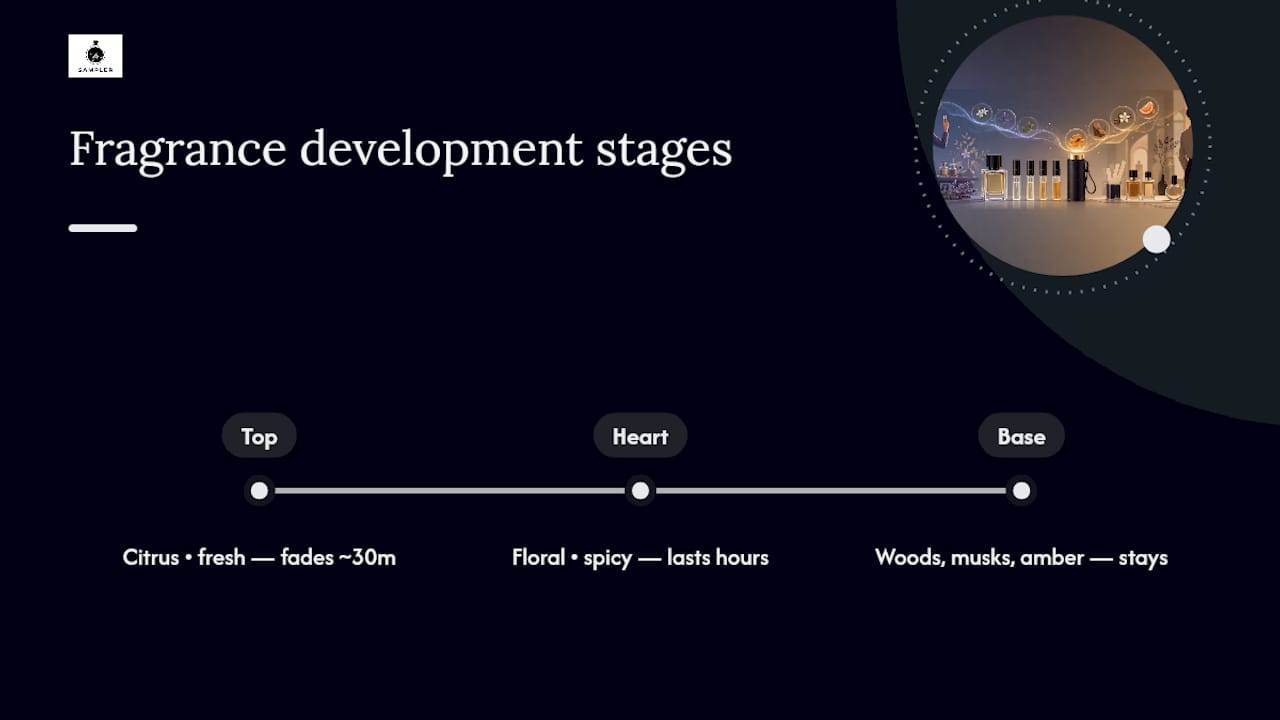
Reading a fragrance description well is a skill, and it is the one place where online buyers genuinely have less information than in-store shoppers. Notes are usually listed in three tiers: top, heart and base, and each tells you something different about how long that character will actually last on skin.
Top notes fade fastest, often within the first thirty minutes, so a description leading with citrus or fresh notes is describing the opening, not the overall character. The heart notes, often floral or spicy, define most of what you will smell for the next few hours. Base notes, typically woods, musks or amber, are what remains after several hours and often what people remember most about a fragrance days later.
Treat marketing language with a critical eye. Descriptions built around evocative imagery rather than specific named ingredients tend to tell you less about how the scent will actually smell. Look instead for concrete ingredient names and comparisons to fragrances you already know. Customer reviews mentioning longevity, projection or specific occasions tend to be more reliable than official marketing copy, since they reflect how the scent actually performed rather than how a brand wants it to be perceived.
How Rupesh approaches fragrance sampling
The workflow that works best is simple and repeatable: screen broadly in-store first, then confirm your top two or three finalists with 2ml to 5ml decants you can wear properly over several days. Skipping straight to a full bottle based on a thirty-second sniff is where most buyer’s regret starts.
One pattern comes up again and again with customers who get this right. They buy two or three decants of scents they already narrowed down at a counter, wear each on a separate day, and only then commit to a full bottle. The decant step rarely costs much, and it consistently prevents the far more expensive mistake of a full bottle that smells wrong by hour three.
— Rupesh
How Theperfumesampler makes wearable testing simple
Online retailers exist to fill the gap between a brief counter spray and a confident full-bottle purchase. Decants commonly come in small sizes such as 2ml, 3ml, 5ml and 10ml across niche and designer fragrances, letting you match the format to the checklist above rather than settling for whatever size a counter happens to give away.
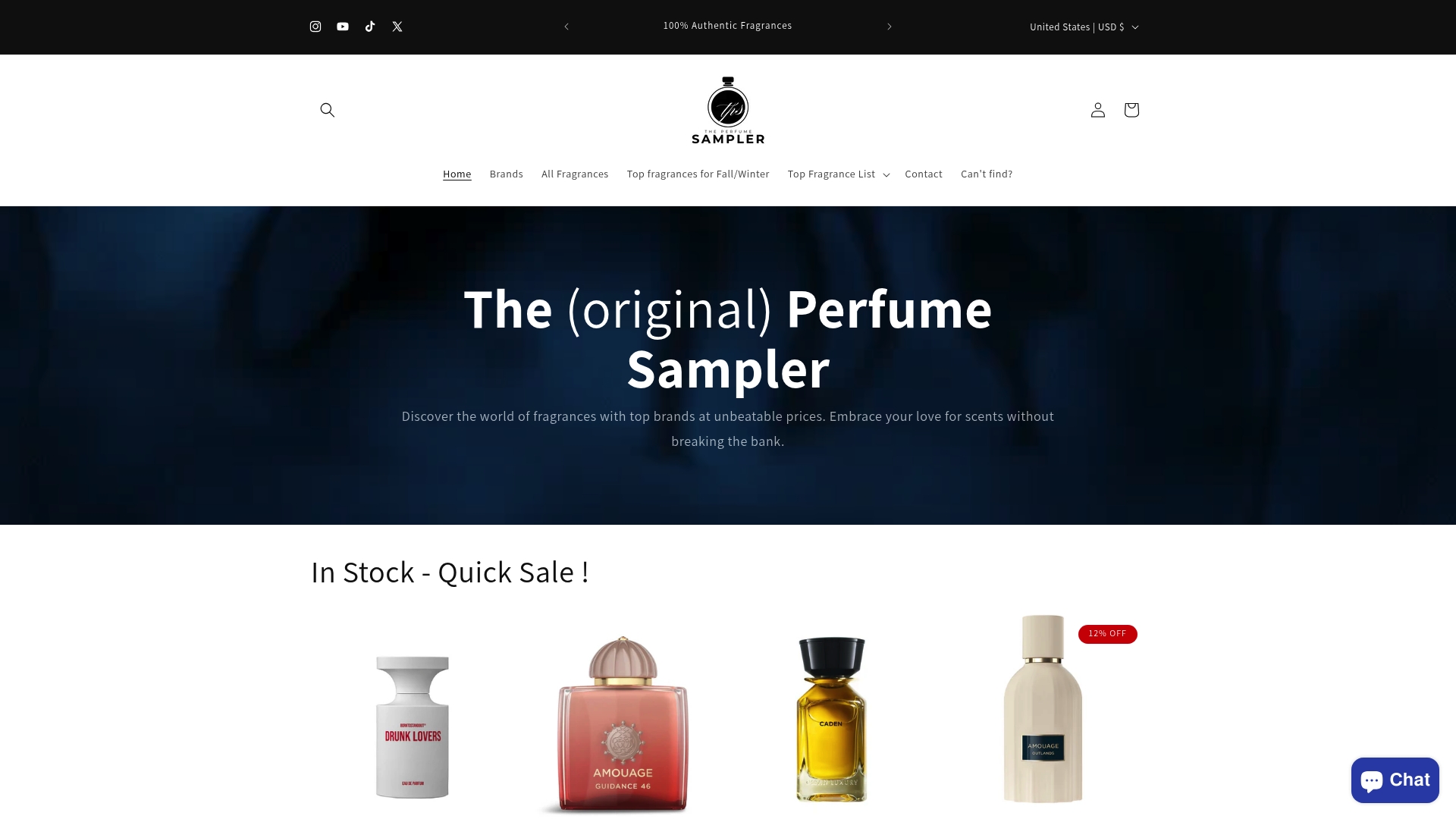
The process is straightforward: pick your two or three finalists from an in-store screening session, order them as decants, and wear each one on a separate day exactly as the testing checklist recommends. A reliable retailer offers an authenticity guarantee, and some have positive customer ratings, with discounts and free shipping thresholds that can make ordering a handful of finalists more affordable. Once one earns its place, the same catalogue carries full bottles ready to order, including options like the BOSS Boss Bottled Absolu Parfum Intense.
Ready to confirm your shortlist? Browse the full range of fragrance samples and decants and order your finalists today.
Sources
- Small samples, big results: 6 takeaways on in-store sampling | Wisconsin School of Business
- What will the future of beauty sampling look like?
- Where to get fragrance samples
- Measuring and managing returns to in-store free sample promotions
FAQ
Is it better to sample fragrance online or in-store?
Neither wins outright: in-store suits quick screening and expert advice, while online suits repeat wear, privacy and niche access. Most shoppers get the best result from a hybrid approach, screening in-store and confirming with online decants.
How many sprays should I use when testing a fragrance?
There is no universal number, but consistency matters more than quantity. Use the same spray count and application site for every finalist so your comparison across separate wear days stays accurate.
What size fragrance sample should I buy for testing?
A 2ml decant suits a quick confirmation of a scent you already like, while 5ml to 10ml gives you several full-day wears to judge longevity properly. Many retailers offer decants in sizes like 2ml, 3ml, 5ml and 10ml to match either need.
How do I know an online fragrance sample is authentic?
Check for clear sourcing information, correct batch coding, and a seller that states an authenticity guarantee rather than vague marketing claims. Reviews mentioning longevity and projection are also a useful check against the product description.
Are in-store fragrance samples always free?
Most department store counter samples are free, though some brands charge a small amount for the equivalent sample sold online, based on reporting from Byrdie. Reward programmes and promotional events are another reliable free route worth checking regularly.