

Match scent to mood: a practical guide for your mood wardrobe
To match a scent to your mood, choose a fragrance family that reliably evokes the emotion you want, test it on your skin, and try a small sample or decant before buying a full bottle. Scent signals travel directly to the limbic system, the brain’s emotional centre, which is why a single note can shift how you feel within minutes. The practical rule: pick your target mood, identify one note family, and test a 2–3 ml sample before committing.
Three steps you can follow right now:
- Decide the mood you want (calm, energised, confident, sensual, or focused).
- Pick the note family that matches it from the list below.
- Try a 2 ml or 3 ml sample on skin and wear it for at least two hours.
Quick mood-to-note-family reference:
- Energised/alert → Citrus (bergamot, grapefruit, lemon)
- Calm/relaxed → Floral-herbal (lavender, chamomile)
- Confident/powerful → Woody (cedarwood, vetiver, sandalwood)
- Sensual/romantic → Oriental (amber, musk, rose)
- Playful/happy → Fresh-fruity (peach, green tea, light florals)
- Focused/productive → Herbal-green (eucalyptus, mint, basil)
- Nostalgic/comforting → Gourmand (vanilla, tonka bean, warm spice)
Key takeaways
Matching fragrance to mood works reliably when you choose the right note family, test on skin through the full dry-down, and use samples to validate before buying.
| Point | Details |
|---|---|
| Choose by note family | Match citrus for energy, lavender/floral for calm, woody for confidence, oriental for sensuality. |
| Test on skin, not paper | Wear a sample for two to four hours to assess the dry-down — that is the scent you will actually live with. |
| Use sample sizes strategically | 2–3 ml for first tests, 5 ml to confirm, 10 ml for regular rotation in your mood wardrobe. |
| Track your reactions | Log mood responses after the dry-down; patterns over two weeks reveal which scents genuinely work for you. |
| Theperfumesampler for sampling | Authentic decants in 2 ml–10 ml sizes let you build a full mood wardrobe without buying full bottles. |
Table of Contents
- How to match scent to mood: the complete note-by-note guide
- How to test a perfume properly before you buy
- Layering, concentration, and wear time: shaping a mood across the day
- Choosing scent by personality, outfit, weather, and time of day
- A quick guide to scent families and their emotional signatures
- Build a mood wardrobe with samples: a practical plan
- Why sampling first is the only sensible approach
- Theperfumesampler makes it practical to build your mood wardrobe
- Sources
How to match scent to mood: the complete note-by-note guide
Matching fragrance with mood works because different notes trigger distinct psychological and sensory responses. Studies link lavender with relaxation and citrus with alertness, and these associations are consistent enough to use as a practical guide.
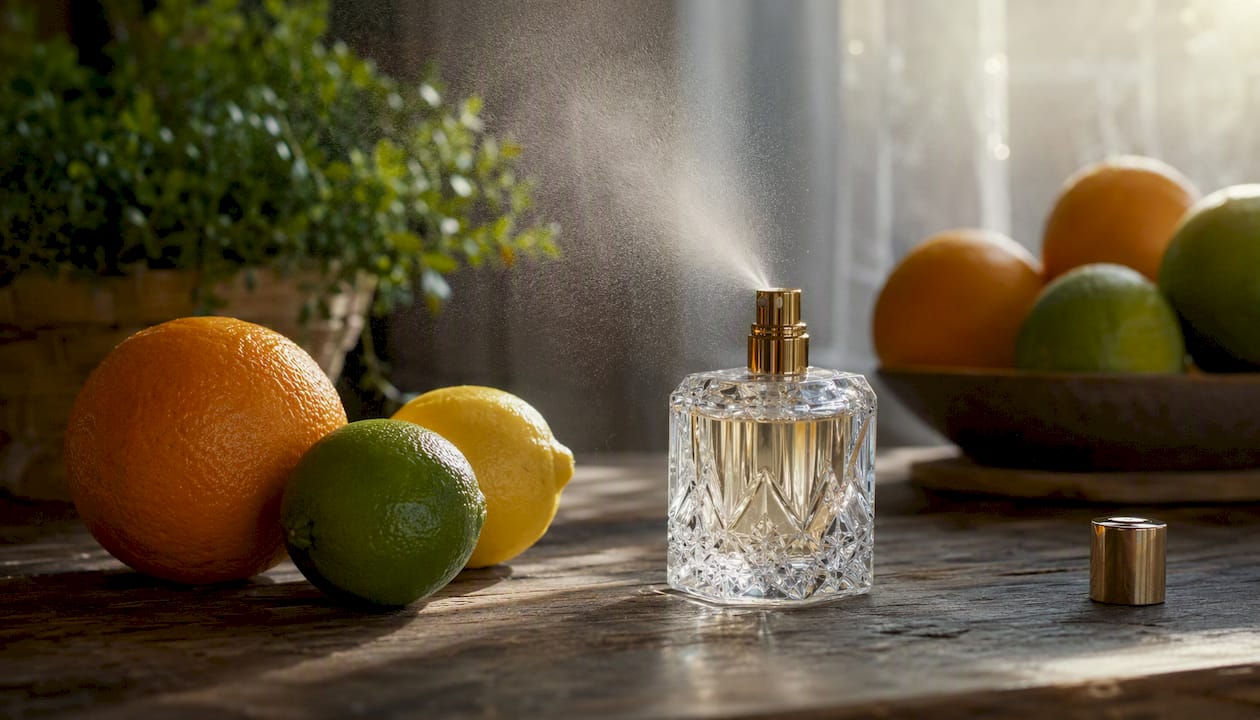
Energised and alert Citrus notes — bergamot, grapefruit, yuzu, lemon — are the clearest mood-lifters in perfumery. They open bright and sharp, stimulating the senses quickly. A citrus cologne or an eau de toilette built on bergamot is the go-to for mornings or pre-workout moments.
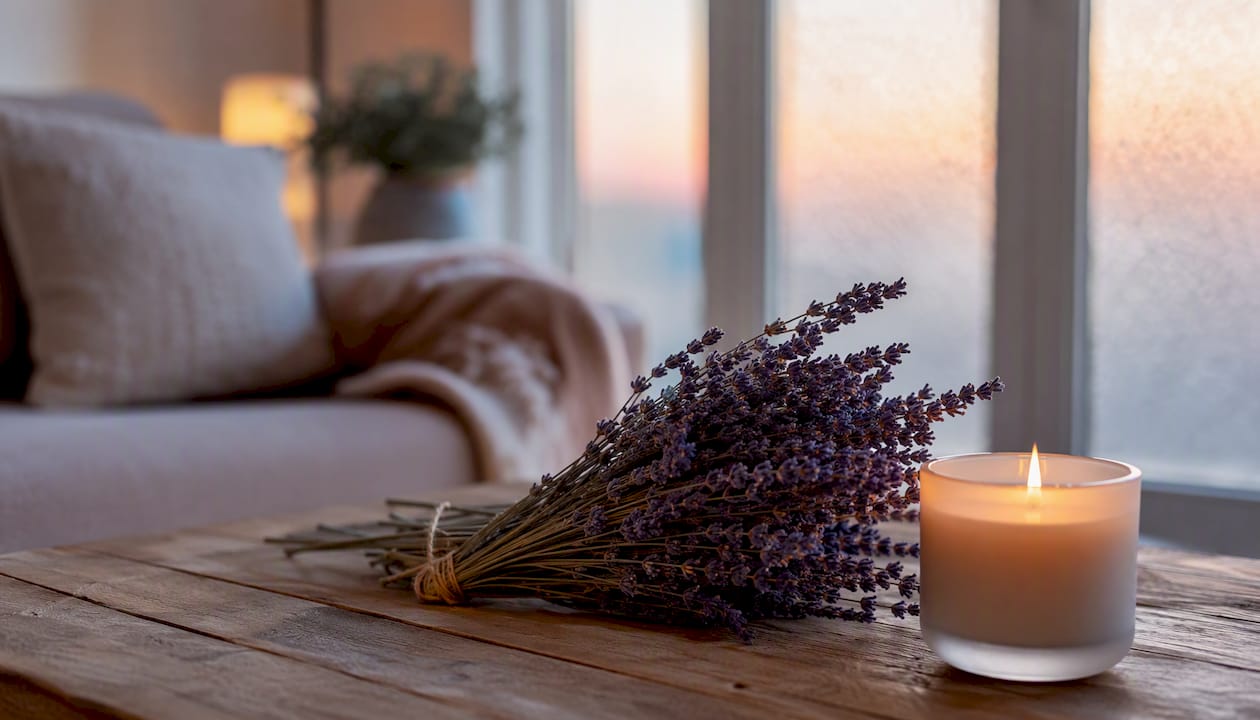
Calm and relaxed Lavender, chamomile, and soft iris are the workhorses of relaxation-focused scents. Lavender in particular appears repeatedly in research as a reliable calming agent. Pair it with a light musk base and you have a classic sleep-or-unwind fragrance. Calming blends built on these notes are also common in wellness and aromatherapy products beyond fine fragrance.
Confident and powerful Woody notes — cedarwood, vetiver, patchouli, oud — project authority and groundedness. They tend to linger on skin, which reinforces a sense of presence. A warm woody oriental or a dry cedarwood fougère suits a formal meeting or any moment where you want to feel composed. For a deeper look at this category, the power fragrance guide covers the specific note combinations that create that effect.
Sensual and romantic Oriental and floral-oriental families deliver warmth and intimacy. Amber, musk, rose, and jasmine are the key notes. They work slowly, building on skin heat over several hours, which is part of why they feel so personal. A practical guide to romantic fragrances covers this mood in more detail.
Playful and happy Light fruity-florals — peach, raspberry, green tea, white musk — feel effortless and sociable. They suit casual weekend wear or any occasion where you want to feel approachable rather than imposing.
Focused and productive Herbal and green notes (eucalyptus, mint, basil, rosemary) are associated with mental clarity. They are less common in mainstream perfumery but appear in niche and aromatherapy-influenced scents. A green herbal eau de cologne worn at a desk can support concentration without distracting others.
Nostalgic and comforting Gourmand notes — vanilla, tonka bean, warm spice, caramel — evoke comfort and memory. They are heavier and sweeter, best suited to evenings or cold-weather days when you want to feel settled.
| Mood | Primary note family | Quick scent type example |
|---|---|---|
| Energised/alert | Citrus | Bergamot-led eau de toilette |
| Calm/relaxed | Floral-herbal | Lavender and soft musk |
| Confident/powerful | Woody/oriental | Dry cedarwood fougère |
| Sensual/romantic | Oriental/floral-oriental | Amber and rose parfum |
| Playful/happy | Fresh-fruity | Peach and green tea |
| Focused/productive | Herbal-green | Mint and eucalyptus |
| Nostalgic/comforting | Gourmand | Vanilla and warm spice |
Pro Tip: For complex moods — say, confident but also calm — layer a woody base with a light herbal top note. Apply the heavier woody scent first, then a small amount of the herbal on pulse points. The two families complement rather than clash.
How to test a perfume properly before you buy
Testing on a paper strip tells you almost nothing useful. The strip shows you the top notes — the first impression that fades within 15 minutes. What matters is how a fragrance behaves on your skin over two to four hours, because body chemistry and dry-down determine the lasting scent.
Understanding top, heart, and base notes is the foundation of a reliable test routine. Top notes open the scent; heart notes carry the mood; base notes are what you smell on your skin three hours later.
A reliable at-home test routine:
- Spritz once on the inside of your wrist or inner elbow.
- Do not rub — rubbing crushes the top notes and distorts the opening.
- Wait 15–20 minutes for the top notes to settle.
- At 45–60 minutes, smell again. This is the heart phase, where the mood of the fragrance becomes clear.
- At two to four hours, check the dry-down. This is what you will smell for the rest of the day.
- Ask yourself: does this scent support the mood I wanted? Does it feel right on my skin?
Sample sizes and how far they go:
- 2 ml: roughly 2–4 wears. Enough for a first proper test.
- 3 ml: roughly 4–6 wears. Enough to test across different days and moods.
- 5 ml: roughly 8–12 wears. Enough to confirm a fragrance works for you long-term.
- 10 ml: roughly 20+ wears. A short-term rotation piece or a confirmed favourite.
Pro Tip: The “coffee bean as a nose cleanser” idea is a myth. Coffee beans do not reset your sense of smell — they just replace one strong scent with another. The most effective palate cleanser is plain air. Step outside, breathe normally for two minutes, and your nose will recalibrate on its own.
Layering, concentration, and wear time: shaping a mood across the day
Concentration affects how long a fragrance supports a mood and how far it projects, with eau de toilette, eau de parfum, and parfum representing increasing oil concentrations, resulting in longer wear and stronger sillage.
For an office, EDT or a light EDP is usually the right call. The projection stays close to the skin, which keeps the mood personal rather than imposing. For an evening out, a richer EDP or parfum lets the scent do more work in the room.
Layering techniques that actually work:
- Apply an unscented or lightly scented moisturiser first. Fragrance clings to hydrated skin and lasts noticeably longer.
- Spray on pulse points: wrists, inner elbows, base of the throat, behind the knees. Body heat amplifies the scent.
- A light touch on hair or clothing extends longevity, but avoid spraying directly on delicate fabrics.
- For a mood shift mid-day, reapply a single spritz on the wrist rather than a full application. It refreshes the top notes without overwhelming the base.
Layering dos and don’ts:
- Do layer complementary families: citrus over a woody base, or floral over a light musk.
- Do not layer two heavy orientals or two dense ouds — the result is muddy rather than complex.
- Do not layer two strong vanillas from different products; the sweetness compounds and becomes cloying.
- Do adjust for temperature. Heat amplifies projection, so use less in summer or warm rooms.
Sillage — the trail a fragrance leaves — matters in social contexts. A heavy sillage in a small office can feel intrusive; the same scent in an open evening venue feels appropriate. Choosing a lighter concentration for daytime and a richer one for evenings is a simple, effective rule.
Choosing scent by personality, outfit, weather, and time of day
A fragrance that matches your mood but clashes with your context will feel off. The practical framework is: personality first, then occasion, then weather, then outfit.
Personality cues and suggested note families:
- Minimalist: clean musks, light woods, aquatic notes
- Bold/expressive: spicy orientals, dark florals, oud
- Nostalgic/romantic: powdery florals, soft amber, iris
- Playful/casual: fruity-florals, green tea, citrus
For more examples of how personality maps to scent, the popular aesthetic fragrance choices guide covers this in practical detail.
Occasion checklist:
- Work/office: light EDT, clean musks or soft woods, low sillage.
- Date/evening: EDP or parfum, warm florals or oriental base.
- Weekend/casual: fresh citrus, fruity-floral, or herbal.
- Home/relaxing: gourmand, soft lavender, or ambient woody.
When context shifts, adjust these variables:
- Hot day: reduce the number of sprays by half; heat amplifies projection significantly.
- Formal meeting: choose a scent with low-to-medium sillage; avoid heavy ouds or dense spice.
- Cosy evening in: lean into gourmand or soft oriental; this is where richer concentrations feel right.
- Cold weather: woody, spicy, and oriental notes perform better in the cold; citrus fades faster.
A quick guide to scent families and their emotional signatures
Understanding fragrance families lets you decode any perfume label and predict how a scent is likely to make you feel. The main families and their emotional associations are consistent enough to use as a reference, though individual skin chemistry always introduces some variation.
| Family | Typical notes | Emotional signature | When to wear |
|---|---|---|---|
| Citrus | Bergamot, lemon, grapefruit, yuzu | Energising, uplifting, alert | Morning, exercise, work |
| Floral | Rose, jasmine, peony, iris | Romantic, soft, feminine | Daytime, dates, spring |
| Woody | Cedarwood, vetiver, sandalwood, oud | Grounded, confident, warm | Evenings, formal, autumn/winter |
| Oriental | Amber, musk, vanilla, spice | Sensual, warm, mysterious | Evenings, cold weather |
| Fresh/aquatic | Sea notes, green tea, cucumber | Clean, calm, refreshed | Summer, sport, casual |
| Fougère | Lavender, oakmoss, coumarin | Classic, composed, reliable | Work, everyday wear |
| Gourmand | Vanilla, caramel, tonka, chocolate | Comforting, nostalgic, sweet | Evenings, winter, home |
For a fuller breakdown of how these families work and how to find a signature scent within them, the fragrance families guide is a useful next step.
A short caution: skin chemistry, diet, and even medication can alter how a fragrance family smells on you specifically. A citrus that smells bright on one person can turn sharp or flat on another. Testing on your own skin remains the only reliable method.
Build a mood wardrobe with samples: a practical plan
A mood wardrobe is a small, deliberate collection of scents — typically six to nine — each chosen for a specific emotional state. The goal is to have a reliable option ready for any mood without owning dozens of full bottles.
Olfactory signals connect directly to the limbic system, which means scent has a measurable effect on emotion, memory, and aspects of cognition. Building a wardrobe around this connection is a practical application of that mechanism.
Step-by-step plan to build your mood wardrobe:
- List the six or seven moods you want to cover (use the mood-to-note table above as a reference).
- For each mood, identify one or two candidate fragrances from the relevant note family.
- Order 2 ml or 3 ml samples of each candidate.
- Test one sample per day, wearing it for a full day and noting your reaction.
- After the dry-down (two to four hours), log how the scent made you feel — a simple emoji or one-word note is enough.
- After two weeks, review your log. Patterns will emerge: some scents will consistently support the mood you intended; others will not.
- Upgrade confirmed favourites to a 5 ml or 10 ml decant for regular rotation.
Tools like Moodnose, which maps emotional signatures across a large perfume database, can help you surface candidates before you order samples. Use it to narrow the field, then validate with skin tests.
Pro Tip: Your first impression of a fragrance — the top notes in the first five minutes — is rarely the most useful data point. The dry-down at two to four hours is where you discover whether a scent genuinely supports the mood you wanted. Log that impression, not the opening.
Why sampling first is the only sensible approach
There is a persistent assumption in fragrance that you should be able to decide in a shop, from a strip, in under a minute. That assumption is wrong, and it costs people money.
Fragrance is one of the most personal sensory experiences there is. The same oriental that smells warm and inviting on one person can turn powdery and flat on another. Skin chemistry, body temperature, and even what you ate that day all affect the dry-down. A strip test in a department store tells you what the perfumer intended. Your skin tells you what you will actually wear.
The mood-matching dimension makes this even more important. A scent that is supposed to make you feel calm but instead makes you feel slightly nauseous — because of a note your chemistry amplifies — is not doing its job. You cannot know that from a strip or from a 30-second wrist sniff. You need hours of real wear.
Sampling first is not a compromise. It is the correct method. The only question is whether you have access to the right samples.
Theperfumesampler makes it practical to build your mood wardrobe
That range maps directly onto the sampling plan above: 2 ml and 3 ml for first tests, 5 ml for confirmation, 10 ml for a confirmed rotation piece.
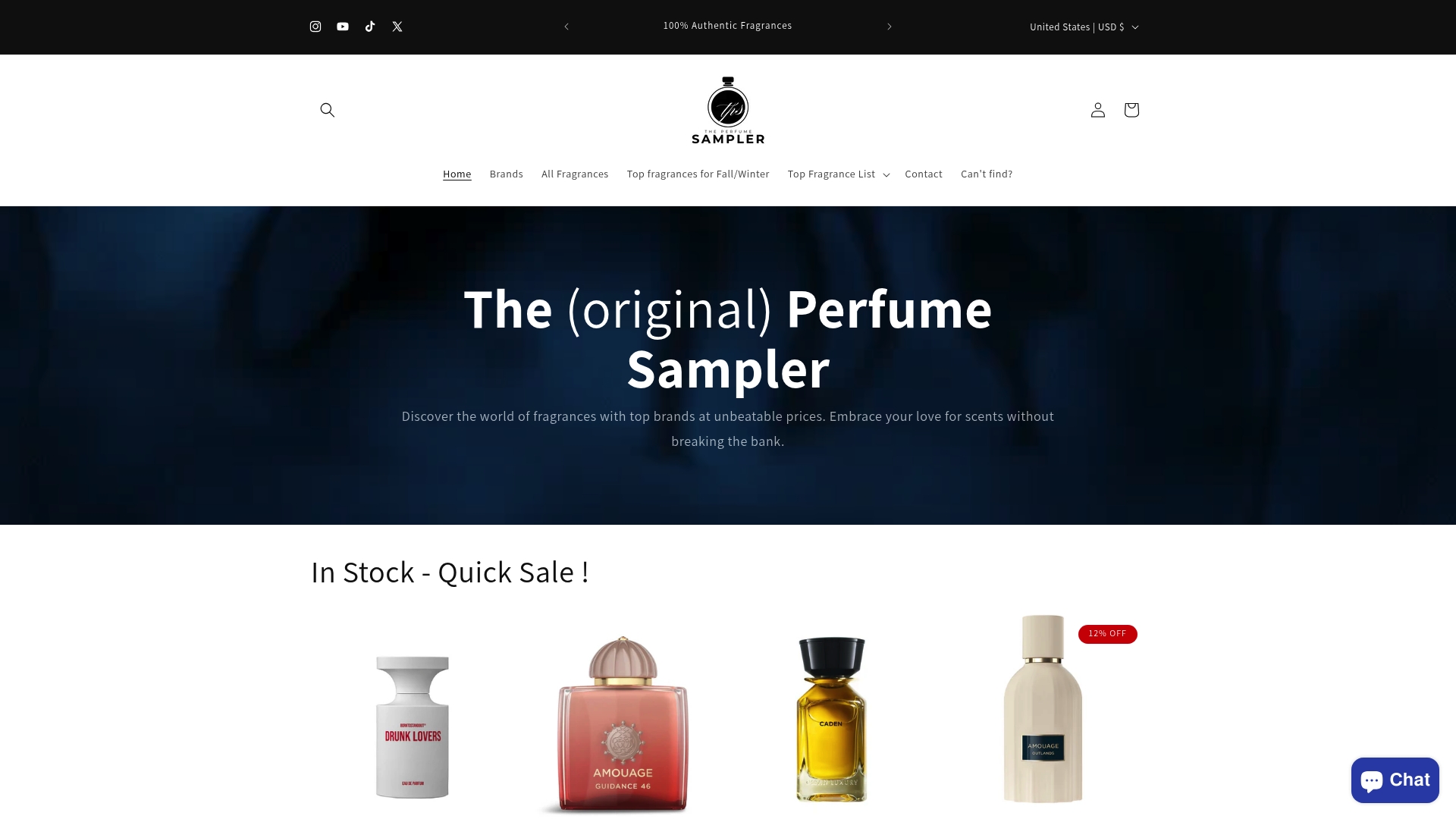
Every decant is filled from the original bottle, so you are testing the real fragrance, not a reformulation or imitation. For readers building a mood wardrobe, this means you can cover six or seven mood categories for a fraction of the cost of full bottles. Full bottles are also available for confirmed favourites, including options like the BOSS Bottled Absolu Parfum Intense for readers who want a higher-concentration option after sampling. Read more about why decants are the practical choice before committing to a full bottle.
Sources
Recommended
- Guide to personal scent style: build your scent wardrobe – ThePerfumeSampler
- How to match perfume to outfits: quick style pairings – ThePerfumeSampler
- Popular aesthetic fragrance choices: find your signature scent – ThePerfumeSampler
- Guide to profiling fragrance personalities: find your scent – ThePerfumeSampler