
How to appreciate rare fragrances: a practical guide
TL;DR:
- Training your nose through daily smelling and scent recall deepens understanding of rare fragrances. Sampling on skin, tracking reactions, and recognizing scent families help enthusiasts appreciate and acquire rare perfumes thoughtfully. Patience and active engagement are key to truly experiencing the craft behind unique scents.
Appreciating rare fragrances is a skill that blends sensory training, emotional recall, and informed selection. The Perfume Society defines olfactory appreciation as the active practice of building scent memory through repeated, deliberate exposure to aromas. Most enthusiasts treat fragrance as passive pleasure. The ones who truly understand rare perfumes treat it as a discipline. This guide covers how to appreciate rare fragrances through nose training, smart sampling, and mindful engagement with scent composition.
How to train your nose for rare fragrances
Active smelling in daily life is the single most effective method for building an olfactory vocabulary. Paying attention to everyday aromas such as morning coffee, fresh herbs, and citrus peel trains the brain to isolate and name individual scent components. That skill transfers directly to recognising the top, heart, and base notes in complex rare perfumes.
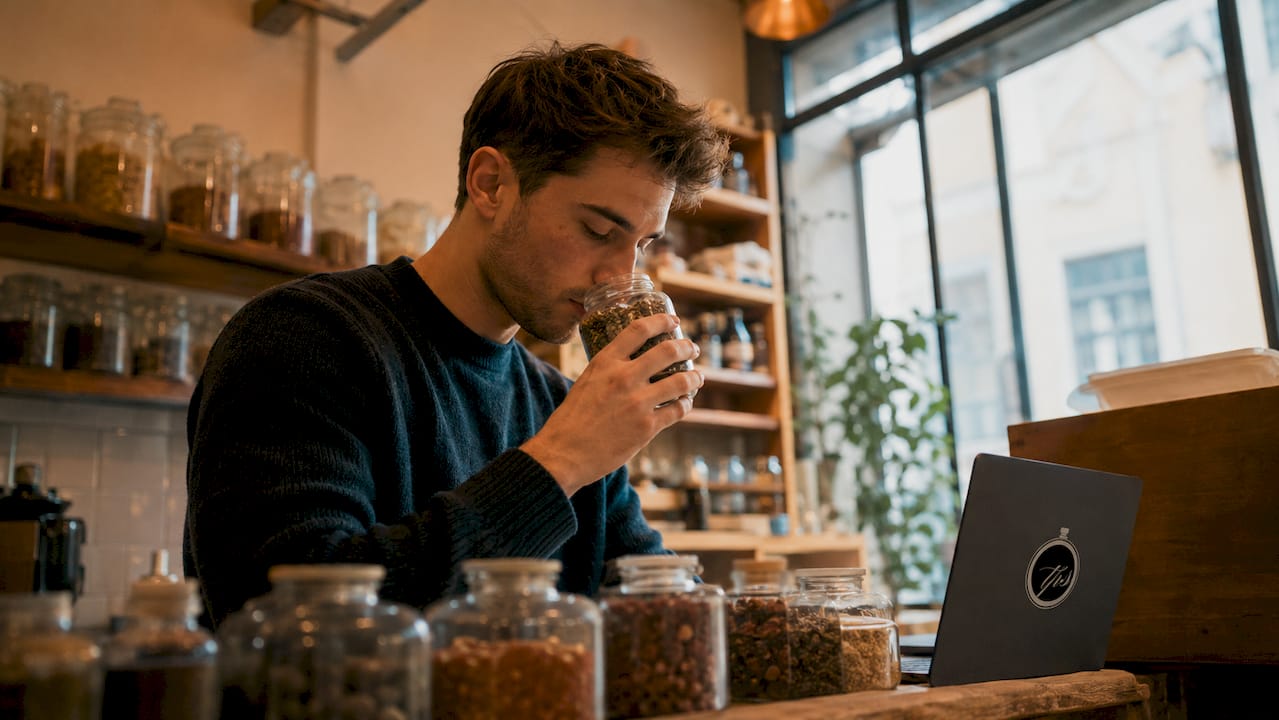
Professional perfumers use a technique called mental blending. They smell a raw material, then mentally combine it with another note they already know. Over time, this builds a personalised internal library of scents and associations. You can replicate this at home by smelling two ingredients side by side and asking yourself what a third note would add.
Curiosity is the foundation of olfactory development. Repeatedly smelling unfamiliar scents, even ones you initially dislike, builds recognition and expands your palate. A scent that smells harsh on first encounter often reveals depth and nuance after three or four exposures.
Pro Tip: Keep a small tin of coffee beans on your dressing table. Inhale briefly between fragrance tests to reset your nose. It clears olfactory fatigue faster than fresh air alone.
- Smell ingredients in your kitchen daily: black pepper, cardamom, vetiver root, and fresh ginger are common perfumery materials.
- Practise naming what you smell before reading a fragrance’s listed notes. This builds independent scent recognition.
- Revisit the same fragrance across different times of day. Temperature and skin chemistry alter how notes project and evolve.
- Link each scent to a specific memory or image. The Perfume Society confirms that scent is closely tied to memory, making emotional anchoring one of the most reliable ways to retain a new scent.
How to select rare fragrances without wasting money
Sampling before committing is the most reliable strategy for enthusiasts exploring rare and niche perfumes. A tiered budgeting approach protects your investment at every stage. The fragrance budget framework works as follows:
- Sampling phase (£0–£40). Start with small decants and discovery sets. Test widely before forming preferences.
- Exploration phase (£40–£120). Invest in curated sets from houses whose samples impressed you. This is where you identify your scent families.
- Signature bottle phase (£120–£280). Purchase full bottles only of fragrances you have worn multiple times and consistently loved.
- Collector phase (£280 and above). Reserve this tier for limited editions, discontinued scents, or perfumer-specific releases you cannot replace.
This framework prevents the most common mistake in fragrance collecting: buying a full bottle based on one wearing in a shop.
Pro Tip: Test no more than three or four fragrances per session. Beyond that, your nose loses accuracy. Use a neutral cotton handkerchief between samples to reset your sense of smell.
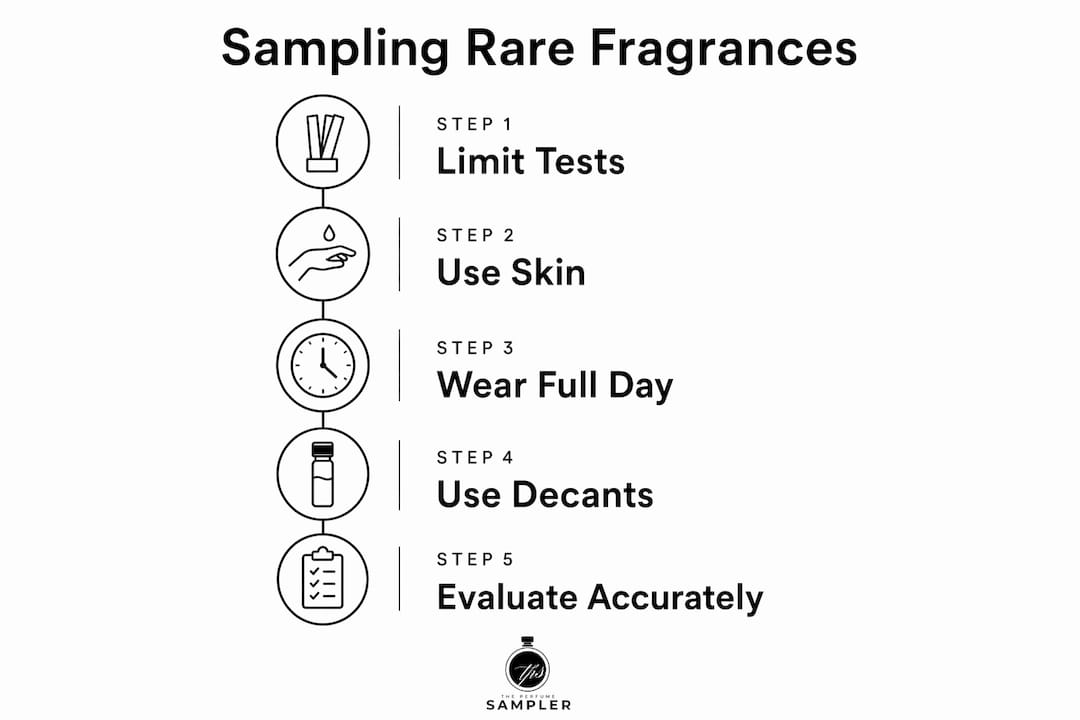
Testing on skin rather than paper strips gives a far more accurate reading of how a fragrance will perform for you. Paper strips show the opening accord only. Skin reveals the full dry-down, which is where rare fragrances often show their most distinctive character.
| Sampling method | What it reveals |
|---|---|
| Paper strip | Opening accord and top notes only |
| Skin test, single wearing | Top and heart notes, initial dry-down |
| Skin test, multiple wearings | Full dry-down, longevity, and skin chemistry interaction |
| Fragrance diary record | Emotional response and long-term preference |
Discovery sets and niche fragrance samples from trusted sources reduce the financial risk of exploring unfamiliar houses. They also accelerate the learning process by exposing you to a wider range of compositions in a short time.
What makes a fragrance rare: understanding scent families
Rare fragrances are defined by limited production, unusual raw materials, or a perfumer’s distinctive creative signature. Understanding olfactive families is the fastest way to decode what makes a particular scent unusual within its category. Recognising these families reduces confusion and gives you a framework for describing and comparing complex compositions.
The main olfactive families are:
- Floral. Rose, jasmine, and iris dominate. Rare florals often feature unusual soliflores or unexpected floral pairings.
- Woody. Sandalwood, oud, and cedarwood. Rare expressions use sustainably sourced or aged materials that carry greater depth.
- Oriental. Amber, vanilla, and resins. Rare orientals layer unusual spices or animalic notes that mass-market versions avoid.
- Chypre. Oakmoss, labdanum, and bergamot. Increasingly rare due to IFRA restrictions on oakmoss, making vintage chypres genuinely scarce.
- Fougère. Lavender, coumarin, and oakmoss. The backbone of classic masculine perfumery, now reimagined by niche houses.
- Gourmand. Edible notes like praline, coffee, and tonka bean. Rare gourmands avoid sweetness in favour of roasted or bitter complexity.
Seasonality shapes how these families perform. Woody and oriental fragrances project more powerfully in cold weather. Citrus and fresh compositions suit warmer months. Layering a light citrus over a woody base is a technique used by collectors to extend the wearability of heavier rare scents across seasons.
Exploring unique fragrance profiles across multiple families builds a versatile palate. Enthusiasts who restrict themselves to one family miss the cross-family contrasts that reveal what makes a rare scent genuinely distinctive.
Creating a mindful fragrance experience
Appreciating niche fragrances requires deliberate attention, not passive wearing. Turning fragrance into a sensory ritual produces stronger scent memories and a deeper personal connection to each composition. The Louvre Abu Dhabi’s Art in Scents programme demonstrates this principle at scale. The tour pairs artworks with bespoke scents to evoke mood and narrative, showing that multisensory engagement creates far more durable scent memories than smelling alone.
You can apply the same principle at home. Smell a fragrance while looking at a painting, listening to a specific piece of music, or sitting in a particular environment. The additional sensory context anchors the scent in memory more reliably than smelling it in isolation.
“Documenting memories or occasions related to a scent aids retention and appreciation over time. A fragrance diary turns passive wearing into an active record of personal scent history.”
Keeping a fragrance diary is one of the most underused tools in fragrance appreciation. Record the date, the occasion, the notes you detected, and your emotional response. Over months, patterns emerge that reveal your genuine preferences rather than your impulse reactions.
- Write your first impression within five minutes of application.
- Record the dry-down after two hours.
- Note longevity and projection on your skin specifically.
- Pair the fragrance with a body oil, such as a prestige oriental dry oil, to extend sillage and observe how the base notes interact with additional layers.
Avoiding passive smelling is the single biggest shift enthusiasts can make. Passive wearing means you stop noticing a fragrance within twenty minutes of application. Active engagement means returning to your wrist every thirty minutes to track how the composition evolves.
Key takeaways
Appreciating rare fragrances requires olfactory training, structured sampling, and deliberate sensory engagement to build lasting scent knowledge.
| Point | Details |
|---|---|
| Train your nose daily | Smell kitchen ingredients and everyday aromas to build an independent scent vocabulary. |
| Sample before you buy | Use decants and discovery sets to test fragrances on skin across multiple wearings before committing. |
| Learn olfactive families | Recognising floral, woody, oriental, and chypre families gives you a framework for decoding rare compositions. |
| Keep a fragrance diary | Recording emotional responses and dry-down notes builds long-term preference awareness. |
| Follow the perfumer, not the brand | A perfumer’s signature style reveals craftsmanship that brand marketing often obscures. |
Why I think most enthusiasts appreciate rare fragrances the wrong way
Most people approach rare fragrances the same way they approach wine: they read the label, smell once, and form an opinion. That approach works for commodity products. It fails completely with rare perfumes.
The mistake I see most often is prioritising brand prestige over perfumer identity. A fragrance from a well-known luxury house is not automatically rare or well-crafted. Following the perfumer’s portfolio reveals the signature style hidden behind brand names. Some of the most distinctive compositions come from independent perfumers with no marketing budget and no celebrity endorsement.
The second mistake is giving up on a fragrance after one wearing. Rare scents are often challenging on first encounter. They use unusual materials, unconventional structures, or deliberately austere openings that resolve into something extraordinary after an hour. Patience is not optional. It is the core skill.
My honest advice: spend three months smelling widely before spending seriously. Use that time to build your olfactory vocabulary, identify two or three scent families that consistently appeal to you, and track your reactions in writing. By the end of that period, you will know exactly what you are looking for. You will also stop being impressed by price tags and start being impressed by craftsmanship.
The enthusiasts who get the most from rare fragrances are not the ones with the largest collections. They are the ones who can articulate precisely why a specific composition moves them.
— Rupesh
Sample rare fragrances with confidence through Theperfumesampler
Theperfumesampler offers fragrance decants in 2ml, 3ml, 5ml, and 10ml sizes, covering high-end niche and designer releases. That range makes it practical to apply the tiered sampling approach described in this guide without committing to full-bottle prices.
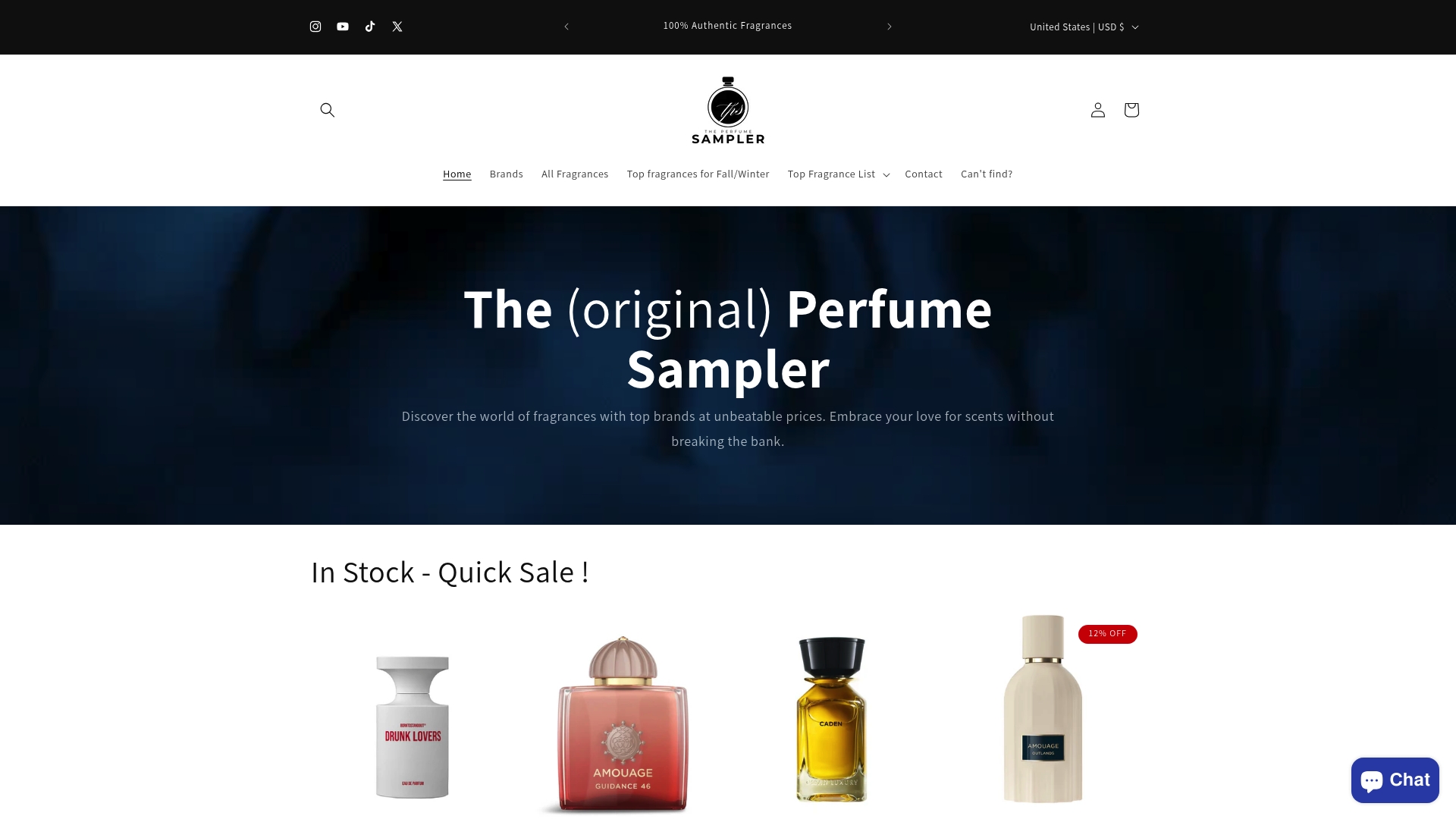
The why decants page explains the full case for sampling before buying, including how decants protect against costly mistakes and accelerate scent education. For enthusiasts ready to move into the collector tier, Theperfumesampler also carries full bottles of luxury releases, including options like BOSS Bottled Absolu Parfum Intense. All products are 100% authentic. Shipping is available internationally.
FAQ
What does it mean to appreciate rare fragrances?
Appreciating rare fragrances means actively training your nose, understanding scent composition, and building emotional connections to specific scents through repeated, deliberate exposure.
How many fragrances should I test in one session?
Test no more than three or four fragrances per session. Beyond that, olfactory fatigue reduces your ability to assess accurately.
What is the best way to sample rare perfumes before buying?
Test fragrances on skin rather than paper strips, and wear each one for a full day before deciding. Small decants from trusted sources make this practical and affordable.
Why do rare fragrances smell different on my skin?
Skin chemistry, temperature, and moisture levels all alter how a fragrance develops. The dry-down on your skin is the most reliable indicator of how a scent will perform for you personally.
Should I follow a perfumer or a brand when collecting rare fragrances?
Follow the perfumer. A perfumer’s signature style reveals consistent quality and creative vision that brand marketing does not always reflect.
Recommended
- What makes a fragrance truly unique: your scent guide – ThePerfumeSampler
- Discover niche fragrances: unique scents & sampling tips – ThePerfumeSampler
- Discover wearable fragrances: a luxury guide to sampling scents – ThePerfumeSampler
- How to choose romantic fragrances: a practical guide – ThePerfumeSampler