
Try Perfume Before You Buy: Why 2 to 10ml Decants Save Money
The most reliable ways to try before you buy perfume are in-store testers, free samples, discovery sets, and decants in 2 to 10ml sizes. Decants give you the most accurate picture because they let you wear a fragrance for a full day rather than catching a few minutes at a counter. Whichever route you choose, test on skin and wait for the dry-down before deciding.
TL;DR:
- Use testers to rule out scents quickly, discovery sets to explore a brand, and decants for a shortlisted fragrance whose longevity you need to assess.
- Apply one or two sprays to skin, check the scent after an hour and several hours, and repeat on different days before deciding.
- Because labels may list ingredients only as fragrance, patch test a small amount for 24 to 48 hours and stop use if irritation appears.
- A 2 ml or 3 ml decant suits quick comparisons, while 5 ml or 10 ml supports longer testing; check sourcing and sample credit policies.
Table of Contents
- Practical ways to try perfume before you commit
- How to test perfume so you can judge it fairly
- Safety and allergen basics when sampling perfumes
- Where to get samples and discovery sets, and how to keep sampling affordable
- Why decants and small samples work: our approach at ThePerfumeSampler
- A short routine for sampling fragrances well
- Try before you buy with ThePerfumeSampler
- FAQ
- Sources
Practical ways to try perfume before you commit
Each sampling method suits a different stage of your search, and the right choice depends on how much time, money, and certainty you need.
- In-store testers: fast and free, letting you rule out scents you dislike within seconds, but the wear time is too short to judge longevity or how a fragrance settles on your skin.
- Free samples and brand discovery sets: often given with a purchase, through a newsletter signup, or as a small paid set, these work well when you want to explore a brand’s range without pressure to buy immediately.
- Decants and small-sample bottles (2 to 10ml): poured from full bottles into smaller vials, these give you enough product for several full-day wear tests, which is the only real way to judge how a scent develops and lasts.
- Subscription and discovery services: curated monthly rotations suit people who want variety and discovery rather than a focused comparison between two or three specific fragrances.
- Community swaps and fragrance forums: a low-cost way to try niche or discontinued scents, though authenticity varies and verifying what you receive is harder than buying from a dedicated seller.
If you already have a shortlist, decants are usually the sharpest tool: they are affordable, they travel well, and they give you the days of wear needed to notice how a fragrance behaves on you specifically. If you are still exploring broadly, a discovery set or in-store session is the quicker starting point. Speed favours testers, cost favours decants, and only decants let you properly test longevity across a working day or a night out.
How to test perfume so you can judge it fairly
Testing a fragrance properly takes a few days, not a few seconds, and following a consistent method stops you from making a decision you will regret once the bottle is open.
- Spray on skin, not just a card. Apply to a pulse point such as your wrist or inner elbow, where warmth helps the fragrance develop naturally.
- Use a light hand. One or two sprays is enough; over-applying changes how the scent reads and can overwhelm the room.
- Wait for the stages. Note your first impression in the opening minutes, then check back after an hour for the heart notes, and again after several hours for the dry-down, which is what you will actually live with most of the day.
- Avoid layering. Skip other scented lotions, perfumes, or strongly fragranced products on test days so you are judging the fragrance alone.
- Repeat on different days. Skin chemistry, diet, and even stress can shift how a fragrance reads, so one wear is rarely enough to be sure.
- Try it on clothing too. Fabric holds scent differently to skin, often extending projection, so a jacket or scarf test can reveal a side of the fragrance that skin alone will not. Our guide to testing perfume on skin or clothes walks through both methods in more detail.
- Keep short notes. Record the date, what you wore it with, and how it felt at each stage so you can compare samples fairly later.
Pro Tip: Test no more than two or three fragrances on the same day, spaced across different body areas, so you don’t fatigue your nose or blend the scents together.
Safety and allergen basics when sampling perfumes
Under FDA rules, fragrance mixtures can be listed simply as “fragrance” or “parfum” on a label, which can conceal specific ingredients and potential allergens from the people wearing them. Related labelling provisions allow some fragrance and flavour components to be declared generically under trade secret protections, meaning the full ingredient list is rarely visible to shoppers.
- Patch test first. Apply a small amount to your inner arm and wait 24 to 48 hours before wider use, watching for redness, itching, or irritation.
- Stop if you react. Wash the area and discontinue use immediately if you notice any skin reaction.
- Check third-party databases. Tools such as EWG Skin Deep and SkinSafe can help you research ingredients that commonly trigger sensitivities.
- Contact the manufacturer when needed. If you have a known allergy, reach out directly for ingredient clarity before buying a full bottle.
Consumer Reports has flagged phthalates and other concerning ingredients commonly hidden under generic fragrance labelling, recommending fragrance-free alternatives for anyone actively avoiding them.
Where to get samples and discovery sets, and how to keep sampling affordable
Retailers and brands offer a few realistic ways to try a scent without buying blind. Department stores and fragrance counters often give out small vials with a purchase or on request. Many brands run discovery programmes tied to newsletter signups, and paid discovery sets bundle several scents at a lower combined cost than buying full bottles.
- Decant sellers pour from authenticated full bottles into smaller vials, giving you a larger, more realistic volume than a single tester spray.
- Sample cost credit is sometimes offered towards a later full-bottle purchase, so check a seller’s policy before buying.
- Shipping and authenticity checks matter: look for clear sourcing information and a return or credit policy before ordering.
- Choose a decant when you already know the fragrance you want to properly test; choose a brand discovery set when you are exploring a range for the first time.
Our piece on why fragrance sampling pays off breaks down the cost logic in more detail, and how to build a trial scent set at home is a useful next step once you have narrowed your shortlist.
Why decants and small samples work: our approach at ThePerfumeSampler
Decants in 2ml, 3ml, 5ml, and 10ml sizes are ideal because those volumes suit real, multi-day wear testing rather than a single spray-and-sniff. A 5ml decant, for example, gives you enough product for several full wear tests across different days and settings before you commit to a full bottle.
- 2ml and 3ml sizes suit a quick comparison between two or three fragrances you are deciding between.
- 5ml and 10ml sizes suit longer testing periods or sharing a decision with someone else.
- Building a trial set of three decants lets you compare a signature scent, a backup option, and something unfamiliar side by side, without the cost of three full bottles.
Our guide on testing perfume on skin versus clothes and our walkthrough on building a trial scent set go further into the practical side of this approach, covering how to structure your own testing week.
A short routine for sampling fragrances well

In my own testing routine, I try no more than two or three decants a day, each on a different patch of skin, and I avoid coffee and strongly scented products on test days so nothing dulls my sense of smell.
I jot a quick note after the first hour and again before bed, just a line on how the dry-down felt and whether I would reach for it again tomorrow. Only after a satisfying multi-day wear test do I consider buying a full bottle.
— Rupesh
Try before you buy with ThePerfumeSampler
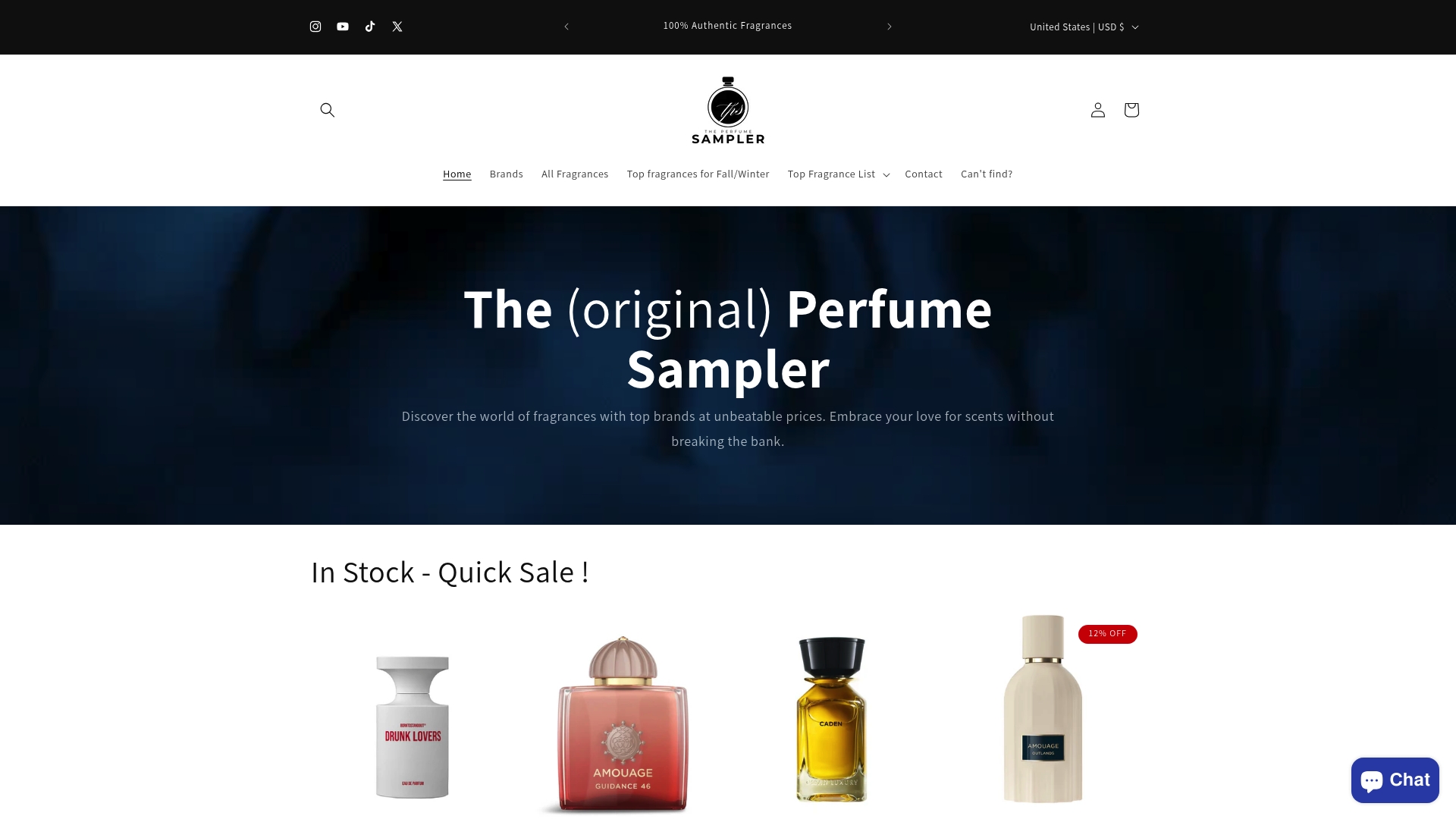
Trying new fragrances is made affordable by offering decants in 2ml, 3ml, 5ml, and 10ml sizes drawn from genuine full bottles, letting you run a proper multi-day wear test before committing to a full size.
- Compare several scents at once without the cost of buying each as a full bottle.
- Move to a full bottle once you have found the one that earns a place in your collection.
Browse our full range of fragrance samples and decants, read more on why decants make sense, or shop full bottles once you are ready to commit.
FAQ
Where can I buy perfume samples online?
You can buy perfume samples online through decant sellers, brand discovery programmes, and retailer sample sets. Decant sellers, including our own range of 2ml to 10ml samples, typically offer the largest selection of niche and designer fragrances in small sizes.
What perfume does Michelle Obama use?
There is no publicly listed, verified source confirming a specific signature fragrance for Michelle Obama. Treat any such claim online with caution unless it links to a credible, named source.
Is the perfume on TikTok shop real?
Authenticity varies widely by seller on open marketplaces, so it depends entirely on who is selling and whether they can verify sourcing. For reassurance, look for sellers with clear authentication policies, and consider checking broader guidance on verifying brand transparency before buying from an unfamiliar vendor.
What are the best affordable perfumes?
Affordability depends more on format than brand, since buying decants or samples lets you access high-end and niche fragrances at a fraction of full-bottle prices. Starting with a 2ml or 3ml sample is often the most cost-effective way to try a luxury scent before deciding whether it is worth a full bottle.
How do I choose a fragrance without wasting money?
Test on skin rather than relying only on a card, and wear the fragrance for a full day before judging it. Buying a small decant instead of a full bottle lets you make that judgement without the expense of a wrong purchase.
Sources
- Fragrances in cosmetics | FDA
- Concerning ingredients in cosmetics and beauty products | Consumer Reports